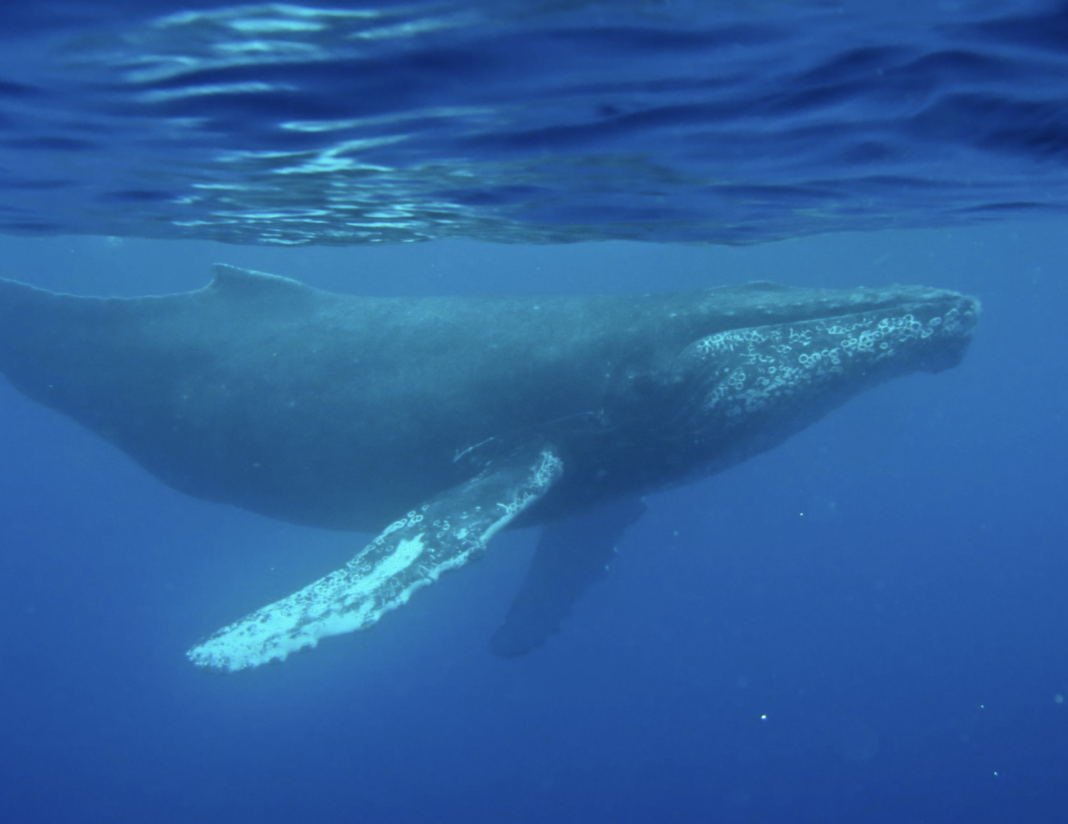

Some moments define an era: the Moon landing, 9/11. For the natural world, a new milestone has surfaced from the ocean’s past, the oldest known recording of a humpback whale. Listen to the historic recoding played over a modern video of whales, above.
Scientists at Woods Hole Oceanographic Institution (WHOI), one of the world’s leading marine research centers, have uncovered a recording captured on March 7, 1949, near Bermuda.
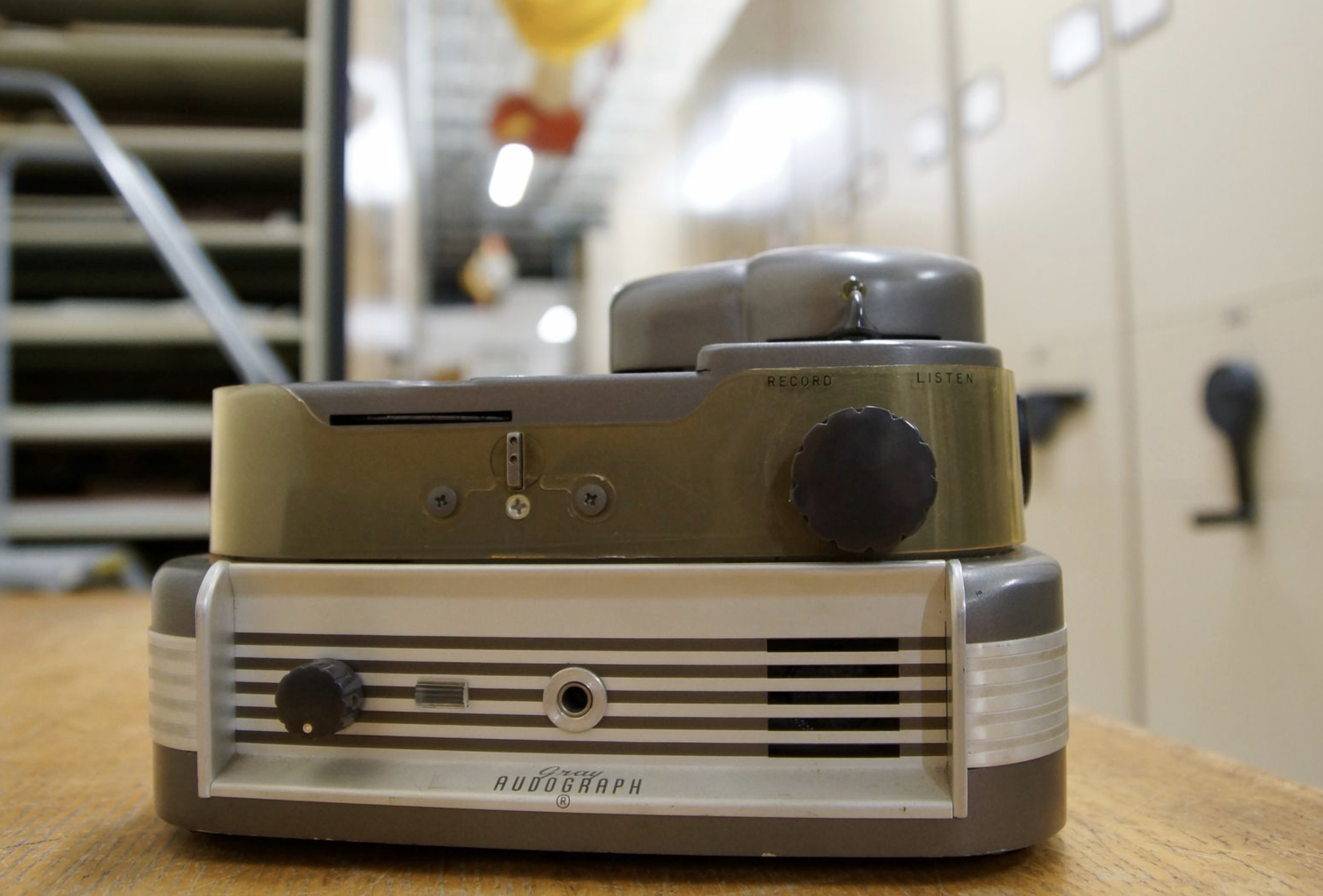
The sound was preserved on a fragile but remarkably intact audograph disc found in the institute’s archives. At the time, researchers aboard the research vessel Atlantis were testing sonar systems, measuring explosive charges, and conducting acoustic experiments in collaboration with the US Office of Naval Research.
Underwater recording technology was then in its infancy, and scientists still struggled to identify the sources of many ocean sounds.
Around that same period, WHOI scientist William Schevill and his wife Barbara Lawrence — a pioneering mammalogist — were laying the foundations of marine mammal bioacoustics. In 1949 they used a crude hydrophone and dictating machine to record beluga whales from a small boat in Canada’s Saguenay River, the first confirmed recording of wild marine mammals. Many recordings from the late 1940s were poorly preserved or lost, reflecting how early ocean acoustics research struggled with both technology and storage.
“Data from this time period simply don’t exist in most cases,” said Laela Sayigh, a marine bioacoustician and senior research specialist at WHOI. “The ocean is much louder now, with increases in both the number and types of sound sources. This recording can provide insight into how humpback whale sounds have changed over time, and serve as a baseline for measuring how human activity shapes the ocean soundscape.”
Today, WHOI scientists deploy passive acoustic buoys, Slocum gliders, and autonomous hydrophones to monitor ocean soundscapes at scale. These systems generate vast datasets used to study marine life, track ship noise and industrial impacts, and understand long-term environmental change.
The WHOI-led Robots4Whales program focuses specifically on protecting marine mammals using autonomous ocean robots equipped with the Digital Acoustic Monitoring Instrument (DMON). These systems detect whale calls in real time by tracking frequency changes in sound — producing “pitch tracks” from spectrograms that can be matched to known species libraries and transmitted ashore via satellite.
“Underwater sound recordings are a powerful tool for understanding and protecting vulnerable whale populations,” said marine bioacoustician Peter Tyack, emeritus research scholar at WHOI. “By listening to the ocean, we can detect whales where they cannot easily be seen. At the same time, these acoustic tools let us track how human activity — from shipping to industrial noise — alters the ocean soundscape and affects how whales communicate, navigate, and survive.”
Unlike most recordings from this era, which were lost as early media deteriorated, the audograph discs survived and appear to have been uniquely used for underwater sound — making them a rare, possibly singular example of early ocean listening preserved from the dawn of marine acoustics.