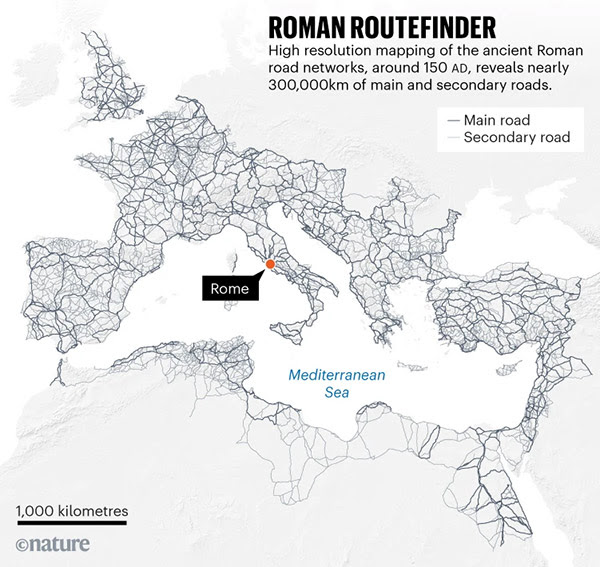
Take me home, Roman roads

Roman roads of the past

Two thousand years ago, all roads led to Rome. Now, thanks to modern data science, they finally do again — this time in high resolution. A newly released digital atlas Itiner-e what they call a “Google Maps for Roman roads.”It is being hailed as a kind of Google Maps for the ancient world, charting nearly 300,000 kilometres of Roman roads across Europe, the Middle East, and North Africa. The project stitches together countless archaeological and historical datasets into a single interactive network, revealing the sheer scale of the viae Romanae that once bound the empire together.
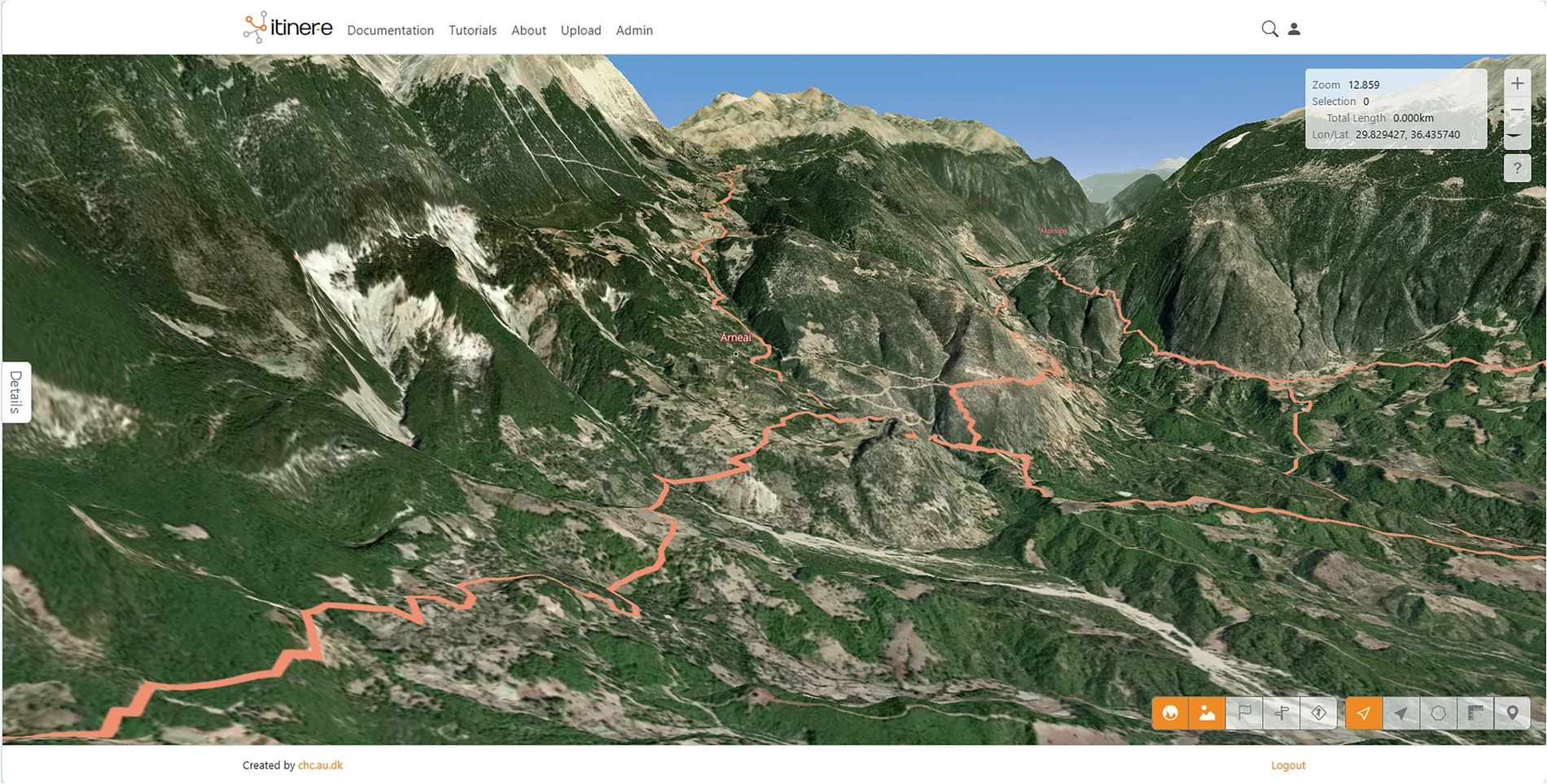
Ancient Roman roads

At its peak around AD 150, the Roman Empire stretched from Britain’s Hadrian’s Wall to the banks of the Euphrates, from the Atlas Mountains to the Black Sea. Its lifeblood was the road — engineered with stone, gravel, and astonishing precision — that carried soldiers, grain, ideas, and empire itself. But despite centuries of scholarship and excavation, our understanding of this network has remained incomplete.
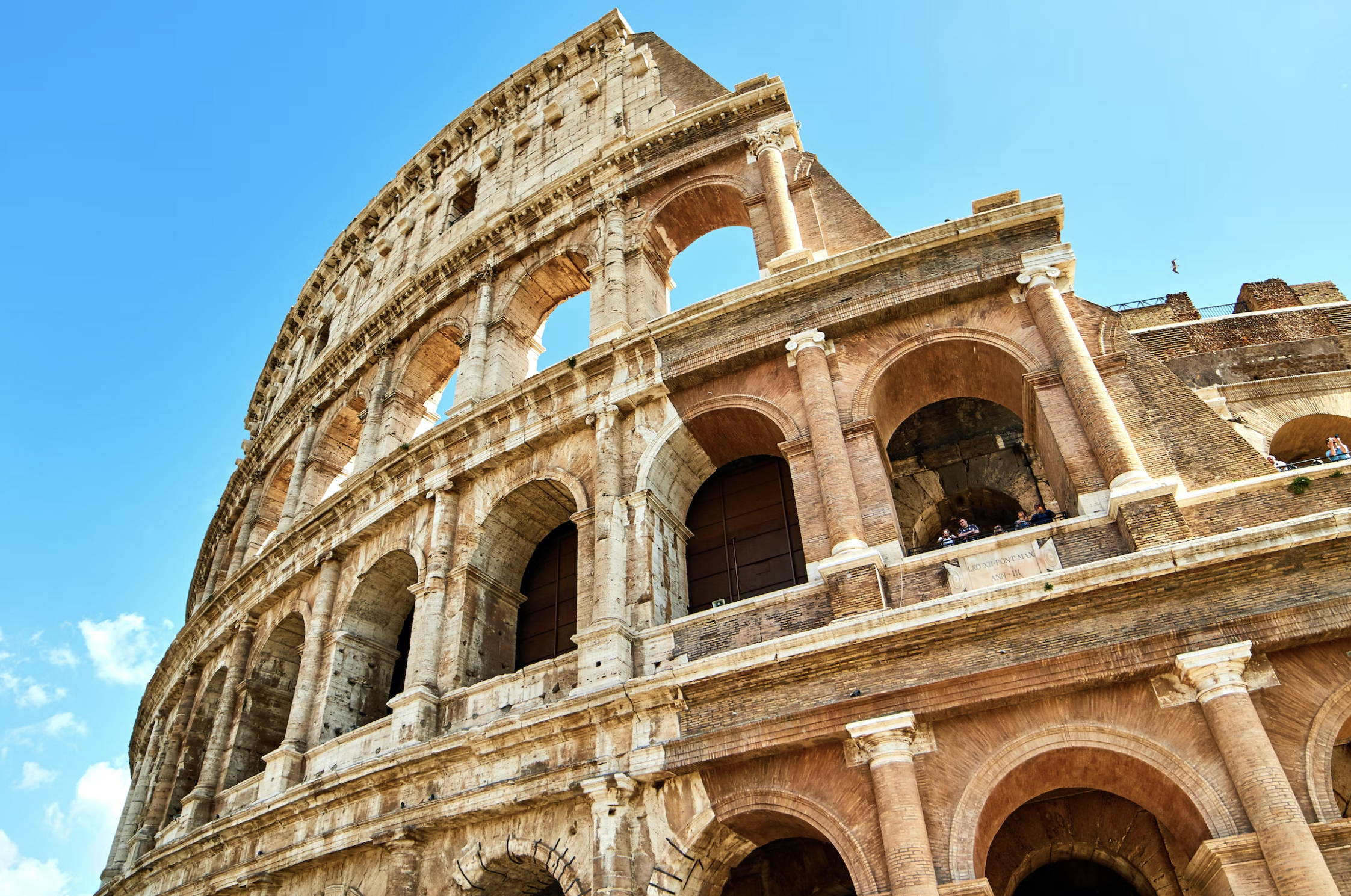
Rome colosseum, self-healing mortar
Romans mastered self-healing mortar, which works well in wet environments

Although the roads are one of the best-known aspects of Roman history, it’s surprising how many details about them we still don’t know. According to the new dataset, the locations of only 3% of Roman roads are known with certainty; the rest have been inferred from satellite imagery, topographical analysis, and fragmentary archaeological evidence.

The map, created through a collaboration of classicists, GIS specialists, and open-data archivists, pulls together previously siloed regional studies — from Britain’s Watling Street to Israel’s Via Maris — into a single digital ecosystem. Each route can be explored interactively, complete with estimated construction dates, trade significance, and terrain context.
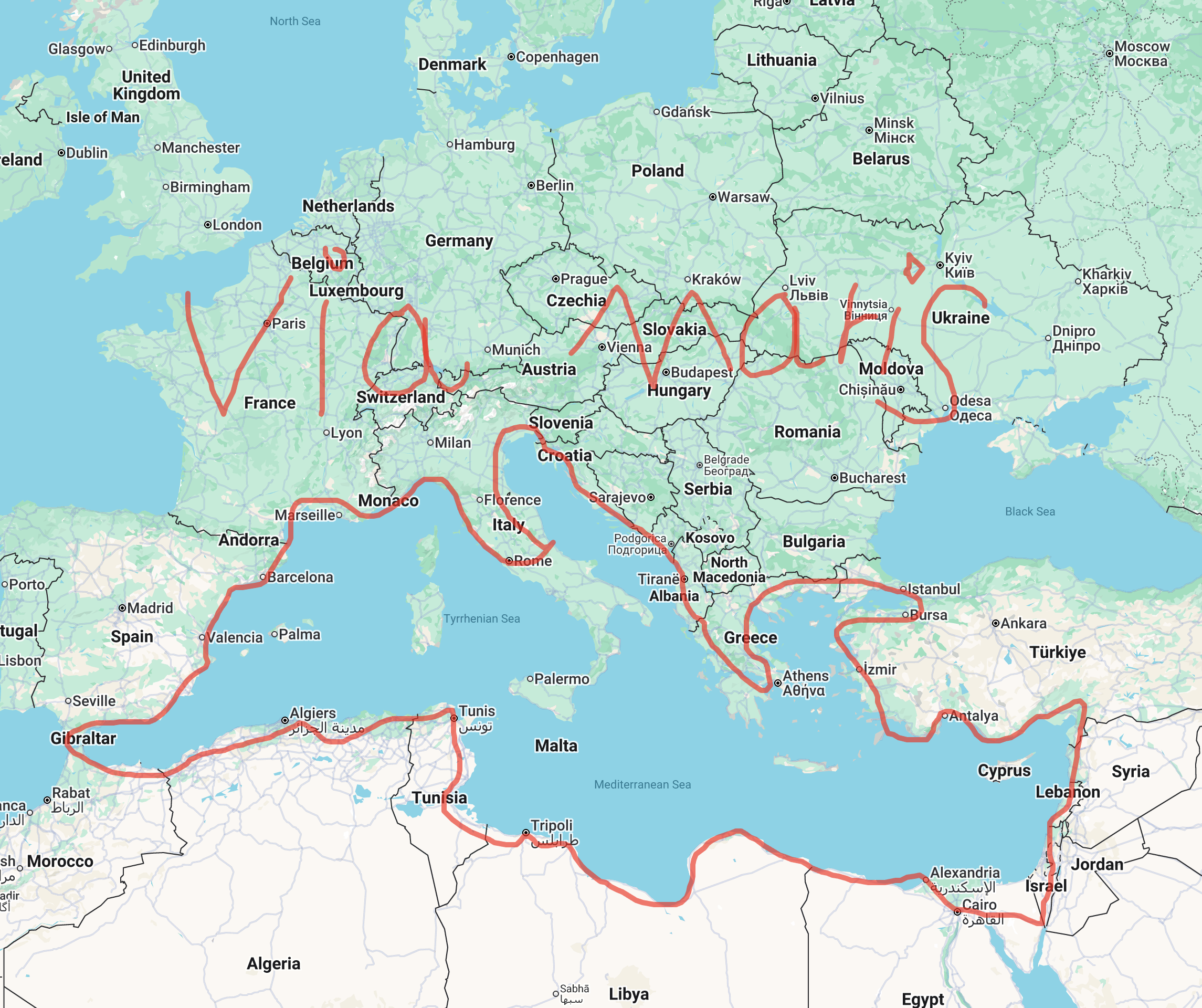
For ordinary viewers, it’s a revelation — a chance to visualize how Rome’s engineers carve through deserts, mountains, and marshes to keep an empire alive. It is, quite literally, the skeleton of Western civilization rendered as pixels and coordinates.

But this project isn’t just a nostalgic look backward. It’s also a powerful reminder of what sustainable infrastructure once meant. Roman roads were built to last millennia, with local materials, drainage systems, and low-maintenance stonework that endured centuries of weather and war. Many of today’s highways and rail lines still trace their original foundations. Roman concrete was self-healing and lasts until today.

In an age of asphalt sprawl, potholes, and short-term urban planning, the Roman network offers a strange kind of hope for our future. Ancient engineers designed for permanence and adaptation — concepts that modern infrastructure often neglects. The Romans understood maintenance as a civic duty, with roads meant to connect people, not just move things.

Roman law (Lex Julia Municipalis, 45 BCE) required local communities and landowners to maintain the sections of road passing through their territory. Public funds (the cursus publicus) supported major arteries, showing that upkeep was embedded in governance.

Some sustainability researchers see parallels between the Roman viae and today’s green corridors: both seek to balance movement, resilience, and local ecology.


LEAVE A REPLY

Please enter your comment!
Please enter your name here

TRENDING

Essay on pleasure revealed in ancient scroll

AI deciphers the text of 2,000-year-old charred papyrus scripts, unveiling musings on music and capers.

If you think the Middle East is dramatic now, 2000 years ago it was a telenovela

The relations between the Herodian Kingdom and the Nabatean...

Mishka Henner’s Feed Lot Photos Can Put You Off Meat

British photographer Mishka Henner has produced some disturbing aerial...

Former Yacht & Porsche Owner Opens a Mega Green Store in Dubai

Gundeep Singh hasn't exactly gone from riches to rags,...

Ancient Paw Print Found Near Roman Bath in Jerusalem

Dating back to the second century CE, archeologists uncover...

Qatar’s climate hypocrisy rides the London Underground

Qatar remains a master of doublethink—burning gas by the megaton while selling “sustainability” to a world desperate for clean air. Wake up from your slumber people.

How Quality of Hire Shapes Modern Recruitment

A 2024 survey by Deloitte found that 76% of talent leaders now consider long-term retention and workforce contribution among their most important hiring success metrics—far surpassing time-to-fill or cost-per-hire. As the expectations for new hires deepen, companies must also confront the inherent challenges in redefining and accurately measuring hiring quality.

8 Team-Building Exercises to Start the Week Off 

Team building to change the world! The best renewable energy companies are ones that function.

Thank you, LinkedIn — and what your Jobs on the Rise report means for sustainable careers

While “green jobs” aren’t always labeled as such, many of the fastest-growing roles are directly enabling the energy transition, climate resilience, and lower-carbon systems: Number one on their list is Artificial Intelligence engineers. But what does that mean? Vibe coding Claude? 

Somali pirates steal oil tankers

The pirates often stage their heists out of Somalia, a lawless country, with a weak central government that is grappling with a violent Islamist insurgency. Using speedboats that swarm the targets, the machine-gun-toting pirates take control of merchant ships and then hold the vessels, crew and cargo for ransom.

Leopoldo Alejandro Betancourt López Turned Ocean Plastic Into Profitable Sunglasses

Few fashion accessories carry the environmental burden of sunglasses. Most frames are constructed from petroleum-based plastics and acrylic polymers that linger in landfills for centuries, shedding microplastics into soil and waterways long after they've been discarded. Leopoldo Alejandro Betancourt López, president of the Spanish eyewear brand Hawkers, saw this problem differently than most industry executives.

Why Dr. Tony Jacob Sees Texas Business Egos as Warning Signs

Everything's bigger in Texas. Except business egos.  Dr. Tony Jacob figured...

Israel and America Sign Renewable Energy Cooperation Deal

Other announcements made at the conference include the Timna Renewable Energy Park, which will be a center for R&D, and the AORA Solar Thermal Module at Kibbutz Samar, the world's first commercial hybrid solar gas-turbine power plant that is already nearing completion. Solel Solar Systems announced it was beginning construction of a 50 MW solar field in Lebrija, Spain, and Brightsource Energy made a pre-conference announcement that it had inked the world's largest solar deal to date with Southern California Edison (SCE).

Related Articles

Popular Categories