


Plastic is everywhere. It’s in the things we use daily—cutting boards, clothing, cleaning sponges—and now, it seems, it’s even in the gum we chew. As the presence of microplastics in our environment grows, researchers are starting to investigate the potential impact of plastic particles on our health. In a pilot study, researchers revealed that chewing gum—both natural and synthetic—can release hundreds to thousands of microplastics into saliva, which could eventually be ingested. But what does this mean for us, and how did we get here?
Microplastics are tiny plastic particles, typically less than five millimeters in diameter, that can enter the body through ingestion or inhalation. These particles are found in numerous everyday products, from teeth aligners, to toothbrushes and toothpaste to tampons, sleep retainers, and even implants. Recent research suggests that these microplastics may have adverse effects on human health, but the science is still in its early stages.

In 2025, a pilot study on chewing gum presented at the American Chemical Society (ACS) Spring Meeting unveiled troubling findings. Researchers discovered that both natural and synthetic chewing gum released microplastics into saliva, potentially contributing to the growing ingestion of microplastics by humans.
“Our goal is not to alarm anybody,” says Sanjay Mohanty, principal investigator and UCLA engineering professor. “Scientists don’t know if microplastics are unsafe to us or not. There are no human trials. But we know we are exposed to plastics in everyday life, and that’s what we wanted to examine here.”
While animal studies and studies with human cells suggest microplastics could cause harm, definitive answers on their impact on human health remain elusive. However, this study raises an important question: if we are unknowingly ingesting microplastics from products like gum, what are the cumulative effects on our bodies?
The amount of microplastics in chewing gum may seem small at first, but consider the numbers: an average person chews 160 to 180 pieces of gum per year. With each piece potentially releasing up to 3,000 microplastic particles, this could lead to the ingestion of tens of thousands of plastic particles each year. While the full health implications are still unknown, reducing exposure to microplastics is something experts agree is important.
The Rise of Plastic Gum: A Transition from Natural to Synthetic
“Our initial hypothesis was that the synthetic gums would have a lot more microplastics because the base is a type of plastic,” says Lowe, who started the project as an undergraduate intern at UCLA and the presenter of this research. The researchers tested five brands of synthetic gum and five brands of natural gum, all of which are commercially available.
Mohanty says they wanted to reduce the human factor of varied chewing patterns and saliva, so they had seven pieces from each brand all chewed by one person. In the lab, the person chewed the piece of gum for 4 minutes, producing samples of saliva every 30 seconds, then a final mouth rinse with clean water, all of which got combined into a single sample.
In another experiment, saliva samples were collected periodically over 20 minutes to look at the release rate of microplastics from each piece of gum. Then, the researchers measured the number of microplastics present in each saliva sample. Plastic particles were either stained red and counted under a microscope or analyzed by Fourier-transform infrared spectroscopy, which also provided the polymer composition.
Lowe measured an average of 100 microplastics released per gram of gum, though some individual gum pieces released as many as 600 microplastics per gram. A typical piece of gum weighs between 2 and 6 grams, meaning a large piece of gum could release up to 3,000 plastic particles.
If the average person chews 160 to 180 small sticks of gum per year, the researchers estimated that could result in the ingestion of around 30,000 microplastics. If the average person consumes tens of thousands of microplastics per year, gum chewing could greatly increase the ingested amount.
“Surprisingly, both synthetic and natural gums had similar amounts of microplastics released when we chewed them,” says Lowe. And they also contained the same polymers: polyolefins, polyethylene terephthalates, polyacrylamides and polystyrenes. The most abundant polymers for both types of gum were polyolefins, a group of plastics that includes polyethylene and polypropylene.
The history of gum
To understand the shift to plastic in chewing gum, we need to take a step back in history. Chewing gum, once made from natural tree sap, has a long history. Indigenous cultures in North America chewed sap from trees like the spruce, and the Mayans chewed a substance called chicle, derived from the sap of the sapodilla tree, as early as the 19th century. Chicle was prized for its chewiness, and for many years, it served as the base for gum products.
The 20th century, however, brought about a shift. The development of synthetic rubber during World War II led to the replacement of natural tree sap with petroleum-based materials. In 1928, the Wrigley Company began using synthetic gum bases, which are made from plastic compounds such as polyolefins, polyethylene, and polypropylene. These materials, while cheaper and more easily mass-produced, are not biodegradable, unlike the natural ingredients used in traditional gum.
The transition to plastic gum base was largely driven by convenience, cost-effectiveness, and the ability to make longer-lasting products. However, the shift from natural to synthetic has raised questions about the potential health risks of long-term exposure to microplastics. “We were transitioning to a world of convenience,” says Dr. Jessica Lee, an environmental scientist at the University of Colorado. “But that convenience came at the cost of environmental and health considerations.”
Synthetic gum bases release microplastics during chewing, as found in the recent UCLA study, but even natural gum, once considered an eco-friendly option, releases similar plastic particles. These findings raise concerns about how much plastic we are unknowingly consuming through everyday products like gum.
A Future of Microplastics: What Can We Do?

The study on microplastics in gum is just one example of the growing presence of plastic in our lives. From dental aligners and toothbrushes to sleep retainers and even microplastics coming out of your tampons, microplastics are increasingly being found in products we rely on for daily hygiene and comfort. Research on the effects of these particles is still in its early stages, but scientists are increasingly concerned about their long-term impact on human health and the environment.
As we wait for more conclusive data, researchers like Mohanty and Lowe urge individuals to take proactive steps to reduce their exposure to microplastics. “If people want to reduce their potential exposure to microplastics from gum,” Lowe suggests, “they can chew one piece longer instead of popping in a new one.”
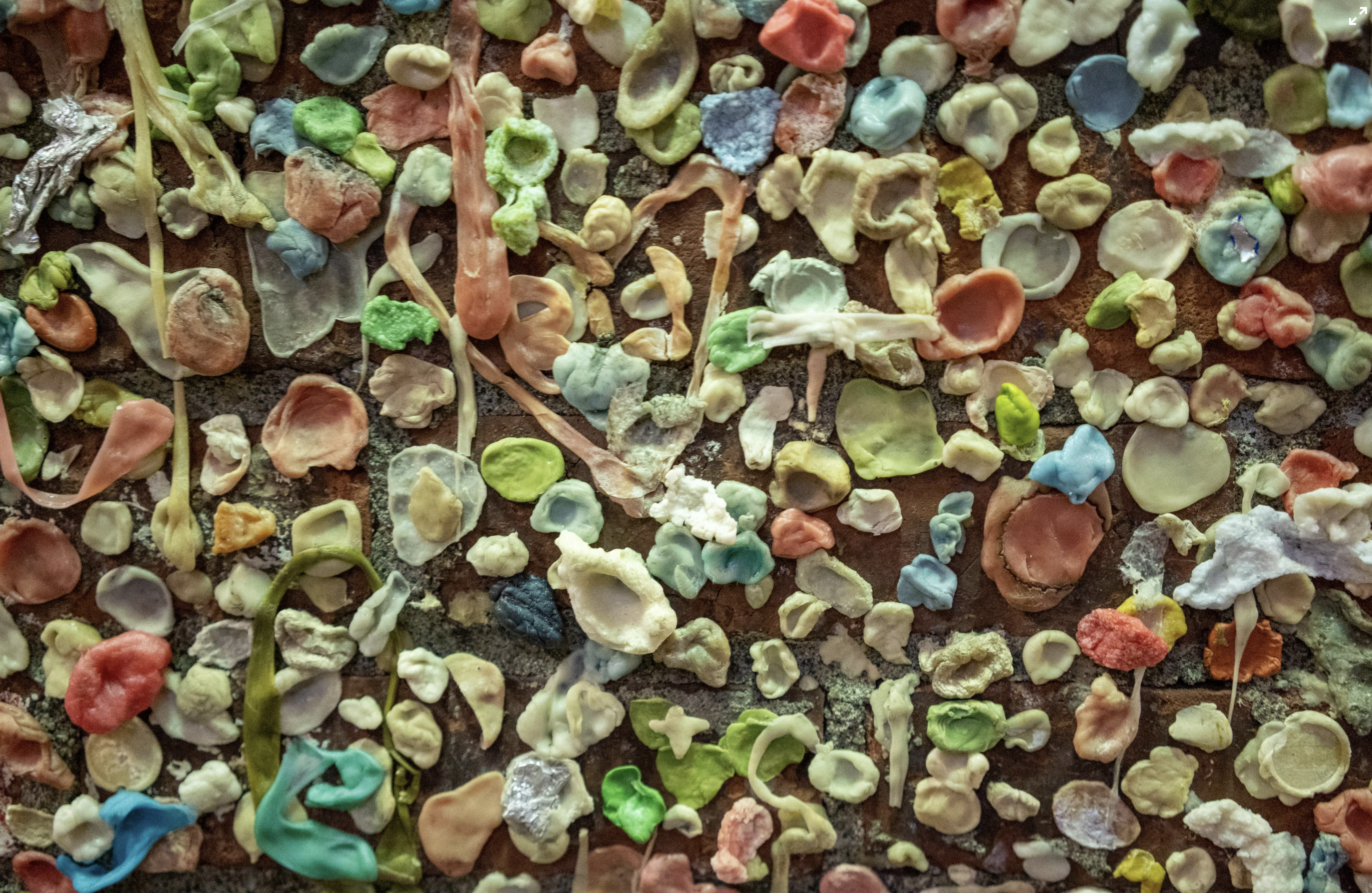
Beyond personal choices, this research highlights the importance of addressing plastic pollution at the manufacturing level. “The plastic released into saliva is a small fraction of the plastic that’s in the gum,” Mohanty concludes. “So, be mindful about the environment and don’t just throw it outside or stick it to a gum wall.”
Proper disposal of gum and other plastic products can help reduce their environmental impact, but ultimately, more research is needed to understand the full scope of how microplastics affect our health.