Oil drilling near the Great Amazon Reef System would wipe out mangroves

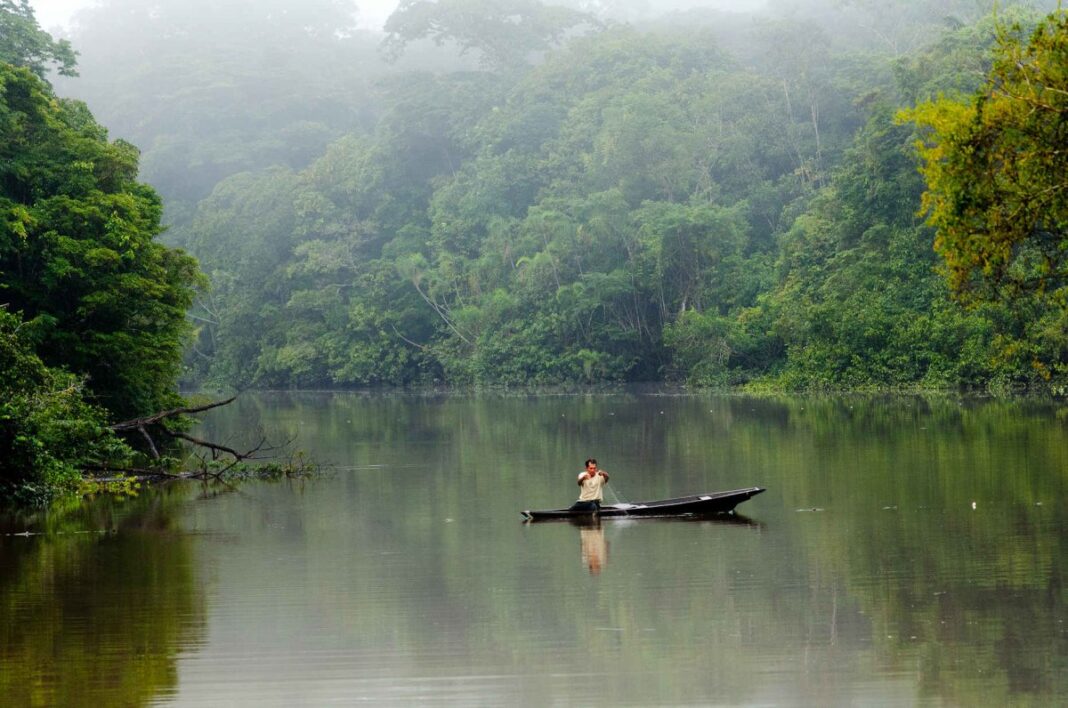
Mangrove forest in the Amazon

The world is up in arms about the new frontier in mining – deep sea mining for minerals like lithium and gold from virgin seafloors around the world. Prospectors say that the growth of electric cars has left us no choice as the batteries need lithium and other rare metals to function. But mining for oil at sea has been ongoing for decades. Offshore drilling began in America in the 1880s and the damage of oil exploration at sea is only too well known after great oil spills.

Now a Brazilian petrochemical company called Petrobras wants to drill exploratory oil wells in the ocean near the mouth of the Amazon. Scientists worry if the plan gets approved, inevitable oil leaks could damage nearby ecosystems, including a vast reef system and the second-largest mangrove forest in the world. Little is known about the reef, so “a comprehensive evaluation of the risks from oil and gas exploitation is currently impossible”, says marine ecologist Rodrigo de Moura in a new Nature article.

His colleague concurs: “There’s a palpable risk of an oil spill if activities proceed — the fact it is an exploratory well for studying the region’s potential for deep-sea oil doesn’t exempt it from accidents,” says Carlos Rezende, a marine biologist at the State University of Northern Rio de Janeiro in Campos dos Goytacazes, Brazil.

In defense, Petrobras said it will not be endangering delicate ecosystems, “there is no record of any nearby conservation units, nor is it located near rivers, lakes, floodplains or reef systems” they wrote, but the scientists familiar with the region know that the Great Amazon Reef System is only about 40 miles away and any oil spill or leakage will easily travel that distance.

Oil prospecting: Map showing the location of a possible exploratory oil well just beyond the Great Amazon Reef System.

Source: Nature

Studies suggest that the reef that the reef somewhere between 9,500 and 56,000 square kilometers across the mouth of the Amazon River. When it was first described by scientists in the 1970s, the researchers then did not observe any impressive range of biodiversity. But recent studies found an ecosystem with corals, sponges and fish.

“It is huge, and it is sensitive,” says Ronaldo Francini-Filho, a marine ecosystems researcher at the University of São Paulo in Brazil. “And we don’t know even 5% of what’s down there.”

Brazil has other megaprojects in the Amazon region that are under debate including the repaving of a highway that would pass through a preserved rainforest, the construction of a major railway for grain transport and the renewal of a giant hydroelectric dam’s license. Countries in South America were easy to exploit in the past but with environmental awakening and the understanding of a country’s need to protect their assets, citizens are expecting more from their leaders who will need to make tough decisions.




Karin Kloosterman
Karin Kloostermanhttp://www.greenprophet.com
Karin Kloosterman is an award-winning journalist, innovation strategist, and founder of Green Prophet, one of the Middle East’s pioneering sustainability platforms. She has ranked in the Top 10 of Verizon innovation competitions, participated in NASA-linked challenges, and spoken worldwide on climate, food security, and future resilience. With an IoT technology patent, features in Canada’s National Post, and leadership inside teams building next-generation agricultural and planetary systems — including Mars-farming concepts — Karin operates at the intersection of storytelling, science, and systems change. She doesn’t report on the future – she helps design it. Reach out directly to [email protected]

Hot this week

How Renewable Energy is Revolutionizing the Way We Power Our World

Solar has become the star of the transition thanks to modular hardware and straightforward installation. It fits dense cities and remote towns alike. Many companies are turning to rooftop arrays and carport systems - and exploring commercial solar installation as a practical way to lock in future savings.

How does one start prepping?

Faced with an extreme winter storm this year, Americans wonder how to be prepared for catastrophe. Miriam has lived through wars in the Middle East - so she's prepared on giving you a guide to prepping.

Fishermen sue tire manufacturers on behalf of the salmon

A federal trial in San Francisco has brought US tire manufacturers, fishing groups, and environmental scientists into court over a chemical most drivers have never heard of — but which scientists say may be silently reshaping aquatic ecosystems.

Listening to Water: Tarek Atoui’s Next Work for Tate Modern

Born in Beirut, Lebanon in 1980 and now living in Paris, Atoui has spent years building instruments that don’t sit comfortably in concert halls. Many of them involve water, glass, and ceramics — materials that react to sound instead of simply producing it.

Leading Through a Dual-Energy Transition: Balancing Decarbonisation with Energy Security

Experience in one area of the energy industry isn't enough to guarantee readiness across all the others. That's where a structured program like an MBA in energy can come in. Today's advanced curricula explore energy economics, finance, policy, and strategic management alongside the technical subjects. And when pursuing an energy MBA online, professionals can skill up and retrain without having to step out of the labor market -- an important perk at a time when skilled professionals are already in short supply.

Topics

How Renewable Energy is Revolutionizing the Way We Power Our World

Solar has become the star of the transition thanks to modular hardware and straightforward installation. It fits dense cities and remote towns alike. Many companies are turning to rooftop arrays and carport systems - and exploring commercial solar installation as a practical way to lock in future savings.

How does one start prepping?

Faced with an extreme winter storm this year, Americans wonder how to be prepared for catastrophe. Miriam has lived through wars in the Middle East - so she's prepared on giving you a guide to prepping.

Fishermen sue tire manufacturers on behalf of the salmon

A federal trial in San Francisco has brought US tire manufacturers, fishing groups, and environmental scientists into court over a chemical most drivers have never heard of — but which scientists say may be silently reshaping aquatic ecosystems.

Listening to Water: Tarek Atoui’s Next Work for Tate Modern

Born in Beirut, Lebanon in 1980 and now living in Paris, Atoui has spent years building instruments that don’t sit comfortably in concert halls. Many of them involve water, glass, and ceramics — materials that react to sound instead of simply producing it.

Leading Through a Dual-Energy Transition: Balancing Decarbonisation with Energy Security

Experience in one area of the energy industry isn't enough to guarantee readiness across all the others. That's where a structured program like an MBA in energy can come in. Today's advanced curricula explore energy economics, finance, policy, and strategic management alongside the technical subjects. And when pursuing an energy MBA online, professionals can skill up and retrain without having to step out of the labor market -- an important perk at a time when skilled professionals are already in short supply.

From Green Energy to Healthy Societies: Why old systems thinking is becoming relevant again

Across the Middle East and North Africa, large investments are being made in green hydrogen, renewable energy, water infrastructure and sustainability. Most of these efforts are discussed in the context of climate change, decarbonization and economic diversification. That framing is important, but it may not capture their full value.

We saw peace – an interreligious encounter deep in our eyes

They came from Israel, Palestine, Jordan, Iraq, Yemen, Morocco, Tunisia, Lebanon, Egypt… There are Sunni Muslims, Shiite Muslims, Jews (Orthodox and Reform), Orthodox Christians, Coptic Christians, Protestant Christians, Druze, Baha'is, a Scientologist.

Can biochar reduce ‘Forever Chemicals’ in food if it’s used in farms?

Biochar is produced by heating organic material in a low-oxygen environment so it does not burn. This process, known as pyrolysis, transforms plant matter into a stable, carbon-rich material.

Related Articles

Popular Categories