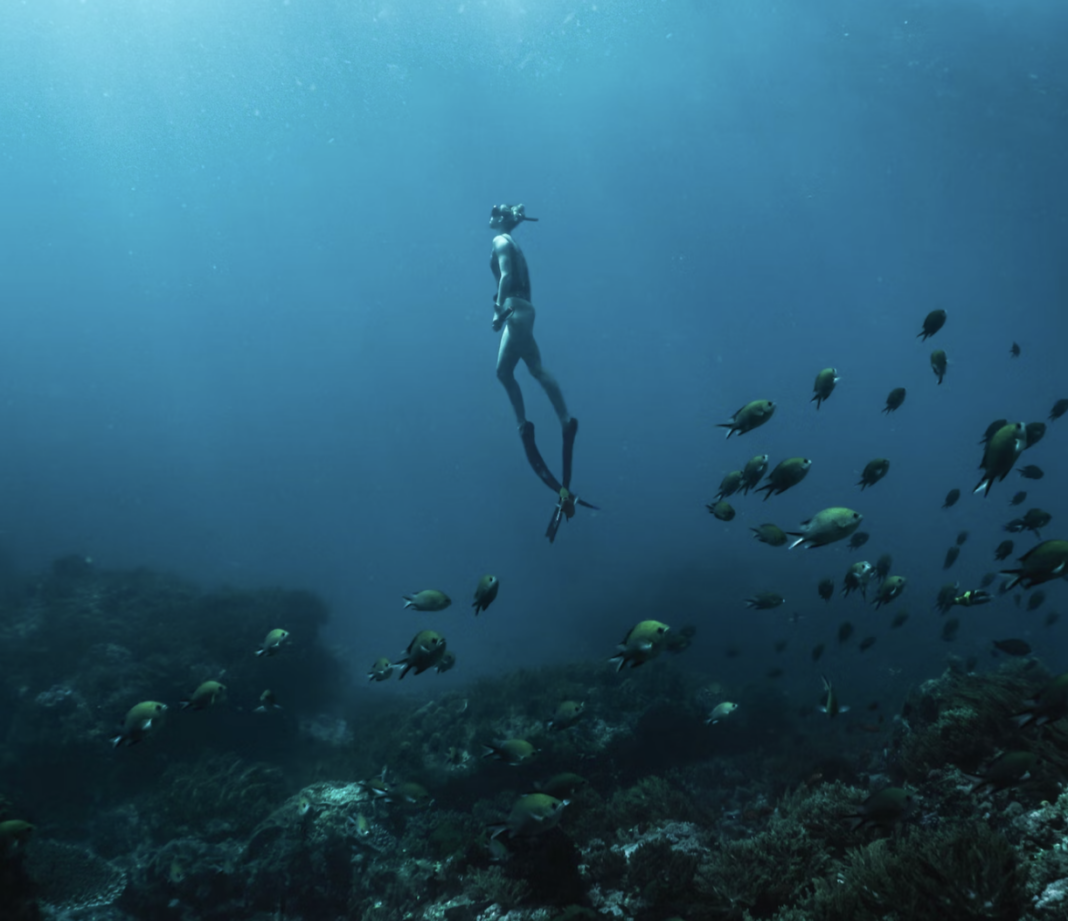


Our life depends on oxygen. Water in rivers and the seas pick it up and dissolve it, and in this way, water is the blood for our earth. Water carries oxygen to the roots of trees and plants in the soil and also to plants, coral, algae and tiny creatures in our seas and oceans. Like fungi living in symbiosis with plants and trees helping them gather nutrients, algae in the sea work alongside coral.
Now with climate change happening and a rising of temperatures in the sea, coral reefs are having a harder time than ever as the globe gets warmer. You can see the effects in famous dive spots in Sinai, Egypt, where reef after reef is just dead and dusty. Marine researchers from Israel and China, working together, are sounding an alarm.
Corals can’t cope
Corals face an ongoing reduction of oxygen in the sea water: They can survive but they pay a heavy physiological price that endangers the survival of the corals’ next generations: an impaired ability to capture prey and a growing reliance on energy provided by their symbiotic algae, with a decline in the reproductive processes, the researchers report.
These findings emerge from a recent study conducted at the University of Haifa: “Although corals survive, they pay a penalty. We are concerned that any further environmental changes, especially those affecting the corals’ interaction with their symbiotic algae, will seriously compromise their ability to cope with the declining oxygen levels,” notes Hagit Kvitt of the University of Haifa, who led the study.
Coral reefs are essential for healthy marine ecosystems and human ecology. They provide a habitat for around 25% of all marine organisms and contribute to the biodiversity of the marine system. In addition, coral reefs function as the “rainforests” of the sea: the coral lives in symbiosis with algae that are contained inside its cells and provide about 90% of its energy through the process of photosynthesis.
Global warming is affecting marine life in many ways, one of which is the decrease in seawater oxygen levels. Rising temperatures cause on the one hand a decline in the amount of oxygen dissolved in the ocean and on the other an increase in the metabolism of marine animals, including their need for oxygen.
“Consequently, the need for oxygen increases while oxygen levels decrease, which poses a greater threat to the animals than the rise in temperature itself,” the researchers explain. “Previous studies have found that some past mass extinction events were likely caused by a similar combination of rising temperatures and decreasing oxygen levels.”
The current study is published in the journal Frontiers in Marine Science and incuded researchers from the Israel Oceanographic and Limnological Research Institute in Eilat, in cooperation with researchers from China.
How researchers measured oxygen in reefs
The team sought to monitor the impact of the ongoing decrease in oxygen levels on the physiology and gene expression of a reef-building coral. Previous studies examined the changes in gene expression upon a decrease of oxygen over 12 hours, a relatively short period compared to conditions expected in nature. Studies examining the impact of 11 days of oxygen depletion focused solely on the physiological response and did not examine changes in gene expression.
The unique feature of the current study is that it examined both the physiological changes and the changes in gene expression over a longer period – 14 days – when the corals were kept at an oxygen level 90% below the normal level of their natural habitat (a drop from 6 mg/l O2 to 0.3-0.6 mg/l O2).
The results of the study show that within the first 12 hours the coral activated processes that helped it cope with the oxygen depletion: it increased its energy production by means that are not dependent on oxygen, it increased the number of mitochondria to improve its utilization of cellular oxygen, and began to increase its nutrient acquisition from the symbiotic algae.
After a longer period – between one and two weeks – a decline was seen in processes related to reproduction, in particular those of sperm production, as well as a decline in the production of the stinging mechanism, that functions in prey capture and self defense.
According to the researchers, the study is very significant in terms of our understanding of the heavy price we will pay for climate change in the future: “This in turn will help us formulate policies for coping with the climate change we are bringing on ourselves,” the researchers conclude.