ISIS uses Tabqa Dam in Syria as weapon of war

The_Tabqa_Dam

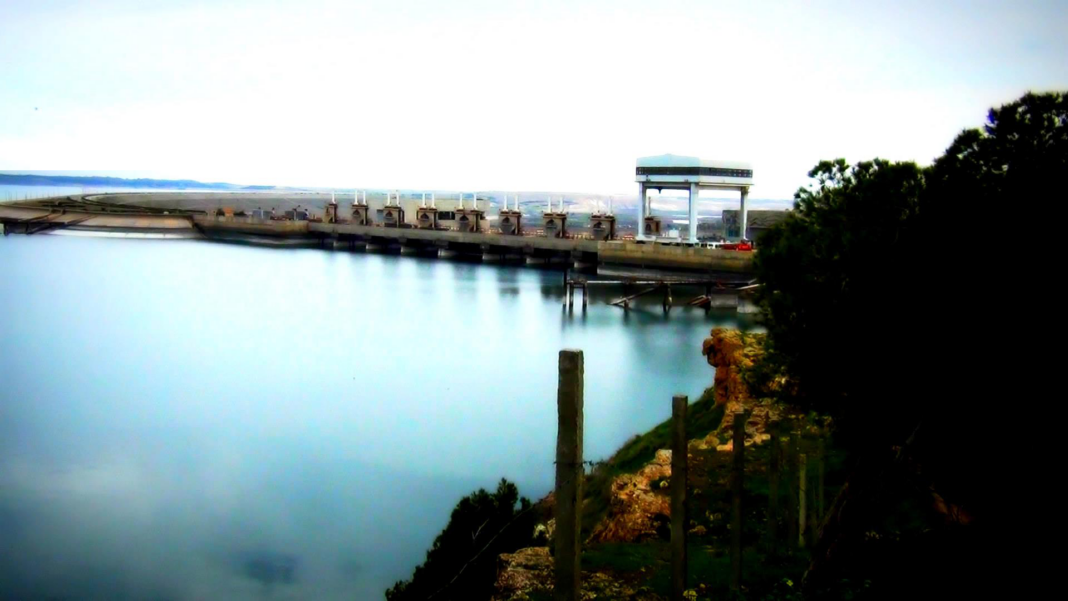
Dams tame wild rivers, they prevent floods, irrigate crops and generate billions of watts of renewable hydroelectric power. But some 25 miles from Raqaa, Syria the Daesh (aka ISIS) don’t see the Tabqa dam as a source of green energy. They see it as a military base, a prison and weapon of war.The Tabqa dam is also known as the al-Thawra dam, in Arabic سد الثورة‎, meaning dam of the revolution.  It was designed to control the flow of the Euphrates river into Iraq and Syria, produce hydroelectric power and irrigate land alongside of the river. Twelve thousand Syrians worked on the dam with financial and engineering support from he Soviet Union. It was completed in 1973. At 200 foot high and nearly three-miles long, it is the largest dam in Syria.

Its construction created lake Assad, the largest reservoir in Syria and hydroelectric turbines eventually allowed it to generate hundreds of Megawatts of electricity for Eastern Syria.

But the Tabqa dam’s construction was not without controversy. A number of antiquities had to be quickly found and relocated. Four thousand Arab families were relocated from the flooded Euphrates valley. The families were resettled into a zone where they were to provide a barrier between the Kurds of Turkey and the Kurds of Iraq. A drought shortly after the dams construction reduced the flow of the Euphrates into Iraq by 1/3rd. Syria argued that dams upstream in Turkey also limited the flow into Syria. At one point Iraq threatened to bomb the dam but the Soviet Union and Saudi helped mediate a water sharing agreement.

To the Daesh, dams are weapons. When they held the Mosel dam, they threatened to drown more than half a million people in Mosel and Baghdad. The Tabqa dam is a shield for their headquarters and a place to keep prisoners of war. By controlling this dam, they also threaten tens of thousands of lives downstream in Iraq. The war between the Daesh and the Syrian government has also caused severe mismanagement and caused the level of lake Assad to drop a record 6 meters.

This is by no means the first time dams have been used as tools of war. In the seventh century B.C.E., queen Semiramis of Assyria wrote that, “I compelled rivers to run where I wanted, and I wanted them to run where it was advantageous.” Semiramis, a Roman commander and manager of aqueducts, diverted the Euphrates river so her troops could march up the Euphrates river straight into Babylon. The same technique was said to have been used by Alexander the great.

While some try to turn swords into plowshares and create a better world, ISIS is weaponizing green technology. But more than sixty nations are working to end this cult of violence and help the good people of Syria take their country back.

Photo of Tabqa dam via Wikipedia by Mohamed7799

Brian Nitz
Brian Nitzhttp://www.greenprophet.com
Brian remembers when a single tear dredged up a nation's guilt. The tear belonged to an Italian-American actor known as Iron-Eyes Cody, the guilt was displaced from centuries of Native American mistreatment and redirected into a new environmental awareness. A 10-year-old Brian wondered, 'What are they... No, what are we doing to this country?' From a family of engineers, farmers and tinkerers Brian's father was a physics teacher. He remembers the day his father drove up to watch a coal power plant's new scrubbers turn smoke from dirty grey-back to steamy white. Surely technology would solve every problem. But then he noticed that breathing was difficult when the wind blew a certain way. While sailing, he often saw a yellow-brown line on the horizon. The stars were beginning to disappear. Gas mileage peaked when Reagan was still president. Solar panels installed in the 1970s were torn from roofs as they were no longer cost-effective to maintain. Racism, public policy and low oil prices transformed suburban life and cities began to sprawl out and absorb farmland. Brian only began to understand the root causes of "doughnut cities" when he moved to Ireland in 2001 and watched history repeat itself. Brian doesn't think environmentalism is 'rocket science', but understanding how to apply it within a society requires wisdom and education. In his travels through Europe, North America, Asia and the Middle East, Brian has learned that great ideas come from everywhere and that sharing mistakes is just as important as sharing ideas.

LEAVE A REPLY

Please enter your comment!
Please enter your name here

TRENDING

Astro uses AI to help procure land for renewable energy

For oil-rich, environmentally vigilant Gulf states, Astro isn’t just another startup story. It is a blueprint for accelerating an energy transition that is now existential, not optional.

How does one start prepping?

Faced with an extreme winter storm this year, Americans wonder how to be prepared for catastrophe. Miriam has lived through wars in the Middle East - so she's prepared on giving you a guide to prepping.

Sink holes from over-watering farmers’ fields

Sinkholes are rapidly appearing in Turkey’s central Anatolian farming region, particularly around Konya and Karapınar. These giant gaping holes in the ground in areas of farmland, known locally as obruk, are not random geological events. They are linked to prolonged drought, climate-driven heat stress, and heavy groundwater extraction for agriculture in one of the country’s most important breadbaskets.

Oil pollution in Basrah’s soil is 1,200% higher than it should be

Soil pollution levels in parts of Basra are 1,200% to 3,300% higher than those typically measured in cities like Toronto or New York, according to new comparative soil data. It's getting into water.

Peace hospital opens between Jordan and Israel

The proposed medical centre, described by Emek HaMaayanot Regional Council head Itamar Matiash as “a centre for cancer treatment, so that people from Jordan or further away could come and receive treatment,” would become the flagship of a wider cluster of medical, academic and innovation-based services planned for the Israeli half of the zone.

Qatar’s climate hypocrisy rides the London Underground

Qatar remains a master of doublethink—burning gas by the megaton while selling “sustainability” to a world desperate for clean air. Wake up from your slumber people.

How Quality of Hire Shapes Modern Recruitment

A 2024 survey by Deloitte found that 76% of talent leaders now consider long-term retention and workforce contribution among their most important hiring success metrics—far surpassing time-to-fill or cost-per-hire. As the expectations for new hires deepen, companies must also confront the inherent challenges in redefining and accurately measuring hiring quality.

8 Team-Building Exercises to Start the Week Off 

Team building to change the world! The best renewable energy companies are ones that function.

Thank you, LinkedIn — and what your Jobs on the Rise report means for sustainable careers

While “green jobs” aren’t always labeled as such, many of the fastest-growing roles are directly enabling the energy transition, climate resilience, and lower-carbon systems: Number one on their list is Artificial Intelligence engineers. But what does that mean? Vibe coding Claude? 

Somali pirates steal oil tankers

The pirates often stage their heists out of Somalia, a lawless country, with a weak central government that is grappling with a violent Islamist insurgency. Using speedboats that swarm the targets, the machine-gun-toting pirates take control of merchant ships and then hold the vessels, crew and cargo for ransom.

Leopoldo Alejandro Betancourt López Turned Ocean Plastic Into Profitable Sunglasses

Few fashion accessories carry the environmental burden of sunglasses. Most frames are constructed from petroleum-based plastics and acrylic polymers that linger in landfills for centuries, shedding microplastics into soil and waterways long after they've been discarded. Leopoldo Alejandro Betancourt López, president of the Spanish eyewear brand Hawkers, saw this problem differently than most industry executives.

Why Dr. Tony Jacob Sees Texas Business Egos as Warning Signs

Everything's bigger in Texas. Except business egos.  Dr. Tony Jacob figured...

Israel and America Sign Renewable Energy Cooperation Deal

Other announcements made at the conference include the Timna Renewable Energy Park, which will be a center for R&D, and the AORA Solar Thermal Module at Kibbutz Samar, the world's first commercial hybrid solar gas-turbine power plant that is already nearing completion. Solel Solar Systems announced it was beginning construction of a 50 MW solar field in Lebrija, Spain, and Brightsource Energy made a pre-conference announcement that it had inked the world's largest solar deal to date with Southern California Edison (SCE).

Related Articles

Popular Categories