

A Documented Response to the Article “The Aga Khan Is Greenwashing Their Awards” and a Reflection on the Relationship Between Development, Tourism, and the Environment on Hormuz Island
Salman Rasouli
Critiquing architectural and development projects, particularly within environmentally sensitive contexts, is an essential component of social dynamism and a prerequisite for healthy public discourse. However, such dialogue can only be constructive when it is built upon accurate information, verified field observations, and unambiguous reference to scientific sources.
The article “The Aga Khan is Greenwashing Their Awards,” written by Ronak Roshan and published on September 3, 2025, on Green Prophet, critiques the “Majara Complex and Community Redevelopment.” While the project appears at first glance to align with the sustainability values of international awards, the article relies on a series of claims to argue that it contradicts the fundamental principles of sustainable development.
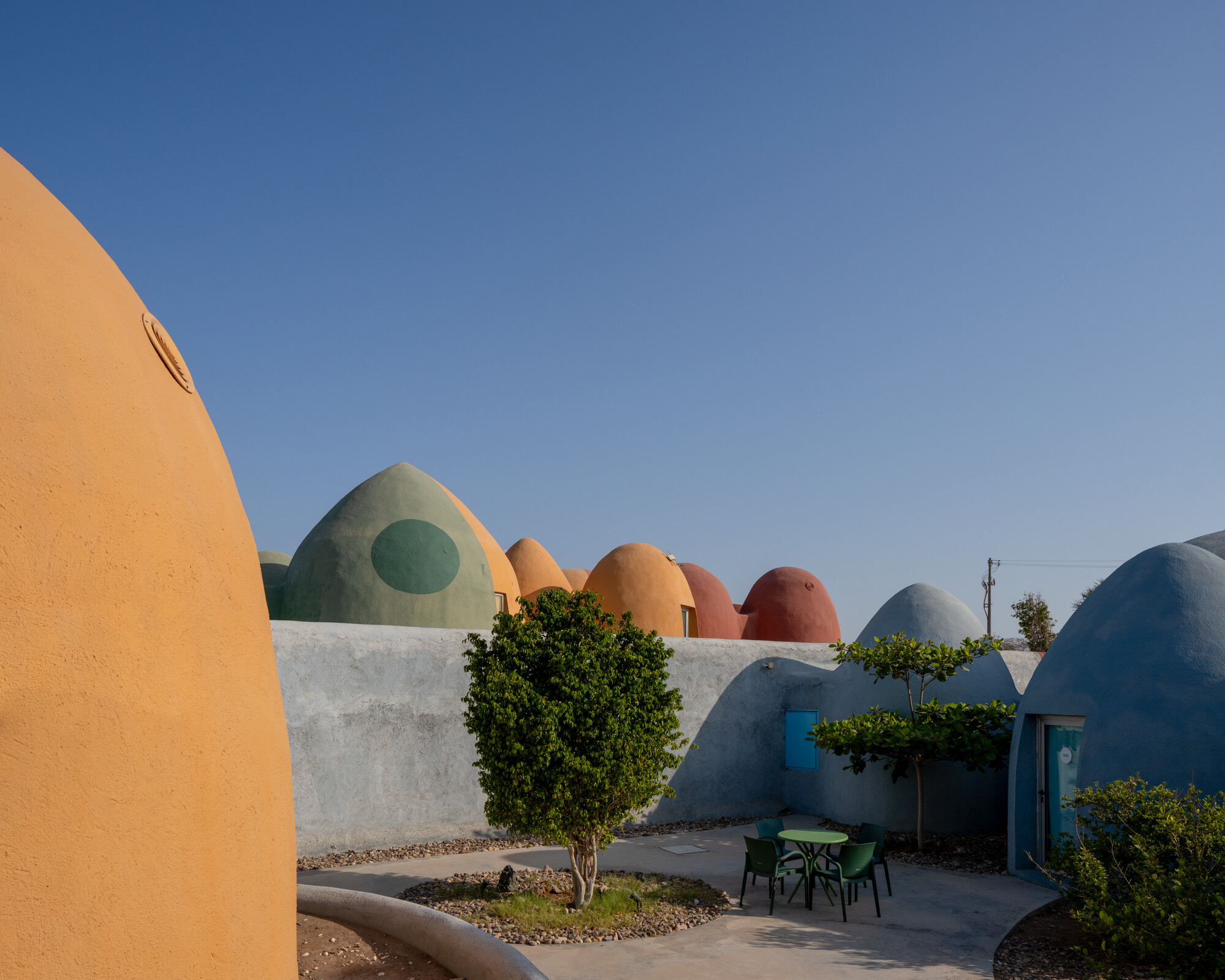
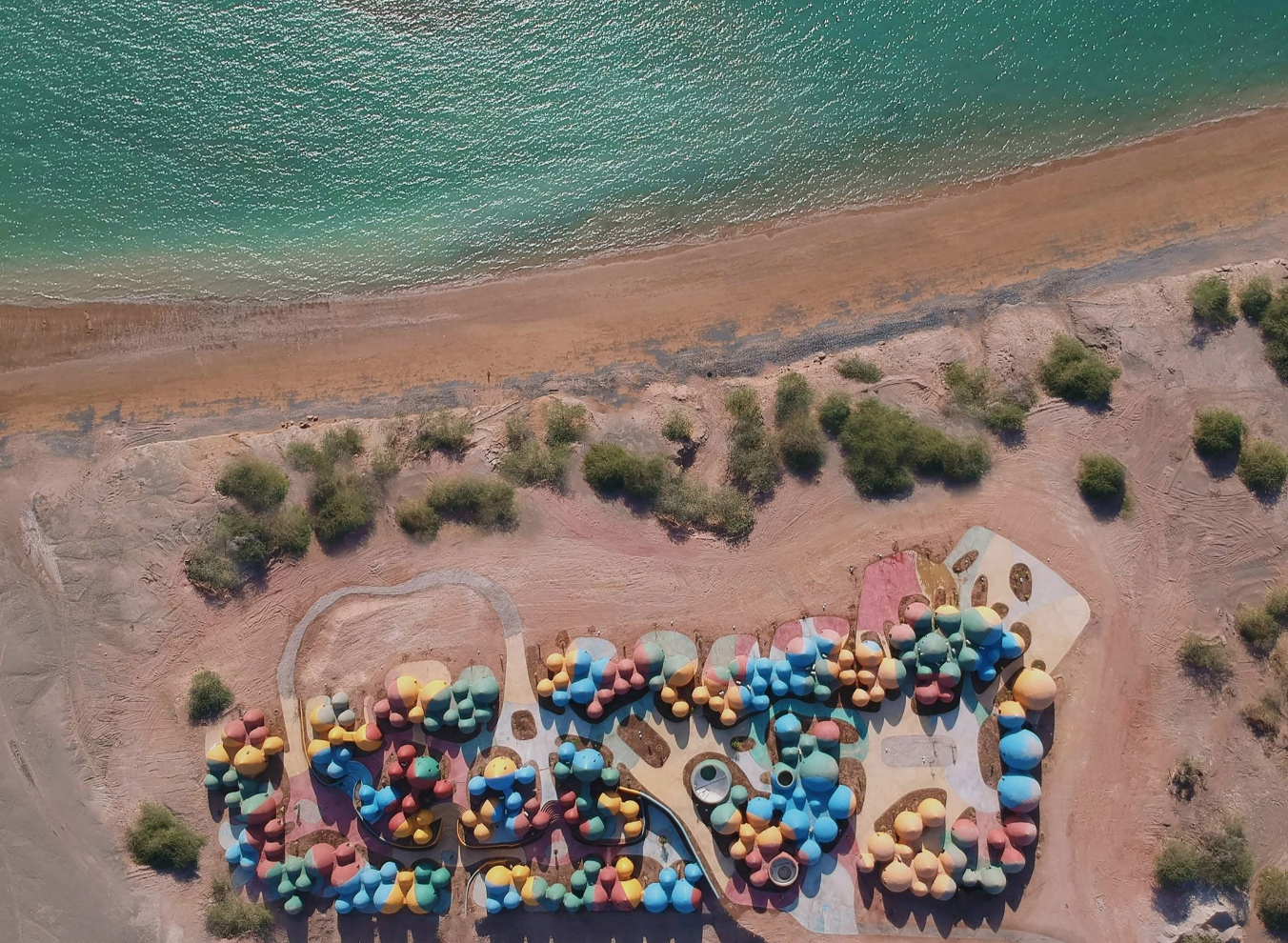
Majara is part of the “Presence in Hormuz” initiative by ZAV Architects, developed alongside projects like the “Rong Cultural Center” and the “Typeless.” Designed within the natural and social fabric of Hormuz Island, the project aims to foster cultural tourism and create socio-economic opportunities for the local community. It was subsequently named a recipient of the Aga Khan Award in the 2023–2025 cycle.
While disagreement regarding the balance between development and the environment is expected, when a critique relies on scientific and environmental claims, the accuracy of citations and field observations becomes paramount. Such texts significantly shape the perception of non-specialist audiences regarding architectural and development projects.
Accuracy of Information and Responsible Critique
In the article in question, references to academic research are presented in a way that initially lends the arguments an air of validity. However, a closer examination reveals that the scientific content of these sources has been misinterpreted.
For example, regarding sea turtle nesting sites:
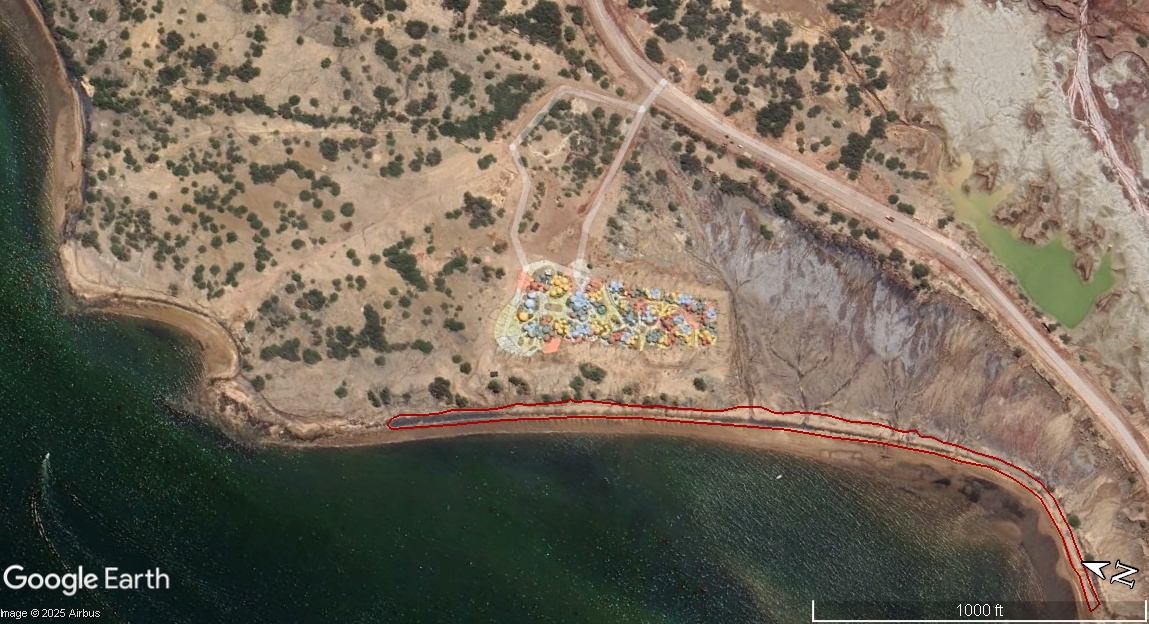
Research by Loghmani-Devin, Savari, and Sadeghi (2013) regarding “Hawksbill Turtle nesting on Hormuz Island” [1] states that while two-thirds of the island’s beaches are suitable for nesting, the northern and western shores are not utilized for this purpose due to the nature of the substrate. The Majara complex is situated precisely along these northern and western shores.
Research by Maria and Nasir (2014), referenced in the article, focuses on “Identifying and Prioritizing Important Nesting Sites of the Green Turtle on the Iranian Beaches of the Oman Sea” [2]. While the study makes passing reference to Persian Gulf islands, its primary focus is the Iranian mainland coast. No specific data or field maps were provided for Hormuz Island, making it an insufficient source for conclusions about the island’s habitats.
Furthermore, inaccuracies exist at the level of basic field observation. The article mistakenly places Majara in the west and southwest of the island. In reality, the complex is located on the northwestern shore, approximately four kilometers from Hormuz City, a fact easily verifiable by public maps.
Development, Sustainable Tourism, and Hormuz Island
In the post-World War II era, rapid industrialization and environmental damage gave rise to environmental movements that increased awareness about resource exploitation. The central dilemma remained: how to reduce poverty and improve social welfare without economic and industrial development.
The concept of sustainable development emerged as a response, aiming to meet present needs without compromising the future. In tourism, this requires balancing economic, social, and environmental impacts.
In Hormuz, the debate is often framed as development versus conservation. Global experience shows that development brings both risks and opportunities. The goal is not to reject development, but to manage it responsibly through planning and conservation strategies.
Majara Project’s Strategy for Sustainable Development
The Majara project outlines several approaches to maintaining a sustainable relationship with the island:
Architectural and Environmental Strategies
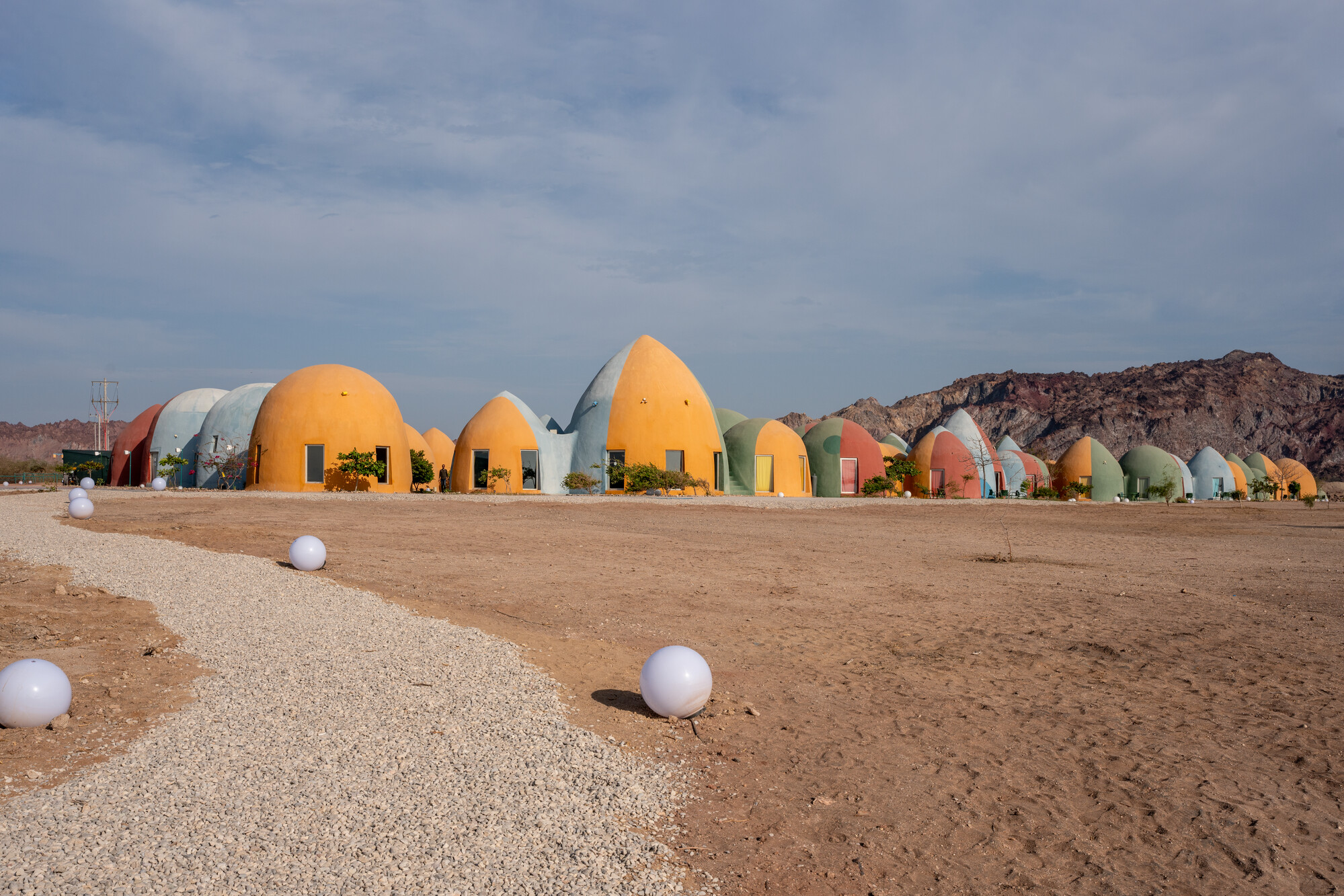
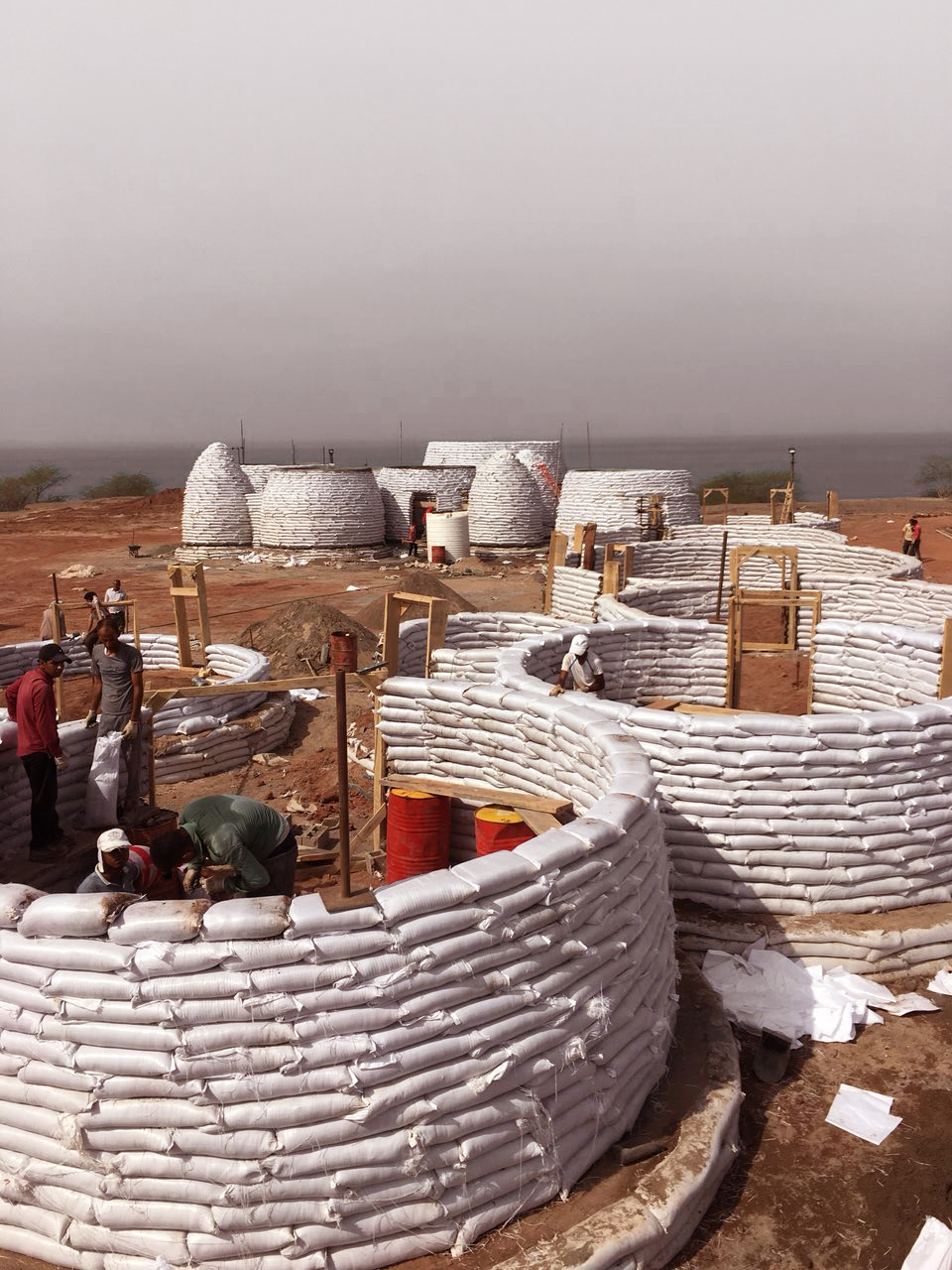
- Materials: Use of Nader Khalili’s Superadobe technique and sustainable materials.
- Permeability: Elimination of perimeter walls to maintain ecosystem integration.
- Setbacks: A 71-meter distance from the high-tide line.
Socio-Economic Strategies
- Employment: Jobs for 120 local residents.
- Empowerment: Training in construction, management, and hospitality.
- Local Support: Support for cultural events and artists.
Social Impact Strategies
- Workshops on biodiversity awareness
- Wildlife mapping for visitors
- Community use of Typeless complex
- Support for cultural programming
Participatory Conservation Strategies
- Collaboration with NGOs and environmental groups
- Stray dog management and gazelle surveys
- Development of a sustainable tourism framework
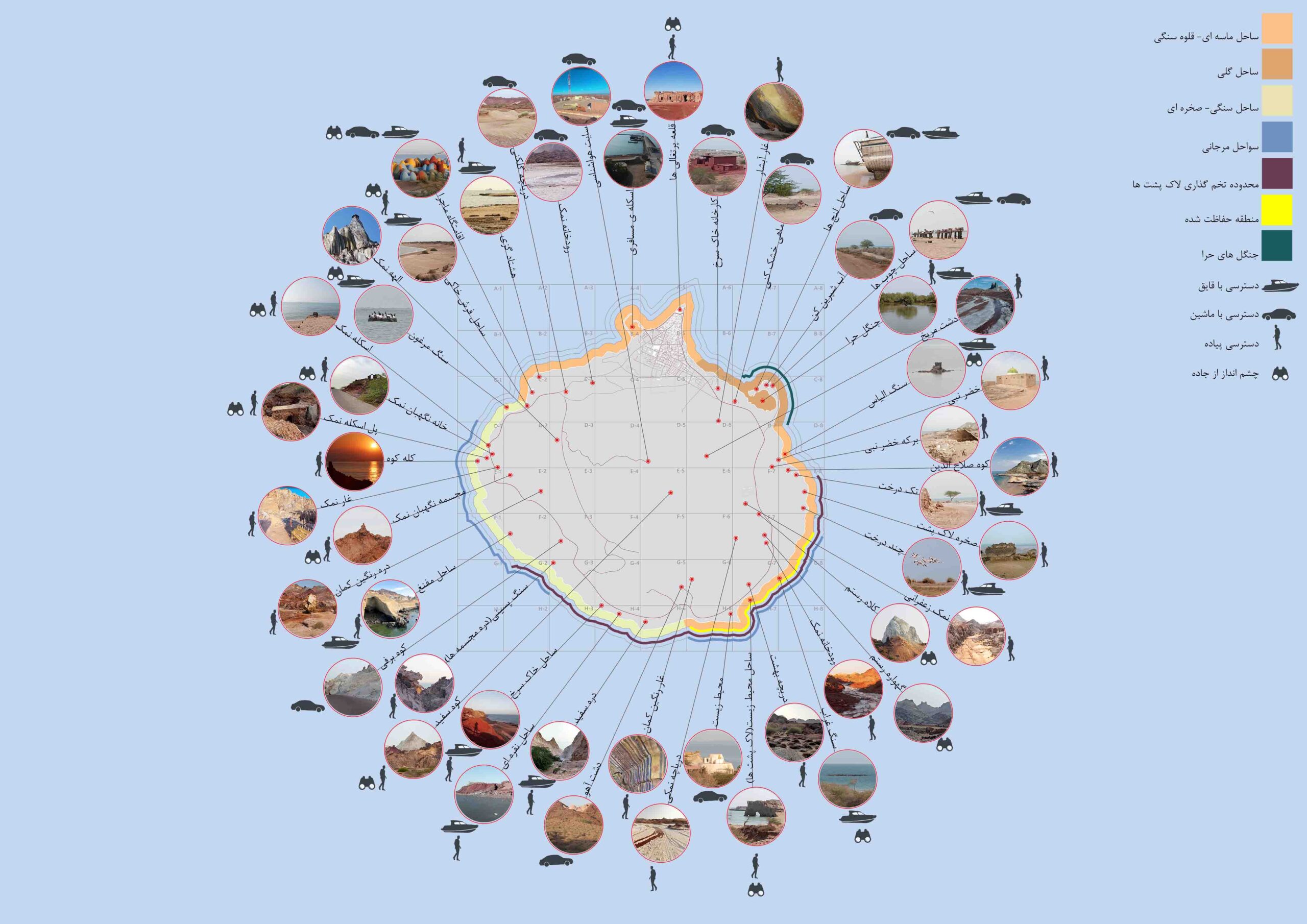
Technical Analysis: Turtle Habitats and Soil Quality
Sea turtle nesting depends on specific coastal conditions. Scientific data indicates that the Majara shoreline is unsuitable due to fine-grained, saline, and metal-rich soils, as well as its narrow width.
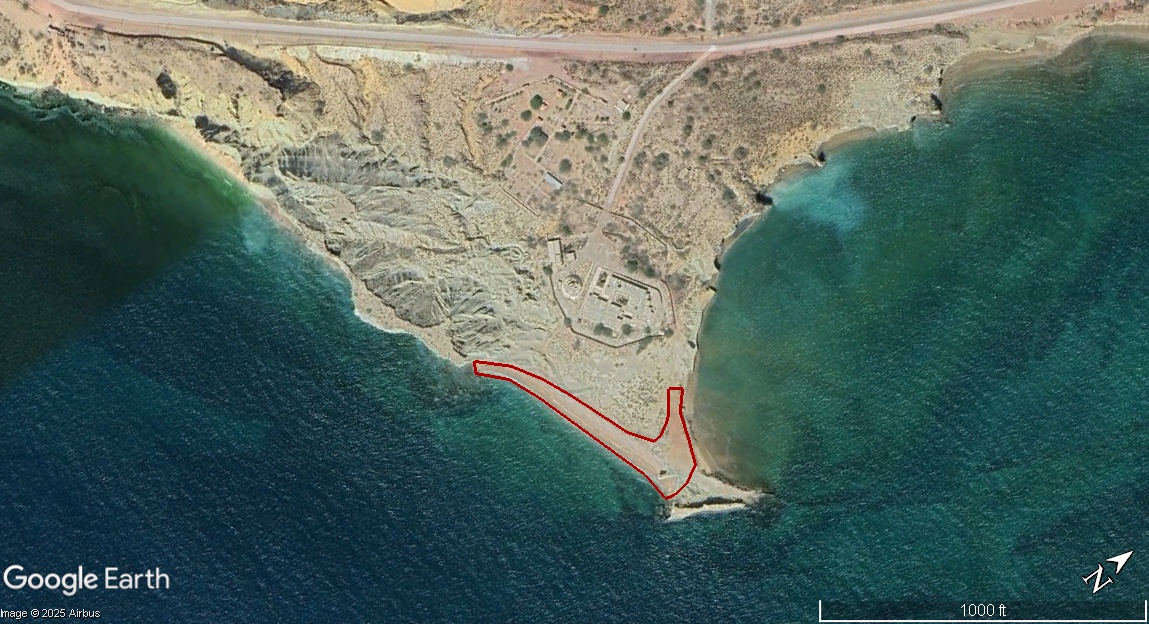
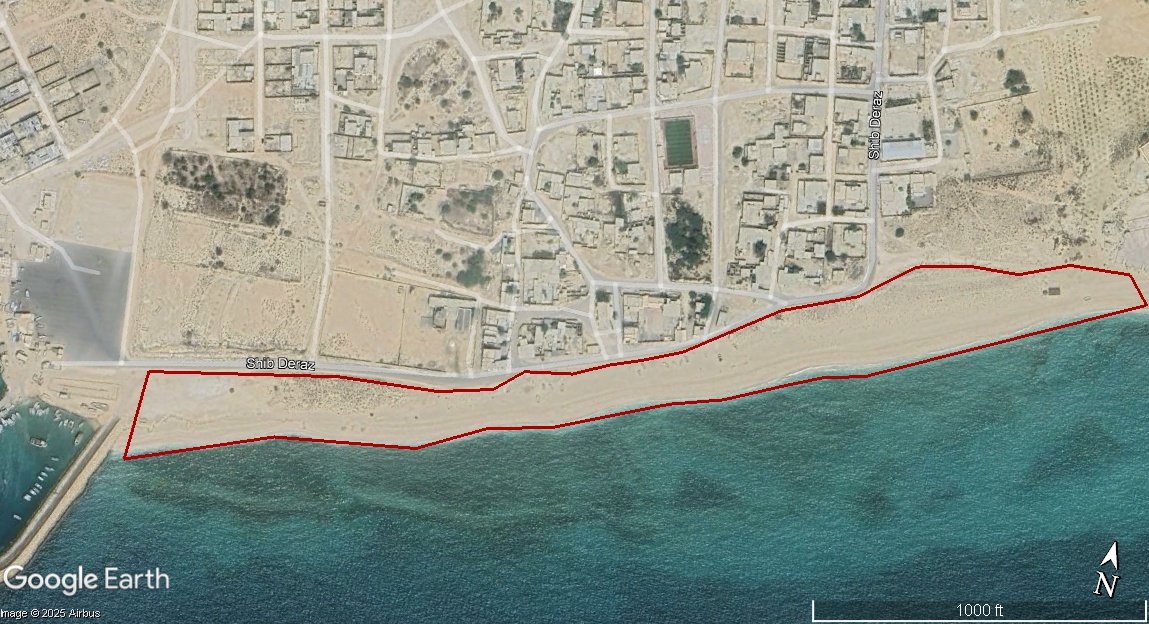
In contrast, southern and southeastern shores have light-colored, permeable, carbonate-rich sands suitable for nesting and are designated protected areas.
Vegetation and Restoration
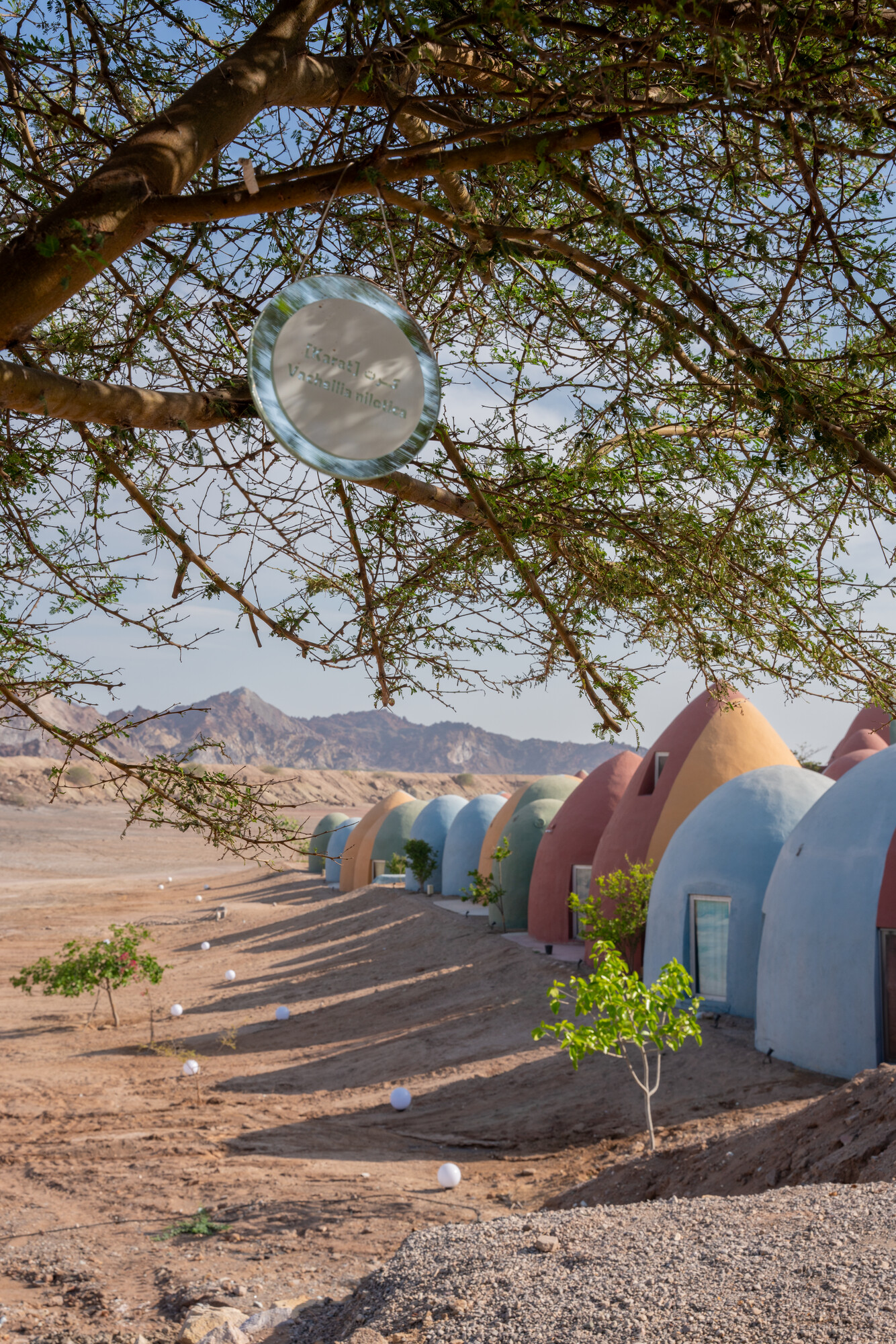
Prosopis juliflora, introduced in the 20th century, became invasive. At Majara, approximately 80 trees were removed and replaced with over 500 native species.
Waste and Water Management
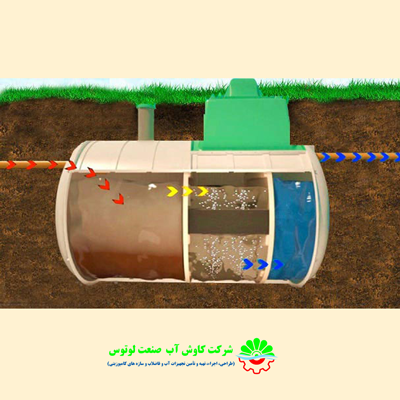
The site includes a wastewater treatment system capable of processing 20 cubic meters per day, along with a composting system handling up to 50 kg of organic waste daily.

Conclusion
The Aga Khan Award process involves rigorous field evaluation. While no project is without limitations, discussions of sustainability must be grounded in accurate data and transparent analysis.
We invite researchers, critics, and interested parties to engage further through field visits and dialogue on Hormuz Island.
_____

Salman Rassouli is an Iranian architect with a passion in green architecture and sustainable development. Starting his career path as an environmental activist, he gained a Master’s degree in environment and sustainable development from UCL in 2009. Further, he served as project manager in the NGO CENESTA, where he led projects such as “empowering nomadic people of Iran” through facilitating development of conservation plans and promotion of sustainable livelihoods. Since 2017, he started working as an architect and sustainability manager in ZAV architects, consulting the Majara and other Projects for sustainable design and environmental impact assessment.

Comments are closed.



This is 🌈 exactly what our community needed to hear right now in these times