
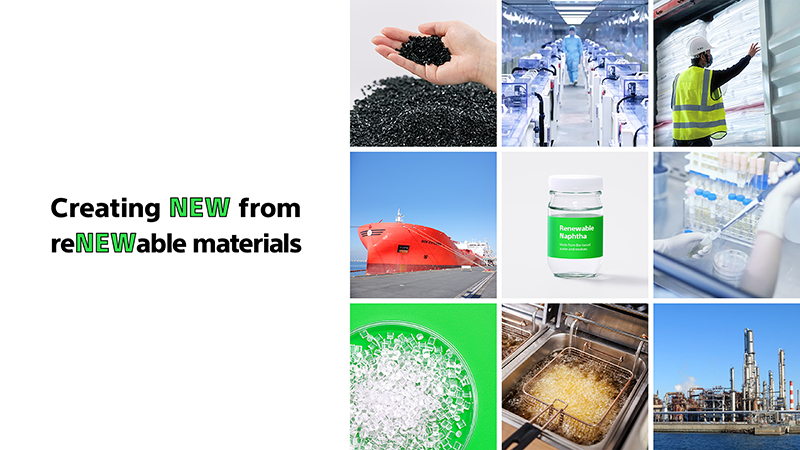
Sony builds the world’s first global supply chain for renewable plastics in high-performance electronics

Sony creates a new bioplastic pipeline and alliance. Image: courtesy.

For years, consumer electronics companies have talked about reducing plastic. What’s been missing is a way to do it without compromising performance, safety, or scale. Of course we’ve been faithful on reporting on novel technology and applications of bio-plastics, that used by Stella McCartney, which is made from mushrooms, or bio-plastics made by Tipa. But this is a drop in the plastic bucket.

This week, Sony Corporation announced what may be one of the most consequential, and least flashy, breakthroughs in sustainable manufacturing: the creation of the world’s first fully visualized global supply chain for renewable plastics designed specifically for high-performance audio-visual products.

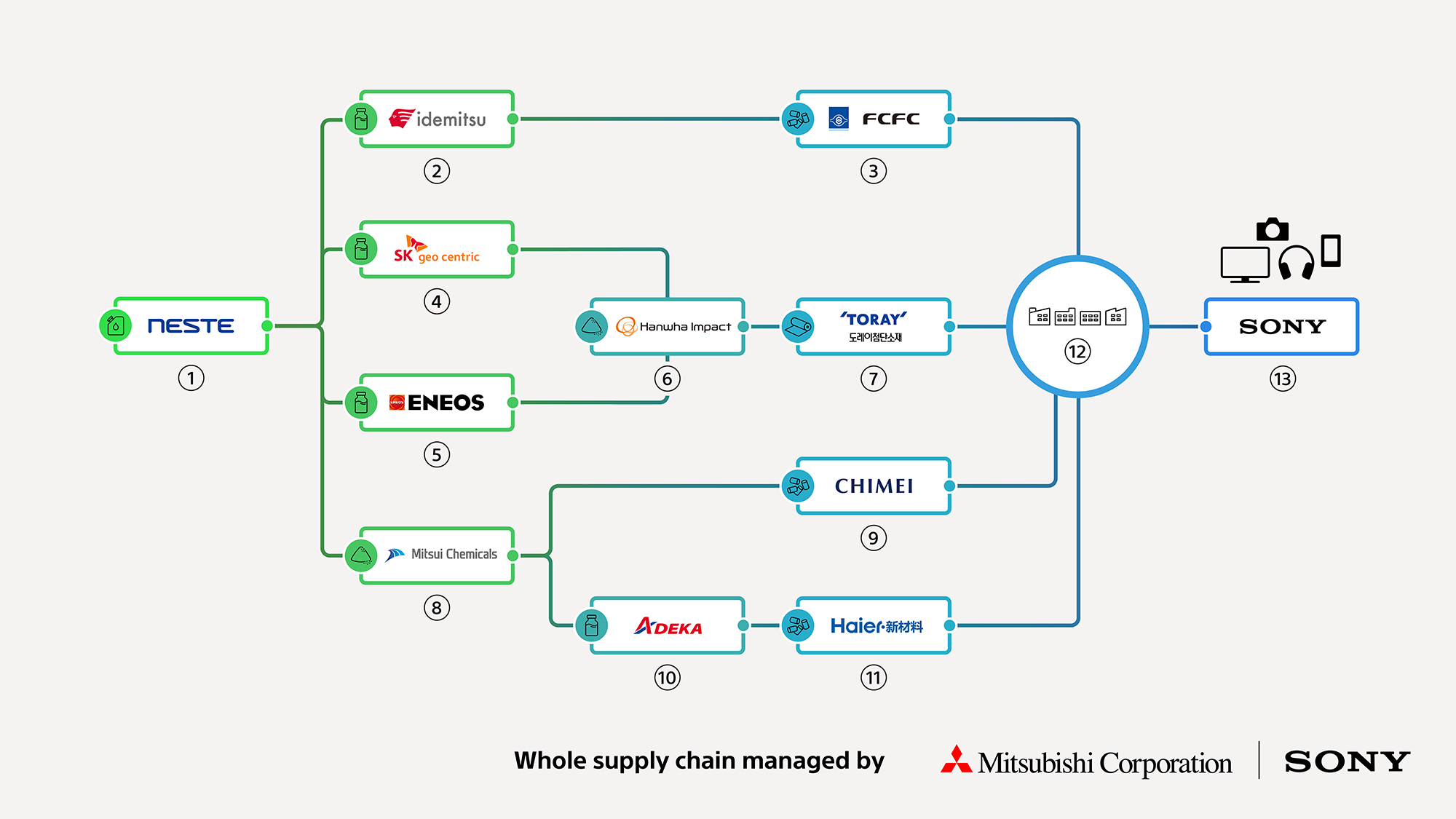
Fourteen companies across five countries and regions have joined in and these are spanning raw materials, chemicals, polymers, additives, and manufacturing. They have aligned to replace fossil-based plastics with biomass-derived alternatives, not in theory, but in products Sony plans to launch globally.

Why this matters more than recycled plastic
Sony creates a new bioplastic pipeline and alliance. Image: courtesy.

We know that most plastics do not get recycled, despite our best intentions to put our bottles in the recycling. With electronics, it is more complicated: Electronics are plastic-heavy for a reason. Casings, optical components, flame-retardant housings, and internal parts require tight tolerances, heat resistance, flame resistance, and optical clarity. These properties are difficult often impossible to create using mechanically recycled plastics alone.

That limitation has quietly stalled progress. Sony and its partners tackled the problem upstream by redesigning the entire materials pipeline, starting not with finished parts, but with renewable chemical feedstocks. Using a certified mass-balance approach, biomass-based inputs such as renewable naphtha are introduced at the earliest stages of chemical production, then tracked through each conversion step — from monomers to resins to finished components.

The result: plastics with the same performance characteristics as virgin fossil-based materials, but with a significantly lower carbon footprint.

One of the most important aspects of the initiative is transparency. High-performance plastics typically pass through dozens of opaque steps, making it nearly impossible to calculate or verify emissions. By mapping and fixing the supply chain end-to-end, Sony and its partners can now track greenhouse gas emissions across the entire lifecycle, enabling real carbon accounting rather than estimates or offsets.

The supply chain includes chemical and materials heavyweights such as Mitsubishi Corporation, Neste Corporation, Toray Industries, Mitsui Chemicals, Idemitsu Kosan, ENEOS, Hanwha Impact, Formosa Chemicals & Fibre, and SK Geo Centric, among others.

Each partner handles a precise step: renewable naphtha, styrene monomer, para-xylene, PET resin, polycarbonate resin, flame retardants, and PC/ABS blend, all engineered to meet electronics-grade requirements.

This level of coordination is rare, and that’s why the announcement matters. It shows that renewable plastics are no longer a niche materials problem, but a solvable industrial systems problem.

Sony frames the initiative as part of its “Creating NEW from reNEWable materials” project, aligned with the company’s broader Road to Zero environmental plan targeting net-zero environmental impact by 2050.


 

Karin Kloosterman
Karin Kloostermanhttp://www.greenprophet.com
Karin Kloosterman is an award-winning journalist, innovation strategist, and founder of Green Prophet, one of the Middle East’s pioneering sustainability platforms. She has ranked in the Top 10 of Verizon innovation competitions, participated in NASA-linked challenges, and spoken worldwide on climate, food security, and future resilience. With an IoT technology patent, features in Canada’s National Post, and leadership inside teams building next-generation agricultural and planetary systems — including Mars-farming concepts — Karin operates at the intersection of storytelling, science, and systems change. She doesn’t report on the future – she helps design it. Reach out directly to [email protected]

LEAVE A REPLY

Please enter your comment!
Please enter your name here

TRENDING

Microplastics Are Becoming Superbug Highways — New Study Warns Beachgoers to Wear Gloves

Prof. Pennie Lindeque added that microplastics “act as carriers for antimicrobial-resistant bacteria, enhancing their survival and spread… each particle becomes a tiny vehicle capable of transporting pathogens from sewage works to beaches, swimming areas and shellfish-growing sites.”

Scientists Crack the Code for Low-Cost, Low-Carbon Plastic Recycling

While enzymatic recycling offers hope for managing existing plastic waste, scientists and environmental advocates agree it must be paired with the development of bio-based plastics—materials made from renewable biological sources like corn starch, sugarcane, or algae. Unlike conventional plastics derived from fossil fuels, bio-based alternatives can dramatically reduce carbon emissions at the production stage and are often compatible with closed-loop recycling.

Toxins in tiny bodies: American children are carrying invisible chemical burden

Chemical exposures were highest among younger toddlers and racial/ethnic minorities, reflecting systemic environmental injustice. While some older chemicals like triclosan and certain phthalates are decreasing (likely due to public pressure and reformulations), new unregulated substitutes like DINCH and emerging pesticides are on the rise.

Microplastics in Your Food Links Nanoplastics to Liver Damage and Glucose Imbalance

Next time you reach for a plastic-wrapped snack or sip from a disposable cup, remember: the real cost may not show up on the price tag, but in your liver enzymes or your glucose test.

Korea’s New Plastic Eats Itself in the Ocean—Without Losing Its Strength

Nylon’s dirty little secret? It sticks around. From fishing nets to yoga pants, nylon takes decades to degrade—especially in oceans—choking marine life and clogging ecosystems. But a Korean research team has just pulled off a sustainability moonshot: a new polyester-amide (PEA) plastic that acts like nylon, but disappears like magic—breaking down 92% in real ocean water within a year.

6 Payment Processors With the Fastest Onboarding for SMBs

Get your SMB up and running fast with these 6 payment processors. Compare the quickest onboarding options to start accepting customer payments without delay.

Qatar’s climate hypocrisy rides the London Underground

Qatar remains a master of doublethink—burning gas by the megaton while selling “sustainability” to a world desperate for clean air. Wake up from your slumber people.

How Quality of Hire Shapes Modern Recruitment

A 2024 survey by Deloitte found that 76% of talent leaders now consider long-term retention and workforce contribution among their most important hiring success metrics—far surpassing time-to-fill or cost-per-hire. As the expectations for new hires deepen, companies must also confront the inherent challenges in redefining and accurately measuring hiring quality.

8 Team-Building Exercises to Start the Week Off 

Team building to change the world! The best renewable energy companies are ones that function.

Thank you, LinkedIn — and what your Jobs on the Rise report means for sustainable careers

While “green jobs” aren’t always labeled as such, many of the fastest-growing roles are directly enabling the energy transition, climate resilience, and lower-carbon systems: Number one on their list is Artificial Intelligence engineers. But what does that mean? Vibe coding Claude? 

Somali pirates steal oil tankers

The pirates often stage their heists out of Somalia, a lawless country, with a weak central government that is grappling with a violent Islamist insurgency. Using speedboats that swarm the targets, the machine-gun-toting pirates take control of merchant ships and then hold the vessels, crew and cargo for ransom.

Leopoldo Alejandro Betancourt López Turned Ocean Plastic Into Profitable Sunglasses

Few fashion accessories carry the environmental burden of sunglasses. Most frames are constructed from petroleum-based plastics and acrylic polymers that linger in landfills for centuries, shedding microplastics into soil and waterways long after they've been discarded. Leopoldo Alejandro Betancourt López, president of the Spanish eyewear brand Hawkers, saw this problem differently than most industry executives.

Why Dr. Tony Jacob Sees Texas Business Egos as Warning Signs

Everything's bigger in Texas. Except business egos.  Dr. Tony Jacob figured...

Related Articles

Popular Categories