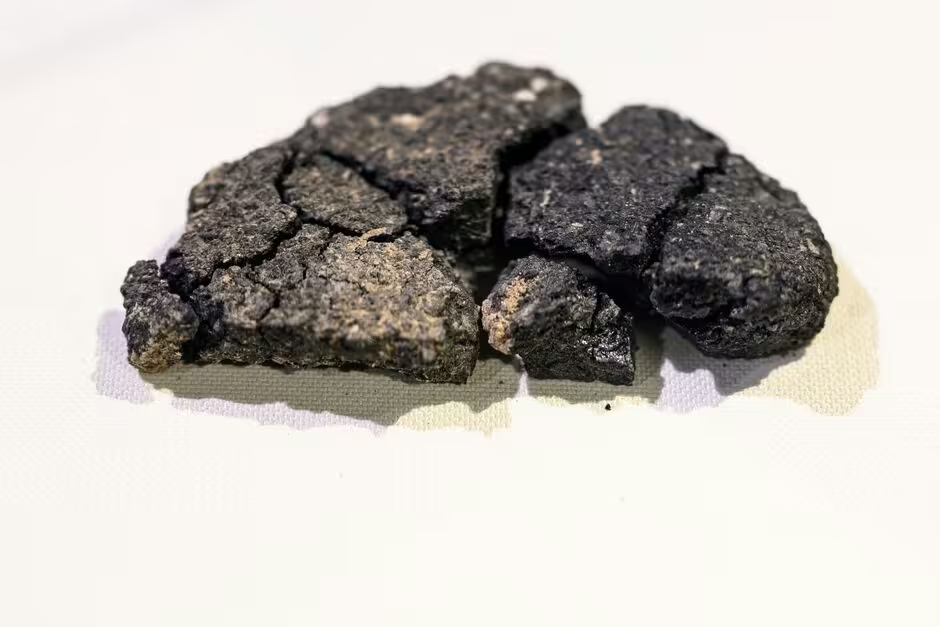
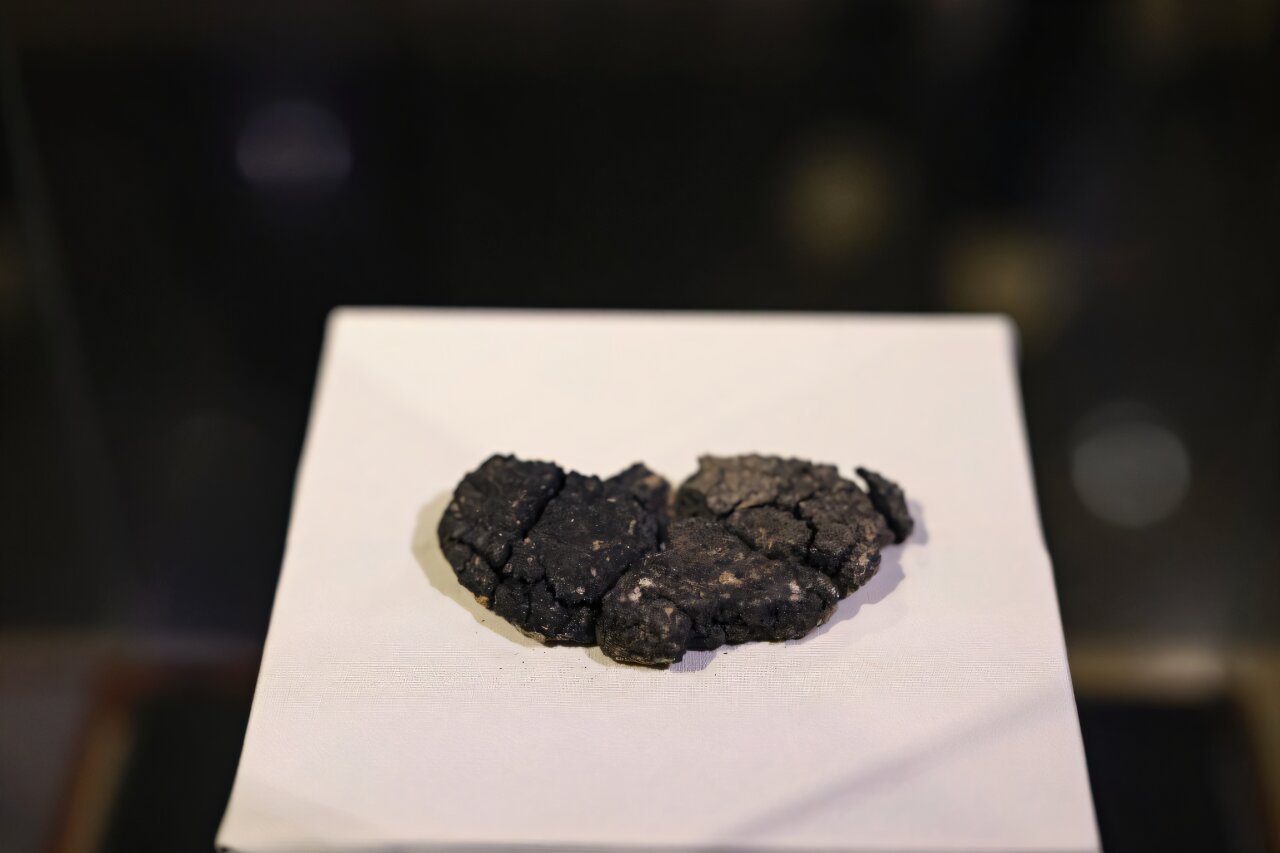
Archaeologists working at the site of Küllüoba Höyüğü in the province of Eskişehir, central Anatolia, Turkey uncovered a charred loaf of bread dating to the Early Bronze Age (c. 3300 BCE). The 5,000 year old loaf gives us insights into ancient diets and how we can eat more sustainably today.
The loaf, according to Turkish news sources, was buried beneath the threshold of a house, and because it had been burnt and then buried, it was remarkably well-preserved — enabling detailed analysis.
Lab analysis of the remains found that the bread was made from coarsely-ground emmer wheat flour (an ancient hulled wheat variety), combined with lentil seeds, and used a leaf of an as-yet-unidentified plant as a kind of natural leavening or fermentation agent.
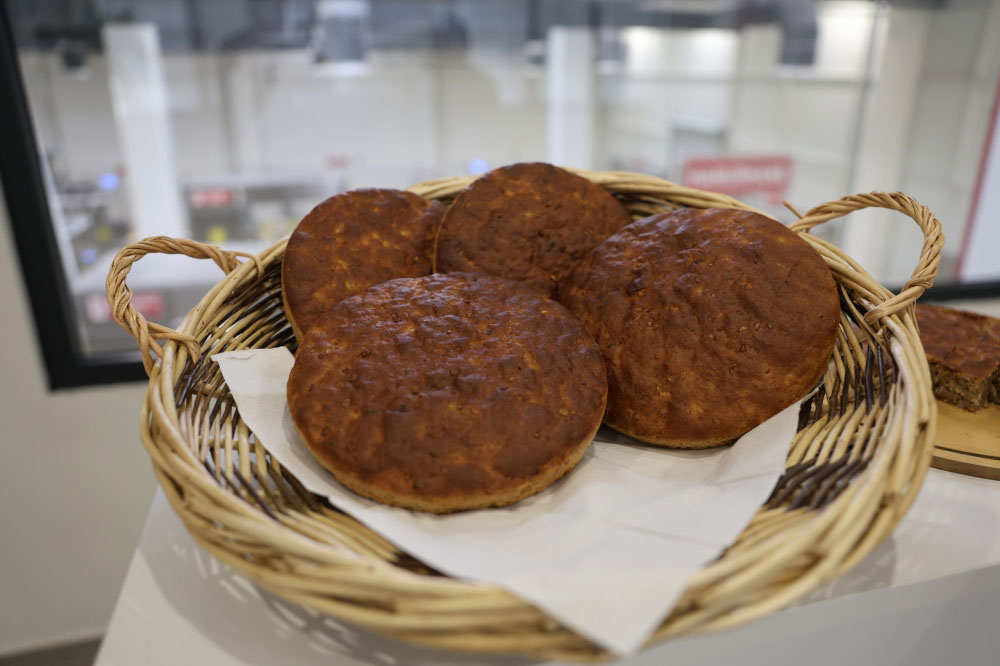
After the discovery, the local municipal bakery (Halk Ekmek in Eskişehir) worked with the archaeological team to recreate the bread, using similar ingredients — in particular substituting a close analogue, the naturally low in gluten ancient wheat variety Kavılca wheat, when original emmer seeds were no longer available.
From a municipal press release (in Turkish) from the Eskişehir Metropolitan Municipality:
“Inspired by the 5,000-year-old bread unearthed at Küllüoba Höyük, the Küllüoba bread is made from ancestral grains such as Kavılca, Khorasan, and Gacer, ground in a stone mill, together with lentil flour. It was noted that with its low-gluten, additive-free, and nutritious composition, this bread also contributes to today’s understanding of healthy eating.”
Emmer wheat is being revived in Israel.
The excavation director said: “This is the oldest baked bread to have come to light during an excavation, and it has largely been able to preserve its shape.”
The renewed bread has not just academic interest — local consumers have lined up to buy the round, flat loaves (≈12 cm diameter). It also sparked interest in reviving ancient wheat varieties that are more drought-resistant.
Home-Baking Recipe (Inspired by the Ancient Loaf)
The following Green Prophet recipe is adapted from the archaeological findings and modern recreation, but simplified for home use. It won’t be exactly the ancient product (especially due to modern ovens and ingredient availability), but it offers a close experience.
Yield: About 2 loaves (≈12 cm diameter each)
Ingredients:
200 g whole-grain emmer or spelt flour (if true emmer unavailable)
50 g bulgur (preferably coarse)
30 g red or green lentil flour (or finely ground lentils)
1 ½ tsp salt
300-330 ml lukewarm water
1 tsp active dry yeast (modern substitute for ancient natural leaf-ferment)
Optional: small pinch of sugar (to assist yeast)
Optional: a few drops of olive oil
Method:
In a large bowl, combine the emmer/spelt flour + bulgur + lentil flour + salt.
Dissolve the yeast (and sugar, if used) in half the water; let sit ~5 minutes until bubbly.
Pour the yeast mixture and the remaining water into the dry mix. Stir to form a soft dough.
Knead lightly for 5 to 7 minutes until the dough is smooth (it may be a bit denser than modern breads due to the coarse grains).
Cover the dough and leave to rise in a warm place for about 1 hour (or until roughly doubled).
After rising, divide into two equal pieces. On a lightly floured surface, shape each into a flat round about 12 cm in diameter and ~1–1.5 cm thick.
Preheat your oven to about 180 °C (350 °F) with a baking stone or heavy baking tray inside.
Once hot, place the rounds onto the stone or tray (you may score a shallow line on top). Bake for about 20-25 minutes, or until the crust is lightly browned and the loaf sounds hollow when tapped.
Remove, cool on a rack for 10 minutes, then slice and serve.
Baking Notes:
Because the original loaf was very flat and pancake-like, you should keep the shaping relatively thin.
The lentil flour adds protein and gives a nutty flavor; if you cannot get it, you may substitute finely ground lentils or omit (but you will reduce authenticity).
If you have access to an ancient grain flour (Kavılca wheat, spelt, einkorn, emmer) use it for more authenticity.
For authenticity you could bake on a heated stone or in a cast-iron skillet to get a rustic bottom crust.
The loaf is best eaten fresh, but will keep a day or two wrapped. We keep our bread in the freezer and heat it in the toaster so it keeps for weeks.
Why ancient bread and ancient recipes matter
The discovery in Turkey offers a rare physical example of bread from ~3300 BCE, giving insights into ancient diet, agriculture and ritual (the loaf was buried beneath a home’s threshold, suggesting a symbolic role). The revival in modern Turkey not only connects bread to cultural heritage, but promotes ancient grains (less‐common, drought-tolerant) and sustainable agriculture.
For home bakers today, experimenting with such a recipe gives a tangible link to thousands of years of bread-making tradition.
Here are three more examples of ancient or heritage-inspired recipes featured on Green Prophet, including one for ancient beer:
Mersu (oldest known dessert from Mesopotamia) — Learn how to make this simple date-and-nut confection, inspired by tablets over 3,700 years old. Link: Make Mersu, the oldest known dessert in history

Mead – The ancient honey wine returns — An article on how mead (fermented from honey and water) was enjoyed in ancient civilizations, with historical context and a modern revival. Link: Mead: The Ancient Wine Is Back Green Prophet

Ancient Mesopotamian Beer — A deeper dive into one of the world’s earliest beers (2-4% alcohol, brewed from barley/emmer and sweetened with dates/honey), including a basic home-brewing interpretation. Link: All About Ancient Mesopotamian Beer