

I met this usual scientist from Russia who was sure that people can hear with their skin. Maybe he wasn’t so nuts after all? Scientists have no found a mechanism that help mice hear, and it’s in their whiskers. This might explain how blind voles can get around. And it may have applications in robotics.
“Whiskers are so delicate that no one had thought of checking whether they produce sounds that mice are able to hear,” says team leader Prof. Ilan Lampl of Weizmann’s Brain Sciences Department.
The study offers a unique glimpse into the complexity of natural perception, which commonly involves input from multiple senses, in this case touch and hearing. In fact humans too combine these two types of cues more often than one might think. Imagine, for example, your fingers delving into a crowded bag to search for a candy bar and the sudden, welcome rustle of the wrapper.
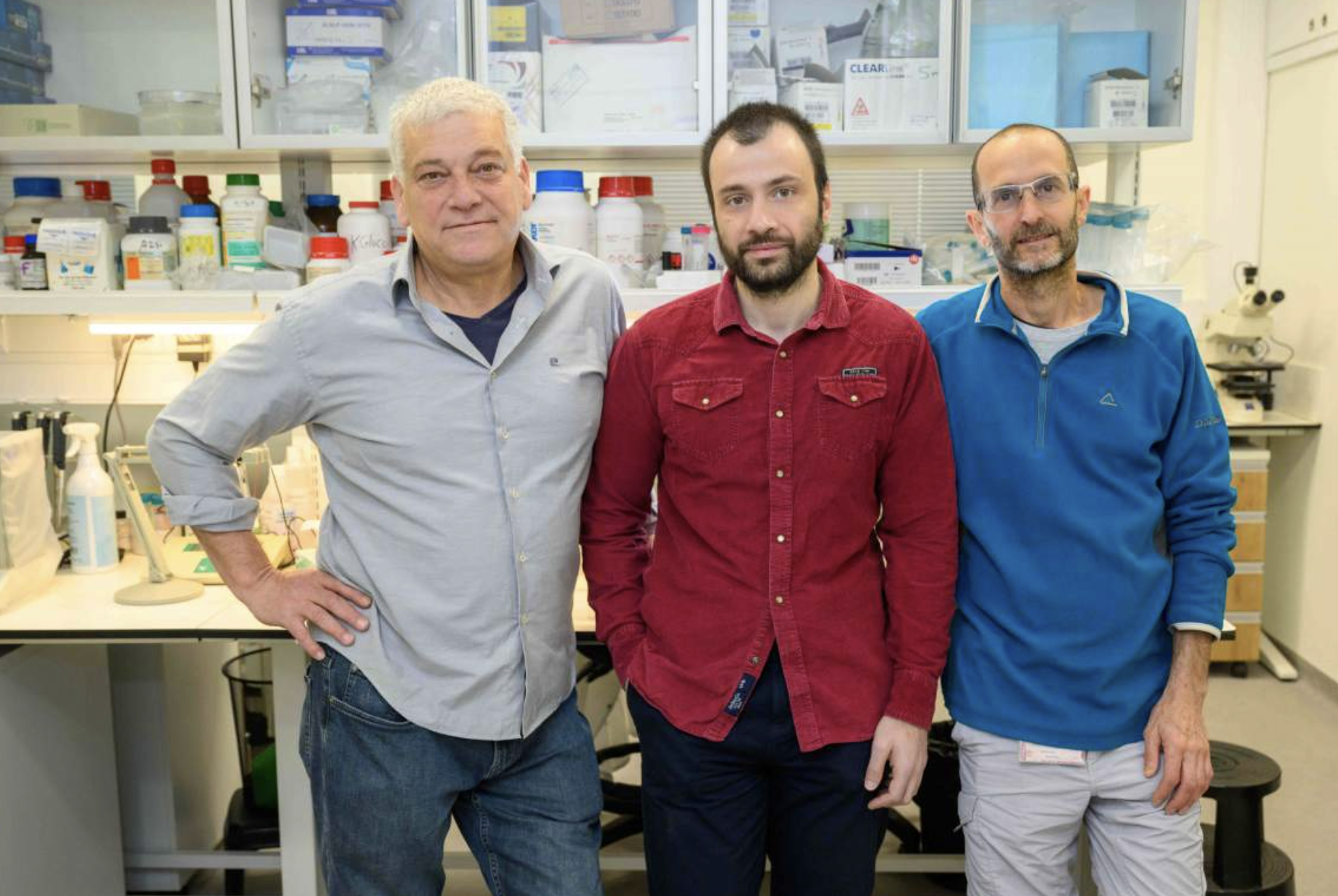
In the new study, Lampl’s team – led by Dr. Ben Efron, then a PhD student, who worked with Drs. Athanasios Ntelezos and Yonatan Katz – started out by recording the sounds made by whiskers probing different surfaces, including dried Bougainvillea leaves and aluminum foil.
The researchers used sensitive microphones that can record ultrasonic frequencies, which are beyond the upper limit of the audible range for humans. The same kind of microphones that can hear when plants speak. They placed the microphones some 2 centimeters from the source of the sound, about the same distance as from the mouse’s ear to its whiskers.
Next, the scientists made entirely different recordings: They measured neural activity in the auditory cortex of mice that were brushing their whiskers against different objects. The recordings showed that the auditory networks of the mice responded to the whisker-generated sounds, no matter how subtle.
When the researchers interrupted the pathways that convey the sensation of touch from the whiskers to the brain, the auditory cortex still responded to these sounds, showing that mice could process them as a separate sensory input, independent of the sense of touch.
Yet the fact that the mouse auditory system responds to certain noises does not necessarily mean that mice use them for sensing and can recognize objects by means of these noises. To explore this issue, the researchers resorted to AI. They first trained a machine-learning model to identify objects based on neural activity recorded from the auditory cortex of mice.
The AI successfully identified the correct objects from neuronal activity alone, suggesting that the mice might be able to similarly interpret these cues. Next, the researchers trained another machine-learning model to identify objects on the basis of recorded sounds made by whiskers probing these objects.
The two models – the one trained on neural activity alone and the one trained on sound recordings – were equally successful, which suggests that the neural responses to the whisking were caused directly by the sounds rather than by other sensory information, such as that coming from smell or touch.
“Our results show that the brain’s whisking network, called the vibrissa system, operates in an integrative, multimodal manner when the animals actively explore their surroundings,” Lampl sums up. This multimodal function, he explains, might have developed in the course of evolution to help mice hunt for prey or avoid their own predators.
“Since whisking generates much weaker sounds than does walking, a mouse could rely on it when, for example, choosing whether to walk across a brittle, drier field of crops versus a fresher, quieter one, to avoid being detected by an owl. Whisking could also help a mouse figure out whether a stem is hollow or sufficiently juicy and worthy of a bite.”
By breaking down the boundaries between touch and hearing, the study doesn’t just reveal something new about mice, it opens up a plethora of research directions for future explorations of the brain’s sensory systems, particularly mechanisms by which the brain integrates different types of sensory input. The new findings might also lead to practical innovations in technology.
The possibilities are endless. If the brain can simultaneously process sensory information from different sources, the same principles might be used in prosthetics, sensory rehabilitation after brain trauma or perhaps even for enhancing perception in visually impaired individuals. For instance, learning exercises for the blind already exploit the distinct sounds produced by the white cane upon contact with a surface, and this approach could be developed further.
Another potential area for prospective innovation is robotics. Says Efron: “Integrating different types of sensory input is a major challenge in the design of robotic systems. The mouse brain’s whisking system might provide inspiration for technologies that would address this challenge by, for example, helping to create early-warning sensors to prevent collisions, particularly when visibility is limited because of smoke or other visual obstructions.”
A new advance for Tesla’s Optimus humanoid that is expected to come out this year?