Foot-and-Mouth Disease Is Spreading Again — What That Means for Farmers, Food, and All of Us

Foot-and-mouth disease (FMD) or hoof-and-mouth disease (HMD) is an infectious and sometimes fatal viral disease that primarily affects even-toed ungulates, including domestic and wild bovids.[1][2] The virus causes a high fever lasting two to six days, followed by blisters inside the mouth and near the hoof that may rupture and cause lameness.
Image via Wikipedia
A new wave of foot-and-mouth disease (FMD) is spreading through Europe and the Near East, and experts at the Food and Agriculture Organization (FAO) are urging countries to take urgent steps to stop it. The recent detection of an unfamiliar strain of the virus in Iraq and Bahrain has raised alarms, especially since this version, known as SAT1, is not normally found in this region. It likely arrived from East Africa and could easily spread to nearby countries that are unprepared to handle it. It was recently found in Kuwait.

Slow Food and regenerative farming may be an answer.

FMD doesn’t infect humans, but the damage it causes to livestock—and to farmers’ livelihoods—is severe. The virus spreads quickly among animals like cattle, sheep, pigs, and goats. It causes fever and painful blisters on the mouth and feet, leading to lameness, less milk and meat production, and in some cases, sudden death in younger animals.

Europe, which is usually free of FMD, is now facing its worst outbreak since 2001. Germany detected a case in January 2025 and managed to contain it, but since then the disease has spread to Hungary and Slovakia, and is proving harder to stop. As a result, the UK has banned meat and dairy imports from affected countries, including Austria due to its proximity to Hungary.
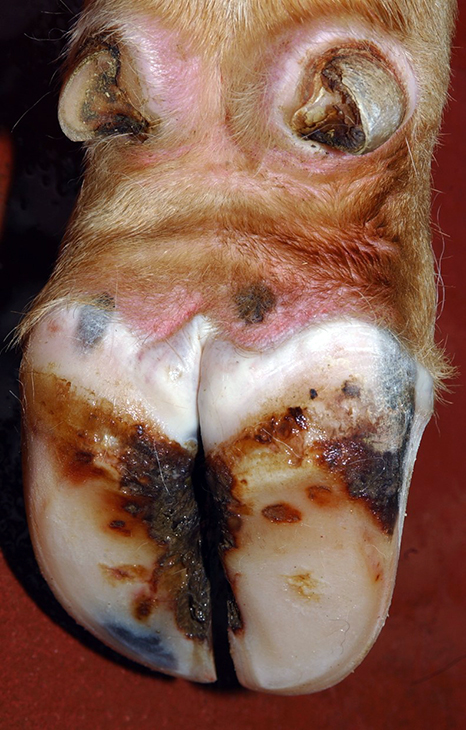
Foot and Mouth Disease on hoof, University of Oaklahoma
Foot and Mouth Disease on hoof, University of Oklahoma

The economic fallout from FMD is enormous. Even in countries where the disease is common, it causes an estimated $21 billion in losses every year—mostly from reduced productivity and the cost of vaccines. But when trade bans, culling, and market disruptions are included, the true financial impact is far greater. For small-scale farmers and rural communities, a single outbreak can be devastating.

In response, FAO is calling on all countries to strengthen their prevention and response efforts. This includes increasing public awareness, especially among farmers and market workers; improving on-farm biosecurity by keeping sick animals isolated and stopping the spread of contaminated equipment or people; and making sure that vaccines, where used, are carefully matched to the circulating virus strain.
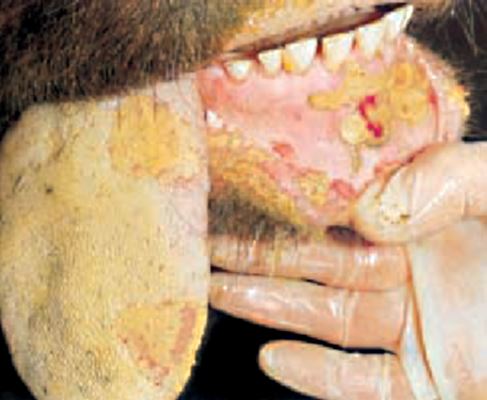
Foot and mouth disease, CABI Bioscience

Vaccination can be very effective, but it needs to be part of a larger strategy that includes active surveillance, testing, and fast action when new outbreaks are detected. Countries should also review their contingency plans to ensure they can respond quickly to new outbreaks. This includes having clear procedures for isolating infected areas, investigating the source, and carrying out targeted vaccinations.

FMD may not pose a health threat to people, but its impact on food systems is real. It affects what we eat, how much it costs, and the stability of trade between countries. The recent outbreaks are a reminder that animal diseases don’t respect borders—and that early detection, clear communication, and coordinated action are the best tools we have to protect both animals and livelihoods.

As the FAO warns, staying alert now could prevent much greater harm later.

LEAVE A REPLY

Please enter your comment!
Please enter your name here

TRENDING

Farm To Table Israel Connects People To The Land

Farm To Table Israel is transforming the traditional dining experience into a hands-on journey.

Lion’s Mane Mushroom Recipe

Eyeing the mushrooms for sale in the local supermarket,...

Slow food market Souk el Tayeb in Lebanon celebrates food and Eid El Barbara

What makes Souk El Tayeb in Lebanon remarkable is not only its insistence on local, seasonal produce, but its belief that dignity and sustainability must go hand in hand. Farmers are paid fairly. Villages are uplifted. Traditional recipes are kept alive not as nostalgia but as knowledge systems: real food is carbon-light, waste-free, and is adapted to the land.

Best cheese made without cow milk

Sheep, goat, and buffalo milk create some of the world’s most flavorful cheeses. And if you are going an extra step and can find it, camel milk cheese might be one to try.

Qatar’s climate hypocrisy rides the London Underground

Qatar remains a master of doublethink—burning gas by the megaton while selling “sustainability” to a world desperate for clean air. Wake up from your slumber people.

How Quality of Hire Shapes Modern Recruitment

A 2024 survey by Deloitte found that 76% of talent leaders now consider long-term retention and workforce contribution among their most important hiring success metrics—far surpassing time-to-fill or cost-per-hire. As the expectations for new hires deepen, companies must also confront the inherent challenges in redefining and accurately measuring hiring quality.

8 Team-Building Exercises to Start the Week Off 

Team building to change the world! The best renewable energy companies are ones that function.

Thank you, LinkedIn — and what your Jobs on the Rise report means for sustainable careers

While “green jobs” aren’t always labeled as such, many of the fastest-growing roles are directly enabling the energy transition, climate resilience, and lower-carbon systems: Number one on their list is Artificial Intelligence engineers. But what does that mean? Vibe coding Claude? 

Somali pirates steal oil tankers

The pirates often stage their heists out of Somalia, a lawless country, with a weak central government that is grappling with a violent Islamist insurgency. Using speedboats that swarm the targets, the machine-gun-toting pirates take control of merchant ships and then hold the vessels, crew and cargo for ransom.

Leopoldo Alejandro Betancourt López Turned Ocean Plastic Into Profitable Sunglasses

Few fashion accessories carry the environmental burden of sunglasses. Most frames are constructed from petroleum-based plastics and acrylic polymers that linger in landfills for centuries, shedding microplastics into soil and waterways long after they've been discarded. Leopoldo Alejandro Betancourt López, president of the Spanish eyewear brand Hawkers, saw this problem differently than most industry executives.

Why Dr. Tony Jacob Sees Texas Business Egos as Warning Signs

Everything's bigger in Texas. Except business egos.  Dr. Tony Jacob figured...

Israel and America Sign Renewable Energy Cooperation Deal

Other announcements made at the conference include the Timna Renewable Energy Park, which will be a center for R&D, and the AORA Solar Thermal Module at Kibbutz Samar, the world's first commercial hybrid solar gas-turbine power plant that is already nearing completion. Solel Solar Systems announced it was beginning construction of a 50 MW solar field in Lebrija, Spain, and Brightsource Energy made a pre-conference announcement that it had inked the world's largest solar deal to date with Southern California Edison (SCE).

Related Articles

Popular Categories