
Green Polyethylene: The Plant-Based Plastic That’s Replacing Oil

SABIC’s Trucircle PE used for greenhouse roofing

As plastic pollution and fossil fuel dependence intensify, one material is gaining momentum as a scalable, low-carbon alternative: green polyethylene. Made from renewable biomass like sugarcane, wheat, or beet, green polyethylene (Green PE) is a bio-based version of the world’s most used plastic—chemically identical to conventional polyethylene, but with dramatically lower greenhouse gas emissions. It offers a rare opportunity: a drop-in solution that works in existing systems without the environmental cost of oil-based plastics.

With governments and companies searching for climate solutions, the case for investing in green plastic infrastructure and research has never been stronger.

What Is Green Polyethylene?

Green PE is produced using ethanol derived from renewable sources—primarily sugarcane in Brazil, but also wheat grain and beet in Europe. It behaves the same as traditional polyethylene: it’s durable, moldable, and recyclable. The difference lies in its feedstock and carbon footprint. While not biodegradable, Green PE is a key player in the circular economy: it sequesters carbon during crop growth and reduces life-cycle emissions when used and recycled responsibly.

The Major Companies Driving the Transition

Braskem: The Sugarcane Giant
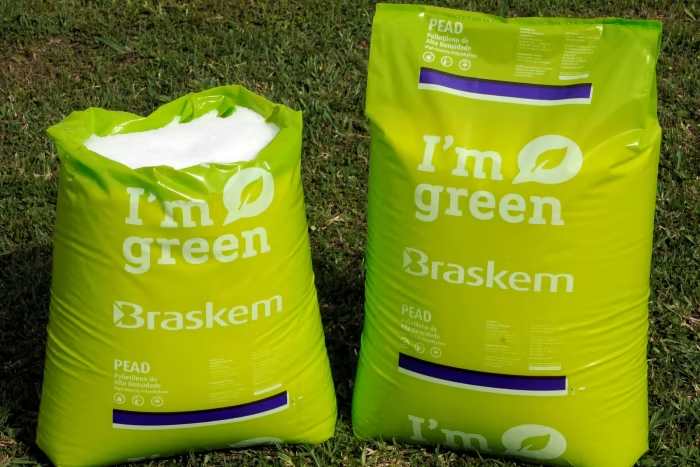
Braskem: The Sugarcane Giant
Braskem: plastics from sugar

Based in Brazil, Braskem pioneered large-scale Green PE production in 2010 with ethanol sourced from responsibly grown sugarcane. Their “I’m Green” polyethylene is now used globally in packaging, cosmetics, and consumer goods, and the company claims its production process results in a carbon-negative footprint.

Neste and IKEA: From Waste Oils to Renewable Plastics

Neste refinery switching over to SAF
Neste refinery in Finland switching to SAF

Finnish renewables company Neste teamed up with IKEA to develop bio-based plastics made from waste oils, fats, and forest residues. While not exclusively Green PE, their work demonstrates how industrial waste can become raw material for durable, climate-conscious plastic alternatives. (Neste is also developing a sustainable aviation fuel).

Avantium: PEF Bottles from Plant Sugars

Avantium N.V., a leading company in renewable and circular polymers, today celebrated the Official Opening Ceremony of its FDCA Flagship Plant in Delfzijl, the Netherlands. The plant opening was officiated by Her Majesty Queen Máxima of the Netherlands, in the presence of (intern)national and local dignitaries, partners and Avantium employees
Avantium N.V., a leading company in renewable and circular polymers, today celebrated the Official Opening Ceremony of its FDCA Flagship Plant in Delfzijl, the Netherlands. 

Amsterdam-based Avantium has developed PEF, a 100% plant-based polymer derived from sugars found in wheat and corn. With superior barrier properties and a faster degradation profile than PET, Avantium’s plastic bottles are poised to disrupt the food and beverage packaging sector.

SABIC: A Fossil Giant Turning Circular
Saudi Arabia’s SABIC, one of the world’s largest petrochemical firms, is now manufacturing certified renewable polyolefins—including Green PE—using second-generation bio-feedstocks like used cooking oil. It’s a strong signal that even fossil giants are moving toward a circular model.

Dow: Scaling Bio-Based Plastics
Dow plastics: providing the disease and the cure

Dow, a legacy name in fossil-based plastics, and a chemical company known for creating the disease and now the cure, is investing in bio-based polyethylene to meet growing demand for sustainable materials. The American company has collaborated with partners to test Green PE in large-scale applications, especially in flexible packaging and industrial materials.

Why This Matters to the Planet Now

The plastics industry accounts for 3–4% of global emissions, and demand is expected to triple by 2060. Green PE could reduce emissions by up to 80% compared to fossil-based PE when produced from sustainable sources. As bans on single-use plastics expand and Extended Producer Responsibility (EPR) laws grow, companies need viable, low-emission alternatives.

Green polyethylene isn’t perfect. It’s not biodegradable, and large-scale production raises questions around land use and food competition. But as fossil-based plastic becomes a liability—for climate, health, and brand reputation—Green PE offers a ready-now material with measurable benefits.

What’s needed:
* Investment in second-generation feedstocks (like algae and agricultural waste),
* Better recycling infrastructure, especially in the Global South,
* Policy incentives for low-carbon plastics over virgin fossil resins.

The difference between green PE and fully compostable polymers

Green PE is chemically identical to fossil-based polyethylene—a long-chain polymer with strong carbon-carbon bonds—made from plant-based ethanol (e.g., sugarcane). It’s designed to be recyclable, not biodegradable, so it behaves just like conventional plastic in use and waste streams.

This bra is edible
This bra in a co-production by Balena is made from a plastic that decomposes, but is it edible?

Companies like Balena and Tipa use biodegradable or compostable polymers, often designed with weaker ester or amide bonds that microorganisms can break down. Balena is all over the news collaborating with brands such as Stella McCartney, VivoBarefoot, Pangaia, and Ecco to develop compostable, fashion-forward materials.

TIPA and Wyld are teaming up to package legal edibles in home-compostable laminate and take steps to keep hard-to-recyclable, single-use flexible plastics out of the environment.
TIPA and Wyld are teaming up to package cannabis edibles in home-compostable laminate and take steps to keep hard-to-recyclable, single-use flexible plastics out of the environment.

These materials may include PLA (polylactic acid), PHA (polyhydroxyalkanoates), or proprietary bio-elastomers, which are engineered to decompose under composting conditions (industrial or home).


Karin Kloosterman
Karin Kloostermanhttp://www.greenprophet.com
Karin Kloosterman is an award-winning journalist, innovation strategist, and founder of Green Prophet, one of the Middle East’s pioneering sustainability platforms. She has ranked in the Top 10 of Verizon innovation competitions, participated in NASA-linked challenges, and spoken worldwide on climate, food security, and future resilience. With an IoT technology patent, features in Canada’s National Post, and leadership inside teams building next-generation agricultural and planetary systems — including Mars-farming concepts — Karin operates at the intersection of storytelling, science, and systems change. She doesn’t report on the future – she helps design it. Reach out directly to [email protected]

LEAVE A REPLY

Please enter your comment!
Please enter your name here

TRENDING

Microplastics Are Becoming Superbug Highways — New Study Warns Beachgoers to Wear Gloves

Prof. Pennie Lindeque added that microplastics “act as carriers for antimicrobial-resistant bacteria, enhancing their survival and spread… each particle becomes a tiny vehicle capable of transporting pathogens from sewage works to beaches, swimming areas and shellfish-growing sites.”

Waste Reform from the Ground Up: How Trash Balers Are Helping Cities Rethink Sustainability

If you’ve ever watched a recycling truck weaving through city streets, you’ve seen the problem firsthand. Most of what we call “recycling” still depends on long-distance transportation and centralized sorting facilities. Those systems are energy-intensive and prone to contamination — the dreaded mix of wet food, plastic wrap, and paper that renders recyclables useless.

Pilsok turns airbags into bags

Pilsok creates sustainable, eco-friendly bags from upcycled airbags, turning automotive waste into stylish, functional accessories. Their innovative approach to recycled materials supports the circular economy, reduces landfill waste, and promotes ethical fashion for a greener future.

Scientists Crack the Code for Low-Cost, Low-Carbon Plastic Recycling

While enzymatic recycling offers hope for managing existing plastic waste, scientists and environmental advocates agree it must be paired with the development of bio-based plastics—materials made from renewable biological sources like corn starch, sugarcane, or algae. Unlike conventional plastics derived from fossil fuels, bio-based alternatives can dramatically reduce carbon emissions at the production stage and are often compatible with closed-loop recycling.

Toxins in tiny bodies: American children are carrying invisible chemical burden

Chemical exposures were highest among younger toddlers and racial/ethnic minorities, reflecting systemic environmental injustice. While some older chemicals like triclosan and certain phthalates are decreasing (likely due to public pressure and reformulations), new unregulated substitutes like DINCH and emerging pesticides are on the rise.

Qatar’s climate hypocrisy rides the London Underground

Qatar remains a master of doublethink—burning gas by the megaton while selling “sustainability” to a world desperate for clean air. Wake up from your slumber people.

How Quality of Hire Shapes Modern Recruitment

A 2024 survey by Deloitte found that 76% of talent leaders now consider long-term retention and workforce contribution among their most important hiring success metrics—far surpassing time-to-fill or cost-per-hire. As the expectations for new hires deepen, companies must also confront the inherent challenges in redefining and accurately measuring hiring quality.

8 Team-Building Exercises to Start the Week Off 

Team building to change the world! The best renewable energy companies are ones that function.

Thank you, LinkedIn — and what your Jobs on the Rise report means for sustainable careers

While “green jobs” aren’t always labeled as such, many of the fastest-growing roles are directly enabling the energy transition, climate resilience, and lower-carbon systems: Number one on their list is Artificial Intelligence engineers. But what does that mean? Vibe coding Claude? 

Somali pirates steal oil tankers

The pirates often stage their heists out of Somalia, a lawless country, with a weak central government that is grappling with a violent Islamist insurgency. Using speedboats that swarm the targets, the machine-gun-toting pirates take control of merchant ships and then hold the vessels, crew and cargo for ransom.

Leopoldo Alejandro Betancourt López Turned Ocean Plastic Into Profitable Sunglasses

Few fashion accessories carry the environmental burden of sunglasses. Most frames are constructed from petroleum-based plastics and acrylic polymers that linger in landfills for centuries, shedding microplastics into soil and waterways long after they've been discarded. Leopoldo Alejandro Betancourt López, president of the Spanish eyewear brand Hawkers, saw this problem differently than most industry executives.

Why Dr. Tony Jacob Sees Texas Business Egos as Warning Signs

Everything's bigger in Texas. Except business egos.  Dr. Tony Jacob figured...

Israel and America Sign Renewable Energy Cooperation Deal

Other announcements made at the conference include the Timna Renewable Energy Park, which will be a center for R&D, and the AORA Solar Thermal Module at Kibbutz Samar, the world's first commercial hybrid solar gas-turbine power plant that is already nearing completion. Solel Solar Systems announced it was beginning construction of a 50 MW solar field in Lebrija, Spain, and Brightsource Energy made a pre-conference announcement that it had inked the world's largest solar deal to date with Southern California Edison (SCE).

Related Articles

Popular Categories