


Exclusive Interview: Pioneer Scientist Moshe Luz Dispels Myths and Reveals How Ivanpah’s Failure Could Stall Bold Investments in Green Tech
California is shutting down its $2.2 Billion CSP solar energy project called Ivanpah. And we wrote last week that investing in things that fail is worthwhile. One of the key scientists behind this technology, Moshe Luz, reached out to Green Prophet to dispel some myths and answer some questions. He argued that claims of bird deaths from CSP are only myths and that Ivanpah’s closure could hinder future renewable energy projects by discouraging investors from taking risks.
Luz emphasized the need for bold investments to advance renewable technology. He suggested that smaller, modular CSP plants could reduce financial risks and attract more investors. Luz also highlighted the importance of balancing innovation with financial sustainability. He noted that government subsidies play a crucial role in supporting renewable energy but warned that dependency on them could jeopardize long-term viability.
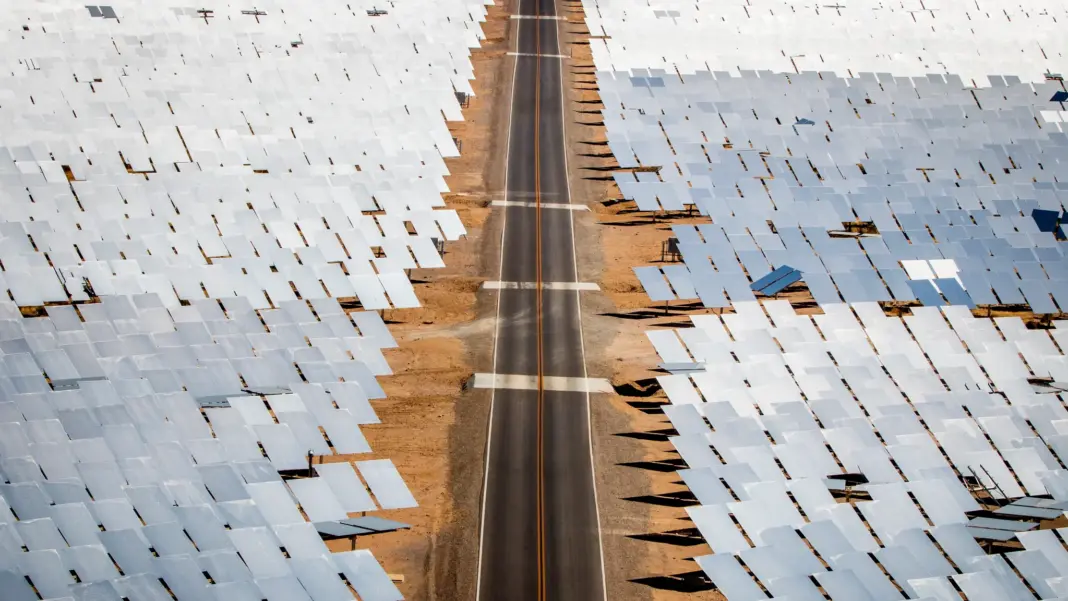
 The Ivanpah Solar Power Facility, a $2.2 billion concentrated solar plant in California, was once hailed as a breakthrough in renewable energy.
Regarding future energy sources, Luz expressed skepticism about the sole reliance on wind, solar, or hydro, pointing instead to nuclear and fusion energy as more sustainable alternatives. He emphasized the need for technological advancements in miniature turbines and molten salt systems to make CSP more cost-effective. His insights underline the challenges and potential of CSP in the evolving renewable energy landscape.
“A very interesting article,” he writes, “I’m not going to argue if the CSP is good or bad, but to reiterate the urban legend, ‘it is known to kill birds that pass by it,’ is absolutely bad because it is not true. All claims about ‘birds evaporating in the air,’ and other nonsense, were rejected scientifically. Whenever a white elephant such as Ivanpah is shutting down – it is bad.
“It means that the bankability of future projects is at risk, and without these daring initiatives the progress is going to be very slow. If investors are deterred from taking risks we will see only very small steps, playing safe. We need brave people and organizations that will be the first to cross the sea. For them it is not encouraging and they will tackle higher barriers,” he tells Green Prophet.
Moshe worked with BrightSource, the company that built the Ivanpah facility but left the company about 5 years ago.
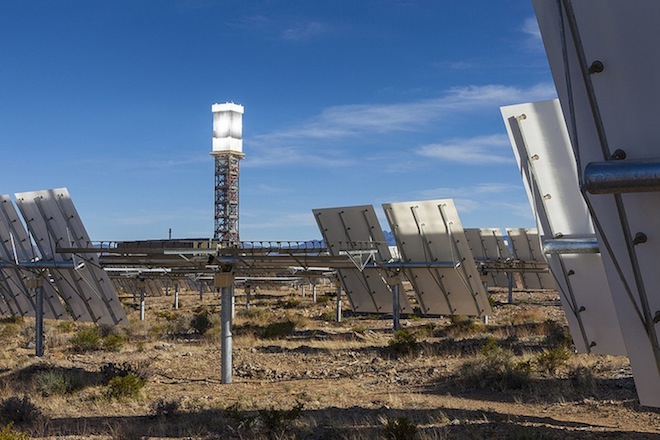
CSP stands for concentrated solar power. It is a technology that uses mirrors or lenses to focus the sun’s energy to a receiver point which heats a fluid to produce steam that drives a turbine to generate electricity. When combined with molten salt, the heated salt stores energy, allowing power generation even when the sun isn’t shining, improving reliability and efficiency. To note, Ivanpah runs steam in its pipes (not molten salt) and it does not have storage (Thermal Energy Storage).
We asked Moshe about the future of CSP and the bankability of new technologies that widen the possibilities for renewable energy.

Questions for Moshe Luz
You seem to suggest that the failure of Ivanpah is a blow to the bankability of future renewable projects. In your opinion, what could have been done differently to ensure its success, and how can future projects avoid similar pitfalls?
Some projects are “doomed” to end up as white elephants. If the technology is not mature enough, the results might fall below expectations, in some cases – while inflicting losses to the investors. This is the nature of the beast… It might be a result of bad design, wild assumptions, ignoring facts and data, very high and unjustified targets or going to the market before the “t”s are crossed and the “i”s are dotted – the designer / manufacturer freezes the design before the job is done because of the pressure to go to the market. There is no proven medicine for these diseases.

What do you think needs to change in the approach to solar power development to make it more cost-effective and viable in the long term?
The present CSP is very expensive and the risks are high. This is why a failure (and there were several) might deter investors from giving money to such plants. Building much smaller plants, where the risk is much smaller as well, will enable more investors to consider the risk as “tolerable”.
So – the solution might be the development of small, modular CSP plants.
You mention that brave organizations should take risks. In your experience, how do you balance the need for innovation with the importance of financial sustainability in such large-scale projects?
There are 2 ways: in the private market the profit from a successful project should be high enough to tempt an investor to take the risk. At the state level, the benefit (not necessarily the profit) should justify the sacrifice of public money in order to promote a project that might lead to better ones. Such was the pilot of “Solar II” that was financed as a test bench for molten salt CSP.
You believe that the future lies in nuclear and fusion energy rather than wind, solar, or hydro. Can you explain why you feel that way, and how do you see these technologies evolving in the coming decades?
The consideration should be balanced between the risks: all power sources affect the environment but the extent and magnitude should be calculated. We learn slowly about the influence of renewable sources on our planet.
For example: if the average efficiency of the PV after some degradation is 20%, it means that 80% is converted into heat. How is it in comparison to bare sand or even a green forest? Do we reduce the heat absorption or increase? What about the influence on fauna and flora? About birds, insects, wildlife etc.?
Remember the turmoil about the birds in Ivanpah – now there are claims that the blades of wind turbines are vibrating and affecting the birds as well. We have experience with nuclear power and it is not so bad although Chernobyl and Fukushima left a trail of devastation.
Imagine the possibility of a collapse of a huge dam, such as Hoover dam or Aswan dam – what will be the result? Can we guarantee that this will never happen? The 2 major advantages of nuclear power is the very small footprint they have and the ability to provide electricity with minimal pollution if maintained properly.
Could you share your thoughts on the role of government policies and subsidies in encouraging or hindering renewable energy advancements? Do you think current incentives are enough?
Please see my reply above about brave organizations. For sure a subsidy of renewable technology might promote their development. LUZ used the subsidy to justify the installation of its CSP plants, which were copied by dozens of other plants, but when the government stopped the money – the justification disappeared.
Yet – the technology survived. Ivanpah also used subsidies and the tower technology evolved from the innovative concept of heliostats field and power tower.
You’ve worked with BrightSource for many years. In hindsight, are there specific lessons learned from your time there that could help future CSP projects succeed?
One very important lesson: if you work on a technology that consumes so much money for each unit – you must work “lean and mean”. BrightSource was a very good place to work, but its burn rate was too high. In some cases it identified changes in the technology too late, which left it behind other competitors.
And above everything: these groundbreaking companies need A LOT OF MONEY!
You mention that climate change has always affected our lives and always will. What is your perspective on how human intervention through renewable energy can address current and future climate challenges?
I don’t hold myself to be an expert in climate changes or renewable energy. Yet, I’m old enough to remember the panic about global cooling in the 70s: it was assumed that the accumulation of ice in the poles will cause the seas to rise and flood the coasts… sounds familiar?
There was a plan to spread coal dust over the ice caps (from C130 airplanes) in order to increase the absorption of heat and thus melt the ice. Today, I’m not convinced that we are responsible for the changes. I read the book “Unsettled” by Steven Koonin and I am convinced that I’m not convinced: do we affect the changes that much, that it is in our hands to change the direction of the change?
I was also impressed by the book “The Famine Was Severe In The Land” by Arie Issar and Mattanya Zohar that claimed many years ago that the fluctuations in the climate in the Middle East caused geo-political changes – without human intervention in the climate. So – I hesitate to declare if we are the cause of the change and if we are a considerable factor in the direction and / or magnitude of the change.
As an expert in the field, what innovations in solar technology or energy storage do you find most promising for the future of CSP?
Without being an expert, I think that there are 2 technologies that might contribute to the CSP industry:
1). a miniature turbine or heat engine, not necessarily a steam turbine, in the size 1-10 MWth (megaWatt thermal). This will enable local small modular CSP plants to be installed where needed and
2). a steady improvement in the equipment for molten salt: pumps, valves, instrumentation. This, together with a reduction in the cost of material (pipes, heat exchangers, solar receivers), will enable the small units to turn into commodities. I’m not aware of any major change that will guarantee the future of CSP.
More about Moshe Luz
Moshe Luz is an accomplished engineering professional specializing in renewable energy, with a particular focus on molten salt thermal energy storage and concentrated solar power (CSP) systems. His last position was as the Molten Salt Director at Luminescent Solar Power Ltd. in Israel, he brings over two decades of leadership and project management experience to the renewable energy sector. He currently works as a freelance consultant.
Previously, Moshe was the Director of Construction for the Northern Sectors at NTA – Metropolitan Mass Transit System Ltd., overseeing infrastructure development for the light train in Israel’s Dan District. His expertise in complex engineering projects was further honed during his tenure at BrightSource Industries Israel (formerly Luz2), where he spent nearly nine years in various strategic roles. These included Project Manager and Product Manager, where he supervised the design, production, and supply of Molten Salt Solar Receivers for the Dubai DEWA solar tower, part of the Noor Energy 1 – 700MW CSP Project.
Moshe also played a pivotal role as Owner’s Engineer for the Ashalim Plot A Solar Plant in Israel, ensuring compliance with contractual obligations and performance standards. His leadership extended to managing the Solar Energy Development Center (SEDC) in Dimona, Israel, a test site for innovative solar receiver and heliostat technologies.
Earlier in his career, Moshe gained extensive project management experience in desalination and energy sectors with prominent companies such as Paz Oil Company, Bateman Litwin, and Oran Safety Glass OSG. His international exposure includes overseeing large-scale infrastructure and utility projects in Nigeria and managing multi-disciplinary engineering teams worldwide.
With a robust background in infrastructure, project management, and renewable energy innovation, Moshe Luz continues to be a driving force in advancing solar thermal technology and sustainable energy solutions.
In Hebrew, “luz” means almond, though in some editions of the Bible, it is translated as hazel.

 project, raising concerns about the future of CSP investments. Moshe Luz, a key scientist in the field, spoke to Green Prophet to address misconceptions and share insights. He argued that claims of bird deaths from CSP are myths and that Ivanpah's closure could hinder future renewable energy projects by discouraging investors from taking risks. Luz emphasized the need for bold investments to advance renewable technology.)