BMW partners with mineral miner SK tes to recycle electric batteries

SK tes recycles batteries
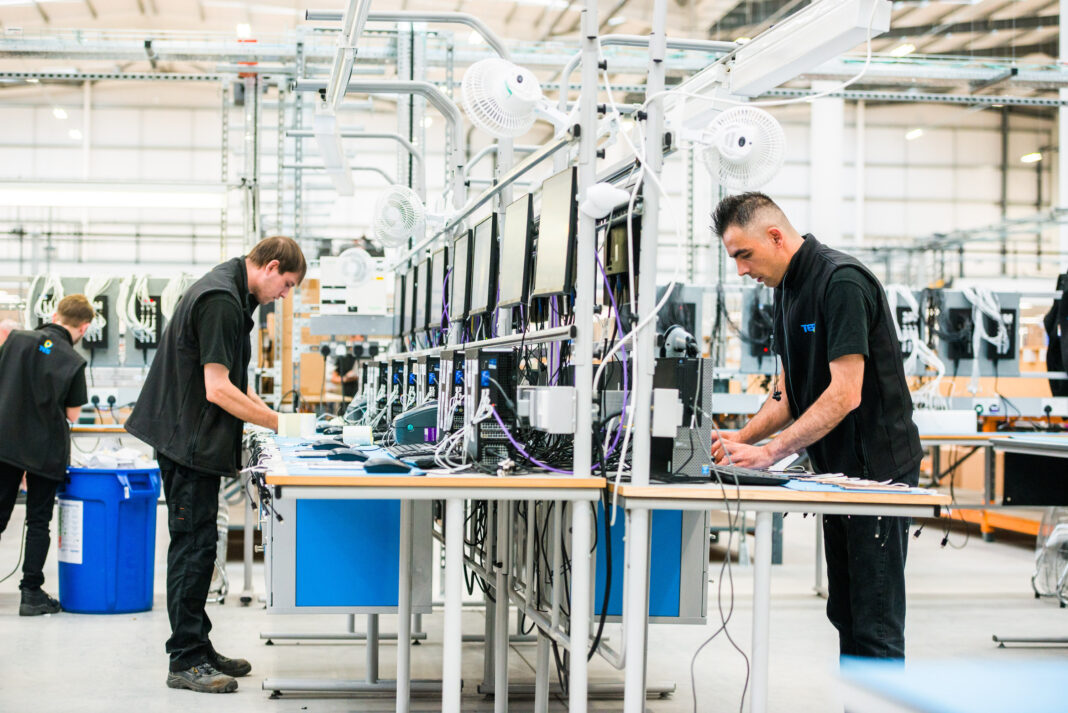
An SK tes urban mining plant

Ask any driver of a Tesla and you will find a happy customer. The cars look good, drive incredibly fast quickly, they cost a quarter of the price of petrol to run, and they have a fart cushion feature that makes every kid laugh.

With electric mobility continuing to gather pace especially in urban environments, recycling high-voltage batteries is increasingly under the spotlight. This is where urban miners, and companies that can recycle batteries and parts after a product’s first life is over.

Raw materials pulled from a BMW electric car battery.

After successfully launching a closed-loop recycling system for the reuse of raw materials from high-voltage batteries thanks to the BMW Brilliance Automotive Joint Venture in China in 2022, BMW has now hit another milestone on its journey to make cleaner, greener electric cars.

This past November, BMW launched a pan-European partnership with SK tes, a company that can mine valuable minerals such as cobalt, nickel and lithium from used batteries before returning them to the value chain to make new batteries.

BMW to recycle rare minerals from its electric car batteries with the company SK tes.
BMW to recycle rare minerals from its electric car batteries with the company SK tes. Images supplied by BMW

BMW to recycle rare minerals from its electric car batteries with the company SK tes. BMW to recycle rare minerals from its electric car batteries with the company SK tes. BMW to recycle rare minerals from its electric car batteries with the company SK tes.

This closed-loop system is set to expand to the car markets in the US-Mexico-Canada regions as early as 2026.

Its long-term partnership with SK tes sees the BMW Group directly involved in the practical recycling processes, allowing it to feed back valuable insights to the development departments: high-voltage batteries from BMW Group development, production and markets in Europe that are no longer fit for use are to be delivered to SK tes in what is the first step towards an effective and sustainable circular economy for batteries.

SK tes then converts the old batteries into high-quality metals that can be reintroduced to battery production. The latter process sees the batteries mechanically shredded, during which the metals are concentrated to leave a material called black mass.

The valuable materials, namely nickel, lithium and cobalt, are then recovered in a highly effective chemical process called hydrometallurgy. Among other things, these secondary raw materials will be used for the new GEN 6 drive train. Government groups like the Department of Energy are actively funding the development of mineral recovery technologies –– we recently reported on more than $20 million USD going toward funding the recycling of decommissioned wind turbines.

“Partnerships like this increase our efficiency in terms of the circular economy. In the closed-loop process, all partners mutually benefit from their experiences,” says Jörg Lederbauer, Vice President Circular Economy, Spare Parts Supply High Voltage Battery and Electric Powertrain at BMW AG. 

We interviewed Regenx on its business model. And how lucrative upcycling minerals can be as the world looks to dangerous alternatives such as deep sea mining to develop new sources of minerals like lithium which exist waiting to be pulled from existing end-of-life products.

“The promotion of circular economy is an important strategic topic for the BMW Group. The development of recyclable products, the increase of secondary materials in our components, and the closing of loops play an equally important role,” says Nadine Philipp, Vice President Sustainability Supplier Network at BMW AG. “And by the means of circular economy we are also increasing our resilience in the supply chains.”

The BMW Group follows the principles of Re:Think, Re:Duce, Re:Use, and Re:Cycle in the sense of a conservation of resources when it comes to circular economy.

From vehicle design and production to recycling and reuse: everything is geared towards ensuring BMW vehicles become a raw materials source for new cars once they reach the end of their useful life. One such example is the BMW Group’s Recycling and Dismantling Centre.

Over a period of 30 years now, the centre has developed processes and put them into practice, making key progress in parts and materials recycling.

Let’s hope a struggling Volkswagon will learn something from BMW in the face of Chinese cars flooding Europe.

::SK tes

Karin Kloosterman
Karin Kloostermanhttp://www.greenprophet.com
Karin Kloosterman is an award-winning journalist, innovation strategist, and founder of Green Prophet, one of the Middle East’s pioneering sustainability platforms. She has ranked in the Top 10 of Verizon innovation competitions, participated in NASA-linked challenges, and spoken worldwide on climate, food security, and future resilience. With an IoT technology patent, features in Canada’s National Post, and leadership inside teams building next-generation agricultural and planetary systems — including Mars-farming concepts — Karin operates at the intersection of storytelling, science, and systems change. She doesn’t report on the future – she helps design it. Reach out directly to [email protected]

TRENDING

China is one step closer to making artificial sun

Nuclear fusion is often described as the holy grail of clean energy: a process that could one day provide abundant power without carbon emissions or long-lived radioactive waste. It has so much promise, but it's difficult. This article on fusion explains why. But turning fusion into a practical energy source depends on solving a set of extremely difficult physics problems. One of the most important is how to keep plasma — a super-hot, electrically charged gas — dense, stable, and confined long enough to produce useful energy.

Global Emissions Keep Rising, But Scientists Say Peak is in Sight

At COP30 in Belém, Brazil, scientists delivered another stark...

Dubai overfishing: 13 years after Tafline’s warning

In 2012, Green Prophet sounded the alarm about depleted Gulf fish stocks and weak enforcement in Dubai. Revisit Tafline Laylin’s original piece here: Dubai Finally Gets Serious About Overfishing.

Europe’s Clean-Tech Pivot: Germany Leads Supply Chain Shift Amid €390B Investment Surge

Germany is cutting its dependence on Chinese wind turbine components by 2035, launching a major strategy to diversify its offshore wind supply chain. As Europe ramps up clean tech investments, this move marks a shift toward energy security and regional manufacturing resilience.

Probiotics from fermented foods can help you sleep

Chinese fermented foods have a rich history stretching back thousands of years, forming a core part of traditional diets and medicine. Staples like doubanjiang (fermented broad bean paste), douchi (fermented black soybeans), jiang (soy sauce-type pastes), fermented tofu, pickled vegetables, and rice wines such as Shaoxing wine are not only prized for their deep umami flavor but also valued for their digestive and health benefits.

Qatar’s climate hypocrisy rides the London Underground

Qatar remains a master of doublethink—burning gas by the megaton while selling “sustainability” to a world desperate for clean air. Wake up from your slumber people.

How Quality of Hire Shapes Modern Recruitment

A 2024 survey by Deloitte found that 76% of talent leaders now consider long-term retention and workforce contribution among their most important hiring success metrics—far surpassing time-to-fill or cost-per-hire. As the expectations for new hires deepen, companies must also confront the inherent challenges in redefining and accurately measuring hiring quality.

8 Team-Building Exercises to Start the Week Off 

Team building to change the world! The best renewable energy companies are ones that function.

Thank you, LinkedIn — and what your Jobs on the Rise report means for sustainable careers

While “green jobs” aren’t always labeled as such, many of the fastest-growing roles are directly enabling the energy transition, climate resilience, and lower-carbon systems: Number one on their list is Artificial Intelligence engineers. But what does that mean? Vibe coding Claude? 

Somali pirates steal oil tankers

The pirates often stage their heists out of Somalia, a lawless country, with a weak central government that is grappling with a violent Islamist insurgency. Using speedboats that swarm the targets, the machine-gun-toting pirates take control of merchant ships and then hold the vessels, crew and cargo for ransom.

Leopoldo Alejandro Betancourt López Turned Ocean Plastic Into Profitable Sunglasses

Few fashion accessories carry the environmental burden of sunglasses. Most frames are constructed from petroleum-based plastics and acrylic polymers that linger in landfills for centuries, shedding microplastics into soil and waterways long after they've been discarded. Leopoldo Alejandro Betancourt López, president of the Spanish eyewear brand Hawkers, saw this problem differently than most industry executives.

Why Dr. Tony Jacob Sees Texas Business Egos as Warning Signs

Everything's bigger in Texas. Except business egos.  Dr. Tony Jacob figured...

Israel and America Sign Renewable Energy Cooperation Deal

Other announcements made at the conference include the Timna Renewable Energy Park, which will be a center for R&D, and the AORA Solar Thermal Module at Kibbutz Samar, the world's first commercial hybrid solar gas-turbine power plant that is already nearing completion. Solel Solar Systems announced it was beginning construction of a 50 MW solar field in Lebrija, Spain, and Brightsource Energy made a pre-conference announcement that it had inked the world's largest solar deal to date with Southern California Edison (SCE).

Related Articles

Popular Categories