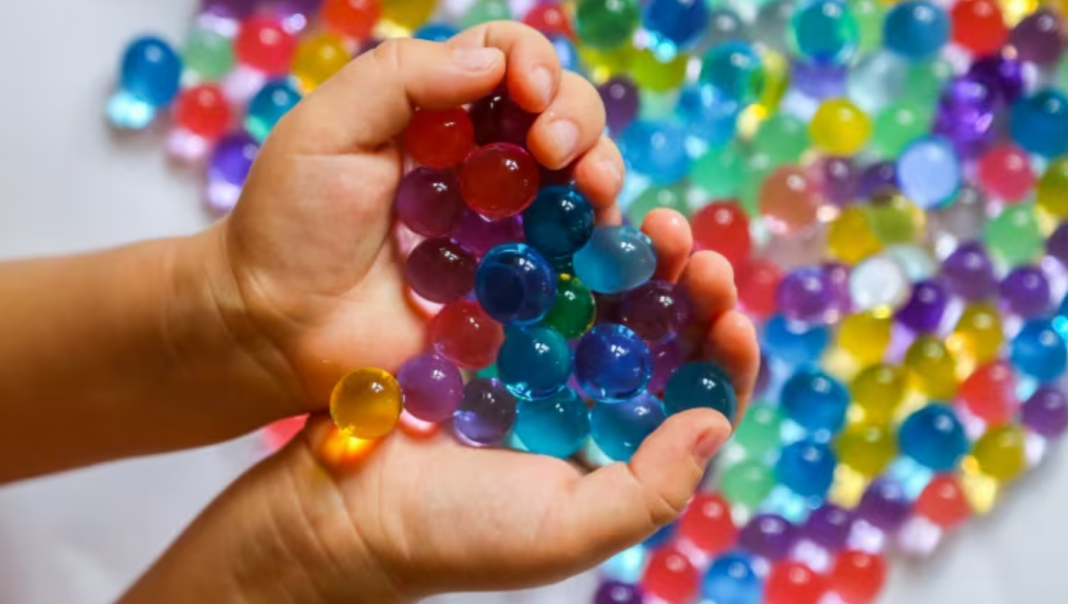


Water beads are superabsorbent polymer chemicals, water beads are also known as jelly beads, hydro orbs, crystal soil and gel beads. They are also called sensory beads, used as play tools for children with autism and other developmental conditions. They can be found in the dollar store and may be a marvel to touch and play with but have become a serious health hazard for young children. Parents may buy them by the hundreds or thousands and misplaced beads which are ingested can lead to death. Orbeez is a common name brand.
Researchers in the United States reported 8000 hospital visits related to water beads in a one-year period from from 2007 through 2022 and found the number of these visits increased rapidly by more than 130% from 2021 to 2022. Many cases were probably not reported.
According to Greenmatch, a consumer environmental watchdog, Orbeez beads are damaging to nature and they are a risk to wildlife who might swallow them. Due to growing concerns about their impact, retailers like Amazon, Walmart, and Target have stopped selling water beads marketed towards children. But they are easily found elsewhere and marketed for different purposes such as floral arrangements.
Orbeez are made of sodium polyacrylate (a type of polymer), composed of acrylic acid, sodium hydroxide and some coloured pigment – and water, once added to increase the size.
While the ingredients that make up water beads are not directly considered to be harmful to the environment, and sodium polyacrylate is technically biodegradable – the issue is that it can take an incredibly long time to break down naturally and is the reason, therefore, that many consider this a non-degradable substance, according to Greenmatch.
There are some things on this planet we can live without
Researchers from the Center for Injury Research and Policy and Central Ohio Poison Center at Nationwide Children’s Hospital published a study on the polluting water beads in the in American Journal of Emergency Medicine where they have asked for regulations to prevent water bead-associated injuries.
Water beads are made from super-absorbent material that can swell to hundreds of times their original size when exposed to fluids. They are commonly sold as child sensory products, gel projectiles for toy “gel blaster” guns, and decorations. If swallowed, they can expand in the gastrointestinal tract and cause intestinal blockage and even death. They can also cause injury if placed in the ear canal or nose.
According to Consumer Reports the beads are also toxic and dangerous to the environment. The watchdog said that the US Consumer Product Safety Commission (CPSC) warned parents and caregivers about water beads this past fall, it cited a panoply of potential risks to children. The tiny, superabsorbent and super-expanding Dollar Store item toys can cause intestinal obstruction if swallowed, lung damage if inhaled, or hearing loss if put in the ear, the agency said.
But there is another potential harm to consider, aside from what the beads’ growth inside the body can do. The beads themselves may be toxic. A mechanical engineer at the CPSC has tested a number of brands of water beads for acrylamide. Acrylamide is a known carcinogen that is also toxic to the nervous system, reproductive system, and brain.
The letter comes following a Consumer Reports investigation into water beads, which featured the stories of several children who were severely injured after they swallowed or inhaled water beads—and, in one case, died.
CR safety experts urged the CPSC to move as quickly as possible to ban them and called on retailers and online platforms to stop selling them. Lawmakers in Congress are also now pushing for a national ban. Consider that about half of all Dollar Store items have tested for toxic materials.
According to the recent study on the dangers of water beads, there were an estimated 8,159 visits to U.S. emergency departments from 2007 through 2022 involving water beads among people younger than 20 years.
More than half (55%) of cases involved children younger than 5 years. Most emergency department visits in this study involved children swallowing water beads (46%), followed by putting water beads in the ear (33%) or nose (12%). Eye injuries made up 9% of cases in this study.
Most patients were treated and released (92%). The proportion of cases admitted was highest among children younger than 5 years (10%), and this age group accounted for most (90%) of admissions in this study. All admissions among children younger than 5 years involved swallowing water beads.
“The number of pediatric water bead-related emergency department visits is increasing rapidly,” said Gary Smith, MD, DrPH, senior author of the study and director of the Center for Injury Research and Policy at Nationwide Children’s. “Although swallowing objects and putting them into an ear or the nose are common among children, water beads pose a unique increased risk of harm because of their expanding properties, and they’re hard to detect with X-rays,” he says.
Water beads in dehydrated form are often sold in sets of tens of thousands, which makes it more likely that misplaced water beads in the home will not be noticed until found by a young child, a group known for exploring their environment by placing objects in their mouth – especially objects like water beads that look like candy.
Water bead toy safety is covered in the ASTM toy safety standard, ASTM F963. The standard addresses bowel obstruction by limiting the size of water beads to the narrowest part of the gastrointestinal tract of a small 18-month-old child. “The current safety standard is inadequate,” said Dr. Smith. “Serious outcomes have occurred to children younger than 18 months, and one-fifth of the water beads swallowed in this study were among children younger than 18 months with the youngest child being 7 months old. Therefore, using intestinal measurements for 18-month-olds is not adequate.”
The ASTM F963 toy safety standard also does not address water beads marketed to individuals 14 years or older as gel blasters or used for home decoration or other purposes.
Legislation introduced in the U.S. Senate (S.4298, Esther’s Law) in May 2024 would ban water beads that expand by 50% or more with hydration or expand to a size of 3 millimeters or larger. This legislation followed a similar bill introduced in the U.S. House of Representatives (H.R.6468) in November 2023, titled the “Ban Water Beads Act,” and applies to water beads marketed not only as toys, but as educational materials, art materials or art material products, or sensory stimulation materials or sensory tools.
The U.S. Consumer Product Safety Commission is also considering regulation of water bead safety. Major U.S. retailers have stopped selling water bead toys in stores and online.
“Many parents are not aware that water beads can be harmful to children,” said Marcel Casavant, MD, co-author of this study and physician at Nationwide Children’s Hospital. “If children younger than six years or with developmental delays live in or visit your home, keep water beads out of your home and talk with your childcare directors, preschool teachers, therapists, and others who may be using water beads with young children.”