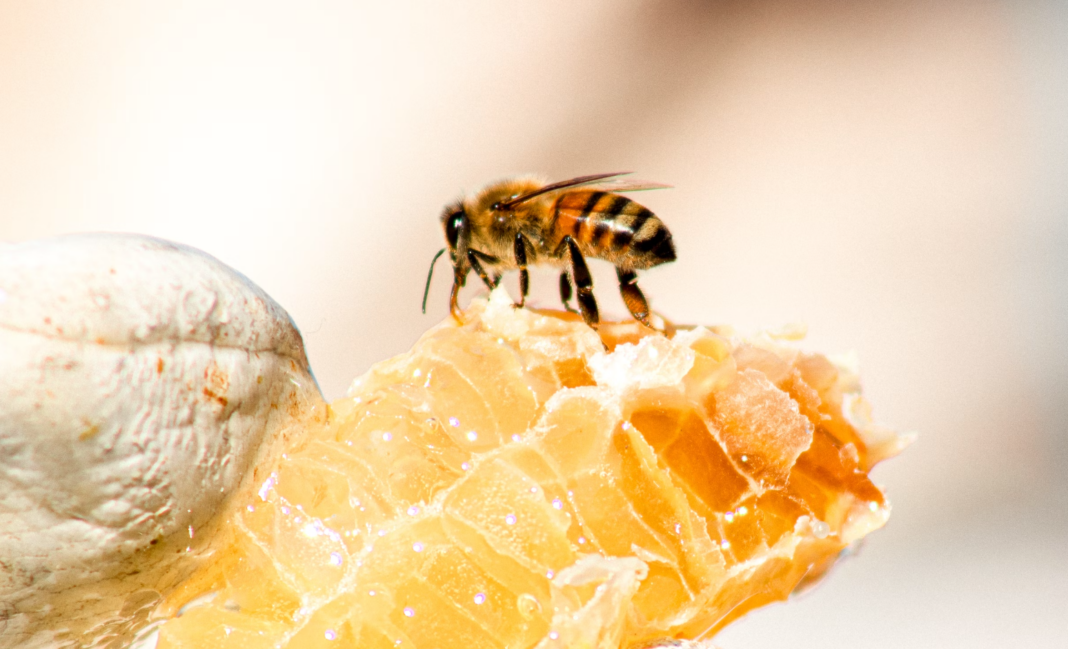


With the proliferation of urban beekeepers I asked myself: Is it safe to eat beeswax from the honeycomb? I told some friends I had a hive and several of them asked specifically for the honeycomb with living, raw honey in it. Commercial honey, we know is pasteurized, so the healing enzymes in honey are killed. But honeycomb is “just wax” I thought. Won’t it get stuck in my intestines or merge with my teeth? Surely they just mean to chew on it like bubblegum?
But, no. Several people I spoke with said that honeycomb is good for you and it’s sought out as a natural medicine. Beekeeping expert, Yossi Oud, from Bees for Peace, Israel told me that beeswax is good for your teeth and your throat and you should it with natural honey. Scientific studies (linked below) confirm this.

For centuries, bee-derived products such as propolis, honey and beeswax from the honeycomb have been used as natural therapies in folk medicine due to their properties and their high content of bioactive compounds. Today, there is renewed interest in apitherapy due to its preventing and healing properties for wounds, rheumatism, and gastrointestinal disorders.
Is there any scientific research out there to support any of these heath claims? In a recent study from Egypt published in Veterinarian Medicine sheep were fed beeswax as part of their diet and the results were impressive and included reduced carbon emissions and better health outcomes for the animals:
The researchers write that beeswax inclusion in the feed formulation is good for sustainable farming. Beeswax in feed “enhanced the nutrient digestibility by enhancing rumen fermentation and decreasing the ammonia emissions,” they wrote.

Feeding farm animals beeswax is regenerative farming
The use of 4 g/day of beeswax supplementation in growing Assaf lambs could promote zootechnical performance, nutrient digestibility, rumen fermentation and thus lower the cost of feed formulation and support the sustainability of lamb farming.
In this study researchers investigated pesticide residues in honey and beeswax. As bees forage miles away from the hive, it is hard to create 100% ecological honey unless you live in a forest with a large organic buffer.
The scientists concluded in the Journal of Agriculture and Food Chemistry that “the food consumption of honey and beeswax contaminated with these residues considered separately does not compromise the consumer’s health, provided proposed action limits are met. In regard to residues of flumethrin in honey and in beeswax, “zero tolerance” should be applied.”
How can consumers check for contamination? How can you know flumethrin wasn’t used?
Flumethrin is a pyrethroid insecticide. It is used externally in veterinary medicine against parasitic insects and ticks on cattle, sheep, goats, horses, and dogs, and against the treatment of parasitic mites in honeybee colonies. It is commonly used to treat varoa mites.
According to Merck who makes the product, flumethrin is toxic to organs, should not contact your skin, eyes, or be breathed. It may damage an unborn child. According to the Government of Canada, this material isn’t a danger to health if used correctly. But how many beekeepers might make a mistake and contaminate a hive and all the honey with the material?
What does it do to the fitness of the hive?
Whenever we ask a question, we find so many more questions waiting to be solved.
If your honey is organic, you might be spared from potential toxins. You can treat mites with natural formulations from chamomile tea, salt and honey, to dusting with organic demerrara sugar and using oxalic acid vapors.
Eat beeswax with honey and olive oil
Some studies suggest that beeswax might help lower cholesterol levels, it may prevent infections, and help protect the stomach from ulcers caused by non-steroidal anti-inflammatory drugs.
This review of existing studies on eating beeswax or honeycomb showed an antimicrobic effect of beeswax against Staphylococcus aureus, Salmonella enterica, Candida albicans and Aspergillus niger: “these inhibitory effects are enhanced synergistically with other natural products such as honey or olive oil.”
Beeswax can be used for a variety of other natural uses. I made sunscreen using beeswax honeycomb and tea. You can cut it with a seed oil that’s low on flavor and use it as a wood polish. It’s great for kitchen tables that get a lot of wear and tear. And you can make natural candles from beeswax. Most candles you buy today are parafin and derivatives of fossil fuels. Better to have some natural wax in your life.
So what are you waiting for? Miriam visited a beehive and got swarmed. I started a beehive and it’s been an ever-ending discovery into nature, the environment, and to myself.
And yes, the honey test works. Want to know if your honey is real or fake? Try this test.
Want to try to eat other non-organic food to see if it helps your health? Have you tried charcoal in your ice-cream or diatomaceous earth?