
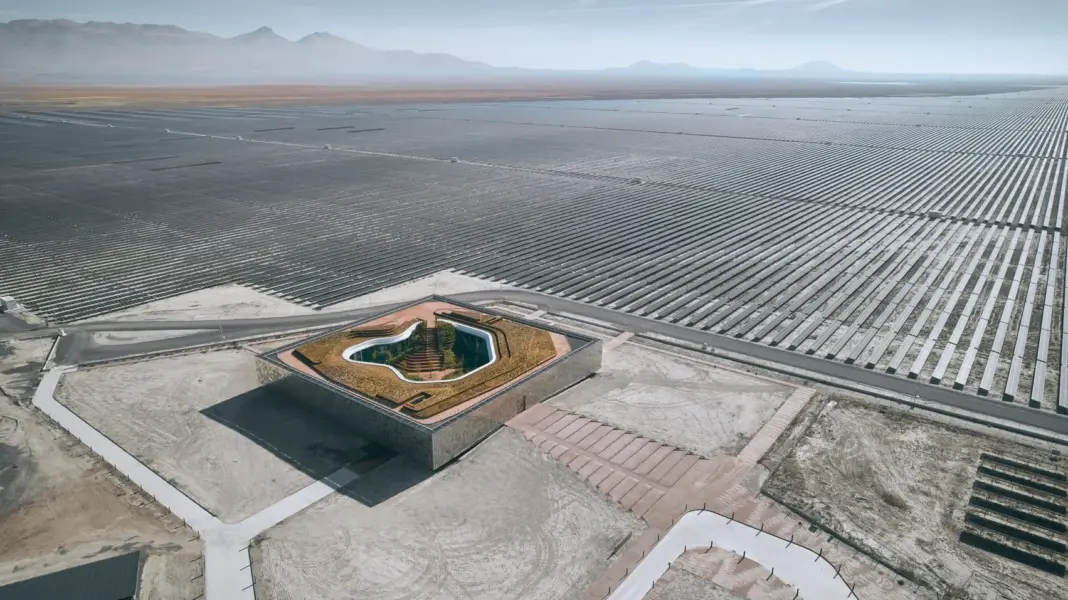

The Ottomans controlled the Levant’s Lebanon, Israel and Syria from the 1500s until the end of World War I in 1918. The Ottoman Empire, from Turkey, was known for its notable architecture of domes and design. These are buildings that last until today. Good architecture is sustainable because people like to protect beautiful buildings. This is what we are seeing in a rare instance where design meets an industrial solar power plant in Turkey. The 3.2 million panel solar farm, Kalyon Karapınar Solar Power Plant, is one of the largest in the region.
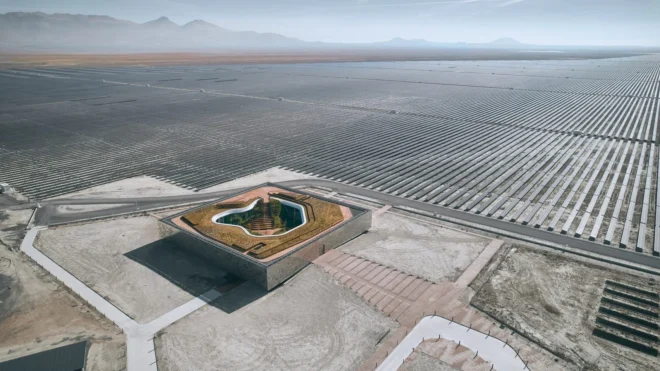
Istanbul-based studio Bilgin Architects have designed the the solar farm’s offices and hub called the Central Control Building and have covered it in shimmering steel panels. It is the nerve center for one of the region’s largest solar farms.
We love that Turkey is using local architects –– important so that vision matches culture and sensibilities. This is not the case in Saudi Arabia, which hires starchitects from the west to build Neom.


Read Also: Maraya the biggest mirror building in the world.
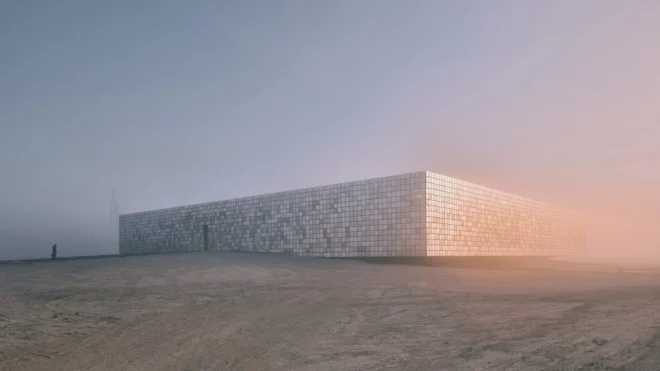
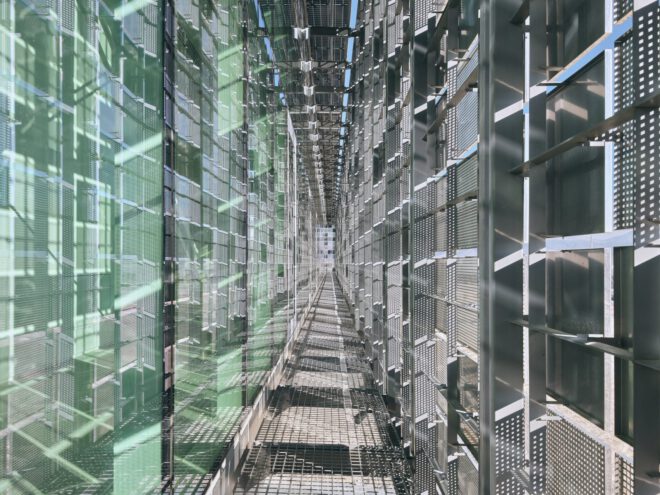
The Central Control Building is more than just a utilitarian structure; it is a study in contrasts. The shimmering steel panels are in stark juxtaposition to the arid landscape that surrounds it. The metallic skin, composed of 7,200 stainless steel panels, is not merely a design choice but a strategic decision to integrate the building with its environment.

Caner Bilgin, the studio’s founding partner, explains that the high reflectance levels of the facade allow the building to blend seamlessly into the horizon, creating a visual continuity that is both striking and harmonious. The building became operational in 2023.
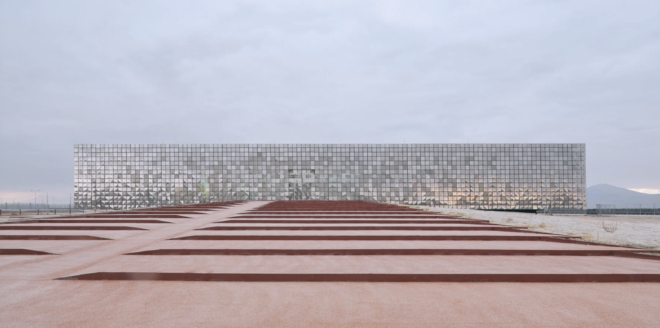

But the facade is more than just a static element; it is a dynamic interplay of light and shadow, transparency and opacity. Perforations in the steel panels create varying levels of transparency, resulting in an ever-changing pattern that interacts with the shifting light and weather conditions.
From the inside, the facade acts as a semi-transparent screen, veiling the outside landscape during the day and revealing the internal spaces at night. This interplay of light not only enhances the building’s aesthetic appeal but also serves practical purposes, optimizing airflow and minimizing heat absorption.
Read Also: The wind catchers of Yazd
The design of the Central Control Building is not confined to its exterior; it extends inward to create a space that is both functional and inviting. Offices and meeting spaces for engineering and management teams are housed within its walls, while public areas serve as venues for educational events and exhibitions, inviting visitors to engage with solar technology firsthand.
It’s a place people will want to work, show their friends and family and where visitors and prospective investors can feel the power and performance of solar energy.

At the heart of the steel-mirrored building lies a central courtyard, and a green roof planted with local species that thrive in the harsh desert climate. This oasis not only provides a refuge from the sun but also contributes to the building’s energy efficiency, acting as a natural cooling system that reduces the need for artificial ventilation.
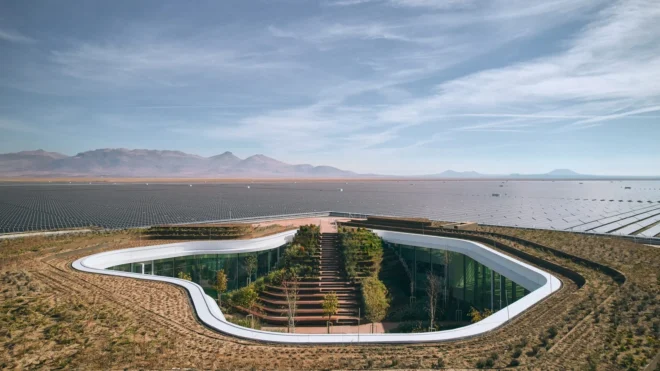
In contrast to the sprawling field of solar panels that stretches to the horizon, the courtyard and interiors of the Central Control Building offer a sense of human scale and connection to nature. Visitors can find solace in the shade of a tree.
Solar energy business
“Türkiye will no longer be a country in need of energy resources but will rather be a country capable of energy export,” Recep Tayyip Erdoğan said in inauguration ceremony in 2023. Developed by Kalyon Energy, the solar plant in the central province of Konya boasts an installed capacity of 1,350 megawatts (MW). It promises to help Turkey curb its vast energy imports.
More than 3.2 million solar panels at the facility are to generate 3 million kilowatt-hours of electricity annually, enough to provide power to 2 million people and prevent the consumption of fossil fuel resources equivalent to $450 million USD.
The $1 billion plant has already started producing electricity, and will prevent 1.5 million tons of carbon emissions annually and increase the share of solar energy in Turkey’s total energy production by 20%.
Kalyon Holding, in August last year, agreed to sell a 50% stake in Kalyon Energy to the Abu Dhabi conglomerate International Holding Co (IHC) for about $490 million. The transaction included the solar power project in Karapınar, in addition to another one in the Gaziantep region and a wind power project in Ankara.
Turkey’s current renewable capacity accounts for over half of its total installed power capacity at 104,488mw. Hydropower capacity stands at around 31,600mw, followed by wind at 11,490mw. Solar power generation reached 9,820mw.


