Killing PFAS forever chemicals with hydrogen and UV light

PFAS cleaned with UV light

A simple method for destroying PFAS using hydrogen and UV light

An insidious category of carcinogenic pollutants known as “forever chemicals” or PFAS may not be so permanent after all University of California, Riverside, chemical engineering and environmental scientists recently published new methods to chemically break up these harmful substances found in drinking water into smaller compounds that are essentially harmless.

Theprocess infuses contaminated water with hydrogen, then blasts the water with high-energy, short-wavelength ultraviolet light. The hydrogen polarizes water molecules to make them more reactive, while the light catalyzes chemical reactions that destroy the pollutants, known as PFAS or poly- and per-fluoroalkyl substances.

This one-two punch breaks the strong fluorine-to-carbon chemicals bonds that make these pollutants so persistent and accumulative in the environment. In fact, the molecular destruction of PFAS increased from 10% to nearly 100% when compared to other ultraviolet water-treatment methods, while no other undesirable byproducts or impurities are generated, the UCR scientists reported in a paper recently published in the Journal of Hazardous Materials Letters.
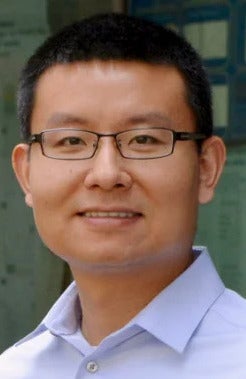
 

Haizhou Liu
Haizhou Liu

What’s more, the cleanup technology is green.

“After the interaction, hydrogen will become water. The advantage of this technology is that it is very sustainable,” said Haizhou Liu, an associate professor in UCR’s Department of Chemical and Environmental Engineering and the corresponding author of the paper.

PFAS are a family of thousands of chemical compounds characterized by fully fluorinated carbon atoms with stubbornly strong chemical bonds that last indefinitely in the environment – hence the moniker “forever chemicals.”

These compounds came into widespread use in thousands of consumer products starting in the 1940s because of their ability to resist heat, water, and lipids.

Examples of PFAS-containing products include grease-resistant paper wrappers and containers such as microwave popcorn bags, pizza boxes, and candy wrappers; stain and water repellents used on carpets, upholstery, clothing, and other fabrics; cleaning products; non-stick cookware; and paints, varnishes, and sealants, according to the U.S. Environmental Protection Agency, or EPA.

Since these compounds persist and accumulate in the environment, dairy products and meat from animals exposed to PFAS are also sources of these compounds. In fact, PFAS are so ubiquitous, scientists have found them in the blood of nearly all people tested, according to a California legislative analysis. Germans find them in their drinking water.

Studies have linked exposure to certain levels of PFAS to many ill health effects, including increased risk for prostate, kidney, and testicular cancers, according to the EPA.

Exposure to these pollutants also may lead to decreased fertility or increased high blood pressure in pregnant women, developmental effects or delays in children, low birth weight, and accelerated puberty. PFAS compounds also have been found to compromise the immune system’s ability to fight infections and to interfere with hormone function.

Because of these health effects, federal and state officials are promulgating new cleanup standards for PFAS in drinking water and in groundwater below or emanating from toxic cleanup sites.

The EPA this fall took public comments on plans to designate two PFAS substances — perfluorooctanoic acid and perfluorooctanesulfonic acid — as hazardous substances under the federal Superfund toxic site cleanup laws. If this regulation is approved, it would hold polluters accountable for cleaning up their contamination.

In California, the State Water Resources Control Board issued an order this year for public drinking water providers to test for PFAS. If the testing exceeds specified levels, the providers must issue public notifications, remove the source or sources, or treat or blend the water.

“We are optimizing it by trying to make this technology versatile for a wide range of PFAS-contaminated source waters,” Liu said. “The technology has shown very promising results in the destruction of PFAS in both drinking water and different types of industrial wastewater.”

The other option entirely is to find clean, fresh springwater and gather water at the source.

Hot this week

How Renewable Energy is Revolutionizing the Way We Power Our World

Solar has become the star of the transition thanks to modular hardware and straightforward installation. It fits dense cities and remote towns alike. Many companies are turning to rooftop arrays and carport systems - and exploring commercial solar installation as a practical way to lock in future savings.

How does one start prepping?

Faced with an extreme winter storm this year, Americans wonder how to be prepared for catastrophe. Miriam has lived through wars in the Middle East - so she's prepared on giving you a guide to prepping.

Fishermen sue tire manufacturers on behalf of the salmon

A federal trial in San Francisco has brought US tire manufacturers, fishing groups, and environmental scientists into court over a chemical most drivers have never heard of — but which scientists say may be silently reshaping aquatic ecosystems.

Listening to Water: Tarek Atoui’s Next Work for Tate Modern

Born in Beirut, Lebanon in 1980 and now living in Paris, Atoui has spent years building instruments that don’t sit comfortably in concert halls. Many of them involve water, glass, and ceramics — materials that react to sound instead of simply producing it.

Leading Through a Dual-Energy Transition: Balancing Decarbonisation with Energy Security

Experience in one area of the energy industry isn't enough to guarantee readiness across all the others. That's where a structured program like an MBA in energy can come in. Today's advanced curricula explore energy economics, finance, policy, and strategic management alongside the technical subjects. And when pursuing an energy MBA online, professionals can skill up and retrain without having to step out of the labor market -- an important perk at a time when skilled professionals are already in short supply.

Topics

How Renewable Energy is Revolutionizing the Way We Power Our World

Solar has become the star of the transition thanks to modular hardware and straightforward installation. It fits dense cities and remote towns alike. Many companies are turning to rooftop arrays and carport systems - and exploring commercial solar installation as a practical way to lock in future savings.

How does one start prepping?

Faced with an extreme winter storm this year, Americans wonder how to be prepared for catastrophe. Miriam has lived through wars in the Middle East - so she's prepared on giving you a guide to prepping.

Fishermen sue tire manufacturers on behalf of the salmon

A federal trial in San Francisco has brought US tire manufacturers, fishing groups, and environmental scientists into court over a chemical most drivers have never heard of — but which scientists say may be silently reshaping aquatic ecosystems.

Listening to Water: Tarek Atoui’s Next Work for Tate Modern

Born in Beirut, Lebanon in 1980 and now living in Paris, Atoui has spent years building instruments that don’t sit comfortably in concert halls. Many of them involve water, glass, and ceramics — materials that react to sound instead of simply producing it.

Leading Through a Dual-Energy Transition: Balancing Decarbonisation with Energy Security

Experience in one area of the energy industry isn't enough to guarantee readiness across all the others. That's where a structured program like an MBA in energy can come in. Today's advanced curricula explore energy economics, finance, policy, and strategic management alongside the technical subjects. And when pursuing an energy MBA online, professionals can skill up and retrain without having to step out of the labor market -- an important perk at a time when skilled professionals are already in short supply.

From Green Energy to Healthy Societies: Why old systems thinking is becoming relevant again

Across the Middle East and North Africa, large investments are being made in green hydrogen, renewable energy, water infrastructure and sustainability. Most of these efforts are discussed in the context of climate change, decarbonization and economic diversification. That framing is important, but it may not capture their full value.

We saw peace – an interreligious encounter deep in our eyes

They came from Israel, Palestine, Jordan, Iraq, Yemen, Morocco, Tunisia, Lebanon, Egypt… There are Sunni Muslims, Shiite Muslims, Jews (Orthodox and Reform), Orthodox Christians, Coptic Christians, Protestant Christians, Druze, Baha'is, a Scientologist.

Can biochar reduce ‘Forever Chemicals’ in food if it’s used in farms?

Biochar is produced by heating organic material in a low-oxygen environment so it does not burn. This process, known as pyrolysis, transforms plant matter into a stable, carbon-rich material.

Related Articles

Popular Categories