
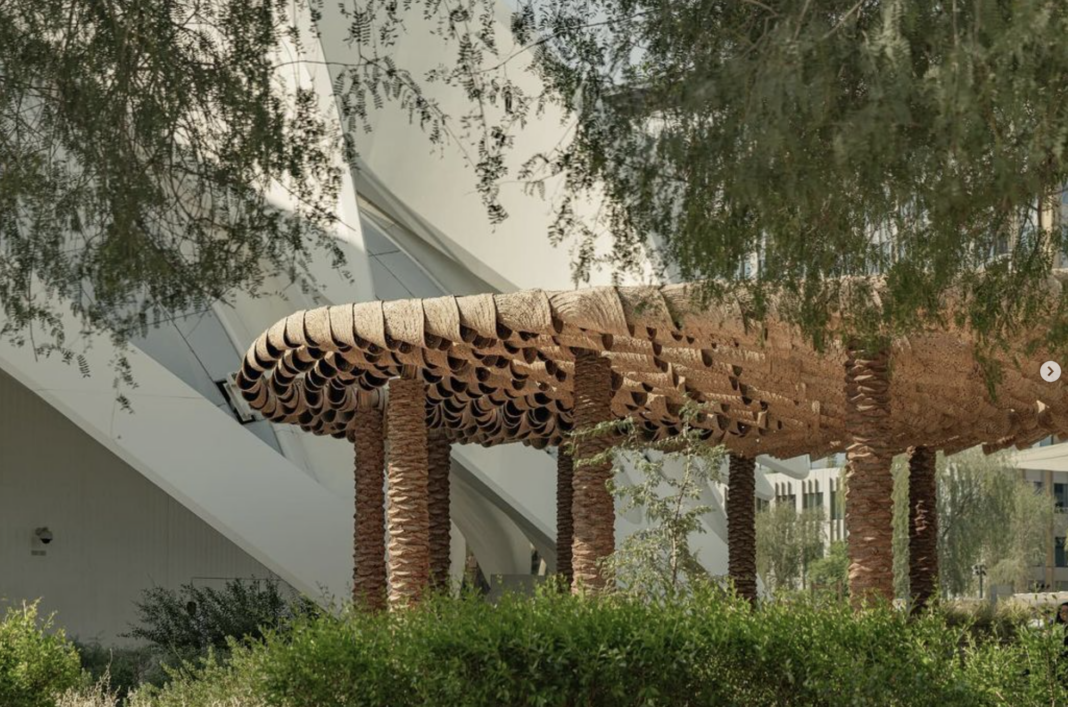

In Egypt, palm trees in furniture and architecture is known as arish and it has a rich history deeply embedded in the cultural fabric of the region. Emirati architect Abdalla Almulla’s (MULA) created the installation Of Palm, a pavilion at Dubai Design Week. Of Palm not only resonates with sustainable and vernacular architecture we celebrate in Sandra Piesek’s book Habitat but it also draws parallels with vernacular furniture in Egypt, Sinai and Saudi Arabia where palm trees have been a traditional resource for crafting functional and aesthetically pleasing pieces.

Abdalla Almulla’s vision transcends the borders of the UAE, finding resonance in the practices of craftsmen in the Middle East who have long recognized the versatility of palm trees.
 The intricate weaving of palm fronds into leaf mats, a prominent feature in the pavilion’s ceilings, gives shade, beauty and comfort unlike plastic which breaks down quickly in the hot sun, you can see palm structures stand for decades, with parts replaced as needed.
The bark-clad trunks acting as pillars in the pavilion echo the structural elements found in historic Egyptian furniture, showcasing a harmonious blend of modern design and ancient craft.

Moreover, Almulla’s choice to use palm wood for furniture pieces within the circular pavilion aligns with the region’s age-old tradition of creating durable and elegant pieces from this readily available material. Darker wood panels form stools and display cases, emphasizing the enduring appeal of palm-based creations. Locals in the Middle East know how strong palm wood fibres are. Car accidents with palm trees tend to be more fatal than hitting a regular deciduous tree.

Almulla’s “Of Palm” pavilion in Dubai, pays homage to the shared heritage of palm tree. It serves as a contemporary reminder of the sustainable design principles deeply rooted in the history of furniture-making in the region.

As we celebrate the convergence of sustainable architecture and traditional craftsmanship, the story of palm tree furniture extends beyond the pavilion’s temporary existence. It intertwines with the narratives of local artisans, weaving a tapestry that spans centuries, connecting the past with a future where sustainable practices continue to shape the world of design.


If you love the look and possibilities of palm, Arish is a great book by Sanda Piesik to explore. She is also the editor of Habitat. In Arish she features traditional buildings made from palm which are called arish in some Middle East regions. These structures have provided shelter from the extreme climate of the Arabian peninsula for generations. Just as bamboo is central to many forms of Asian vernacular constructions, so is palm leaf in the United Arab Emirates, Egypt, Saudi Arabia and surrounding countries.
::MULA

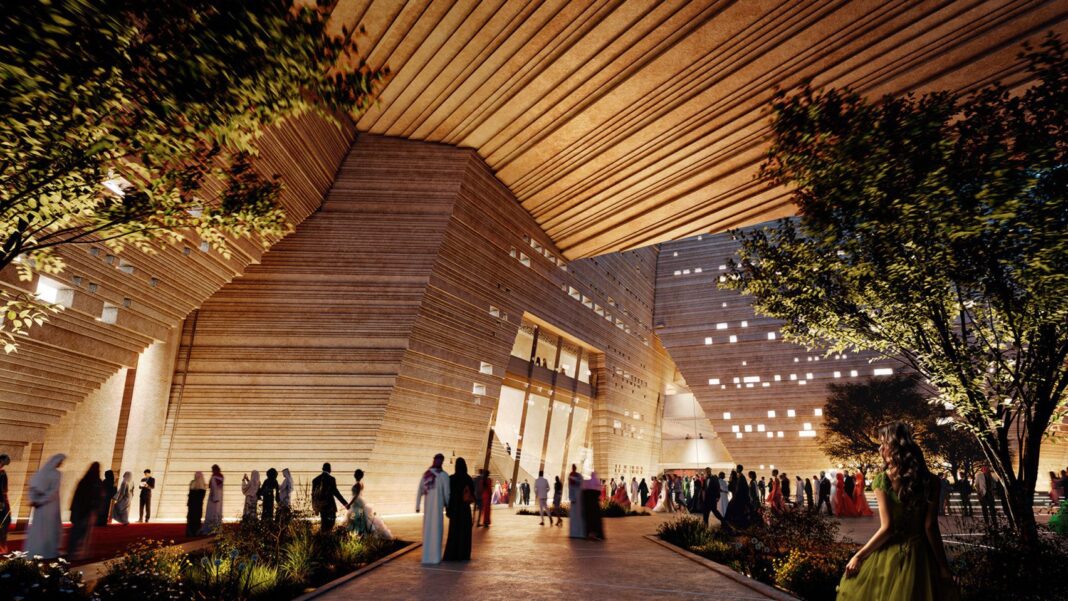

 Of Palm pavilion at Dubai Design Week not only resonates with sustainable practices but also draws parallels with vernacular furniture in Egypt, where palm trees have been a traditional resource for crafting functional and aesthetically pleasing pieces.)