
Magic and Islam

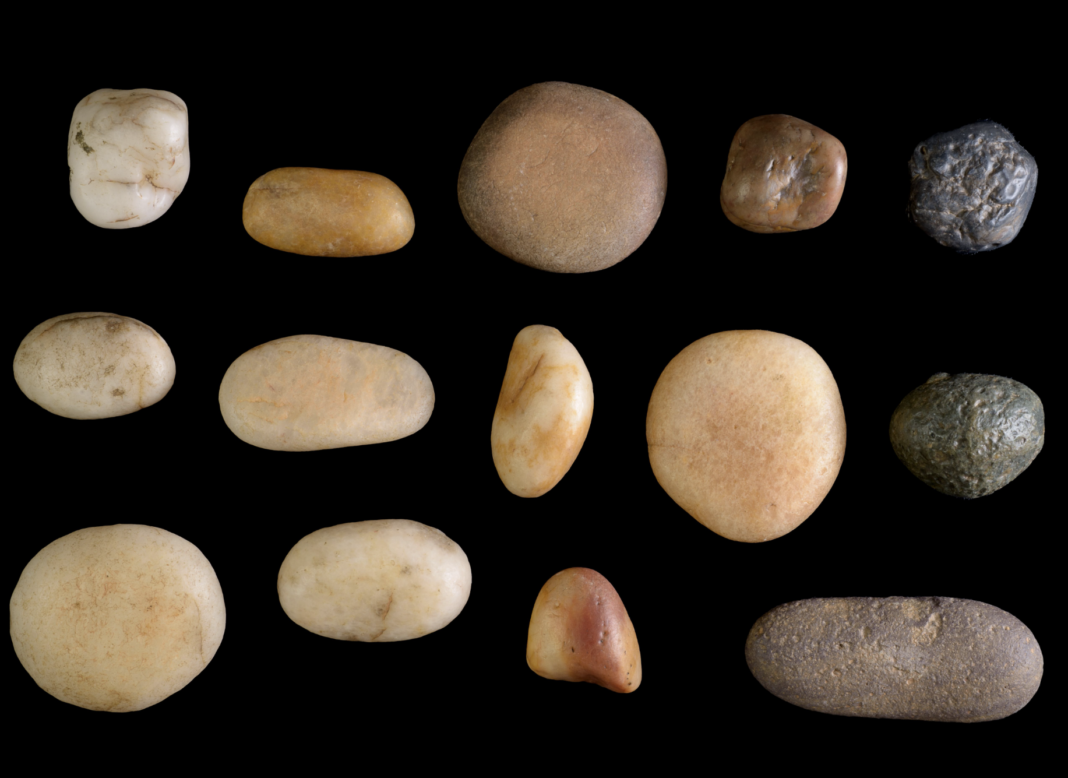
Muslim stones for warding off the evil eye
When Muslim pilgrims talked to sorcerers on their way to Mecca: Muslims used stones for warding off the evil eye. A pile of unusual magical objects was uncovered in Israel and believed to be used by sorcerers helping pilgrims on their way to Mecca in Saudi Arabia.

On the road to Mecca in Saudi Arabia four hundred years ago, one could stop at a professional sorcerer: it seems that Muslim pilgrims walking from Cairo in Egypt to Mecca in the Arabian Peninsula would make a stop at these professional sorcerers. Dinns are a real thing in Islam, so beware if you cross one when out on a pilgrimage or if one enters your home. This guide may help you get the dinns out.

You know about the Evil Eye and hamsa, hamsa, hamsa for keeping it away? It’s an old practice in the Middle East. Finding some sources to superstitions are the strange magical tools found along pilgrim routes and described by Israeli researchers in the Journal of Material Cultures in the Muslim World. The researchers found stones and sculptures, some broken, and guess these objects were used in magical rituals carried out in order to ward off the evil eye, to heal diseases and more.

According to the researchers, “This discovery reveals that people in the Early Ottoman Period—just as today—consulted popular sorcerers, alongside the formal belief in the official religion.”

Muslim stones for warding off the evil eye
Archeology site where camp with magical objects was found

Itamar Taxel of the Israel Antiquities Authority, Uzi Avner of the Dead Sea-Arava Science Center, and Nitzan Amitai-Preiss of the Hebrew University of Jerusalem were involved in the study that looked at the objects found in the Eilat region in the 1990s.

The group of objects is associated with rituals or ceremonies and comprises predominantly dozens of fragments of clay globular rattles, mostly similar to table tennis balls, containing small stones, that sound when the rattle was shaken. There were 2 miniature votive incense altars found, a small figurine of a naked woman or a goddess with raised hands, a characteristic feature of deities or priests; a few other figurines, and crystal pebbles.

The examination of the clay used for the ceramic objects has shown that they came from Egypt.

This is the first time that such a large assemblage of ritual objects of this kind has been found, and it is even more unique at a temporary site and not a permanent settlement.

A magical sculpture endowed with properties then broken?

The magical objects were found next to the Pilgrimage Road (Darb al-Hajj, in Arabic) that led from Cairo, crossed the Sinai Peninsula, and continued in the region of Eilat to the town of Aqaba, and then crossed the Arabian Peninsula on the way to Hajj in Mecca and Medina. This route was in use from the first centuries after the rise of Islam, from the 7th century to the 19th century.

“The spot of these artifacts next to the camping site, and the comparison of the artifacts to those known in the Muslim world, as well as the fact that these artifacts were found together as a group, lead to the understanding that they were used in magical rituals,” the researchers announce, adding:

“The artifacts were found broken, and they may even have been purposely broken in the ceremonies. It seems that these rituals were carried out at the site by one or several people who specialized in popular magical ceremonies. From the literary sources, we know that there was a demand for magical rituals among people from different strands of society. Such rituals were carried out daily alongside the formal religious rituals—including in the Muslim world—and it is probable that the pilgrims making their way to the holy cities of Mecca and Medina were no exception,” they add.

The Darb el-Haj road will be part of tourism and educational activities in Israel showing how cultures past lived their lives in the Holy Land.

Karin Kloosterman
Karin Kloostermanhttp://www.greenprophet.com
Karin Kloosterman is an award-winning journalist, innovation strategist, and founder of Green Prophet, one of the Middle East’s pioneering sustainability platforms. She has ranked in the Top 10 of Verizon innovation competitions, participated in NASA-linked challenges, and spoken worldwide on climate, food security, and future resilience. With an IoT technology patent, features in Canada’s National Post, and leadership inside teams building next-generation agricultural and planetary systems — including Mars-farming concepts — Karin operates at the intersection of storytelling, science, and systems change. She doesn’t report on the future – she helps design it. Reach out directly to [email protected]

LEAVE A REPLY

Please enter your comment!
Please enter your name here

TRENDING

The Christ’s thorn (sidr tree) is also a well-known folk medicine

Christ’s thorn jujube (Ziziphus spina-christi) also known as the sidr tree is a real, identifiable tree native to the Middle East, and it appears—directly or indirectly—in Islam, Judaism, and later Christian tradition. The connections between the three faiths are not theological agreements but overlapping uses, names, and symbolic associations rooted in the same landscape.

The Lote Tree of the Utmost Boundary, explained

Knowing about the concept of the Lote Tree of the Utmost Boundary helps explain a core idea in Islam.

Female Genital Mutilation still happens — quietly, at home, and across borders in Canada

A service provider explains that women may choose midwives from within their community to keep their status private. Another line cuts to the core: “There’s a lack of understanding… especially psychologically.”

Egypt building nuclear power

Egypt is building a nuclear energy plant, expected to go online in 2026 when countries like Germany have shut down all its domestic nuclear power. The El Dabaa Nuclear Power Plant is the first nuclear power plant planned for Egypt and will be located at El Dabaa, Matrouh Governorate, Egypt, about 320 kilometers northwest of Cairo. 

Sustainable Architect Ronak Roshan on the Politics Behind the Houston Ismaili Center

Roshan’s reflection situates the Houston Ismaili Center within a broader discussion about architecture as diplomacy — where aesthetics, faith, and geopolitics intersect. Her words challenge readers to question whether “green” design and grand symbolism can coexist without transparency and accountability.

Qatar’s climate hypocrisy rides the London Underground

Qatar remains a master of doublethink—burning gas by the megaton while selling “sustainability” to a world desperate for clean air. Wake up from your slumber people.

How Quality of Hire Shapes Modern Recruitment

A 2024 survey by Deloitte found that 76% of talent leaders now consider long-term retention and workforce contribution among their most important hiring success metrics—far surpassing time-to-fill or cost-per-hire. As the expectations for new hires deepen, companies must also confront the inherent challenges in redefining and accurately measuring hiring quality.

8 Team-Building Exercises to Start the Week Off 

Team building to change the world! The best renewable energy companies are ones that function.

Thank you, LinkedIn — and what your Jobs on the Rise report means for sustainable careers

While “green jobs” aren’t always labeled as such, many of the fastest-growing roles are directly enabling the energy transition, climate resilience, and lower-carbon systems: Number one on their list is Artificial Intelligence engineers. But what does that mean? Vibe coding Claude? 

Somali pirates steal oil tankers

The pirates often stage their heists out of Somalia, a lawless country, with a weak central government that is grappling with a violent Islamist insurgency. Using speedboats that swarm the targets, the machine-gun-toting pirates take control of merchant ships and then hold the vessels, crew and cargo for ransom.

Leopoldo Alejandro Betancourt López Turned Ocean Plastic Into Profitable Sunglasses

Few fashion accessories carry the environmental burden of sunglasses. Most frames are constructed from petroleum-based plastics and acrylic polymers that linger in landfills for centuries, shedding microplastics into soil and waterways long after they've been discarded. Leopoldo Alejandro Betancourt López, president of the Spanish eyewear brand Hawkers, saw this problem differently than most industry executives.

Why Dr. Tony Jacob Sees Texas Business Egos as Warning Signs

Everything's bigger in Texas. Except business egos.  Dr. Tony Jacob figured...

Israel and America Sign Renewable Energy Cooperation Deal

Other announcements made at the conference include the Timna Renewable Energy Park, which will be a center for R&D, and the AORA Solar Thermal Module at Kibbutz Samar, the world's first commercial hybrid solar gas-turbine power plant that is already nearing completion. Solel Solar Systems announced it was beginning construction of a 50 MW solar field in Lebrija, Spain, and Brightsource Energy made a pre-conference announcement that it had inked the world's largest solar deal to date with Southern California Edison (SCE).

Related Articles

Popular Categories