Lebanon hosts climate justice heroes of COP28

Youth from 100 countries wrap up Climate Justice Camp, Demand Justice ahead of COP28

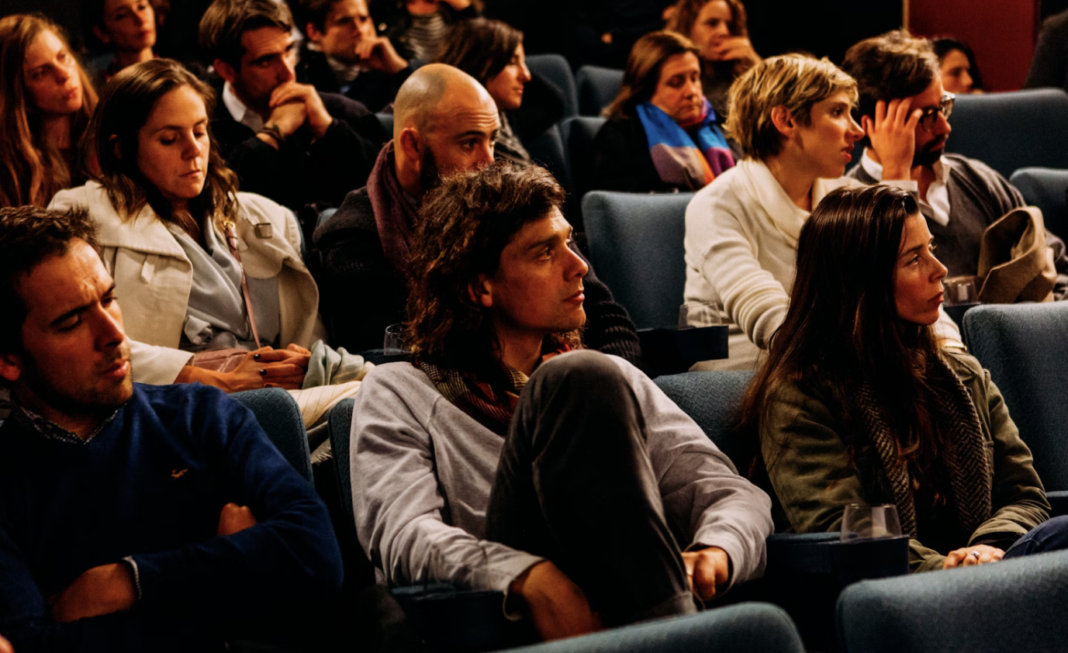
The recent Climate Justice Camp concluded, uniting 450 young leaders  450 young leaders from across the Global South. Joining us from the world’s most climate-impacted regions, participants shared their perspectives and realities, exchanged knowledge, and developed demands during more than 100 varied workshops.

Who asks Lebanon or the Middle East what they think about climate change? Is it possible that these water and energy-strapped regions who have the most to lose from a hot planet might have something critical to say? Those voices were heard at a Climate Justice Camp in August.

Participants from almost 100 countries across the Middle East and North Africa-Europe areas came together at the camp – one of the largest events of its kind to take place in the region – to attend and lead sessions on topics including loss and damage, climate adaptation, and fossil fuel phase-out. Eco Peace, Middle East, fashions large events of this nature every year or so. See our interview with Gidon Bromberg.

During the recent sessions in Beirut, in which Green Prophet was invited but could not attend, sessions, participants and organizations developed partnerships and collaborations to push for change in local and global contexts.

To bring the camp to a close, attendees gathered at sunset around a sculpture of a giant hand, which was collectively constructed using more than 400 pieces of embroidery, banners, symbolic textiles, and fabrics brought from their home countries.

Renowned Lebanese artist and designer Pierre Abboud worked with participants across the week to co-design the sculpture as a symbol of solidarity for climate justice. He said: “This sculpture is a creative act of solidarity crafted by hundreds of young people coming together from around the world. Each piece of material tells a personal story, and woven together they form a hand that symbolizes the unity we feel in this gathering for climate justice, in such a beautiful part of the world – my country, my soul, my Lebanon.”

Kenzie Azmi, a campaigner at Greenpeace Middle East & North Africa said: “Gathering 450 young leaders this week from regions hardest hit by climate change, the Climate Justice Camp in Lebanon stands as a powerful show of solidarity. Together, Global South communities are taking a stand against climate change and demanding justice. We are immensely proud of the outcomes achieved and the unified spirit of the youth.

Climate Justice, Arab woman in Lebanon
Does the world listen to what Arab women say? Listen to what was happening in Lebanon this summer.

This unity highlights a stark reality: Middle East and Global South communities face unprecedented challenges across social, health, and economic fronts, often worsened by past injustices. Those hit the hardest often have the least responsibility for the crisis.

The call remains clear: rich historically polluting countries are duty-bound to take the lead in phasing out fossil fuels. They must also bear the financial burden of addressing losses and damages, while also funding a fast and fair global transition to renewable energy that puts the needs of frontline communities first. They should generate the required funds by imposing taxes on their fossil fuel industry, which has been both a primary driver and beneficiary of the climate crisis for decades.

Youth from 100 countries wrap up Climate Justice Camp, Demand Justice ahead of COP28 The recent Climate Justice Camp concluded, uniting 450 young leaders 450 young leaders from across the Global South. Joining us from the world’s most climate-impacted regions, participants shared their perspectives and realities, exchanged knowledge, and developed demands during more than 100 varied workshops.

Camp attendee Ayisha Siddiqa from Pakistan, a human rights and land defender and Climate Advisor to the UN Secretary-General said: “Regions in the Middle East, which get the least attention but are arguably some of the most looted and impacted regions on Earth, first paid for fossil fuels with their life and are now paying in drought, flood, and hunger. It does not take a political scientist to understand that environmental disasters of such scale lead to political and social upheaval. The foundations of a market-based economy collapse fast and what we are left with is human suffering. More than ever we need people power, we need to unify across borders and regions, across cultures and languages, to fix what we have broken. That starts with us caring for each other and the planet like it’s the most precious resource to exist.”

Fatima-Zahrae Tarib from Morocco, camp participant, youth climate advocate, and political science major, said:  “What we have at the Climate Justice Camp is the power of storytelling. The beauty of this space lies in the fact that it’s dedicated to young people, grassroots movements, Indigenous communities, and those living on the frontlines of the climate crisis to come together from inspiring communities around the world. We have been sharing our stories with one another every day, exchanging experiences and knowledge that can’t be found on the internet or in books. It can only be taught through people’s stories and lived realities – through people’s power.

“This helps us grow the movement. It helps us keep the motivation going to continue campaigning for climate justice. While we may feel disappointment or hopelessness about how the climate crisis is being dealt with; when you create a lasting community in a space like this, that’s how we can work together to get stuff done and keep the momentum going.”

The Climate Justice Camp in Lebanon is the second edition of this global grassroots event, building on the success of the inaugural September 2022 camp in Tunisia. More than 40 local and global organizations worked collaboratively this year to bring together young people from the Middle East, Africa, Latin America, South East Asia, the Caribbean, and the Pacific, between August 28 to September 2.

Want contacts to get involved? Reach out to those below.

  • Hiam Mardini, Middle East and North Africa regional communications Manager, Greenpeace MENA Whatsapp: +961 71 533 232, [email protected]
  • Sophie Schroder, Climate Justice Camp global communications, Greenpeace Aotearoa – Roots Program, Whatsapp: +64 21 086 47450, [email protected]
  • Linda Åström, Climate Justice Camp global communications, GSCC, Whatsapp: +46 73-852 4285, [email protected]
Karin Kloosterman
Karin Kloostermanhttp://www.greenprophet.com
Karin Kloosterman is an award-winning journalist, innovation strategist, and founder of Green Prophet, one of the Middle East’s pioneering sustainability platforms. She has ranked in the Top 10 of Verizon innovation competitions, participated in NASA-linked challenges, and spoken worldwide on climate, food security, and future resilience. With an IoT technology patent, features in Canada’s National Post, and leadership inside teams building next-generation agricultural and planetary systems — including Mars-farming concepts — Karin operates at the intersection of storytelling, science, and systems change. She doesn’t report on the future – she helps design it. Reach out directly to [email protected]

LEAVE A REPLY

Please enter your comment!
Please enter your name here

TRENDING

Listening to Water: Tarek Atoui’s Next Work for Tate Modern

Born in Beirut, Lebanon in 1980 and now living in Paris, Atoui has spent years building instruments that don’t sit comfortably in concert halls. Many of them involve water, glass, and ceramics — materials that react to sound instead of simply producing it.

Lebanon reporting fellowship for truth-tellers

Lebanon’s environmental crisis is not abstract. It is shaped by war, neglect, corruption, and silence. Rivers carry untreated sewage and industrial waste into the Mediterranean. Dynamite fishing shatters fragile marine ecosystems along the coast. In many areas, Hezbollah’s military presence and decades of instability have made environmental accountability nearly impossible. What flows into the sea is not only pollution — it is politics, poverty, and unresolved war. And yet, these stories are rarely told with depth, care, or courage. Silat Wassel’s Environmental Justice Journalism Fellowship is opening space for exactly that. They are looking for a few brave souls. 

Slow food market Souk el Tayeb in Lebanon celebrates food and Eid El Barbara

What makes Souk El Tayeb in Lebanon remarkable is not only its insistence on local, seasonal produce, but its belief that dignity and sustainability must go hand in hand. Farmers are paid fairly. Villages are uplifted. Traditional recipes are kept alive not as nostalgia but as knowledge systems: real food is carbon-light, waste-free, and is adapted to the land.

The Pope visits Lebanon and the site of the deadly Beirut blast

“Lebanon, stand up,” he added. “Be a home of justice and fraternity! Be a prophetic sign of peace for the whole of the Levant!”

Dead shark on beach injured by fishing nets

  A dead shark that washed ashore this week at...

Qatar’s climate hypocrisy rides the London Underground

Qatar remains a master of doublethink—burning gas by the megaton while selling “sustainability” to a world desperate for clean air. Wake up from your slumber people.

How Quality of Hire Shapes Modern Recruitment

A 2024 survey by Deloitte found that 76% of talent leaders now consider long-term retention and workforce contribution among their most important hiring success metrics—far surpassing time-to-fill or cost-per-hire. As the expectations for new hires deepen, companies must also confront the inherent challenges in redefining and accurately measuring hiring quality.

8 Team-Building Exercises to Start the Week Off 

Team building to change the world! The best renewable energy companies are ones that function.

Thank you, LinkedIn — and what your Jobs on the Rise report means for sustainable careers

While “green jobs” aren’t always labeled as such, many of the fastest-growing roles are directly enabling the energy transition, climate resilience, and lower-carbon systems: Number one on their list is Artificial Intelligence engineers. But what does that mean? Vibe coding Claude? 

Somali pirates steal oil tankers

The pirates often stage their heists out of Somalia, a lawless country, with a weak central government that is grappling with a violent Islamist insurgency. Using speedboats that swarm the targets, the machine-gun-toting pirates take control of merchant ships and then hold the vessels, crew and cargo for ransom.

Leopoldo Alejandro Betancourt López Turned Ocean Plastic Into Profitable Sunglasses

Few fashion accessories carry the environmental burden of sunglasses. Most frames are constructed from petroleum-based plastics and acrylic polymers that linger in landfills for centuries, shedding microplastics into soil and waterways long after they've been discarded. Leopoldo Alejandro Betancourt López, president of the Spanish eyewear brand Hawkers, saw this problem differently than most industry executives.

Why Dr. Tony Jacob Sees Texas Business Egos as Warning Signs

Everything's bigger in Texas. Except business egos.  Dr. Tony Jacob figured...

Israel and America Sign Renewable Energy Cooperation Deal

Other announcements made at the conference include the Timna Renewable Energy Park, which will be a center for R&D, and the AORA Solar Thermal Module at Kibbutz Samar, the world's first commercial hybrid solar gas-turbine power plant that is already nearing completion. Solel Solar Systems announced it was beginning construction of a 50 MW solar field in Lebrija, Spain, and Brightsource Energy made a pre-conference announcement that it had inked the world's largest solar deal to date with Southern California Edison (SCE).

Related Articles

Popular Categories