

Noise is toxic and damaging to your peace of mind. An unsettled mind can lead to immune system malfunctions and chronic problems related to stress. A loud industrial saw is working on construction of the building next door to me in Tel Aviv, as I type. Music blasting in nature sites, bus speakers announcing stops, criminal level shouting and incessant honking and screaming – on the streets, and in classrooms, are the norm in an overly loud Israeli city.
Israel, by law, has natural quiet hours –– between the hours of 2PM and 4PM when European Jews like to nap and it’s called schlafstunde –– Yiddish for afternoon sleep. The law is still intact, but it’s easy to get around it if you own a construction business and need to get the job done.
Chronic, including humming and droning noise by large machinery during waking and sleeping hours is not just annoying, it’s a health threat that goes largely unrecognized. The relentless din of cars, trucks, trains and planes increases the risk of hypertension, stroke and heart attacks according to research studies.
Even people who live in generally quiet areas are affected: those sudden jarring sounds coming from fire crackers are also particularly detrimental. Cities like New York enacted honking bans in some of the more populous areas of Manhattan already in the early 90s and now cities like Paris have installed noise cameras to monitor vehicles’ sound levels. Thanks to the lovely Swiss, they are introducing national quiet hours.
Noise pollution is a global concern
According to the European Environment Agency, more than one in every five EU citizens is exposed to chronic harmful levels of road traffic noise. This percentage is much higher in many urban areas. The number of people ‘highly annoyed’ and ‘highly sleep disturbed’ must be reduced by 5.4 million and 1.5 million, respectively, in order to meet the 2030 zero pollution targets for noise pollution. They say that “based on levels and measures currently in place, the prospect of meeting these targets is low.”

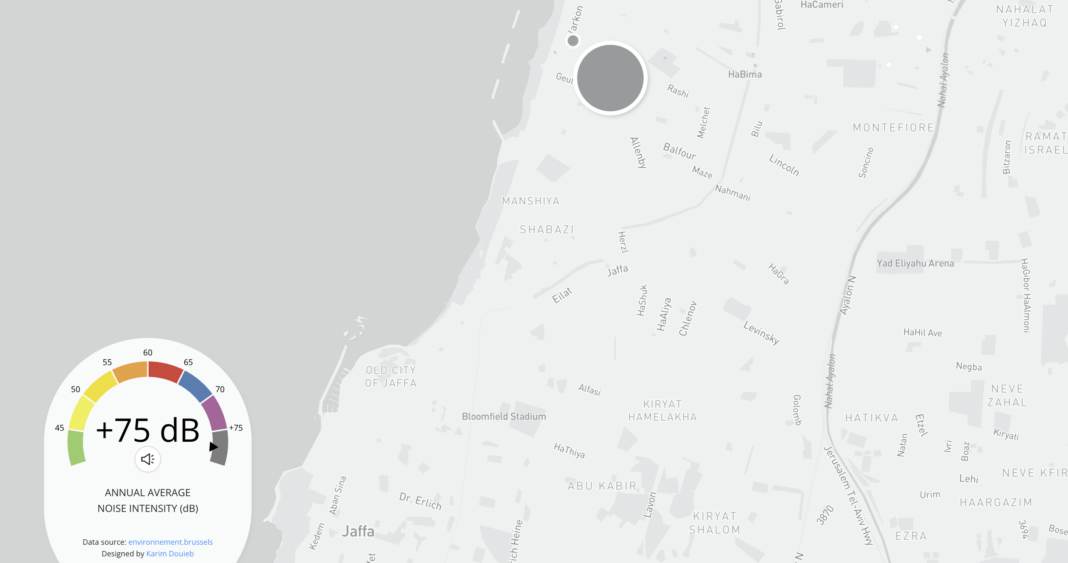
Try this interactive map of noise pollution from Noisy City to see how your city and region fares. I rolled over Tel Aviv and experienced what more than 75 dB of sound can feel like all day, every day.
Israel fortunately, does care about noise pollution but really doesn’t do much to enforce that the laws or guidelines are met. First step to complaining about noise is finding which ministry will deal with it. The Ministry of Environmental Protection, the weakest ministry in the Israeli Government, oversees noise pollution. But on a local level the police and city authorities may also handle complaints. If it’s construction noise ongoing, a hum of an air conditioner rattling your brain or the sounds of a garbage truck picking up a bin at 4am. All are different units. Consult this complainer’s noise guide if this is what you are looking for.
If you want to change policy and law, contact Adam Teva V’Din, an Israeli organization that creates policies and the foundations for environmental law in Israel.