Captura harvests CO2 from the Sea


captura carbon sequester
Carbon capture from the sea, by Captura

The next time you open a container of carbonated water, sparkling wine or a soft drink you might wonder if the inventors of this green technology were inspired by the pssst fizz sound of carbon dioxide being released from the beverage into the atmosphere? What if this process could be reversed? Could this be used to sequester carbon dioxide?

Climate change is a product of too much carbon dioxide and other greenhouse gases such as methane in the atmosphere. See the forest fires raging in Canada? An effect of climate change

In some ways nature is ahead of us. Carbon dioxide (CO2) dissolves in water even at normal atmospheric pressure.  Captura believes it can take advantage of the natural ability of water to dissolve carbon dioxide.

Billions of tons of carbon dioxide have already dissolved into the water of the world’s rivers lakes and oceans. We can be thankful for this but even nature has a limit. The dissolved CO2 makes carbonic acid which makes these bodies of water more acidic and can impact aquatic life. Acidity is one of the factors affecting coral reef health in the world’s oceans. 

Eventually the water loses its ability to absorb more carbon dioxide. When freshwater lake temperature drops to its point of maximum density of 39°F or 3.98°C,  surface water sinks to the bottom, displacing CO2 saturated water which rises and releases some of this gas back into the atmosphere. This seasonal turning of lakes happens in temperate climates. It also removes methane and introduces oxygen to deep waters. Certain types of fish such as smelt become active when a lake turns. 

In equatorial climates the water temperature never drops to its point of maximum density so many lakes remain stratified and never turn over. Carbon dioxide and other dissolved gases can build up to a point where it is released catastrophically. This happened at Lake Nyos in Cameroon West Africa in August of 1986. The released carbon dioxide killed at least 1700 people.

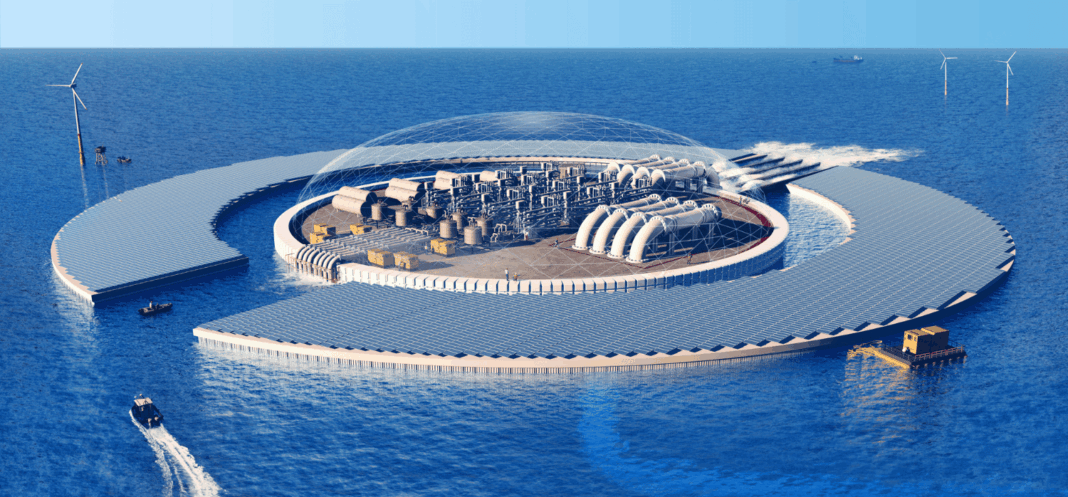
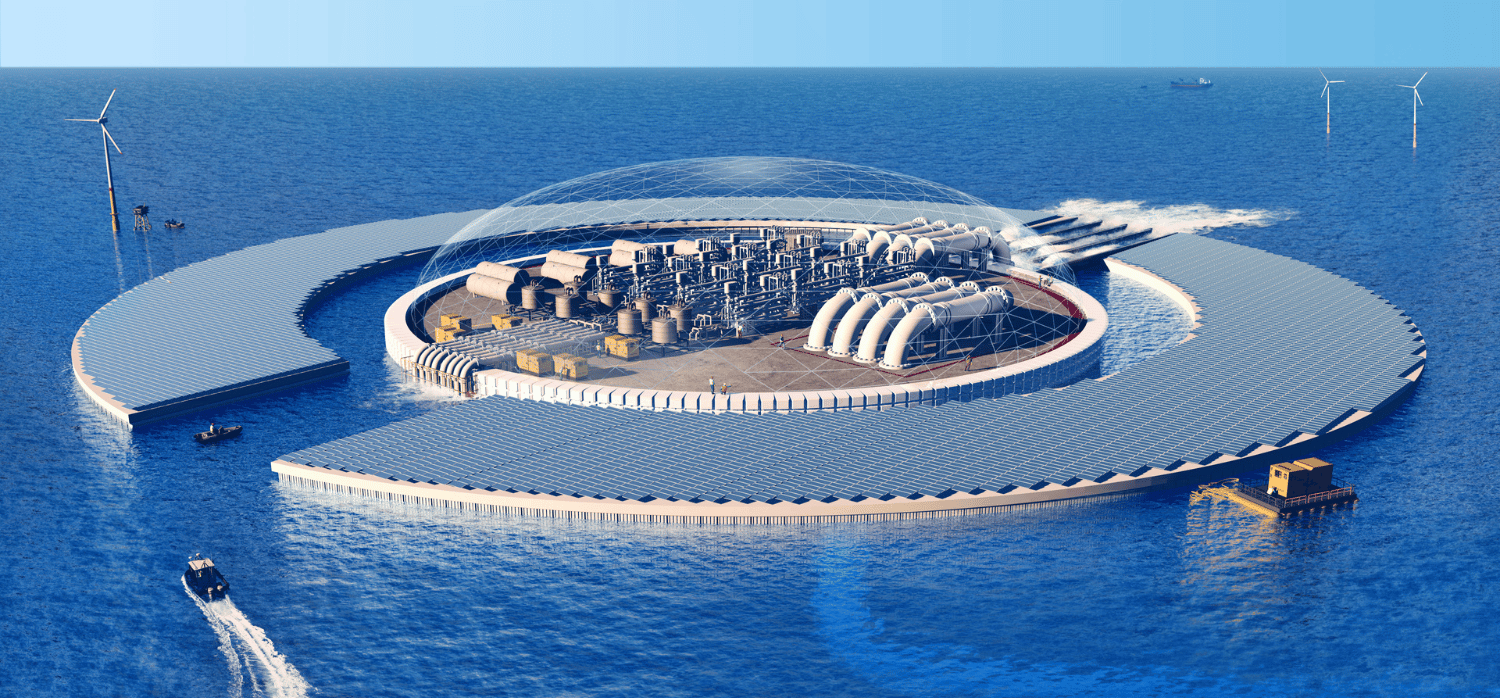
Captura, from the United States, plans to use renewable energy to gently extract CO2 from the ocean where it can be used for industrial processes. Founded in 2021 using technology developed at Caltech’s laboratories, Captura provides low-cost atmospheric carbon removal by leveraging the world’s largest natural CO2 absorber – the ocean.

They report minimal impacts on the environment and using only renewable electricity and ocean water as inputs, applying a patented electrodialysis process to generate a stream of pure CO2 that can then be sequestered or utilized to make other low-carbon products.

The intake and output are in relatively shallow water with no need for deepwater pipelines or drilling platforms. Most ocean water will not need pre-treatment for the electrodialysis process which separates more acetic carbon dioxide rich water from the alkali water which is released to allow more “breathing room” for shallow ocean waters to absorb CO2 from the atmosphere and pass it down to be absorbed by deeper water.

The CO2 output can be used for industrial processes and provides a verifiable measurement for carbon credit accounting.

A pilot is running in the Pacific ocean off Newport Beach California. It’s one of those ideas that when you see it you wonder why you didn’t think of it the last time you opened a can of soda.


Brian Nitz
Brian Nitzhttp://www.greenprophet.com
Brian remembers when a single tear dredged up a nation's guilt. The tear belonged to an Italian-American actor known as Iron-Eyes Cody, the guilt was displaced from centuries of Native American mistreatment and redirected into a new environmental awareness. A 10-year-old Brian wondered, 'What are they... No, what are we doing to this country?' From a family of engineers, farmers and tinkerers Brian's father was a physics teacher. He remembers the day his father drove up to watch a coal power plant's new scrubbers turn smoke from dirty grey-back to steamy white. Surely technology would solve every problem. But then he noticed that breathing was difficult when the wind blew a certain way. While sailing, he often saw a yellow-brown line on the horizon. The stars were beginning to disappear. Gas mileage peaked when Reagan was still president. Solar panels installed in the 1970s were torn from roofs as they were no longer cost-effective to maintain. Racism, public policy and low oil prices transformed suburban life and cities began to sprawl out and absorb farmland. Brian only began to understand the root causes of "doughnut cities" when he moved to Ireland in 2001 and watched history repeat itself. Brian doesn't think environmentalism is 'rocket science', but understanding how to apply it within a society requires wisdom and education. In his travels through Europe, North America, Asia and the Middle East, Brian has learned that great ideas come from everywhere and that sharing mistakes is just as important as sharing ideas.

TRENDING

Key Rules Recreational Cannabis Users Must Follow in Pittsburgh

Adults who are 21 or older can carry up to 30 grams. This amount applies to personal use within Pittsburgh’s limits. Carrying more could lead to confiscation or legal action. Staying under the limit avoids problems during any public stop.

Turning Your Energy Consultancy into an LLC: 4 Legal Steps for Founders in Texas

If you are starting a renewable energy business in Texas, learn how to start an LLC by the books.

Ancient Chinese medicine might heal spinal cord injuries

In the study, the scientists didn’t just test one plant compound at a time. They tested two traditional Chinese medicine compounds together — luteolin (from flowers like honeysuckle and chrysanthemum) and astragaloside IV (from astragalus root, Huang Qi). These plants have been combined in Chinese herbal formulas for centuries to help the body recover from injury and inflammation.

Luxury meets the textile waste stream with Coach – Bank & Vogue

A new collaboration between luxury brand Coach and textile reuse pioneer Bank & Vogue attempts to stitch those two worlds together: high fashion and the global textile waste stream.

EU startup aiming to generate energy on moon villages

Stepping up to democratize the moon is an EU-funded company, Deep Space Energy, which has just raised more than $1 million USD as a seed fund to help it create energy generators on the moon.

Turning Your Energy Consultancy into an LLC: 4 Legal Steps for Founders in Texas

If you are starting a renewable energy business in Texas, learn how to start an LLC by the books.

Tracking the Impacts of a Hydroelectric Dam Along the Tigris River

For the next two months, I'll be taking a break from my usual Green Prophet posts to report on a transnational environmental issue: the Ilısu Dam currently under construction in Turkey, and the ways it will transform life along the Tigris River.

6 Payment Processors With the Fastest Onboarding for SMBs

Get your SMB up and running fast with these 6 payment processors. Compare the quickest onboarding options to start accepting customer payments without delay.

Qatar’s climate hypocrisy rides the London Underground

Qatar remains a master of doublethink—burning gas by the megaton while selling “sustainability” to a world desperate for clean air. Wake up from your slumber people.

How Quality of Hire Shapes Modern Recruitment

A 2024 survey by Deloitte found that 76% of talent leaders now consider long-term retention and workforce contribution among their most important hiring success metrics—far surpassing time-to-fill or cost-per-hire. As the expectations for new hires deepen, companies must also confront the inherent challenges in redefining and accurately measuring hiring quality.

8 Team-Building Exercises to Start the Week Off 

Team building to change the world! The best renewable energy companies are ones that function.

Thank you, LinkedIn — and what your Jobs on the Rise report means for sustainable careers

While “green jobs” aren’t always labeled as such, many of the fastest-growing roles are directly enabling the energy transition, climate resilience, and lower-carbon systems: Number one on their list is Artificial Intelligence engineers. But what does that mean? Vibe coding Claude? 

Somali pirates steal oil tankers

The pirates often stage their heists out of Somalia, a lawless country, with a weak central government that is grappling with a violent Islamist insurgency. Using speedboats that swarm the targets, the machine-gun-toting pirates take control of merchant ships and then hold the vessels, crew and cargo for ransom.

Related Articles

Popular Categories