Desert kites are massive death traps built by the ancients

desert hunting kites, saudi arabia
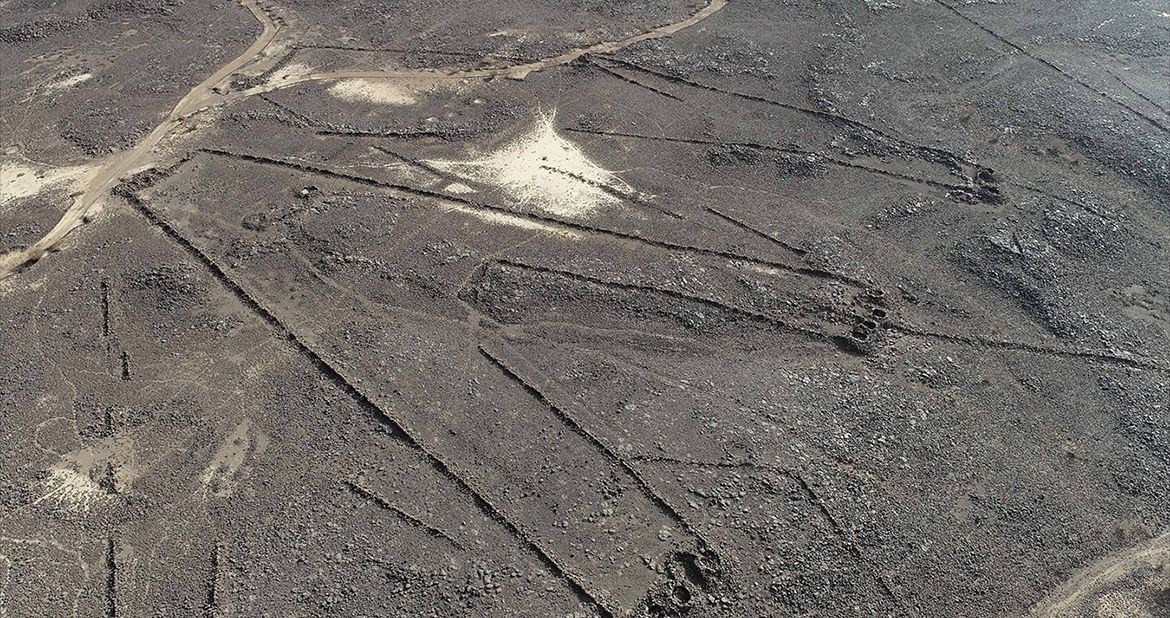
Ancient man built elaborate hunting traps, and worked collaboratively. These are desert kites found in Jordan, in the Middle East.

Hunting season is in November in Canada and those looking to trap or entice a deer onto their property might get a kick out of knowing how the ancients did it. They used desert kites, or a sort of mega-trap to catch their prey. The structures seen from up high in the sky were named ‘kites’ by aviators in the 1920s because they looked like old-fashioned children’s kites with streamers. Until now, the origins and function of Saudi Arabia’s desert kites, monumental structures (like the pendant burial graves) had been a matter of debate.

But new research from French archaeologists reveal that Middle East desert kites were hunting traps, and not enclosures for domesticating animals as proposed earlier.
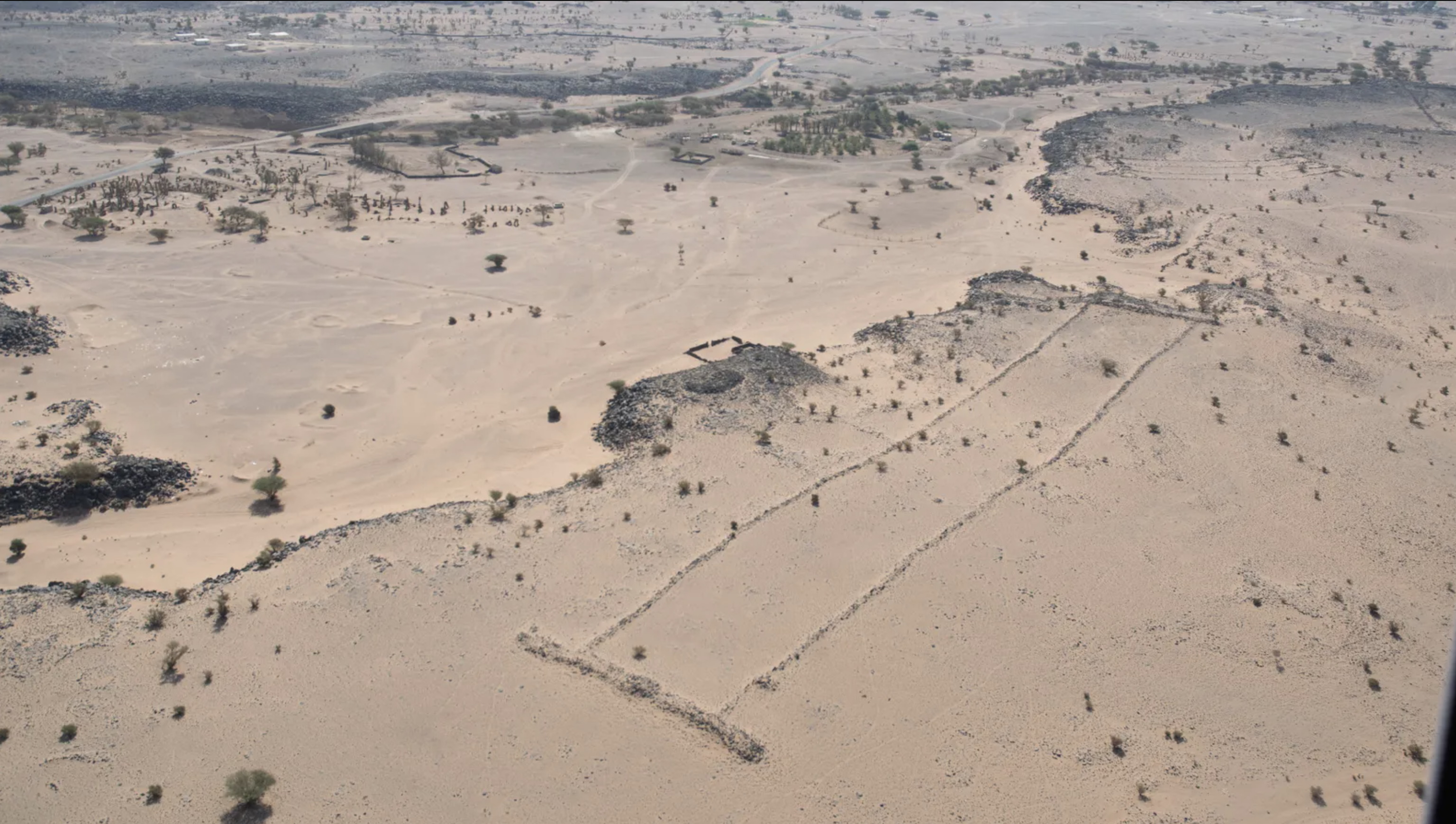
desert kites, saudi Arabia, hunting traps of the ancients
Aerial view of a kite in the Khaybar area of north-west Saudi Arabia. These ancient hunting structures were named ‘kites’ by aviators in the 1920s because, observed from above, their form is reminiscent of old-fashioned child’s kites with streamers. (Diaa Albukaai and Kévin Guadagnini, Khaybar Longue Durée Archaeological Project, RCU-Afalula-CNRS)

Remy Crassard, a leading expert on desert kites, notes that they are some of the largest ancient structures of their era from about 7000 BCE, that is 5000 years older than Stonehenge. But not as old as the Göbekli Tepe complex in southeastern Anatolia, Turkey which is dated to 11,500 years old.

The oldest kites, found in southern Jordan, have been dated to 7000 BCE. The age of newly found kites in north-west Arabia is still being determined but appears to straddle the transition from the Late Neolithic to the Bronze Age which is about 5000 to 2000 BCE.
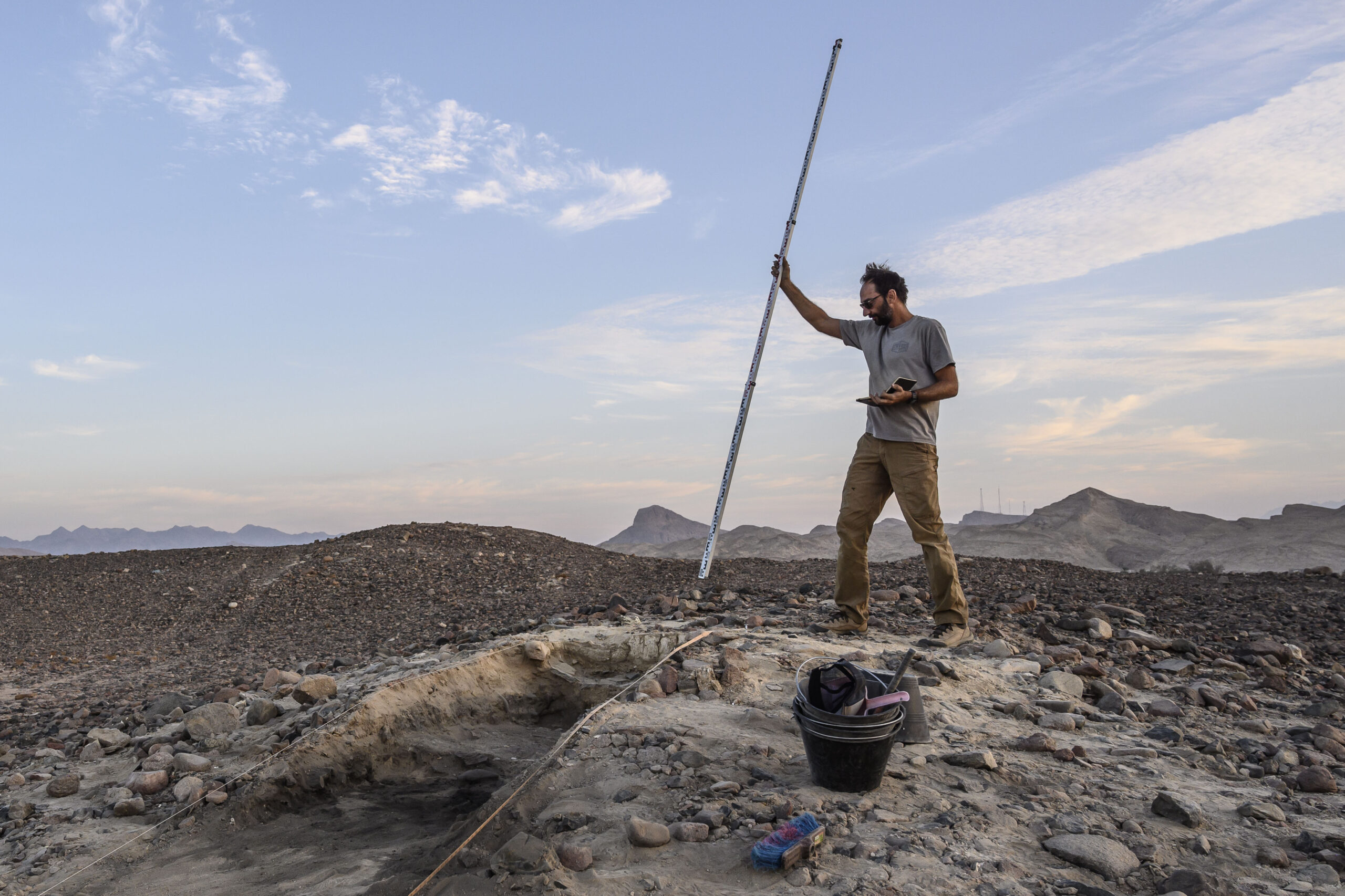
remy crassard, desert kites
Al-Bad, Saudi Arabia. Remy Crassard is measuring altitudes at pre-historic sites. 

Crassard, affiliated with France’s National Centre for Scientific Research is a co-director of the Khaybar Longue Durée Archaeological Project, estimates that 700 to 800 kites were known 20 years ago compared to about 6,500 now, with the number still growing.
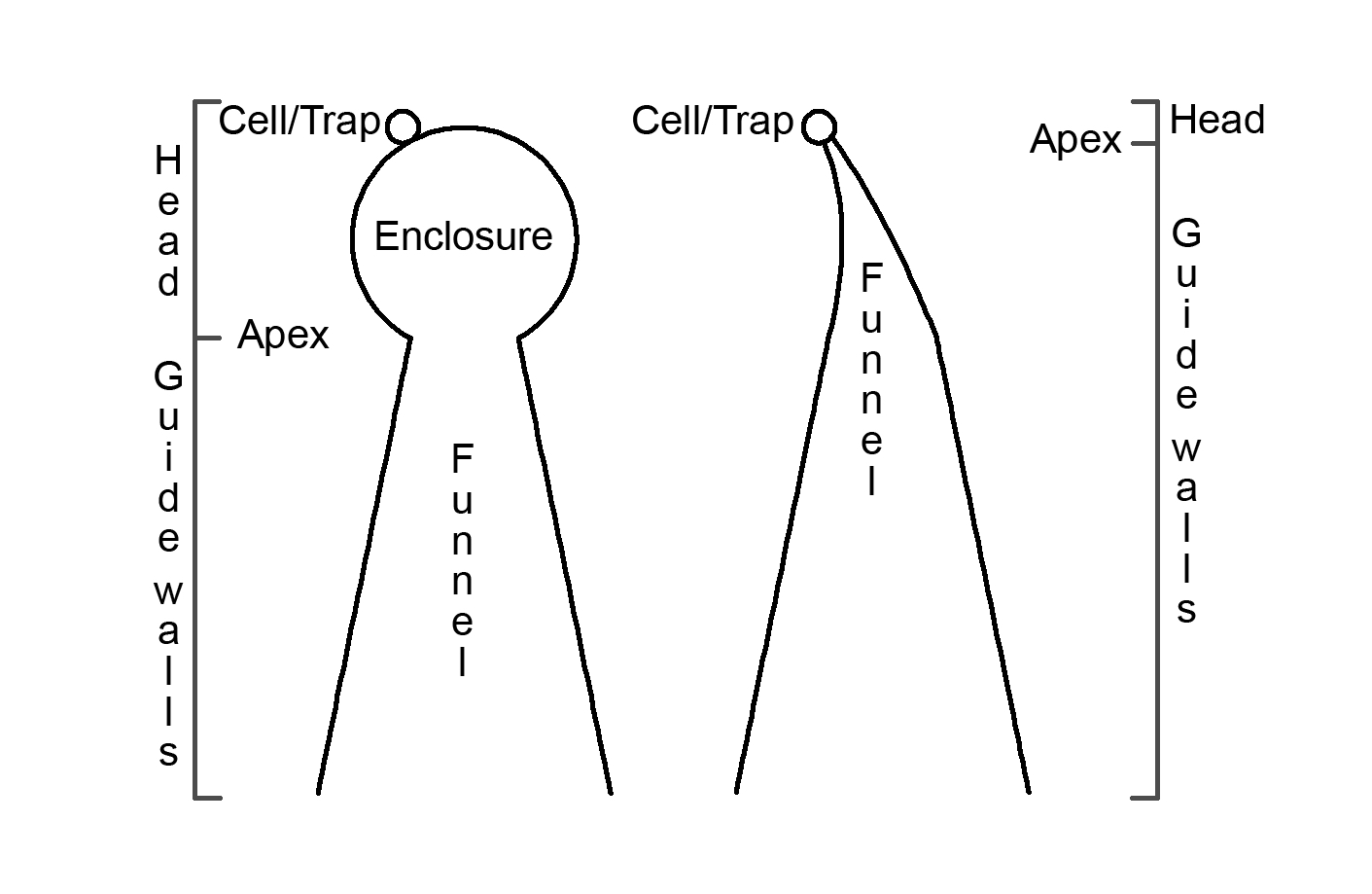
Desert kites, illustration of how it works
Stylised diagram of kites shows their key components. (Drawn by Rebecca Repper)

Based on recent research conducted in Saudi ArabiaJordanArmenia and Kazakhstan, Crassard’s team affirms that kites were used for hunting and not for domestication, that they “mark a profound change in human strategies for trapping animals”, and that “the development of these mega-traps made a spectacular human impact on the landscape”.

In Saudi Arabia, research led by Rebecca Repper of the University of Western Australia, concentrated on the Harrat ‘Uwayrid, an upland area with an extinct volcano. The team found that a distinct type of V-shaped kit was the dominant form in their study area, in contrast to kites found elsewhere in the region.

Kites have been described in a variety of shapes, including V, ‘sock’, ‘hatchet’ and W-shaped.
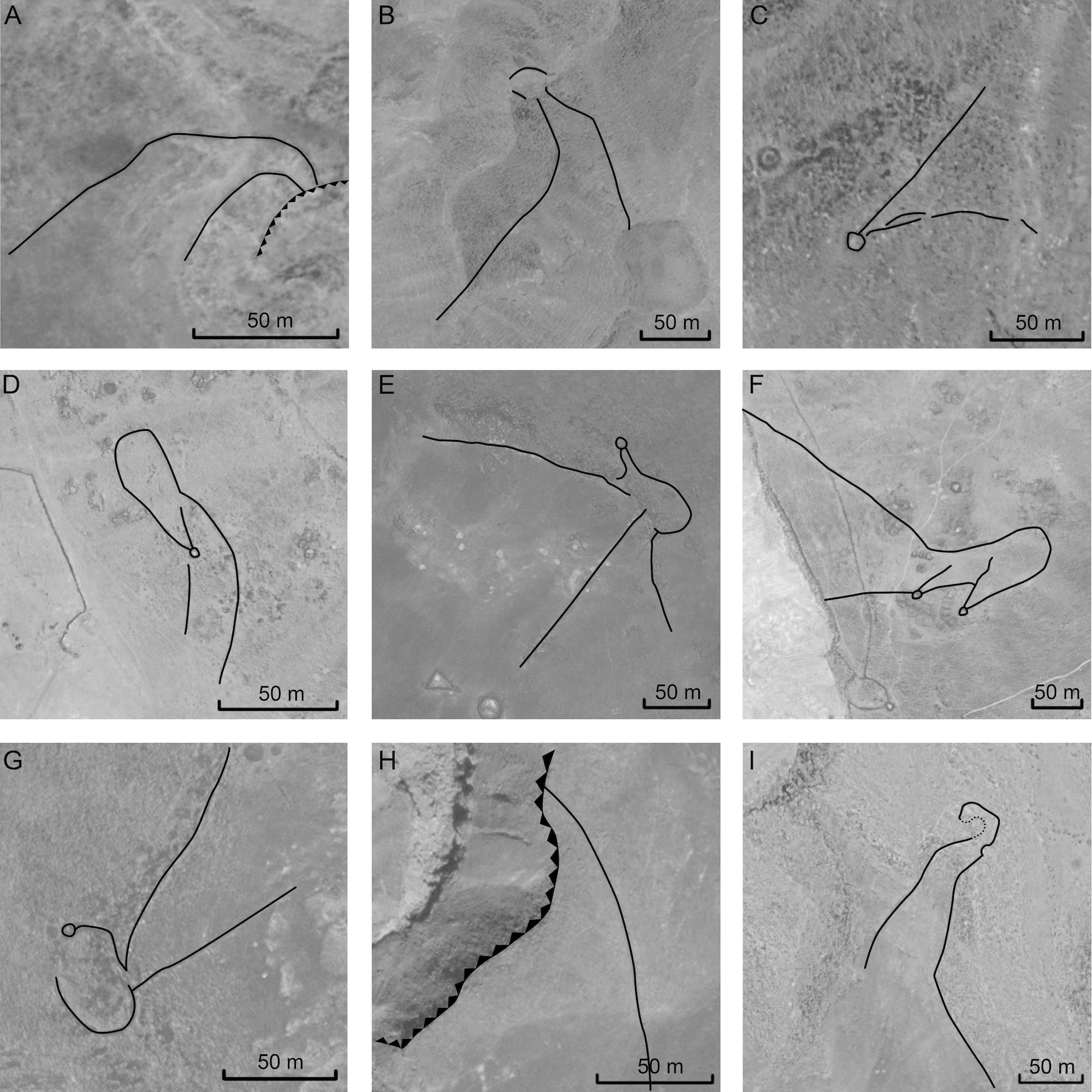
types of desert kites
The variety of kite forms recorded on the Ḥarrat’Uwayriḍ: (a–c) are simple V-shaped kites,
where two converging walls end in a trap formed by a precipice (indicated by crenulated line) and/or a
cell. The funnel can be curved (a, b) or straight (c); (d–f) are ‘hatchet’ kites, so named for the lopsided
enclosure and the position of the trap/s proximal to the apex of the guiding walls; (g) is a ‘rounded’ kite,
a type that displays a rounded enclosure, usually with attached cell(s); (h) is a single-walled kite where
the topography (here a precipice, indicated by crenulated line) acts as a second barrier; (i) is a possible
‘sock’ kite, where the walls converge to an extended curved funnel before ending in a small, enclosed
area. (Drawn by Rebecca Repper, background imagery Google Earth)

Kites may have led to hunting well beyond subsistence levels, related to “an increase in symbolic behaviour related to food production and social organisation”. Some wild species such as gazelles might have altered their migratory routes as a result, and other species might have been hunted to extinction.
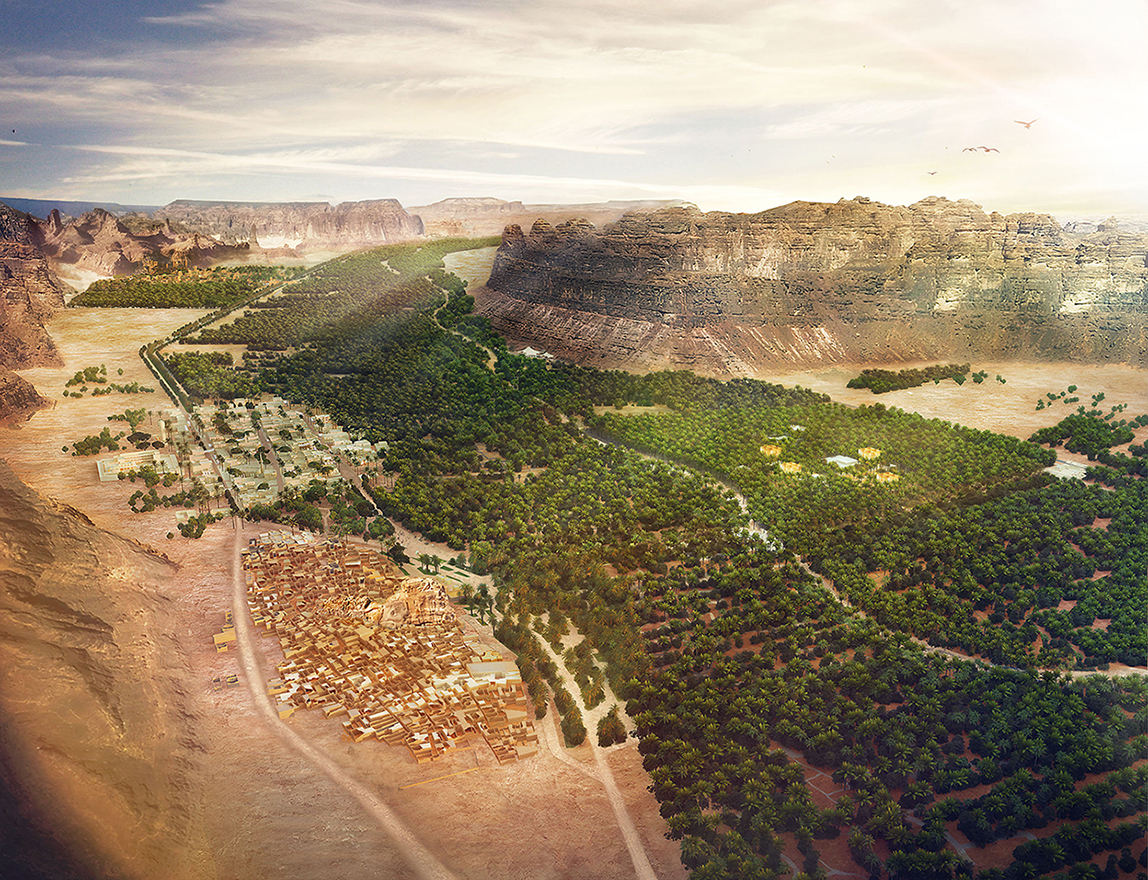
future of the region in Saudi Arabia
The Royal Commission of Saudi Arabia is regenerating AlUla as a leading
global destination for cultural and natural heritage. One of the centrepieces by 2035 will be the Cultural
Oasis, as shown above. From this spot tourists will visit desert kites. 

How to build a desert kite

Regardless of form, all kites in the region have driving lines of low stone walls that converge to funnel animals towards a trap such as a pit or precipice. On average, the driving lines of the AlUla kites, in Saudi Arabia, are about 200 yards long. Elsewhere they can stretch for miles.

Repper says the shorter length shows the local knowledge of the hunters, who placed the traps in areas where existing landscapes naturally restricted animal movements. Kite placement also suggests that the hunters had an intimate knowledge of prey movements.
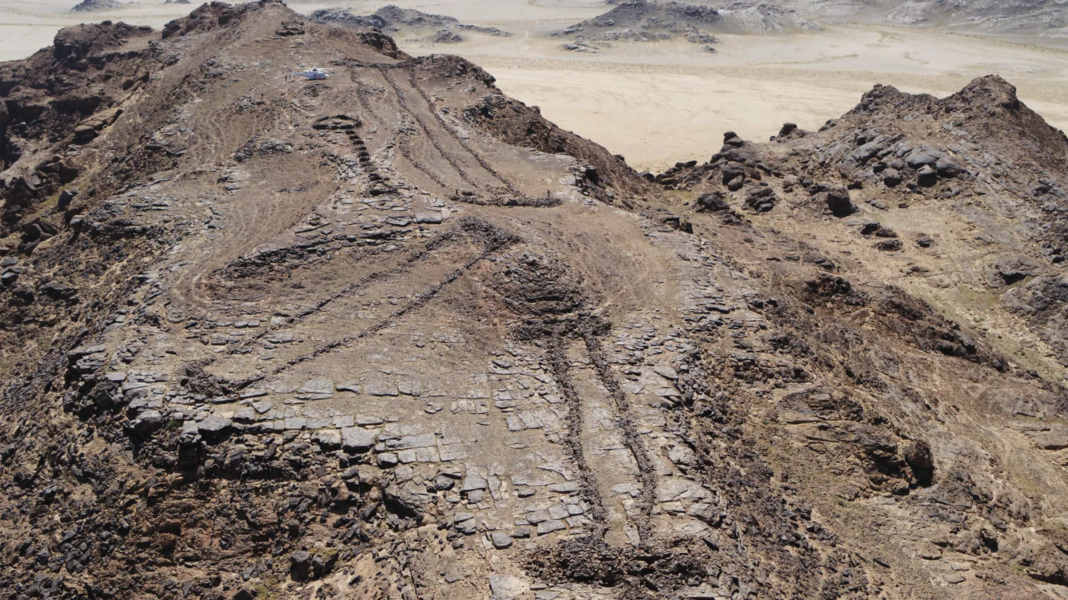
desert kite, ancient hunting trap
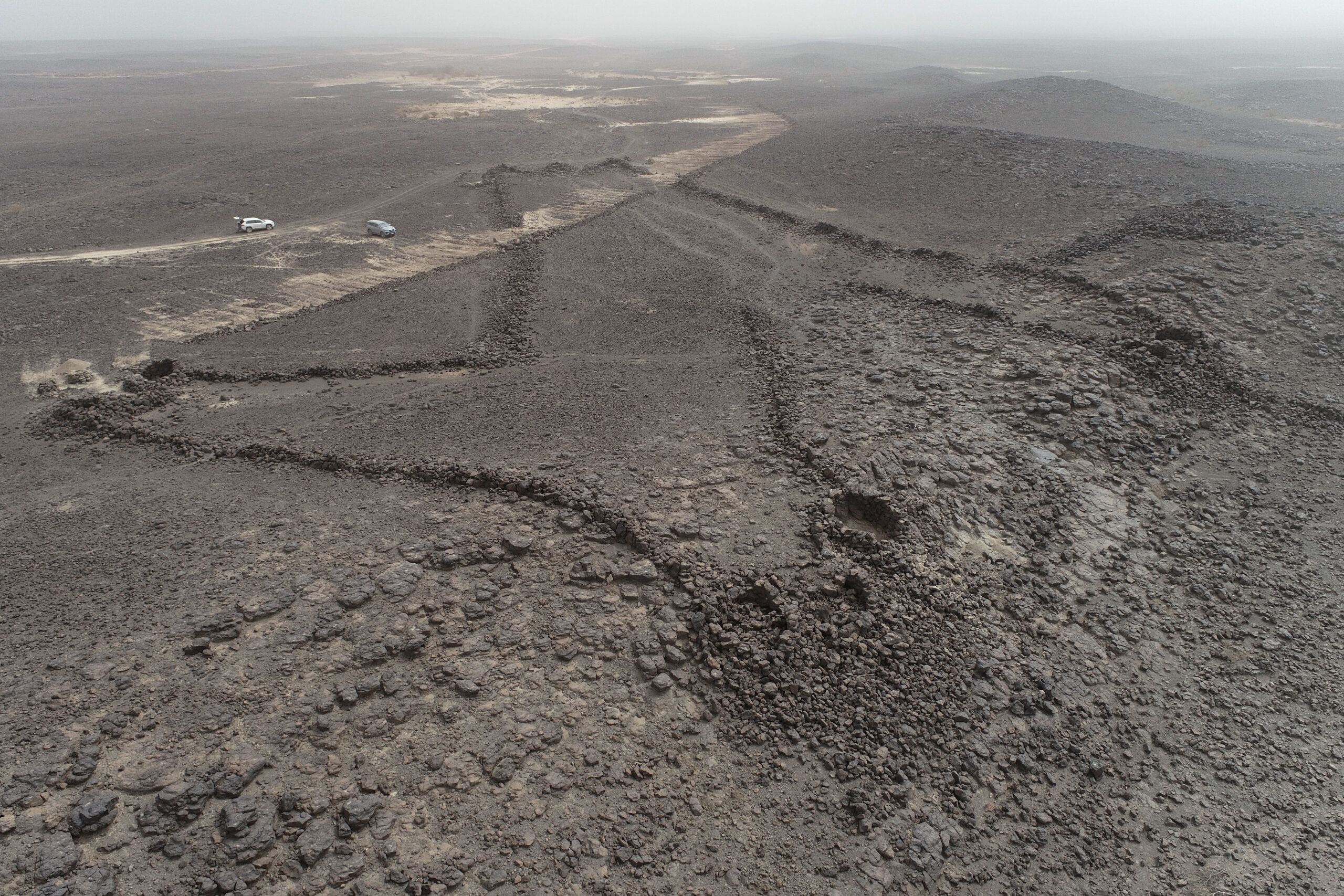
Aerial view of a kite in the Khaybar area of north-west Saudi Arabia. New archaeological
findings on ‘kites’ show the ingenuity and perhaps collaborative nature of the region’s peoples in the
past. (Diaa Albukaai and Kévin Guadagnini, Khaybar Longue Durée Archaeological Project, RCU-Afalula-
CNRS)

While kites recorded in the AlUla region of Saudi Arabia tended to funnel prey towards a sudden precipice, kites elsewhere often end in concealed pits, in which hundreds of animals could be killed during a single hunt. This difference could be an adaptation to the local geography or an evolution of trap hunting.
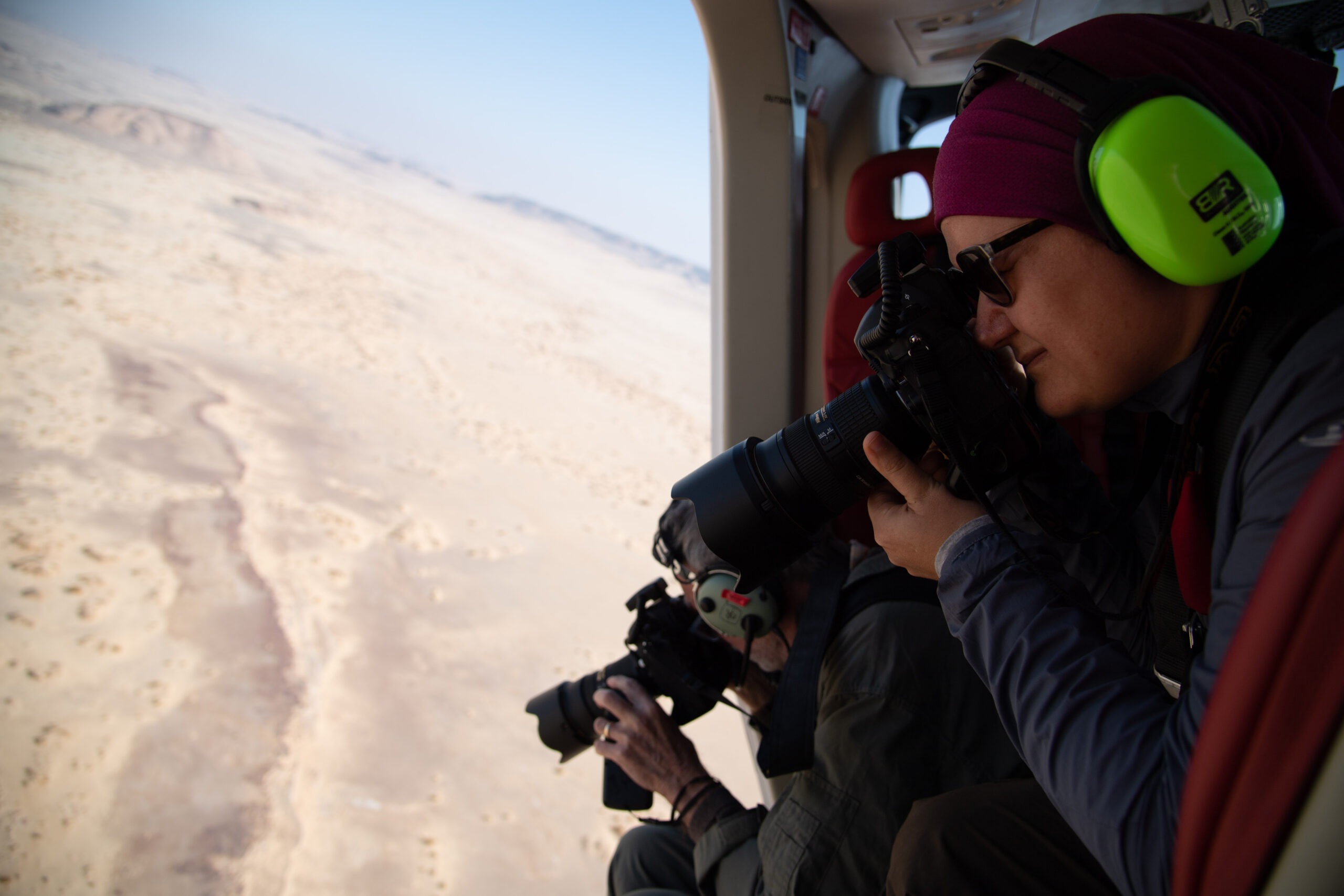
desert kites, helicopter in the sky
Photographing desert kites

In Khaybar, two types of kites have been distinguished: traditionally defined desert kites and rudimentary proto-kites, which do not have a well-defined enclosure surrounded by traps or pits. The team suggests that the proto-kites might have been a precursor to desert kites. The more complex kites may reflect less opportunistic and more formalized hunting techniques.

The recent studies expand on earlier discoveries of the Neolithic period in the region, including the construction of large-scale ritual structures known as mustatils. 

What are mustatils?
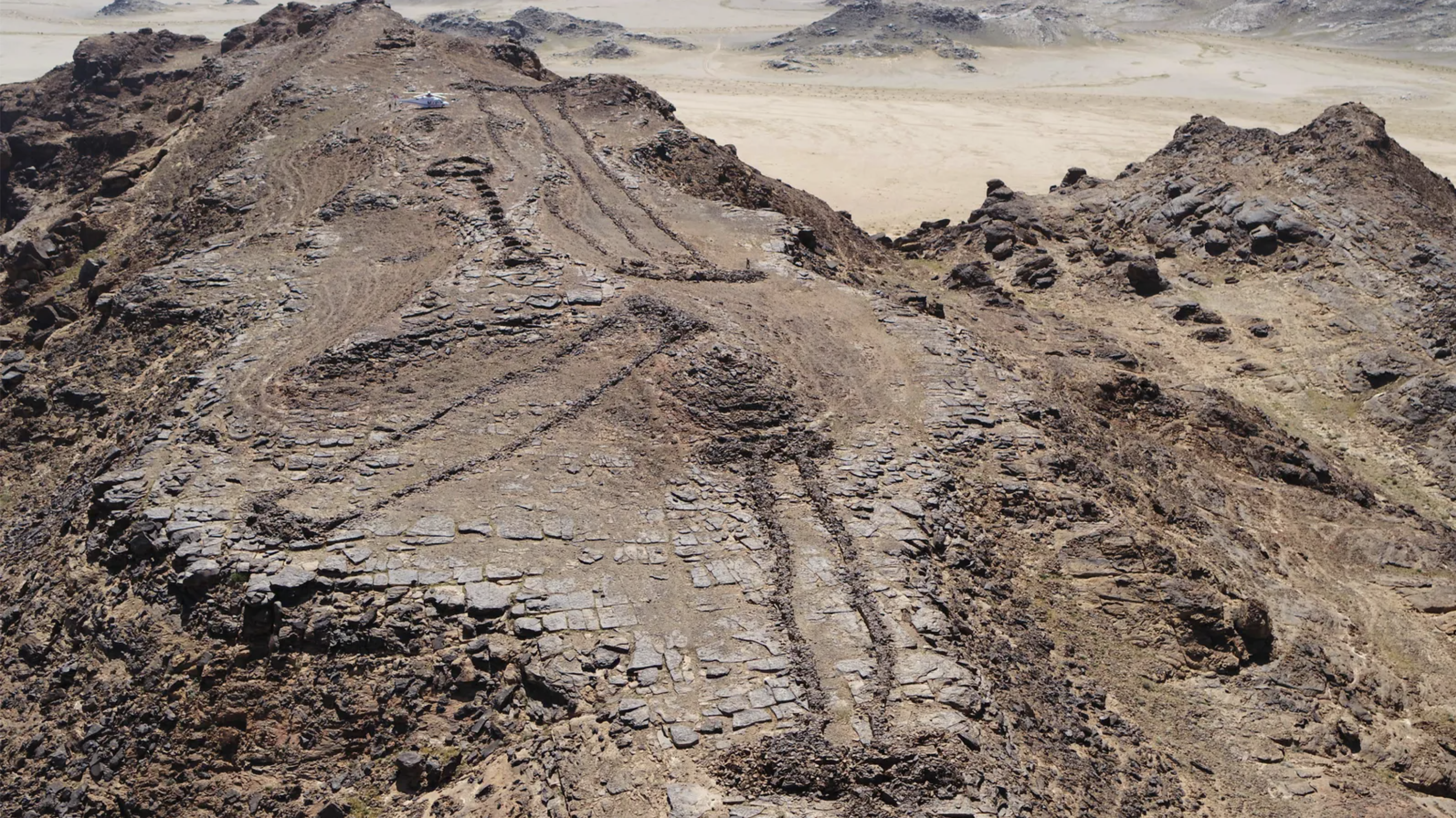
Mustatils in saudi arabia, ancient cult, stones on moutains, older than stonehenge
Mustatils are organized stone formations, spread over Saudi Arabia in an area as big as Poland.

Mustatils are newly found rock buildings in northwest of Saudi Arabia believed to be among earliest stone monuments in history. Mustatils is a plural form of the Arabic term for rectangles and these structures consist of two thick-walled ends, connected by two or more long walls to create a series of giant rectangle courtyards, ranging in length from about 20 yards to half a mile.  
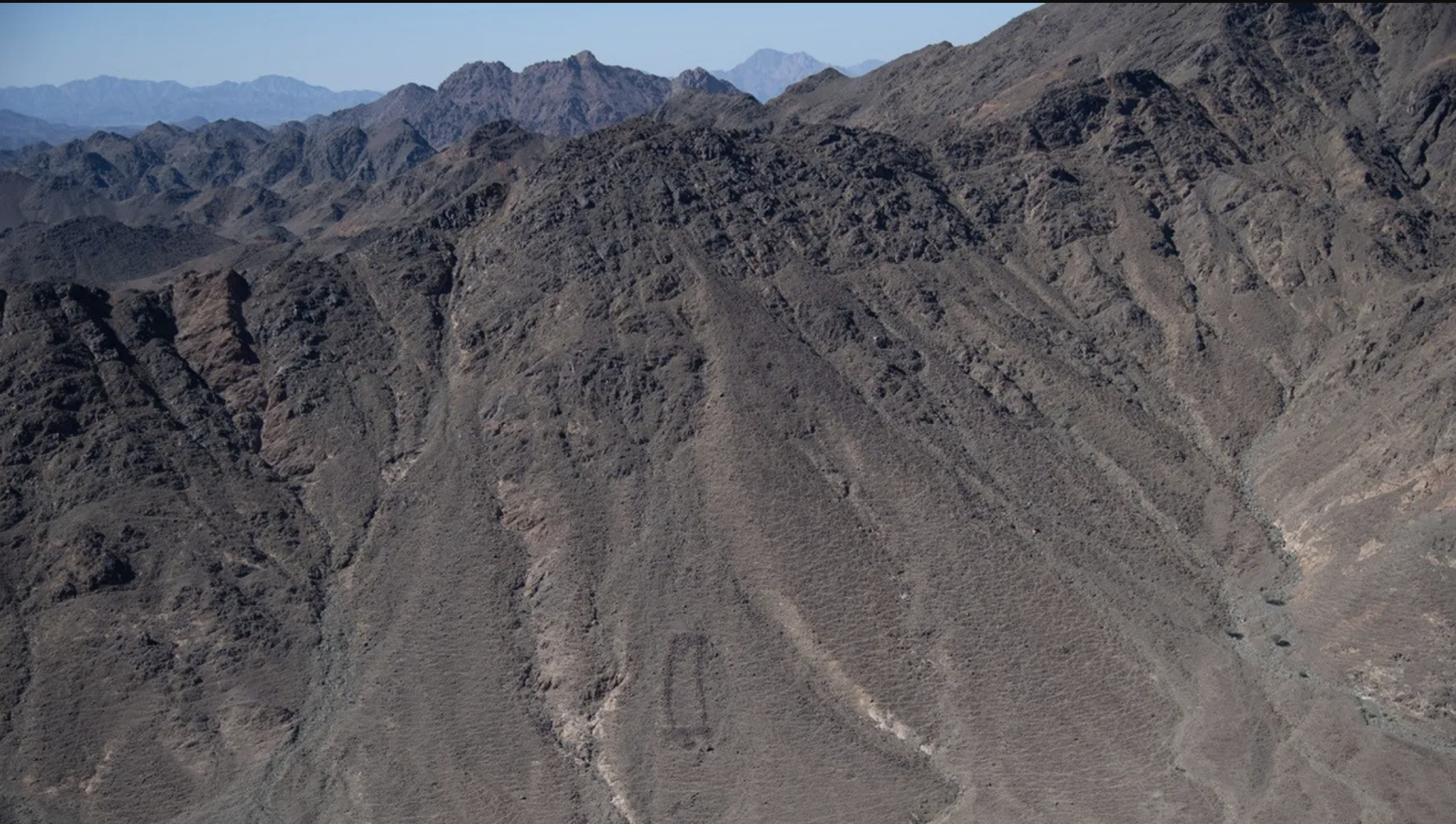
As part of the large mustatils, several mysterious “gates” were analyzed are believed to have been elements of procession for ritual sacrifices, as remains of animals including cattle, sheep and gazelle were found. No human remains or elements from domestic life were discovered in the excavation process, but further digging will take place.

Want to read more about desert kites?

We covered desert kites here

‘The Use of Desert Kites as Hunting Mega Traps: Functional Evidence and Potential Impacts on Socioeconomic and Ecological Spheres’ by Rémy Crassard, et al, published in Journal of World Prehistory. Project sponsored by CNRS and French National Research Agency.

‘Kites of AlUla County and the Ḥarrat ‘Uwayriḍ, Saudi Arabia‘ by Rebecca Repper, et al, published in Arabian Archaeology and Epigraphy. Project sponsored by RCU.

‘New Arabian desert kites and potential proto-kites extend the global distribution of hunting mega-traps’ by Olivier Barge, et al, published in Journal of Archaeological Science: Reports. Khaybar data in this article results from the Khaybar Longue Durée Archaeological Project.


Karin Kloosterman
Karin Kloostermanhttp://www.greenprophet.com
Karin Kloosterman is an award-winning journalist, innovation strategist, and founder of Green Prophet, one of the Middle East’s pioneering sustainability platforms. She has ranked in the Top 10 of Verizon innovation competitions, participated in NASA-linked challenges, and spoken worldwide on climate, food security, and future resilience. With an IoT technology patent, features in Canada’s National Post, and leadership inside teams building next-generation agricultural and planetary systems — including Mars-farming concepts — Karin operates at the intersection of storytelling, science, and systems change. She doesn’t report on the future – she helps design it. Reach out directly to [email protected]

LEAVE A REPLY

Please enter your comment!
Please enter your name here

TRENDING

Earth building with Dead Sea salt bricks

Researchers develop a brick made largely from recycled Dead Sea salt—offering a potential alternative to carbon-intensive cement.

Seaweed fashion brands can source from Saudi Arabian sea

From Red Sea seaweed to runway-ready fabric, Saudi Arabia is quietly reshaping fashion’s material future. KAUST scientists, designers, and textile innovators are proving that sustainability can begin in local ecosystems. As seaweed becomes wearable, fashion is learning to grow not from fields — but from tides.

The Line’s 15 minute city failure and the limits of green futurism

The failure of The Line is not a failure of imagination. It is a failure of restraint by western architects and planners who go along with the charade. Who is holding these firms accountable? This is actually a reasonable kind of project for the UN to take on and challenge. 

Peace hospital opens between Jordan and Israel

The proposed medical centre, described by Emek HaMaayanot Regional Council head Itamar Matiash as “a centre for cancer treatment, so that people from Jordan or further away could come and receive treatment,” would become the flagship of a wider cluster of medical, academic and innovation-based services planned for the Israeli half of the zone.

Musk’s Saudi Mega-Data Center Signals a Desert Arms Race for AI

For now, Musk’s partnership signals a deepening alignment between Silicon Valley and Riyadh — and a new chapter in the Middle East’s data-powered future. The satellites and robots may come later. The energy footprint, however, is already here.

Qatar’s climate hypocrisy rides the London Underground

Qatar remains a master of doublethink—burning gas by the megaton while selling “sustainability” to a world desperate for clean air. Wake up from your slumber people.

How Quality of Hire Shapes Modern Recruitment

A 2024 survey by Deloitte found that 76% of talent leaders now consider long-term retention and workforce contribution among their most important hiring success metrics—far surpassing time-to-fill or cost-per-hire. As the expectations for new hires deepen, companies must also confront the inherent challenges in redefining and accurately measuring hiring quality.

8 Team-Building Exercises to Start the Week Off 

Team building to change the world! The best renewable energy companies are ones that function.

Thank you, LinkedIn — and what your Jobs on the Rise report means for sustainable careers

While “green jobs” aren’t always labeled as such, many of the fastest-growing roles are directly enabling the energy transition, climate resilience, and lower-carbon systems: Number one on their list is Artificial Intelligence engineers. But what does that mean? Vibe coding Claude? 

Somali pirates steal oil tankers

The pirates often stage their heists out of Somalia, a lawless country, with a weak central government that is grappling with a violent Islamist insurgency. Using speedboats that swarm the targets, the machine-gun-toting pirates take control of merchant ships and then hold the vessels, crew and cargo for ransom.

Leopoldo Alejandro Betancourt López Turned Ocean Plastic Into Profitable Sunglasses

Few fashion accessories carry the environmental burden of sunglasses. Most frames are constructed from petroleum-based plastics and acrylic polymers that linger in landfills for centuries, shedding microplastics into soil and waterways long after they've been discarded. Leopoldo Alejandro Betancourt López, president of the Spanish eyewear brand Hawkers, saw this problem differently than most industry executives.

Why Dr. Tony Jacob Sees Texas Business Egos as Warning Signs

Everything's bigger in Texas. Except business egos.  Dr. Tony Jacob figured...

Israel and America Sign Renewable Energy Cooperation Deal

Other announcements made at the conference include the Timna Renewable Energy Park, which will be a center for R&D, and the AORA Solar Thermal Module at Kibbutz Samar, the world's first commercial hybrid solar gas-turbine power plant that is already nearing completion. Solel Solar Systems announced it was beginning construction of a 50 MW solar field in Lebrija, Spain, and Brightsource Energy made a pre-conference announcement that it had inked the world's largest solar deal to date with Southern California Edison (SCE).

Related Articles

Popular Categories