Scientists call for a plastic cap

plastics waste cap asia
Plastics everywhere

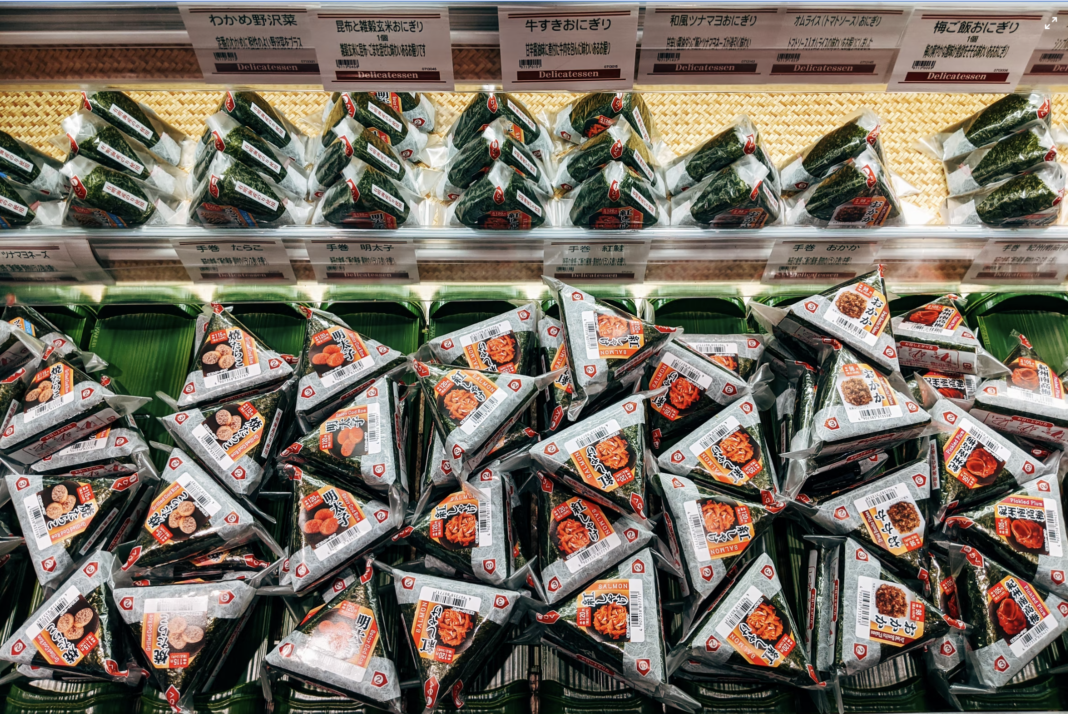
Ever visit a 7-11 in Thailand? Or a convenience store anywhere in the world? How about the middle aisles of every grocery store? Single bananas wrapped in plastics. Refined foods, sub-divided, then wrapped. Single cookies. Single candies. Single everything in a plastic coating in a plastic bag in a plastic lined box. How long can this go on? Climate scientists call for a plastic diet, asking governments to cap production. 

An international group of experts says the production of new plastics should be capped to solve the plastic pollution problem. The authors argue that all other measures won’t suffice to keep up with the pace of plastic production and releases. The letter was published in the journal Science.

plastic soup, boy with plastic heap at sea
Plastic Soup draws an atlas of plastics and where they are accumulating around the world.

Capping production of new plastics, the authors implore, will help cut their release to the environment — and the release of dioxins, PVC, Bisphenol A— and brings other benefits, from boosting the value of plastics to helping tackle climate change., the scientists write in their plea. 

The letter comes two months after the United Nations’ historic decision to adopt a global treaty to end plastic pollution, and governmental negotiations on the agreement are set to begin on May 30. These will foster intense debates on what kind of measures will be needed to end the pollution of the air, soils, rivers and oceans with plastic debris and microplastics. Microplastics are in the air we breathe. Microplastics are teaming up with other toxins for an additive effect. Microplastics are found in baby faeces. Microplastics are linked to Covid problems

How do we stop microplastics?

Regulating, capping, and in the long term phasing out the production of new plastics.

“Even if we recycled better and tried to manage the waste as much as we can, we would still release more than 17 million tons of plastic per year into nature,” says Melanie Bergmann of the German Alfred-Wegener-Institute, the initiator of the letter. “If production just keeps growing and growing, we will be faced with a truly Sisyphean task,” she adds.

gold dust graduation from Walmart
The gold dust bought at Walmart may make your graduation photo pretty. But one blow and it’s forever cycling as microplastics that will get into our lungs.

Research published in Science in 2020 shows that plastic emissions can only be cut by 79 per cent over the next 20 years if all solutions available today are implemented, including replacing some plastics with other materials, and improved recycling and waste management.

“The exponentially growing production is really the root cause of the problem, and the amounts of plastics we have produced thus far have already exceeded planetary boundaries,” says Bethanie Carney Almroth of the University of Gothenburg, Sweden. “If we don’t tackle that, all other measures will fail to achieve the goal of substantially reducing the release of plastic into the environment,” she said.

Why we should plastics in feeding animals

Phasing out the production of new plastics from fresh feedstocks should be part of a systemic solution to end plastic pollution, the experts from Canada, Germany, India, Norway, Sweden, Turkey, the UK and the U.S. argue. This approach is supported by the best science available today and in line with what political and legal experts proposed in Science last year.

Along with measures to address the consumption and demand side of the problem — such as taxes — a comprehensive approach must also cover the supply side, meaning the actual amount of plastics produced and put on the market.

Gradually cutting the production of new plastics will come with many societal, environmental and economic benefits, the scientists say.

Sedat Gündoğdu of the Cukurova University, Turkey, says “The massive production also feeds the plastic waste transfer from the Global North to the South. A production cap will facilitate getting rid of non-essential applications and reduce plastic waste exports.”

“We gain a lot of benefits from plastics but reducing production will increase the value of plastics, boost other measures to curb plastic pollution, help tackle climate change and promote our transition to a circular and sustainable economy,” adds Martin Wagner, an ecotoxicologist at the Norwegian University of Science and Technology.


Karin Kloosterman
Karin Kloostermanhttp://www.greenprophet.com
Karin Kloosterman is an award-winning journalist, innovation strategist, and founder of Green Prophet, one of the Middle East’s pioneering sustainability platforms. She has ranked in the Top 10 of Verizon innovation competitions, participated in NASA-linked challenges, and spoken worldwide on climate, food security, and future resilience. With an IoT technology patent, features in Canada’s National Post, and leadership inside teams building next-generation agricultural and planetary systems — including Mars-farming concepts — Karin operates at the intersection of storytelling, science, and systems change. She doesn’t report on the future – she helps design it. Reach out directly to [email protected]

LEAVE A REPLY

Please enter your comment!
Please enter your name here

TRENDING

These worms eat plastic

Insect larvae are eating plastic. The secret is in their saliva. Try your own real experiments at home with plastics you find.

Recycle your contact lenses

New research presented by the American Chemical Society at their August meeting warned of the damage disposable contact lenses cause after they are flushed down our home plumbing, a daily habit of many of the 45 million Americans who wear them.

More than half of Dollar Store products contain toxins that can hurt you

new report finds that 54% of all the products tested at Dollar Stores contain hazardous chemicals linked to cancer, learning disabilities and serious illnesses.

Boxed Water, the natural step to weaning ourselves from plastic bottles

With Covid times and one-time use more in demand, Americans consume 70 billion plastic water bottles each year on planes, at offices, at resorts, at school, at home –– only 8% of the U.S.’s plastic waste is recycled. Boxed Water is Better, a company that proposes an interim solution is better for the planet.

Banana leaves replace plastic packaging in Asian markets

A Thai supermarket in Chiangmai has devised a brilliant alternative to...

Qatar’s climate hypocrisy rides the London Underground

Qatar remains a master of doublethink—burning gas by the megaton while selling “sustainability” to a world desperate for clean air. Wake up from your slumber people.

How Quality of Hire Shapes Modern Recruitment

A 2024 survey by Deloitte found that 76% of talent leaders now consider long-term retention and workforce contribution among their most important hiring success metrics—far surpassing time-to-fill or cost-per-hire. As the expectations for new hires deepen, companies must also confront the inherent challenges in redefining and accurately measuring hiring quality.

8 Team-Building Exercises to Start the Week Off 

Team building to change the world! The best renewable energy companies are ones that function.

Thank you, LinkedIn — and what your Jobs on the Rise report means for sustainable careers

While “green jobs” aren’t always labeled as such, many of the fastest-growing roles are directly enabling the energy transition, climate resilience, and lower-carbon systems: Number one on their list is Artificial Intelligence engineers. But what does that mean? Vibe coding Claude? 

Somali pirates steal oil tankers

The pirates often stage their heists out of Somalia, a lawless country, with a weak central government that is grappling with a violent Islamist insurgency. Using speedboats that swarm the targets, the machine-gun-toting pirates take control of merchant ships and then hold the vessels, crew and cargo for ransom.

Leopoldo Alejandro Betancourt López Turned Ocean Plastic Into Profitable Sunglasses

Few fashion accessories carry the environmental burden of sunglasses. Most frames are constructed from petroleum-based plastics and acrylic polymers that linger in landfills for centuries, shedding microplastics into soil and waterways long after they've been discarded. Leopoldo Alejandro Betancourt López, president of the Spanish eyewear brand Hawkers, saw this problem differently than most industry executives.

Why Dr. Tony Jacob Sees Texas Business Egos as Warning Signs

Everything's bigger in Texas. Except business egos.  Dr. Tony Jacob figured...

Israel and America Sign Renewable Energy Cooperation Deal

Other announcements made at the conference include the Timna Renewable Energy Park, which will be a center for R&D, and the AORA Solar Thermal Module at Kibbutz Samar, the world's first commercial hybrid solar gas-turbine power plant that is already nearing completion. Solel Solar Systems announced it was beginning construction of a 50 MW solar field in Lebrija, Spain, and Brightsource Energy made a pre-conference announcement that it had inked the world's largest solar deal to date with Southern California Edison (SCE).

Related Articles

Popular Categories