
There are wild ingredients found in your home that are now under threat. Brazil nuts, argan oil, and shea butter are now classified among a dozen wild, threatened and at risk plants known as flagship species that need protecting. A new report published by the UN called Wild Check: Assessing risks and opportunities of trade in wild plant ingredients, sheds light on twelve flagship species – the so-called “wild dozen” – that are hidden in our everyday products.
Developed in collaboration with TRAFFIC, a non-governmental organisation working globally on trade in wild animals and plants, and the International Union for Conservation of Nature, the report aims to raise awareness about the sustainable use of wild-harvested plants. It can help consumers choose fair trade labels or opt out using these products altogether.
There is a surge in global demand for wild plant ingredients (an increase of more than 75 percent in value over the past two decades).
Thousands of species are at risk primarily due to habitat loss, as well as other factors such as climate change and over-exploitation. Of the 21 percent of medicinal and aromatic plant species whose vulnerability status has been assessed, nine percent are considered threatened with extinction. About 1 billion of the world’s most vulnerable people are thought to depend on them for their livelihoods.
“The sustainable use of wild plants has critical implications for food security and for millions of livelihoods around the world. It is time that wild plants are given serious consideration in our efforts to protect and restore habitats, promote sustainable agrifood systems and build inclusive, resilient and sustainable economies, particularly as countries work on the post-COVID recovery,” said Sven Walter, who heads FAO’s Forest Products and Statistics team.
Supply and demand
Plants make up around 80 percent of all biomass on Earth and play a fundamental role in supporting humans and other animals by providing food, medicine, oxygen and shelter. In some parts of the world, wild plants are collected by some of the most vulnerable people, often using traditional methods that date back generations.
Meanwhile, demand for wild plant ingredients keeps growing, especially in wealthier countries. Consumers in the United States alone spent an estimated 11.3 billion dollars on herbal dietary supplements in 2020, while preliminary evidence suggests the COVID-19 pandemic has renewed interest in the use of wild species as ingredients in traditional and modern medicine.
Overall, it is estimated that up to 5.8 billion people may be using wild or semi-wild plants globally, according to a study by Rhodes University in South Africa.
Despite their ubiquity, importance, and the threats they face, wild plant ingredients are often obscured from consumers and escape companies’ due diligence due to a lack of awareness and traceability.
The report aims to address these challenges by providing detailed information on a selection of ‘flagship’ wild plant ingredients, dubbed the “Wild Dozen.”
What are the wild dozen?
The 12 wild plants singled out in the report are:

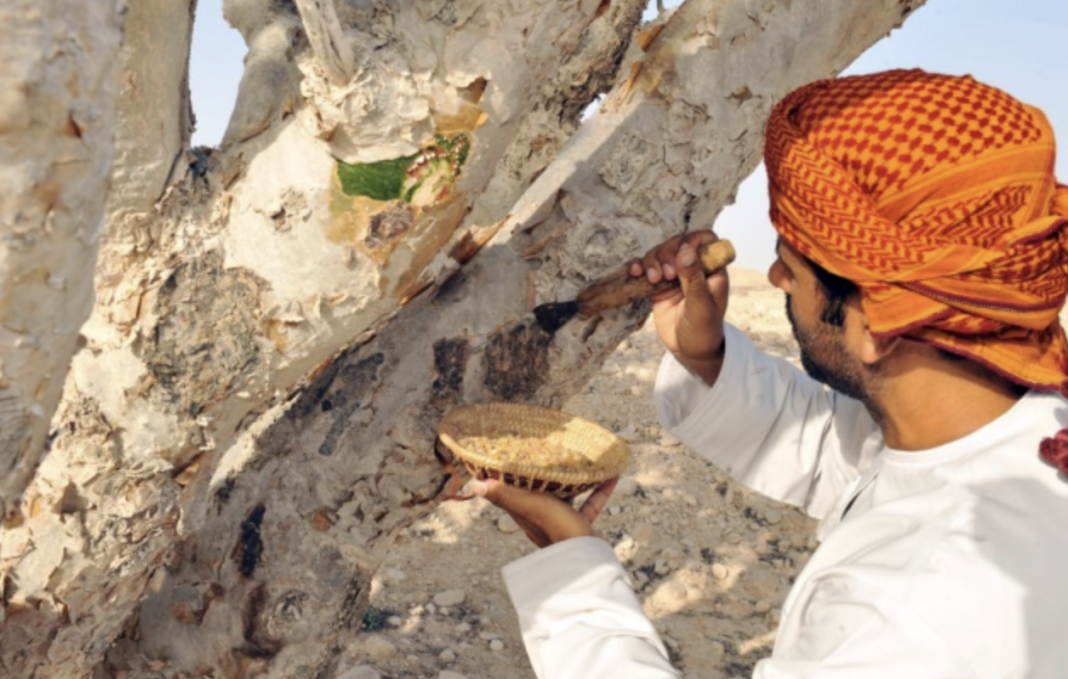
Frankincense: Found in north-eastern parts of Africa, as well as in Oman, Somalia and Yemen, its resin is used for incense, aromatherapy, cosmetics, perfumes and traditional medicines. Conservation status: near threatened
Pygeum: Also listed in ingredients for medicines and herbal products as Prunus, African cherry, red stinkwood or African almond, this tree grows in forests across tropical Africa. Conservation status: vulnerable
Shea: Grows across Africa, from Senegal to Uganda. Used widely in the food industry as a cocoa butter equivalent, it is also popular in cosmetics. Locally, it is used as a healthy cooking oil. Conservation status: vulnerable
Jatamansi: A perennial, aromatic plant that grows in the Himalayas, its roots are harvested for their medicinal properties. Conservation status: critically endangered
Gum arabic: This species grows in Africa and is primarily used in the food and pharmaceutical industries as an additive, emulsifier or stabilizer. Conservation status: not assessed
Goldenseal: Also known as hydraste du Canada or ground raspberry, this species is native to eastern North America and is primarily used for medicinal products. Conservation status: vulnerable
Candelilla: Found in Mexico and confining parts of the United States, candelilla wax was a common ingredient in chewing gum. It is used as a food additive (E902) and in cosmetics and pharmaceuticals, as well as industrial waxes and polishes. Conservation status: not assessed
Argan: Also known as Moroccan oil, and rumored to be processed inside a goat’s butt, argan oil‘s anti-ageing properties make it a popular choice among European and North American consumers of cosmetics and hair products, while its oil is also used to treat a number of ailments, from acne to arthritis. It grows in Algeria, Mauritania, Morocco and the Western Sahara territory. Conservation status: vulnerable

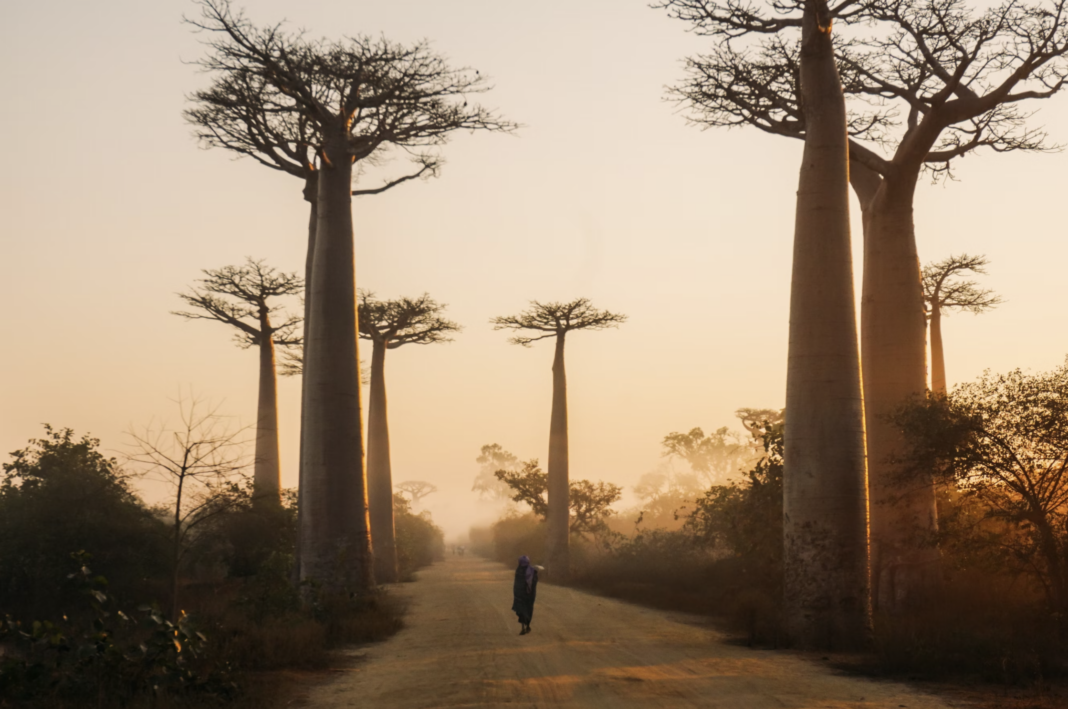
Baobab: The A. digitata variety of this species is native to mainland Africa and famously eaten by our ancestors. Baobab powder is used as a food and beverage ingredient, while its seed oil is used as a cosmetic ingredient. Conservation status: not assessed
Brazil nut: Harvested entirely from the wild, the tree is primarily exploited for its nutritious, edible nuts packed with nutrients and antioxidants such as magnesium, zinc, protein and selenium. Its harvesting has contributed to preserving millions of hectares of Amazonian forests, which is why it is often called the cornerstone of Amazon Forest conservation. Conservation status: vulnerable
Liquorice: This perennial herb is native to Eurasia, northern Africa and western Asia, and is primarily used for medicinal purposes, as a sweetener and in the tobacco industry. Conservation status: least concern
Juniper: Juniperus communis is a species of the temperate and subarctic northern hemisphere. Its berries are a key ingredient in gin manufacturing. They are also used as a food flavouring, an essential oil, an ingredient in cosmetics, and have a long history of use in traditional medicines and for religious purposes. Conservation status: least concern