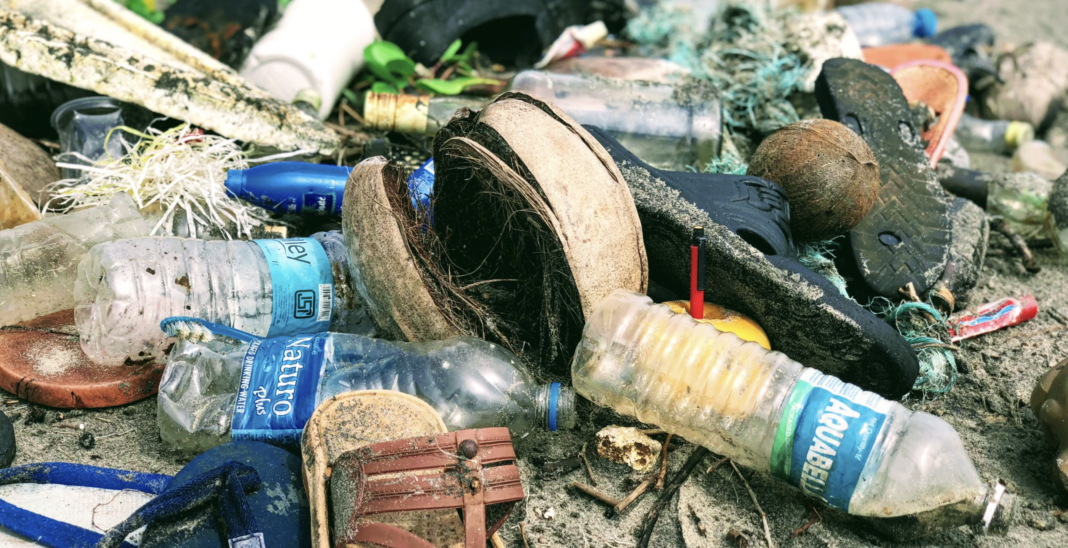

If you have ever spent Spring Break at a beach in Panama City you would be shocked. Get up at the crack of dawn and you find plastic cups and bottles as far as the eye can see littering the beach. When I was there some years ago with my parents we were also disheartened to learn that the bottles that don’t get swept into the sea, just get thrown into the municipal trash. Because while recycling efforts may take the sting or guilt from our hearts, most plastics we use today don’t get recycled at all.
With Covid times and one-time use more in demand, Americans consume 70 billion plastic water bottles each year on planes, at offices, at resorts, at school, at home –– only 8% of the U.S.’s plastic waste is recycled. Boxed Water is Better, a company that proposes an interim solution is better for the planet. After all, plastic waste simply cannot continue to build at this rate.. er!”
The brand gets the single-use rub. Their official motto is “Boxed Water is Better, Refill is best,” which is why they are focused on distribution channels where packaged water is unavoidable, e.g. airlines, hotels, restaurants, take-out, entertainment venues, sports, venues. And with our current annual rate of plastic water bottle consumption (again 70 billion!), it’s unrealistic to expect a network of purified refill stations to appear overnight in the immediate future.
Boxed Water sources 92 percent of its packaging from plants, the highest rate for any water product. Every carton is fitted with a plant-based cap that won’t take forever to break down in the environment.

“Recycling efforts can no longer keep up with the world’s plastic production, and the shift toward plant-based products is critical for our planet’s wellbeing,” Daryn Kuipers, the CEO of Boxed Water tells Green Prophet. “Our product is almost entirely plant-based, and we are proud to have the highest sustainable content in the water category, at about 92%.”

Caps made from FSC-certified wood waste
The plant-based cap is made from FSC-certified sustainably grown trees used for pulp and bioenergy and has lower CO2 emissions than petroleum and sugarcane.
Every Boxed Water carton offers a similar plant-based design, created out of paper sourced from trees in well managed forests. “We needed to create a better plant-based cap than what was currently being offered,” Kuipers adds, “by avoiding sugar cane, we are using substantially fewer natural resources and generating a lower environmental footprint.”
Boxed Water remains committed to their promise to always deliver 100% recyclable and BPA free packaging. Compared to aluminum (which is mined from Bauxite), Boxed Water is 50% lower impact on ozone depletion and smog emissions from smelting, and has a 33% lower impact on acidification due to deforestation.
- U.S. consumes more plastic than any other country in the world. Our plastic recycling rates are at 8%
- U.S. plastic waste inputs to the coastal environment were among the highest in the world: 51- 1.45 million metric tons
- U.S. purchases 70 billion plastic water bottles per year.
- #1 ocean bound plastic: beverage bottles. #2: bottle caps
Measuring a box footprint
These days everyone in the consumer and service industry is measuring their carbon footprint and just buying offsets or ESG investments won’t do. It’s easy to buy your way out of offsetting, hearder to do it in-house. But here is an easy way to slash the carbon footprint for hotels, events producers, and airlines. When we fully emerge from Covid, be ready: Compared to plastic, Boxed Water has a 64% lower carbon footprint (lower contributor to global warming), 43% less fossil fuel use, and 1,084% lower in impact on the ozone. Also, only 25% of plastic is recycled.
Currently available in multiple sizes, Boxed Water can be purchased in a 250mL, 330mL, 500mL and 1 liter box, and is packed in 6-pack, 12-pack and 24-pack configurations.
Boxed Water say they address the front-end of the problem too –– and that the environmental impact of oil drilling and blow molding needed for food grade plastic… and the strip mining and smelting required for aluminum is extremely damaging to the planet as well.
If you want to dive into the boxed water story, watch this recorded Zoom session:
An outside company, Anthesis Group, looked at Boxed Water and reported Boxed Water has a 36% lower carbon footprint global warming), 43% less fossil fuel use, and 95% lower impact on our ozone.
We spoke with CRO Robert Koenen, asking him some additional questions:

If your packaging could be 100% biodegradable and plant-derived, how would that look? Imagine 10 years down the line. Where would the materials come from? (Want to encourage chemists to start thinking how)
It’s a great question and we’re always trying to make our product more sustainable. We’re proud that our package is already 92% plant-derived, the highest in the industry. I think what so many people miss in the sustainability discussion is the importance of how you source materials. We know that plastic and aluminum are actually not sustainable because they come from finite resources that deplete the planet. Our paper-based carton is the only water that is made from a renewable resource- trees. Even some plant-based plastics, like sugarcane, are grown and harvested solely for the production of plastic. That’s why our Boxed Water’s plant-based cap comes from Nordic pine tree oil, which is leftover from the paper-making process. Our plant-based cap was a new innovation we announced in 2020, and our entire product’s history has been centered around new approaches to packaging.
In order for our carton to be 100% biodegradable, we would need to remove some barrier between the paperboard and the water to keep the water fresh and the box intact. We know that even with a sustainability mission, you still need to offer customers an exceptional product, so if any of your chemist readers want to work on a material to safely and sustainably protect the package and water, we’d love it. We are currently looking at ways to remove those layers ourselves, while still keeping the water pure. We’re still a small company trying to make a big impact, so the more that sustainability becomes “mainstream” the bigger impact we can make.
What are the most polluting industries for plastic bottles, in order with stats… hotels, travel, home? Schools?
The bottled water industry is the largest polluter–with Coke, Pepsi and Nestle leading the pack. Bottles, caps and ties make up the overwhelming majority of pollution that is found in the ocean. Hotels, travel, schools are all places you find bottles—we are blind to the amount of plastic that is around us. I challenge your readers to stop the next time they are in a grocery store to stop in the water aisle and just look at the tons of plastic–in just one store.
I will speak to the industries that we see making changes in a meaningful way. The high carbon footprint of the travel industry is well-documented. It makes such an impact when you have people from around the world coming and going for short amounts of time. While it would be wonderful to solely use reusable bottles, the travel industry is one of the more challenging situations when you look at it practically, and in the age of COVID, shared water pitchers or drinking fountains aren’t always a safe option.
While the travel industry generates a lot of plastic bottles, they also have an enormous opportunity for impact and we’ve seen them be some of our most-receptive customers. Much of the travel and hospitality industry is based upon the experience you provide customers, and customers take note when you offer a Boxed Water instead of a plastic bottle. We’ve even had hotel customers share that they make more sales because customers are happier and more likely to purchase a Boxed Water than a plastic bottled water.
We’ve seen a growing area of interest from schools as well because young people are so passionate about environmental change – it’s their future we’re talking about. While schools often encourage and have reusable water bottles more easily accessible, we’ve seen calls from the student-level demanding their schools shift from plastic water bottles.
Retail stores that provide water, specifically in the fashion industry, have made the switch to cartons. Handing a bottle of water to a consumer is like handing them a pack of cigarettes.
Of course, we think that small changes end up making the biggest impact. We continue to work with the industries that go through billions of single-use plastic bottles every year, the average American uses 167 single-use plastic bottles a year. If you made a change for yourself and your family, you could stop hundreds of plastic bottles from polluting the planet. We’re here to empower every person to make a change, by making the sustainable choice simple and convenient.
How do big box stores with low cost water contribute to the plastic problem? You can buy 24 bottles for .99 in some Costcos sometimes
There is a reason that plastic bottles are so prevalent: they are inexpensive to produce. These low costs lead to huge margins, and it’s a big profit generator for these stores. It’s literally a financial addiction. Unfortunately, these low cost items come at an astronomical price for our planet. While most importantly everyone should have access to clean water, we want to make the sustainable choice a simple and convenient one for consumers. We hope that you think twice about purchasing single-use plastic bottles and if you don’t see an alternative, ask for one. Only consumer demand can change this addiction for the big boxes.
How does plastic residue affect the water? Even if it’s food safe, I somehow don’t trust it. Explain what you think.
I trust it. We test our water constantly during the day to make sure it’s super pure and pH balanced. We are BPA free, and also remove impurities. Due to our package construction, we don’t need to use BPA plastic so it doesn’t affect your health or the taste. In fact, we’ve won awards for the fresh taste of our water. Plastic has infiltrated not just our lifestyle, but our food chain.
There are the negative effects of BPA in plastic impacting our health, and so thankfully with this awareness, there has been a push to ensure many products are free of BPA (like our Boxed Water!). However, the pollution of plastic in our oceans is breaking down into micro-plastics and being eaten by fish and other sea creatures. People consume a credit card’s worth of plastic every week. Again, there isn’t any doubt that for the health of our planet and ourselves, we need to be seeking alternatives to single-use plastic. ….I’d be more worried about residue in the plastic bottles.
Thank you for the interview! For more information see Boxed Water is Better