Human’s built mass equals planet’s biomass

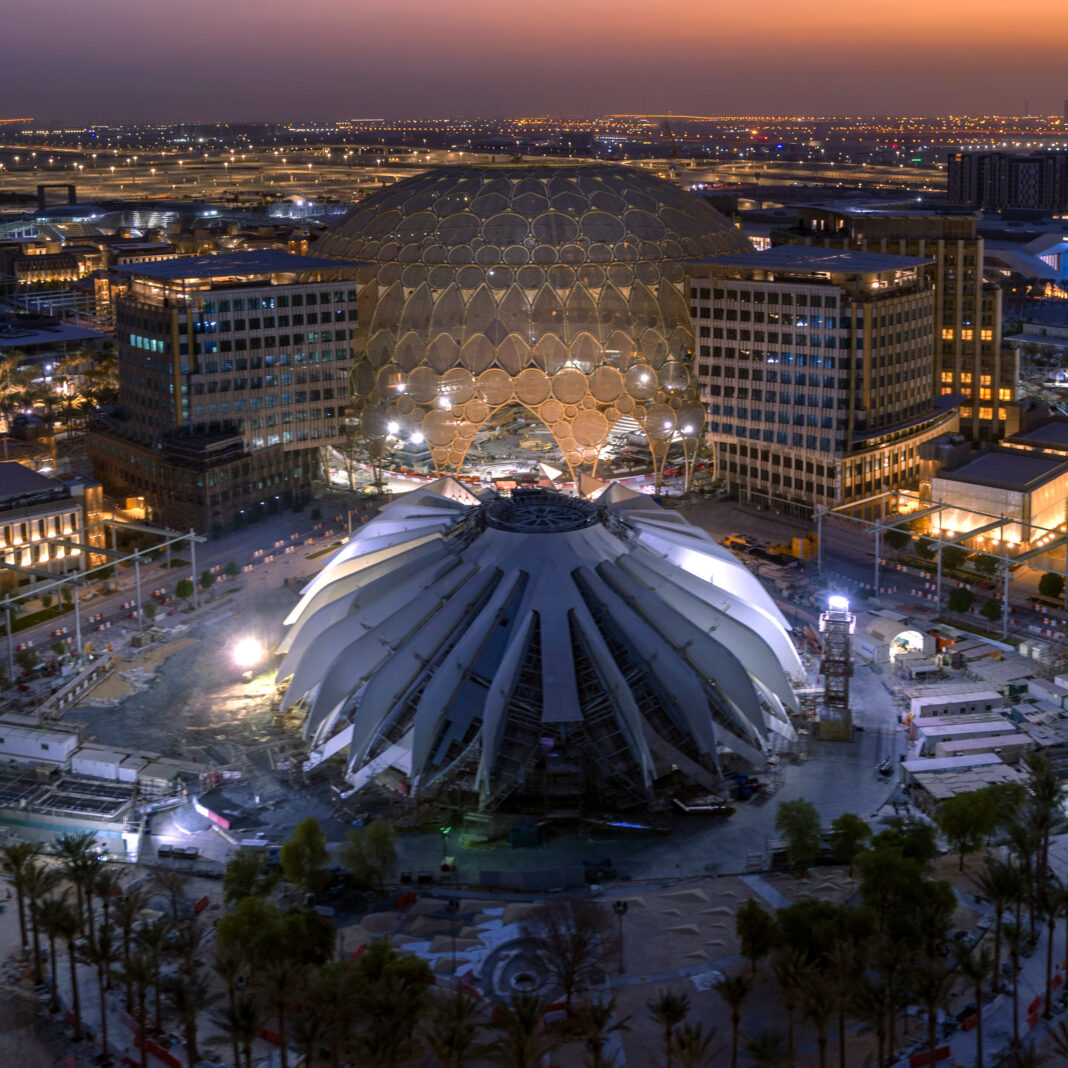
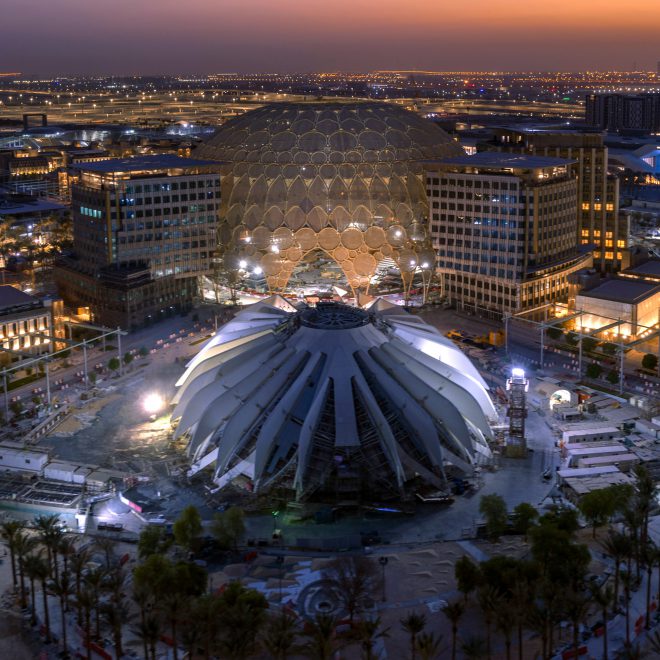
sustainability pavillion Dubai
Dubai’s sustainability pavillion = more man-made mass.

Concrete, steel, pavement. A new study finds we are doubling the mass of the human-made, “anthropogenic” part of the world every twenty years and the curve is not flattening. We now have as much human-made mass as earth’s biomass. 

The mass of all human-produced materials – concrete, steel, asphalt, etc. – has grown to equal the mass of all life on the planet, its biomass. According to a new study at the Weizmann Institute of Science, we are right at this tipping point, and humans are currently adding new buildings, roads, vehicles and products at a rate that is doubling every 20 years, leading to a “concrete jungle” that is predicted to reach over two teratonnes (i.e. two million million) – or more than double the mass of living things, by 2040.

concrete jungle weighs as much as a real jungle scale
We have reached a new tipping point.

The study, published today in Nature and conducted in the group of Prof. Ron Milo of the Plant and Environmental Sciences Department by Emily Elhacham and Liad Ben Uri, shows that at the outset of the 20th century, human-produced “anthropogenic mass” equaled just around 3 % of the total biomass.

How did we get from 3% to an equivalent mass in just over a century? Not only have we humans quadrupled our numbers in the intervening years, the things we produce have far outpaced population growth: Today, on average, for each person on the globe, a quantity of anthropogenic mass greater than their body weight is produced every week.

The upswing is seen markedly from the 1950s on, when building materials like concrete and aggregates became widely available. In the “great acceleration” following World War II, spacious single-family homes, roads and multi-story office buildings sprang up around the US, Europe and other countries. That acceleration has been ongoing for over six decades, and those two materials, in particular, make up a major component of the growth in anthropogenic mass.

“The study provides a sort of ‘big picture’ snapshot of the planet in 2020. This overview can provide a crucial understanding of our major role in shaping the face of the Earth in the current age of the Anthropocene. The message to both the policy makers and the general public is that we cannot dismiss our role as a tiny one in comparison to the huge Earth. We are already a major player and I think with that comes a shared responsibility.” says Milo.

Referring to the dynamics of the human-made materials in our world as a “socio-economic metabolism,” the study invites further comparison with the way that natural materials flow through the planet’s living and geologic cycles. “By contrasting human-made mass and biomass over the last century, we bring into focus an additional dimension of the growing impact of human activity on our planet,” says Elhacham.

Milo: “This study demonstrates just how far our global footprint has expanded beyond our ‘shoe size.’ We hope that once we all have these somewhat shocking figures before our eyes, we can, as a species, take responsibility.”

Milo and Elhacham teamed with graphic designer Itai Raveh to create the website, anthropogenicmass, to help explain these figures in clear, simple terms.

Steven Jacobs urban farmer
Steven Jacobs urban farmer. We met when he was helping farm food for Microsoft employees

Some urban farmers like Steven Jacobs are hoping for a radically rebuilt future. I met Jacobs when he was an Urban Farming Specialist working for Compass Eurest supporting the Redmond Microsoft Campus.

Jacobs writes to me: “If we can ever develop the tools (biological or otherwise) to recycle all this stuff it wouldn’t be an issue.

“Every other dominant organism over earths history seems to have done something similar. Trees are the best and easiest example I can think of. Lignocellulose was just sitting in piles, indigestible, for tens of millions of years. Some genes come along to allow fungi the ability to recycle it and now we see them as keystone species in the ecosystem.

“Imagine if the build environment could follow a similar trend. I really see only 2 roads for us. One road we follow that trend. The other road we follow the other side of that trend, which is organisms who cannot change their environment in a way which other organisms can then use to reduce/reuse/recycle, they die in a fairly abrupt and massive way.”

It’s time to start creating biodegradable cities, maybe?

Karin Kloosterman
Karin Kloostermanhttp://www.greenprophet.com
Karin Kloosterman is an award-winning journalist, innovation strategist, and founder of Green Prophet, one of the Middle East’s pioneering sustainability platforms. She has ranked in the Top 10 of Verizon innovation competitions, participated in NASA-linked challenges, and spoken worldwide on climate, food security, and future resilience. With an IoT technology patent, features in Canada’s National Post, and leadership inside teams building next-generation agricultural and planetary systems — including Mars-farming concepts — Karin operates at the intersection of storytelling, science, and systems change. She doesn’t report on the future – she helps design it. Reach out directly to [email protected]

LEAVE A REPLY

Please enter your comment!
Please enter your name here

TRENDING

Inflatable concrete homes: a California and Ontario case study

Across Ontario and California, builders are rethinking concrete housing through inflatable-shell design—an approach that replaces wooden formwork with air and innovation. A 1,000-square-foot low-carbon concrete shell, insulated with hempcrete, can be erected in a day and cost far less than conventional construction. Over time, the savings in energy, materials, and mortgage costs make this model a realistic response to rising living expenses and climate stress. With low-carbon cement, hempcrete walls, and renewable energy, inflatable concrete homes show how even the world’s most carbon-heavy material can become part of a sustainable future—if built smartly, and within local building codes.

Inflatable Concrete Houses: What Are They & How Much Do They Cost?

Some small Binishell prototypes have been built for around US $3,500 using sprayed concrete over an inflatable form. Automatic Construction reports shell costs of roughly $10–$30 per square foot for 100- to 200-square-foot prototypes—far below standard homebuilding prices. The Vienna method is described as “quick and cost-saving” for double-curved shell structures, but specific dollar/€ cost numbers are not given in the available sources.

Deep sea mining for concrete

Sand is the most important building resource and it is being mined illegally at sea.

Eco concrete entrepreneur killed on electric scooter

Eco-entrepreneur Shimrit Perkol-Finkel, 45 and a mother of 3 girls, was killed on the streets of Tel Aviv while riding an electric scooter this week. The streets of Tel Aviv are dangerous and deadly for drivers and pedestrians. 

Israel’s Itay Kirshenbaum Grows Backyard Furniture

What is up with Israeli designers? On the whole,...

Qatar’s climate hypocrisy rides the London Underground

Qatar remains a master of doublethink—burning gas by the megaton while selling “sustainability” to a world desperate for clean air. Wake up from your slumber people.

How Quality of Hire Shapes Modern Recruitment

A 2024 survey by Deloitte found that 76% of talent leaders now consider long-term retention and workforce contribution among their most important hiring success metrics—far surpassing time-to-fill or cost-per-hire. As the expectations for new hires deepen, companies must also confront the inherent challenges in redefining and accurately measuring hiring quality.

8 Team-Building Exercises to Start the Week Off 

Team building to change the world! The best renewable energy companies are ones that function.

Thank you, LinkedIn — and what your Jobs on the Rise report means for sustainable careers

While “green jobs” aren’t always labeled as such, many of the fastest-growing roles are directly enabling the energy transition, climate resilience, and lower-carbon systems: Number one on their list is Artificial Intelligence engineers. But what does that mean? Vibe coding Claude? 

Somali pirates steal oil tankers

The pirates often stage their heists out of Somalia, a lawless country, with a weak central government that is grappling with a violent Islamist insurgency. Using speedboats that swarm the targets, the machine-gun-toting pirates take control of merchant ships and then hold the vessels, crew and cargo for ransom.

Leopoldo Alejandro Betancourt López Turned Ocean Plastic Into Profitable Sunglasses

Few fashion accessories carry the environmental burden of sunglasses. Most frames are constructed from petroleum-based plastics and acrylic polymers that linger in landfills for centuries, shedding microplastics into soil and waterways long after they've been discarded. Leopoldo Alejandro Betancourt López, president of the Spanish eyewear brand Hawkers, saw this problem differently than most industry executives.

Why Dr. Tony Jacob Sees Texas Business Egos as Warning Signs

Everything's bigger in Texas. Except business egos.  Dr. Tony Jacob figured...

Israel and America Sign Renewable Energy Cooperation Deal

Other announcements made at the conference include the Timna Renewable Energy Park, which will be a center for R&D, and the AORA Solar Thermal Module at Kibbutz Samar, the world's first commercial hybrid solar gas-turbine power plant that is already nearing completion. Solel Solar Systems announced it was beginning construction of a 50 MW solar field in Lebrija, Spain, and Brightsource Energy made a pre-conference announcement that it had inked the world's largest solar deal to date with Southern California Edison (SCE).

Related Articles

Popular Categories