How microbes find an oil spill

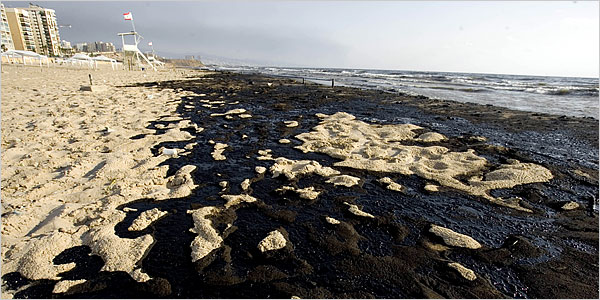
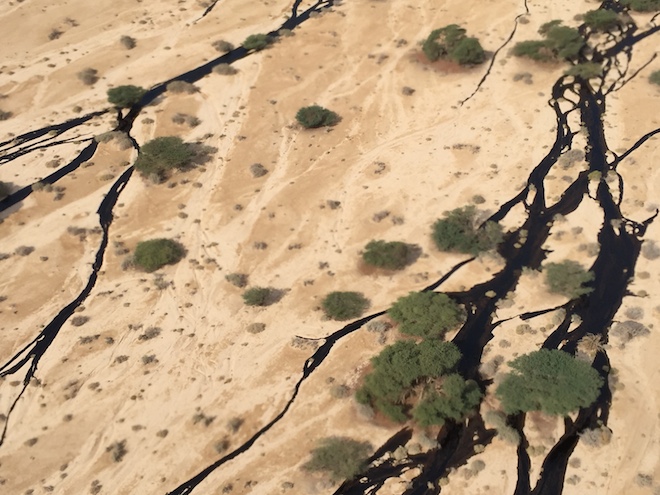
Israel oil spill
An oil spill in Israel, 2014

When containing a massive disaster like an oil spill, small microbes play a big role.

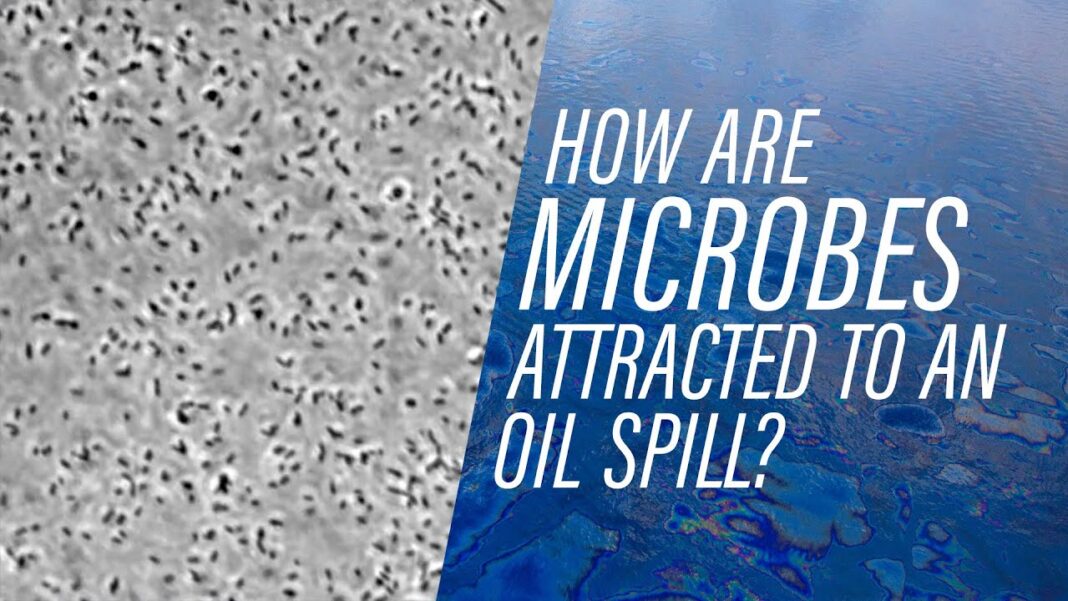
Arezoo Ardekani, a Purdue University associate professor of mechanical engineering, has published research that describes the complex hydrodynamics of microorganisms at liquid-liquid and gas-liquid interfaces, showing that microbes may flock to areas where surfactant has been applied. This is important news for the western east oil producing nations, as many oil spills threaten the Red Sea, Indian ocean and Mediterranean Sea. Bacteria are known to break down oil from oil spills but if we know how the system works we can speed it up and localize the process, when needed. Here’s how.

On April 20, 2010, a catastrophic explosion aboard the Louisiana oil rig Deepwater Horizon caused an underwater wellhead to rupture, discharging oil into the Gulf of Mexico. It took 87 days to cap the underwater well, by which point more than 200 million gallons of oil had discharged into the gulf. Officials used many different tactics to contain the damage of the oil spill, such as relying on microbes to digest hydrocarbons, and using dispersant (or surfactant) chemicals to break up oil slicks, making it easier for the microbes to digest.

deepwater horizon oil spill
Deepwater Horizon oil spill, Gulf of Mexico

“Microbes were the ‘first responders’ to the oil spill,” Ardekani said.  “They remediated a significant amount of hydrocarbons. But the Gulf of Mexico is a big place. How did so many microbes find this oil?”

As Ardekani discovered, the performance of the microbes was affected by the surfactant, but not how anyone expected.

“There are several things that cause microorganisms to move,” she said.  “For example, the microbes near an oil spill may be motivated by chemotaxis, i.e., picking up the chemical trail of a potential food source. But the surfactant actually created a hydrodynamic phenomenon that caused microbes to gather in even greater numbers.”
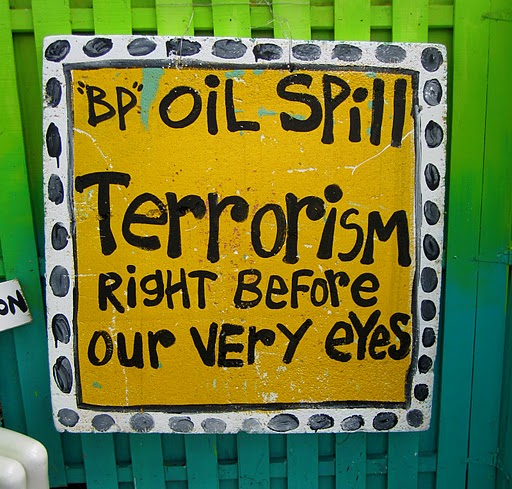
oil spill, nature, conservation, Glf

Ardekani’s team tested its hypothesis in the lab, using E. coli cells, single-celled bacteria, whose behavior is well-known. The researchers 3D-printed a small chamber, where they could microscopically observe the cells’ movements in a liquid suspension, and then tested what happened when that liquid came into contact with another liquid of different viscosity. The results showed that the E. coli cells accumulated at higher density at the liquid-liquid interfaces, and even greater density at gas-liquid interfaces.

Surfactants applied to an oil spill attract microorganisms, due to complex hydrodynamics that were recently discovered by Purdue researchers.

“Those surfactants changed the interface property,” Ardekani said. “If microbes are hydrodynamically attracted to gas-liquid interfaces, the presence of surfactants made it even more attractive.”

Using this experiment as a guide, researchers built theoretical models that successfully explained the complex fluid dynamics at these gas-liquid interfaces. Their research has been featured on the cover of the journal Soft Matter, and also published in the journal Physical Review E.


The use of dispersants during the Deepwater Horizon oil spill was not without controversy; Scientists disagreed on whether the chemicals did more harm than good for the ecosystem. In the aftermath of the disaster, BP spent $500 million to establish the Gulf of Mexico Research Initiative, an independent organization that funds thorough scientific research in mitigating the effects of the spill.

Ardekani’s research is one of the results of that effort.

“We didn’t know any of this before the spill,” Ardekani said.  “The main reason they used dispersants was to break up the size of the oil droplets. But now we have discovered a new hydrodynamic mechanism, that adding surfactant causes microbes to spend more time near oil droplets. That, combined with chemotaxis, may potentially give microbes more time to decompose these hydrocarbons.”

Karin Kloosterman
Karin Kloostermanhttp://www.greenprophet.com
Karin Kloosterman is an award-winning journalist, innovation strategist, and founder of Green Prophet, one of the Middle East’s pioneering sustainability platforms. She has ranked in the Top 10 of Verizon innovation competitions, participated in NASA-linked challenges, and spoken worldwide on climate, food security, and future resilience. With an IoT technology patent, features in Canada’s National Post, and leadership inside teams building next-generation agricultural and planetary systems — including Mars-farming concepts — Karin operates at the intersection of storytelling, science, and systems change. She doesn’t report on the future – she helps design it. Reach out directly to [email protected]

LEAVE A REPLY

Please enter your comment!
Please enter your name here

TRENDING

Italy’s energy company Eni adds Italian flair for design in industrial fusion reactor

“We have the chance to explore new forms of storytelling about energy,” adds Italo Rota, co-designer of the installation. “We believe that design is a powerful tool to turn a narration into an experience, allowing visitors to sense the energy while being surrounded by a unique atmosphere.”

Azerbaijan state energy company buys into Israel’s gas fields

SOCAR will continue its efforts to acquire stakes in strategic assets in foreign countries in the future. It is a major source of income for the authoritarian regime in Azerbaijan.

Gulf oil company wants to support startups in the circular way

Gulf oil companies want to support circular startups: Dr. Abdulwahab Al-Sadoun

The UAE goes nuclear – complete’s first nuclear plant in the Arab world

The United Arab Emirates has gone nuclear to keep running its air conditioners.

Just Stop Oil activists await jail time for Van Gogh and airport vandalism

Just Stop Oil activists are in jail awaiting sentencing.

Qatar’s climate hypocrisy rides the London Underground

Qatar remains a master of doublethink—burning gas by the megaton while selling “sustainability” to a world desperate for clean air. Wake up from your slumber people.

How Quality of Hire Shapes Modern Recruitment

A 2024 survey by Deloitte found that 76% of talent leaders now consider long-term retention and workforce contribution among their most important hiring success metrics—far surpassing time-to-fill or cost-per-hire. As the expectations for new hires deepen, companies must also confront the inherent challenges in redefining and accurately measuring hiring quality.

8 Team-Building Exercises to Start the Week Off 

Team building to change the world! The best renewable energy companies are ones that function.

Thank you, LinkedIn — and what your Jobs on the Rise report means for sustainable careers

While “green jobs” aren’t always labeled as such, many of the fastest-growing roles are directly enabling the energy transition, climate resilience, and lower-carbon systems: Number one on their list is Artificial Intelligence engineers. But what does that mean? Vibe coding Claude? 

Somali pirates steal oil tankers

The pirates often stage their heists out of Somalia, a lawless country, with a weak central government that is grappling with a violent Islamist insurgency. Using speedboats that swarm the targets, the machine-gun-toting pirates take control of merchant ships and then hold the vessels, crew and cargo for ransom.

Leopoldo Alejandro Betancourt López Turned Ocean Plastic Into Profitable Sunglasses

Few fashion accessories carry the environmental burden of sunglasses. Most frames are constructed from petroleum-based plastics and acrylic polymers that linger in landfills for centuries, shedding microplastics into soil and waterways long after they've been discarded. Leopoldo Alejandro Betancourt López, president of the Spanish eyewear brand Hawkers, saw this problem differently than most industry executives.

Why Dr. Tony Jacob Sees Texas Business Egos as Warning Signs

Everything's bigger in Texas. Except business egos.  Dr. Tony Jacob figured...

Israel and America Sign Renewable Energy Cooperation Deal

Other announcements made at the conference include the Timna Renewable Energy Park, which will be a center for R&D, and the AORA Solar Thermal Module at Kibbutz Samar, the world's first commercial hybrid solar gas-turbine power plant that is already nearing completion. Solel Solar Systems announced it was beginning construction of a 50 MW solar field in Lebrija, Spain, and Brightsource Energy made a pre-conference announcement that it had inked the world's largest solar deal to date with Southern California Edison (SCE).

Related Articles

Popular Categories