

We have a tendency to go about traveling as we go about our busy daily lives: frantically ticking off our to-do list to make sure we make the most of our time – and have a lot of Instagrammable pictures to show for it. But more and more people are realizing that making the best of our time might mean something completely different: it requires us to slow down, so we can really appreciate the places we visit.
The best part: while traveling slow gives us a more meaningful experience, it also maximizes benefits for local communities and the environment. With traveling slow, everybody wins. (I even learned what it takes to build a successful NGO).
My travel burn-out (yes, it’s a thing)
I learned to travel slow by experience, long before I knew there was such a thing as a slow travel movement. In January 2017 I quit my job, sold my belongings, and bought a one-way ticket to Bangkok: I was off on a long backpacking trip through Asia. Although I had all the time in the world, I felt the need to see and do as much as possible and moved around a lot, staying in one place only for a few days before moving on to the next.
While I had an amazing time at first, a few months into my trip I noticed I just wasn’t that excited for anything anymore. Another gorgeous waterfall? Mwah, I’ll pass. Another mesmerizing temple? Please, no. Was that a camel passing me by on the street just now? Ah well, what’s new. After the excitement of the first months of traveling wore off I was left with a feeling I had seen it all before. I had caught a serious case of travel fatigue.
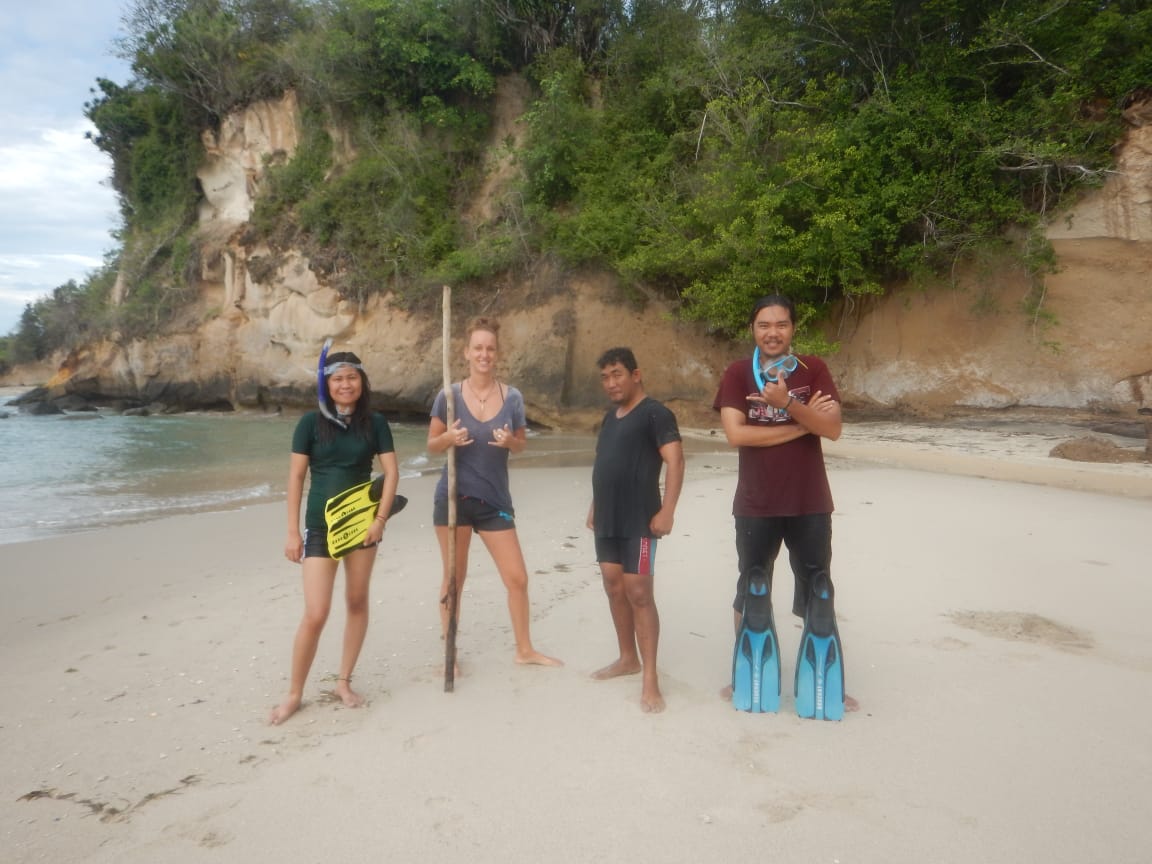
I concluded it was time for a break from traveling and decided to look for a comfortable place to settle down for a while. I found the perfect spot on some remote beach on a Malaysian island and resolved to make no plans, but instead stay put as long as I felt like it, doing absolutely nothing remarkable. I ended up staying two months – and emerged from it with a new perspective on traveling.
During this time something incredible happened: I made amazing connections to other people, got a renewed appreciation for nature, and learned an awful lot about myself. These two months had more impact on me as a person than all the previous months of traveling together. From then on, I would not even bother with trying to see it all. Instead, I would focus on connecting to the places I visited – I chose quality over quantity.
Welcome to the slow travel movement
Later I learned that the new way of traveling I discovered actually has a name: it’s called slow travel. It’s part of an increasingly popular movement that includes other aspects of slow living, such as slow food and slow fashion.
It all started with the slow food movement, that originated in Rome in 1986, as a protest against the opening of a McDonald’s restaurant in the city. Many Italians considered fast food an insult to the long-standing Italian culinary tradition. Journalist Carlo Petrini launched a culinary philosophy that embodied exactly the opposite of fast food: slow food. It stood for quality food, use of local ingredients, and preservation of traditional dishes, and emphasized the importance of enjoyment in buying, preparing, and sharing food – qualities that were being lost in fast-paced modern society.
All concepts related to slow living counter the prevailing notion that “faster is better”, which translates into a lifestyle that’s typically hurried, stressed, impatient, and superficial. Instead, slow living centers around living consciously, intentionally, mindfully, and deeply. It means taking the time to do things properly, thus creating a more meaningful and fulfilling experience. It’s about savoring the minutes, not counting them, and living a balanced life in a fast-paced world.
Applied to traveling, this means slowing down your pace in order to really immerse yourself in your environment and connect to places you visit. It means letting go of your schedule and allowing yourself to explore freely. It involves getting to know a place on a deeper level by connecting to local people and immersing yourself in the local culture. It’s about being open to new experiences and learning to appreciate different ways of life in all their complexity.
Back to the roots (why we travel in the first place)
Traveling slow makes all the more sense when you consider why people travel in the first place. Most of us travel to experience something we can’t experience back home. Personally, I set out to travel the world because I wanted to break free from my predictable life, my daily routines, and fixed patterns. I was aching to experience new and different things, to see what the world was like outside my little bubble, and get a glimpse of how other people lived their lives. I wanted to see the world to get a fresh perspective on life.
But how was I ever going to get a new perspective by sticking to a pre-arranged plan? That would only allow me to see the things I was expecting to see, the things I already knew existed. The only way to go beyond that and explore new, unknown territories, was to create space for the unplanned, the unexpected, the spontaneous. If you want your travel to mean something, to transform you, and to provide you with new insights – and it should! – you have to be willing to let go and explore with an open mind.
Traveling slow, by the way, doesn’t mean you must travel at a snail’s pace or have oceans of time at hand. Traveling slow, above all, is a mindset. It’s about having a basic habit of pacing yourself, taking as much time as you need to immerse yourself in a place, and prioritizing the quality of the experience. Whether you apply them during a gap year or a weekend break, the principles remain the same.
An ethical alternative to mass tourism
From the above, it naturally follows that slow travel provides a way more enriching and fulfilling experience than the kind of fast travel that sees a trip as a checklist or photo competition. But it gets better: slow travel doesn’t just benefit the traveler, but local communities and the environment as well.
Slow travel values connecting with local people and culture. In their search for authenticity, slow travelers tend to venture off the beaten trail and stay away from tourist hotspots, big chain resorts, and international restaurants. They’d rather explore the hidden gems, wander around local neighborhoods, stay at small guesthouses or homestays, and try traditional dishes at local eateries. They can’t be bothered with buying touristy souvenirs, but are interested in original local produce. By doing so, the money they spend supports local families and helps traditional local businesses thrive.
This stands in stark contrast to traditional mass tourism, which often does little to advance the interests of local communities. Mass tourism is big business, with profits often flowing to rich foreign investors and large companies that push local entrepreneurs out of business. Unrestricted tourism risks changing the character of places beyond recognition and threatening traditional ways of living. Overtourism can even make places unliveable for local residents. This obviously doesn’t do local communities justice – their interests should always come first.
Slow travel promotes a fair and ethical travel industry by empowering local businesses, supporting the preservation of the unique character of places, and taking the pressure off tourist hotspots suffering from the effects of overtourism. Beyond that, slow travel invites travelers and local people to engage in meaningful interactions, which promotes cultural exchange and cross-cultural understanding, for the benefit of all parties involved. Slow travel doesn’t capitalize on places, but aims to make places better – for local communities as well as travelers.
An eco-friendly travel style
In less obvious ways, slow travel also benefits the environment. A big environmental issue related to traveling concerns the emissions travelers inevitably produce by moving from A to B. While slow travelers might not be completely carbon neutral, they minimize their footprints by visiting a small amount of locations and traveling short distances, consequently using less transportation than fast travelers who hop between destinations all the time.
Slow travelers are also more likely to use public and shared forms of transport – such as trains and buses – which provide great opportunities to mingle with locals and are less damaging to the environment than flights or private cars. Plus, for slow travelers there is no better way to explore an area than by bicycle or foot, using all five senses to experience the place. After all, a slow traveler wants to enjoy every step of the way. From that point of view, sitting in planes is the ultimate bore.
In addition, slow travel puts less strain on the environment by emphasizing the consumption of regional produce and traditional food, typically prepared with locally sourced ingredients – meaning no products have to be imported from abroad just to cater to their culinary wishes (and really, why would you want to have a hamburger when you can eat the best pasta in the world anyway?).
An added bonus to slow travel
Last but not least, slow travel often has an unintentional but most welcome side-effect – at least for those of us who don’t have unlimited resources to fund our trips. Although slow travel can take many shapes and is suitable for different budgets, it can reduce the costs of traveling significantly. Cutting down on transportation costs and entry fees for expensive tourist attractions makes a big difference in your budget, and local guesthouses and eateries are often cheaper than luxury resorts and fancy restaurants.
Slow travel isn’t just friendly to people and the planet, but also to your wallet. If you still needed convincing of the benefits of slow travel – maybe this wins you over.