
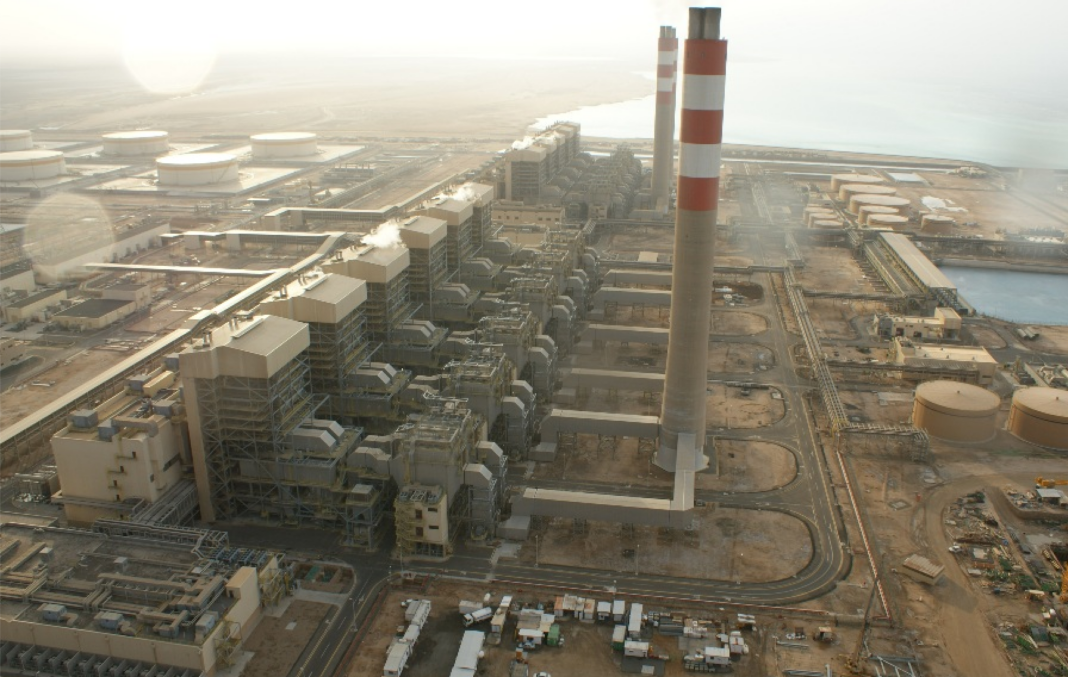


It’s kind of like the Shaggy song, even when he’s caught red handed: it wasn’t me. Greenhouse gas production from coal and oil are on the increase. No one is taking responsibility. We are in deep, deep trouble, new UN “Gap” report unveils today.
So it’s time to wake up Middle East! The Production Gap Report – produced by leading research organizations and the UN – is the first assessment of the gap between Paris Agreement goals and countries’ planned production of coal, oil and gas.

The world is on track to produce far more coal, oil and gas than would be consistent with limiting warming to 1.5°C or 2°C, creating a “production gap” that makes climate goals much harder to reach, according to the first report to assess countries’ plans and projections for fossil fuel production.
The Production Gap Report complements the UN Environment Programme (UNEP) Emissions Gap Report, which shows that country pledges fall short of the emission reductions needed to meet global temperature limits.
Countries are planning to produce fossil fuels far in excess of the levels needed to fulfil their climate pledges under the Paris Agreement, which themselves are far from adequate. This overinvestment in coal, oil, and gas supply locks in fossil fuel infrastructure that will make emissions reductions harder to achieve. “Over the past decade, the climate conversation has shifted. There’s greater recognition of the role that the unfettered expansion of fossil fuel production plays in undermining climate progress,” said Michael Lazarus, a lead author on the report and the director of Stockholm Environment Institute’s US Center.
“This report shows, for the first time, just how big the disconnect is between Paris temperature goals and countries’ plans and policies for coal, oil, and gas production. It also shares solutions, suggesting ways to help close this gap through domestic policies and international cooperation.”
The report was produced by leading research organizations, including the Stockholm Environment Institute (SEI), International Institute for Sustainable Development, Overseas Development Institute, CICERO Centre for International Climate and Environmental Research, Climate Analytics, and UNEP.
Over fifty researchers contributed to the analysis and review, spanning numerous universities and additional research organizations.
In the report preface, UNEP Executive Director Inger Andersen notes that carbon emissions have remained exactly at the levels projected a decade ago, under the business-as-usual scenarios used in Emissions Gap Reports.
“This calls for a sharpened, and long overdue, focus on fossil fuels,” she writes. “The world’s energy supply remains dominated by coal, oil and gas, driving emission levels that are inconsistent with climate goals. To that end, this report introduces the fossil fuel production gap, a new metric that clearly shows the gap between increasing fossil fuel production and the decline needed to limit global warming.”
The report’s main findings include:
• The world is on track to produce about 50% more fossil fuels in 2030 than would be consistent with limiting warming to 2°C and 120% more than would be consistent with limiting warming to 1.5°C.
• This production gap is largest for coal. Countries plan to produce 150% more coal in 2030 than would be consistent with limiting warming to 2°C, and 280% more than would be consistent with limiting warming to 1.5°C.
• Oil and gas are also on track to exceed carbon budgets, with continued investment and infrastructure locking in use of these fuels, until countries are producing between 40% and 50% more oil and gas by 2040 than would be consistent with limiting warming to 2°C.
• National projections suggest that countries are planning on 17% more coal, 10% more oil and 5% more gas production in 2030 than consistent with NDC implementation (which itself is not enough to limit warming to 1.5°C or 2°C). Countries have numerous options for closing the production gap, including limiting exploration and extraction, removing subsidies, and aligning future production plans with climate goals. The report details these options, as well as those available through international cooperation under the Paris Agreement.
The authors also emphasize the importance of a just transition away from fossil fuels.
“There is a pressing need to ensure that those affected by social and economic change are not left behind,” said report author and SEI Research Fellow Cleo Verkuijl. “At the same time, transition planning can build consensus for more ambitious climate policy.”
The Production Gap Report comes as more than 60 countries have already committed to updating their nationally determined contributions (NDCs), which set out their new emission reduction plans and climate pledges under the Paris Agreement, by 2020.
“Countries can use this opportunity to integrate strategies to manage fossil fuel production into their NDCs – which in turn will help them reach emission reduction goals,” said Niklas Hagelberg, UNEP’s climate change coordinator.
“Despite more than two decades of climate policy making, fossil fuel production levels are higher than ever,” said SEI’s Executive Director, Måns Nilsson. “This report shows that governments’ continued support for coal, oil and gas extraction is a big part of the problem. We’re in a deep hole – and we need to stop digging.”




[…] the global energy discourse and stay informed on developments in the renewable energy sector. Guess Greta Thunberg had something to do with […]