An international day for electronic waste

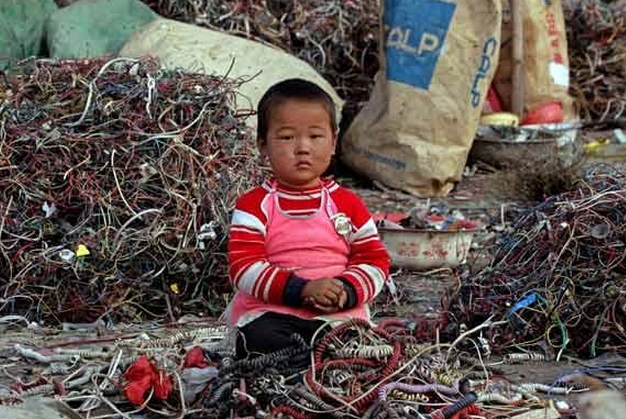
china boy child labor e-waste
Children from all over the world are making a living sorting through e-waste.

More than one hundred organisations from over forty countries worldwide will organise activities as part of the second International E-Waste Day taking place on 14th October.

E-waste is an abbreviation for electronic waste, all the metals and materials that get dumped when we throw out our old devices. Some countries like Canada have a fee on new goods bought to recycle them at end of life, and plenty of facilities to bring them to when they die. But not every country is like this. 

So, the event organised by the WEEE Forum, is intended to educate people better on the e-waste problem. An international association of e-waste collection schemes, and its members, brings together e-waste stakeholders across the world to promote the correct disposal of electrical and electronic equipment to enable reuse and recycling.

The International Telecommunication Union, the UN agency responsible for ICT is involved. Well as much as its able. The UN moves slow for action but does serve an important role in motivating countries to file reports about the size of the e-waste problem. 

Growing problem of poisonous e-waste

It is estimated that 50 million tonnes of e-waste will be generated across the planet in 2019. Half of this is personal devices such as computers, screens, smartphones, tablets and TVs, with the remainder being larger household appliances and heating and cooling equipment.

Pakistan, E-waste, soil contamination, water contamination, pollution

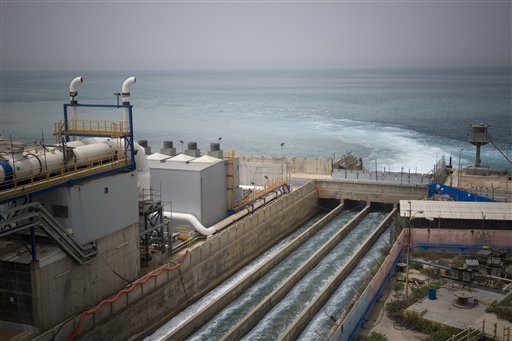
Only around 20% of global e-waste is recycled each year (this company from Israel is one of them – in Hebrew), which means that 40 million tonnes of e-waste per year is either placed in landfill, burned or illegally traded and treated in a sub-standard way and this is despite 66% of the world’s population being covered by e-waste legislation. E-waste or electronic waste happens when you throw out your computer, laptop or cell phone, generating hazardous materials from electronics parts.

E-waste loses raw materials forever

This results in the huge loss of valuable and critical raw materials from the supply chain and causes serious health, environmental and societal issues through illegal shipments of waste to developing countries.

Initiatives being undertaken by participant organisations are designed to increase consumers’ knowledge about e-waste and how to dispose of it correctly. These initiatives are many and diverse and include conferences, school and city collections, promotions in stores and recycling centres, videos and animations, and an online guide for proper e-waste disposal. All of these will be promoted locally on and around International E-waste Day.

Infographics for electronic waste

The WEEE Forum itself has developed a series of infographics that illustrate the growing e-waste problem as well as videos featuring different representatives from e-waste value chain giving their take on how to tackle the challenge. All the materials can be viewed here.

Karmenu Vella, EU Commissioner for Environment, Maritime Affairs and Fisheries explained in his dedicated video message for International E-Waste Day, “We are entering the next stage in Europe’s commitment to foster a circular economy. This will be part of the new Green Deal for Europe announced by the incoming Commission President Ursula van der Leyen.”

He continued “Prevention and dealing with e-waste will be part and parcel of our coming work. This means recycling all our electronic waste where it cannot be avoided. But it also means rethinking the value chain for electronic goods. It means considering their appropriateness for reuse or recycling from conception. It means even going beyond and prioritizing dematerialization and closed loop systems.”

EU makes a pact to clean up e-waste

Pascal Leroy, Director General of the WEEE Forum, said, “From 2019, the minimum collection rate to be achieved annually in EU member states will be 65% of the average weight of appliances placed on the market in the three preceding years, or alternatively 85% of WEEE generated. The new collection targets seek to ensure that around 10 million tonnes, or roughly 20 kg per capita, will be separately collected. Such a high collection rate is impossible to reach without the involvement of all actors in the value chain, including citizens. We are confident that International E-Waste Day will contribute to improving the societal awareness and through this help in improving the collection rates not only in Europe, but also globally.”

He added: “There are many countries worldwide that are currently in the process of implementing e-waste legislation. We are therefore very pleased to have participants from six continents involved in this year’s International E-Waste Day”.

Karin Kloosterman
Karin Kloostermanhttp://www.greenprophet.com
Karin Kloosterman is an award-winning journalist, innovation strategist, and founder of Green Prophet, one of the Middle East’s pioneering sustainability platforms. She has ranked in the Top 10 of Verizon innovation competitions, participated in NASA-linked challenges, and spoken worldwide on climate, food security, and future resilience. With an IoT technology patent, features in Canada’s National Post, and leadership inside teams building next-generation agricultural and planetary systems — including Mars-farming concepts — Karin operates at the intersection of storytelling, science, and systems change. She doesn’t report on the future – she helps design it. Reach out directly to [email protected]

Hot this week

How Renewable Energy is Revolutionizing the Way We Power Our World

Solar has become the star of the transition thanks to modular hardware and straightforward installation. It fits dense cities and remote towns alike. Many companies are turning to rooftop arrays and carport systems - and exploring commercial solar installation as a practical way to lock in future savings.

How does one start prepping?

Faced with an extreme winter storm this year, Americans wonder how to be prepared for catastrophe. Miriam has lived through wars in the Middle East - so she's prepared on giving you a guide to prepping.

Fishermen sue tire manufacturers on behalf of the salmon

A federal trial in San Francisco has brought US tire manufacturers, fishing groups, and environmental scientists into court over a chemical most drivers have never heard of — but which scientists say may be silently reshaping aquatic ecosystems.

Listening to Water: Tarek Atoui’s Next Work for Tate Modern

Born in Beirut, Lebanon in 1980 and now living in Paris, Atoui has spent years building instruments that don’t sit comfortably in concert halls. Many of them involve water, glass, and ceramics — materials that react to sound instead of simply producing it.

Leading Through a Dual-Energy Transition: Balancing Decarbonisation with Energy Security

Experience in one area of the energy industry isn't enough to guarantee readiness across all the others. That's where a structured program like an MBA in energy can come in. Today's advanced curricula explore energy economics, finance, policy, and strategic management alongside the technical subjects. And when pursuing an energy MBA online, professionals can skill up and retrain without having to step out of the labor market -- an important perk at a time when skilled professionals are already in short supply.

Topics

How Renewable Energy is Revolutionizing the Way We Power Our World

Solar has become the star of the transition thanks to modular hardware and straightforward installation. It fits dense cities and remote towns alike. Many companies are turning to rooftop arrays and carport systems - and exploring commercial solar installation as a practical way to lock in future savings.

How does one start prepping?

Faced with an extreme winter storm this year, Americans wonder how to be prepared for catastrophe. Miriam has lived through wars in the Middle East - so she's prepared on giving you a guide to prepping.

Fishermen sue tire manufacturers on behalf of the salmon

A federal trial in San Francisco has brought US tire manufacturers, fishing groups, and environmental scientists into court over a chemical most drivers have never heard of — but which scientists say may be silently reshaping aquatic ecosystems.

Listening to Water: Tarek Atoui’s Next Work for Tate Modern

Born in Beirut, Lebanon in 1980 and now living in Paris, Atoui has spent years building instruments that don’t sit comfortably in concert halls. Many of them involve water, glass, and ceramics — materials that react to sound instead of simply producing it.

Leading Through a Dual-Energy Transition: Balancing Decarbonisation with Energy Security

Experience in one area of the energy industry isn't enough to guarantee readiness across all the others. That's where a structured program like an MBA in energy can come in. Today's advanced curricula explore energy economics, finance, policy, and strategic management alongside the technical subjects. And when pursuing an energy MBA online, professionals can skill up and retrain without having to step out of the labor market -- an important perk at a time when skilled professionals are already in short supply.

From Green Energy to Healthy Societies: Why old systems thinking is becoming relevant again

Across the Middle East and North Africa, large investments are being made in green hydrogen, renewable energy, water infrastructure and sustainability. Most of these efforts are discussed in the context of climate change, decarbonization and economic diversification. That framing is important, but it may not capture their full value.

We saw peace – an interreligious encounter deep in our eyes

They came from Israel, Palestine, Jordan, Iraq, Yemen, Morocco, Tunisia, Lebanon, Egypt… There are Sunni Muslims, Shiite Muslims, Jews (Orthodox and Reform), Orthodox Christians, Coptic Christians, Protestant Christians, Druze, Baha'is, a Scientologist.

Can biochar reduce ‘Forever Chemicals’ in food if it’s used in farms?

Biochar is produced by heating organic material in a low-oxygen environment so it does not burn. This process, known as pyrolysis, transforms plant matter into a stable, carbon-rich material.

Related Articles

Popular Categories