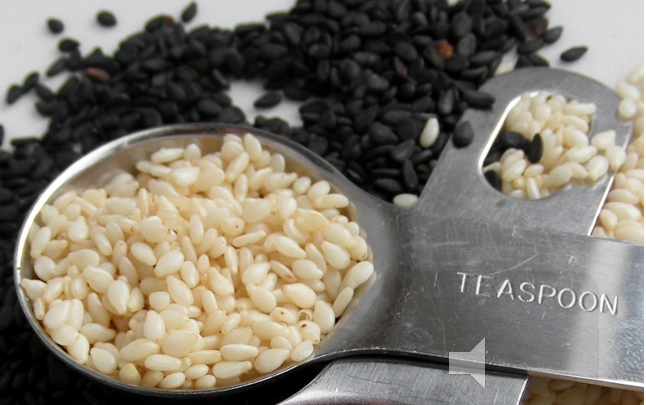


Climate change is a reality. New research shows that drought-tolerant crops like sesame (the main ingredient in tehini!) is an ideal alternative in regions that have relied on cotton or sorghum for this very same reason.
Texas has a long history of growing cotton. It’s a resilient crop, able to withstand big swings in temperature fairly well. However, growing cotton in the same fields year after year can be a bad idea. Nutrients can get depleted. Disease can lurk in the ground during the winter season, only to attack the following year. Thus, rotating cotton with other crops could be a better system.
Agronomists have been researching various alternative crops that will grow well in western Texas. This area is part of the Ogallala water aquifer, which has been hit extremely hard the past few decades by drought. Another crop, sorghum, grows well with low water availability, but the yield can be greatly affected by drought conditions.
Irish Lorraine B. Pabuayon, a researcher at Texas Tech University (TTU), is on the team looking at an alternative crop for west Texas: sesame.
Like cotton and sorghum, sesame is also a “low-input” crop. This means it does not need a great deal of water, something that vegetable crops, corn and wheat need regularly and in large quantities.
“When introducing new crops to a water-limited system, it is important for growers to justify the water requirements of the new crops,” says Pabuayon. “Properly determining the water requirements of the crops is important. Management decisions for wise use of limited water resources requires understanding a crop’s moisture requirements.”
Pabuayon and the TTU team found that even under conditions that lowered sorghum and cotton yields, sesame performed well. This could be good news for west Texas farmers.
“Our results showed that sesame yields were not significantly altered under water-deficit conditions,” says Pabuayon. “Sesame continued to have consistent yields, even when water-deficit conditions decreased sorghum’s yield by 25% and cotton’s yield by 40%.”
Having another crop that has good market value and can grow well during drought could benefit west Texas farmers. According to Pabuayon, sesame seeds are commonly used for food consumption and other culinary uses. The seeds are high in fat and are a good source of protein. Sesame is a major source of cooking oil. The remaining parts of sesame, after oil extraction, are good sources of livestock feed. Sesame has uses in the biodiesel industry, and even in cosmetics. This means there are multiple markets for the tiny seeds.
“Provided that the market price of sesame can support current yields, the results are favorable for low-input sesame production in west Texas,” says Pabuayon. “However, the relatively low yields of sesame (per acre, compared to cotton and sorghum) suggest opportunities for additional genetic advancement. Currently, sesame varieties available for Texas are well-suited as an alternative crop for water-limited crop production systems.