Why Reusable Menstrual Products are Good for the Environment

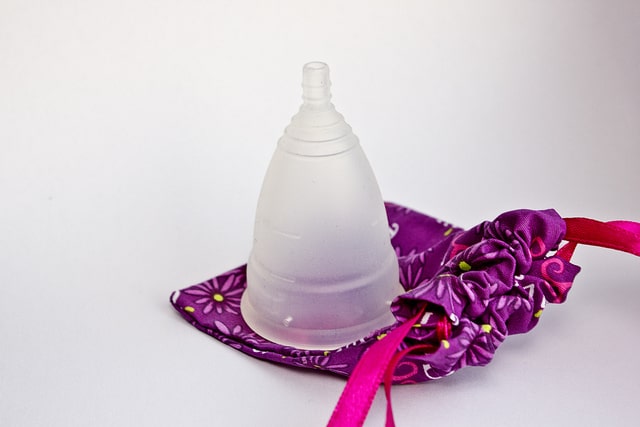
Reusable menstruation cup
Menstrual cup collects menstrual blood, and you can reuse it

 Do you use homemade pads or moon cups? There are so many alternatives to wasteful products that choke our bodies and our natural environment.

The environment is big news right now. Our oceans are full of plastic waste and there are bulging landfill sites all over the world. The biggest problem with the never-ending stream of human waste is that most of it is likely to stick around for a very long time.

menstrual cups in colours
Menstrual cups in colors of the rainbow

One of the biggest issues is plastic. Each year, we produce millions of tons of the stuff, and every day, around eight million bits of plastic waste end up in the ocean. Conservative estimates say there are around 51 trillion microscopic pieces of plastic in the ocean right now. None of this plastic waste ever goes away. Larger plastic objects break down slowly, over many decades, until they become microscopic plastic fragments, which are swallowed by marine animals and eventually consumed by us and them.

The damage caused to our environment is shocking. You might think that photos of marine animals lying dead on a beach, their stomachs full of plastic waste, does not affect you directly, but it does. Plastic pollution causes knock-on effects, such as chemical contamination of waterways, which ends up in our drinking water. It’s also unpleasant to walk along an idyllic beach and spot used tampons and sanitary towels washed up by the tide.

Bad for the Environment

Tampons and sanitary towels are bad for the environment. They are not sustainable and cause long-term, lasting damage to the world around us. Most of the materials used to manufacture tampons and sanitary towels are non-recyclable, which means they end up in landfill sites and floating in oceans.

On average, women use around 11,000 disposable sanitary products in one lifetime. That’s a lot of waste. Even organic tampons, which are made from organic cotton, are not good for the environment. They do break down, but it’s incredibly slow. In addition, most of the packaging, and in the case of many brands of tampons, the applicators, are made from plastic, so they never break down.

One way to do your bit for the environment is to switch to reusable sanitary products.

Menstrual Cups and Period Panties

Menstrual cups and period panties are more eco-friendly than tampons and sanitary towels. Instead of being discarded after each use, menstrual cups and period panties are reusable and will last for several years.

Menstrual cups are designed to be worn internally, where they collect menstrual blood. Period panties look like regular underwear, except they have a thick, super absorbent layer to soak up period blood and prevent leaks. In both cases, you rinse or wash them rather than throw them away.

There are many different brands of both out there, including Diva Cup, Lunette, Thinx, and Lunapads. You can read menstrual cup and period panty reviews online if you need some help and advice. Alternatively, ask your friends what they use or connect with other users on social media; there is a whole sub-culture of women who actively promote plastic-free periods on Instagram and YouTube. By making the switch to reusable sanitary products, you can join the community and the conversation.

Aa well as being much better for the environment, reusable sanitary products are also much better for your pocket.

Period Poverty Around the World

Women spend around $100 on sanitary products every year. This is a big expenditure for girls and women in low-income households, and in many rural areas, women and girls are forced to make do with rags to soak up their period blood.

Reusable sanitary products are rinsed/washed and reused. With the right care, they can last several years, which saves the user a lot of money.

Menstrual cups and period panties are also a lot easier to use. Once you get used to the technique of inserting and removing a menstrual cup, you will wonder why you haven’t made the switch before. It is far easier removing and emptying a menstrual cup when there is no bathroom available. As long as you have some clean water to rinse your hands and the cup, you are good to go.

Blood as a fertilizer on farms?

In addition, menstrual blood is good for the environment and can be used as an iron-rich fertilizer for plants and vegetables.

african farmer in a greenhouse
Human waste including blood, can be used for fertilizing plants. With caution. 

There are many reasons to make the switch to reusable menstrual products such as menstrual cups and period panties. If you’re not convinced yet, try it for one month and see how you get on?


Karin Kloosterman
Karin Kloostermanhttp://www.greenprophet.com
Karin Kloosterman is an award-winning journalist, innovation strategist, and founder of Green Prophet, one of the Middle East’s pioneering sustainability platforms. She has ranked in the Top 10 of Verizon innovation competitions, participated in NASA-linked challenges, and spoken worldwide on climate, food security, and future resilience. With an IoT technology patent, features in Canada’s National Post, and leadership inside teams building next-generation agricultural and planetary systems — including Mars-farming concepts — Karin operates at the intersection of storytelling, science, and systems change. She doesn’t report on the future – she helps design it. Reach out directly to [email protected]

LEAVE A REPLY

Please enter your comment!
Please enter your name here

TRENDING

Urban miner Sortera raises $45 million USD to pull aluminum from the scrap pile

Sortera Technologies, founded in 2020 by Nalin Kumar and Manuel Garcia, is emerging as a major U.S. circular-industry player. Led by CEO Michael Siemer, the company uses AI and advanced sensors to turn scrap metal into high-value aluminum alloys. Its new ~$45 million funding round signals investor appetite for industrial decarbonisation—where emissions cuts come not from PR-friendly solar installs, but from upgrading the materials that power EVs, solar frames, and construction.

Waste Reform from the Ground Up: How Trash Balers Are Helping Cities Rethink Sustainability

If you’ve ever watched a recycling truck weaving through city streets, you’ve seen the problem firsthand. Most of what we call “recycling” still depends on long-distance transportation and centralized sorting facilities. Those systems are energy-intensive and prone to contamination — the dreaded mix of wet food, plastic wrap, and paper that renders recyclables useless.

Scientists Crack the Code for Low-Cost, Low-Carbon Plastic Recycling

While enzymatic recycling offers hope for managing existing plastic waste, scientists and environmental advocates agree it must be paired with the development of bio-based plastics—materials made from renewable biological sources like corn starch, sugarcane, or algae. Unlike conventional plastics derived from fossil fuels, bio-based alternatives can dramatically reduce carbon emissions at the production stage and are often compatible with closed-loop recycling.

Long-term coffee drinking food for women’s health

If you’re a woman in your 40s or 50s enjoying your morning brew, this study gives new reason to sip with purpose. But even more importantly, it underscores a simple truth we often return to: wellness is cumulative. The choices we make today—how we move, what we eat, how we rest, and yes, how we caffeinate—are the building blocks of the decades to come.

Chewing gum releases thousands of bits of microplastics in your mouth

While chewing gum may seem like a harmless habit, recent studies have revealed a concerning reality: microplastics are a part of our daily lives, even in the things we put in our mouths. As we transition further into a world dominated by synthetic materials, it's crucial to stay informed about the potential risks of microplastics. As Mohanty and his team continue to explore this issue, we must remain cautious and mindful of the products we consume, taking steps to reduce our exposure to plastics and advocating for more sustainable alternatives.

Qatar’s climate hypocrisy rides the London Underground

Qatar remains a master of doublethink—burning gas by the megaton while selling “sustainability” to a world desperate for clean air. Wake up from your slumber people.

How Quality of Hire Shapes Modern Recruitment

A 2024 survey by Deloitte found that 76% of talent leaders now consider long-term retention and workforce contribution among their most important hiring success metrics—far surpassing time-to-fill or cost-per-hire. As the expectations for new hires deepen, companies must also confront the inherent challenges in redefining and accurately measuring hiring quality.

8 Team-Building Exercises to Start the Week Off 

Team building to change the world! The best renewable energy companies are ones that function.

Thank you, LinkedIn — and what your Jobs on the Rise report means for sustainable careers

While “green jobs” aren’t always labeled as such, many of the fastest-growing roles are directly enabling the energy transition, climate resilience, and lower-carbon systems: Number one on their list is Artificial Intelligence engineers. But what does that mean? Vibe coding Claude? 

Somali pirates steal oil tankers

The pirates often stage their heists out of Somalia, a lawless country, with a weak central government that is grappling with a violent Islamist insurgency. Using speedboats that swarm the targets, the machine-gun-toting pirates take control of merchant ships and then hold the vessels, crew and cargo for ransom.

Leopoldo Alejandro Betancourt López Turned Ocean Plastic Into Profitable Sunglasses

Few fashion accessories carry the environmental burden of sunglasses. Most frames are constructed from petroleum-based plastics and acrylic polymers that linger in landfills for centuries, shedding microplastics into soil and waterways long after they've been discarded. Leopoldo Alejandro Betancourt López, president of the Spanish eyewear brand Hawkers, saw this problem differently than most industry executives.

Why Dr. Tony Jacob Sees Texas Business Egos as Warning Signs

Everything's bigger in Texas. Except business egos.  Dr. Tony Jacob figured...

Israel and America Sign Renewable Energy Cooperation Deal

Other announcements made at the conference include the Timna Renewable Energy Park, which will be a center for R&D, and the AORA Solar Thermal Module at Kibbutz Samar, the world's first commercial hybrid solar gas-turbine power plant that is already nearing completion. Solel Solar Systems announced it was beginning construction of a 50 MW solar field in Lebrija, Spain, and Brightsource Energy made a pre-conference announcement that it had inked the world's largest solar deal to date with Southern California Edison (SCE).

Related Articles

Popular Categories