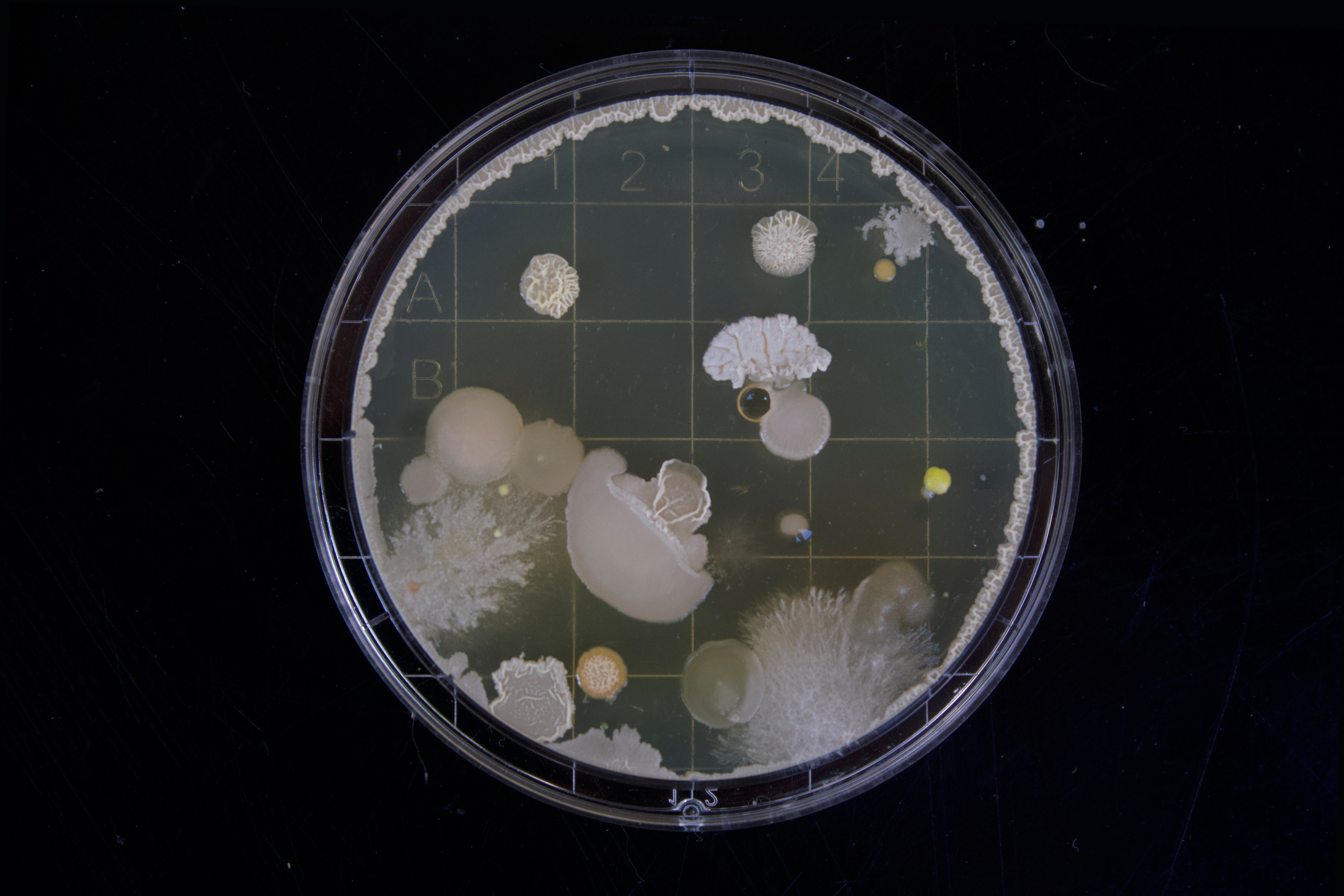
The first person ever to be treated with an antibiotic was a policeman from Oxford, England in 1941. While tending his garden during his day off, the man scratched himself on a rose thorn, which soon led to an infection. Two months later he found himself on the verge of dying in the Radcliffe Infirmary. A team of doctors had managed to synthesize a small amount of penicillin, which was discovered some 12 years before by Alexander Fleming but had never been used on a human (and no one even knew if it would work). The treatment allowed the policeman to live a couple more days, but he died shortly after the doctors ran out of medicine.
Nowadays, there are no such shortages, and many lives have been saved due to antibiotics. However, massive industrial utilization and misuse of the drug, have imposed such a considerable selection pressure on bacteria which that many of them have become resistant to antibiotics. “Antibiotic resistance is one of the most complicated problems we are facing today,” says Prof. Nadav Davidovitz from the Ben Gurion University, who was part of the special multidisciplinary effort addressing the problem.
Are antibiotics really killing the bacteria?
Bacteria are single-celled organisms that can be found all over the inside and outside of our bodies. Many bacteria are not harmful. In fact, some are actually beneficial to the body, including most of the bacteria that live inside our intestines.
Antibiotics are drugs that fight infections caused by bacteria in both humans and animals, either by killing off the bacteria or by making it more difficult for them to grow and multiply. Antibiotic resistance occurs when bacteria, by natural selection, become immune to the drugs designed to kill them; in short, the germs are not killed and continue to grow. Therefore, antibiotic resistance does not mean the body becomes resistant to antibiotics, but the bacteria become resistant to the antibiotics.
Infections caused by antibiotic-resistant germs are difficult and sometimes impossible, to treat. In most cases, infections require extended hospital stays, additional follow-up doctor visits, and costly and toxic alternatives. “Some patients can no longer be treated with antibiotics because certain bacteria are completely resistant,” says Dr. Gili Regev-Yochay, Director of Infectious Disease Epidemiology Unit from Sheba Medical Center.
Despite significant advances in science, there has been a steady increase in mortality from infectious diseases due to the emergence of bacteria that are resistant to a wide variety of antibiotics. It is estimated that by 2050, global mortality associated with antibiotic resistance will reach about 10 million people per year. The World Health Organization has recently included antimicrobial resistance in its list of the ten biggest threats to global health in 2019, emphasizing the need for an international effort to tackle the problem.
Antibiotics are used in livestock to treat and prevent diseases. In the second half of the 20th century, they have also been used to increase the growth rate in farm animals. Although data collection is highly insufficient so far, it is estimated that global antibiotics use in food production ranges between 63,000 tons to over 240,000 tons. In the US, farm animals consume twice as many antibiotics as humans do every year.
Experts come together in “hackathon” to discuss solutions
In this context, a 36-hour hackathon (a multidisciplinary debate) was carried out at the Center for Digital Innovation (CDI) in Beersheba, in southern Israel, with the aim to boost entrepreneurship and answer one central question: How do we stop the rise of antibiotic resistance?
“We believe that solving complicated problems requires people from various disciplines from different sectors of society and that is what we hope to achieve through this hackathon,” says Shahar Cahanovitz from the Heschel Sustainability Center.
The hackathon consisted of nine teams, each one covering a specific aspect of the issue of antibiotic-resistant bacteria – resistant bacteria and ventilation systems, monitoring control and antibiotics, reducing antibiotics in the animal industry, medical education, vaccines to prevent infection, contaminated sewage treatment, media and press, reducing the duration of treatment and intervention in the food chain system.
At the end of the debating marathon, 15 judges chose three groups that had come up with the most promising and worthwhile ideas. The jury consisted of experts from different fields ranging from professors and researchers to entrepreneurs and doctors.
“The fact that a potential solution to a problem of this magnitude may arise from an outright multidisciplinary field of professionals is simply fascinating. We sat down for two days straight, without distractions and managed to produce something that otherwise would have taken months” says Dr. Uri Lerner, a Mimshak graduate (an Environmental Science and Policy Fellowships Program) working in Maccabi Healthcare.
Toilet bowl cleaner with an active antibiotics breaker
The team for reducing antibiotics in the animal industry came off as the winner of the hackathon. The main question the group asked itself was: How much antibiotics do animals actually receive? In search of the answer to this question, the team concluded that monitoring must be the first step. By having accurate data on how much medicine livestock are receiving, measures may be taken to either adjust or reduce the drug dosages. The outstanding feature of the approach lies in an innovative system named ‘E-prescriptions for veterinarians,’ in which the animal’s drugs would be electronically prescribed. In practice, this process would be directed by the Ministry of Health and greatly simplify the monitoring efforts.