
Top 6 Factors Favouring Sustainable Development In The Middle East

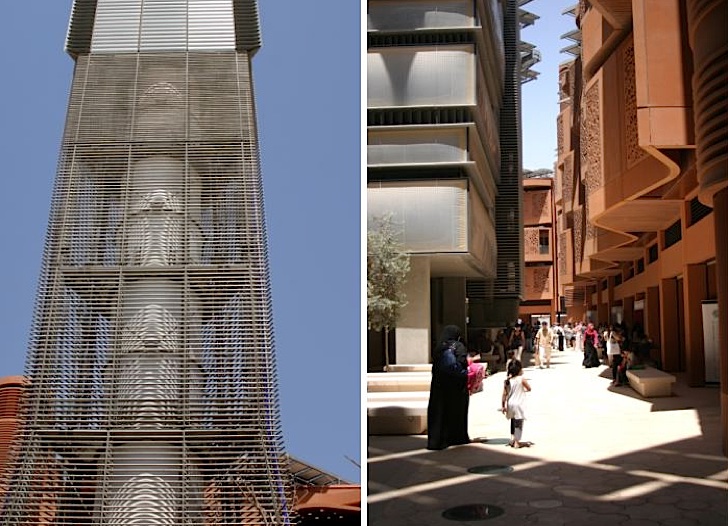
masdar city, abu dhabi, green building, desert, zero carbon

People have this general perception that the Middle East lags behind in matters of sustainability. There is the misconception that people in this region lead flashy lifestyles and engage in over-consumption to balance out the ever-increasing wealth from an endless supply of oil. However, when you get to the ground, you soon discover that the situation is far much different, and that sustainability is a concept that many espouse here. Although CMC Markets may have reported falling stock prices due to Middle East political tensions which is true, business in this region remains sustainable due to the following reasons:

A hybrid approach

According to Al Zubi, the head of sustainability at Majid Al Futtaim Properties (MAFP), the Middle East is a recipient of many best practices from around the world. Some countries, such as Singapore, have been able to combine technology and ideas to create a hybrid approach. The hybrid approach is always the best and has proved to be a determining factor in enhancing sustainability. Consequently, the Middle East has seen its malls thrive as a result of espousing gleaming modernity, opulence, and luxury. These malls are now attracting thousands of shoppers from around the globe.

A unique region

Al Zubi avers hat some factors combine to make the Middle East a unique area. Most significant of the factors is the prevailing northwest breeze that creates a comfortable microclimate that is likely to attract many tourists. The construction industry is harnessing this pleasant weather by designing and angling buildings in such a way as to capture the cool breeze. Also, the construction industry is taking a leading role in sustainability standards. For instance, Mashreib has undertaken a regeneration project in Qatar that will have the largest number of LEED buildings, all targeting the gold and platinum status.

Development of own standards

It is not lost to the world that the Middle East is no longer playing catch-up to the rest of the world. International reference points revolve around LEED from the US, and BREEAM from the UK. Most governments in the Middle East have developed their standards to reflect the needs, challenges and local conditions. Qatar has QSAS while Abu Dhabi has installed PEARL. These standards are the pedestals for mounting quality and ensuring efficiency and adherence to international requirements.

Defining quality

The Middle East commitment to ensuring quality is beyond doubt. In the United Arab Emirates, all new state buildings are required to have a minimum of a two-star rating. The effect of this requirement has been the establishment a local green building market that is boosting skills through training. You will note that working in government institution is no different from working for an NGO due to the high standards the Middle East has put into place.

The family connection

The importance of the family has played a great role in the sustainability of business in the Middle East. Al Zubi points out that most of the private companies are owned by families. He argues that it is never about profit or passion, but both. The import of family-owned businesses lies in the creation of jobs in an environment of high unemployment rates. In Lebanon, for instance, one family-owned mall is likely to create two thousand job openings for the local people. You are not likely to read about the impact of families on the economies of Middle East countries because of their stringent culture that demands modesty. Consequently, there may be no reports detailing how many people have gained jobs in family businesses.

A social dimension to sustainability

Sustainability can’t be assured without putting social factors into consideration. Most Middle East countries have taken measures to ensure worker safety, training, and health. You may note that past generations relied on safe working environments in government jobs or corporate companies. However, the current trends are leading to entrepreneurship. Consequently, the UAE awards about 10% of all contracts to Small and Medium Enterprises (SMEs). Boosting the local enterprise is key to sustainability.

Several factors have combined to do sustainable business in the Middle East. Being a unique region with a wealth of resources, and a hybrid approach to development, the Middle East has created a perfect environment for green business. Development of own standards and allowing families to start the business has also gone a long way to boost the economy of the Middle East. The Middle East region is no longer playing catch-up.

Bhok Thompson
Bhok Thompsonhttp://www.greenprophet.com
Bhok Thompson is an “eco-tinkerer” who thrives at the intersection of sustainability, business, and cutting-edge technology. With a background in mechanical engineering and a deep fascination with renewable energy, Bhok has dedicated his career to developing innovative solutions that bridge environmental consciousness with profitability. A frequent contributor to Green Prophet, Bhok writes about futuristic green tech, urban sustainability, and the latest trends in eco-friendly startups. His passion for engineering meets his love for business as he mentors young entrepreneurs looking to create scalable, impact-driven companies. Beyond his work, Bhok is an avid collector of vintage mechanical watches, believing they represent an era of precision and craftsmanship that modern technology often overlooks. Reach out: [email protected]

LEAVE A REPLY

Please enter your comment!
Please enter your name here

TRENDING

Astro uses AI to help procure land for renewable energy

For oil-rich, environmentally vigilant Gulf states, Astro isn’t just another startup story. It is a blueprint for accelerating an energy transition that is now existential, not optional.

The Science Behind How Elite Marathon Runners Train

Discover the science behind elite marathon training. Explore techniques, nutrition, and mental strategies that propel top runners to success.

Earth building with Dead Sea salt bricks

Researchers develop a brick made largely from recycled Dead Sea salt—offering a potential alternative to carbon-intensive cement.

The Christ’s thorn (sidr tree) is also a well-known folk medicine

Christ’s thorn jujube (Ziziphus spina-christi) also known as the sidr tree is a real, identifiable tree native to the Middle East, and it appears—directly or indirectly—in Islam, Judaism, and later Christian tradition. The connections between the three faiths are not theological agreements but overlapping uses, names, and symbolic associations rooted in the same landscape.

Farm To Table Israel Connects People To The Land

Farm To Table Israel is transforming the traditional dining experience into a hands-on journey.

Qatar’s climate hypocrisy rides the London Underground

Qatar remains a master of doublethink—burning gas by the megaton while selling “sustainability” to a world desperate for clean air. Wake up from your slumber people.

How Quality of Hire Shapes Modern Recruitment

A 2024 survey by Deloitte found that 76% of talent leaders now consider long-term retention and workforce contribution among their most important hiring success metrics—far surpassing time-to-fill or cost-per-hire. As the expectations for new hires deepen, companies must also confront the inherent challenges in redefining and accurately measuring hiring quality.

8 Team-Building Exercises to Start the Week Off 

Team building to change the world! The best renewable energy companies are ones that function.

Thank you, LinkedIn — and what your Jobs on the Rise report means for sustainable careers

While “green jobs” aren’t always labeled as such, many of the fastest-growing roles are directly enabling the energy transition, climate resilience, and lower-carbon systems: Number one on their list is Artificial Intelligence engineers. But what does that mean? Vibe coding Claude? 

Somali pirates steal oil tankers

The pirates often stage their heists out of Somalia, a lawless country, with a weak central government that is grappling with a violent Islamist insurgency. Using speedboats that swarm the targets, the machine-gun-toting pirates take control of merchant ships and then hold the vessels, crew and cargo for ransom.

Leopoldo Alejandro Betancourt López Turned Ocean Plastic Into Profitable Sunglasses

Few fashion accessories carry the environmental burden of sunglasses. Most frames are constructed from petroleum-based plastics and acrylic polymers that linger in landfills for centuries, shedding microplastics into soil and waterways long after they've been discarded. Leopoldo Alejandro Betancourt López, president of the Spanish eyewear brand Hawkers, saw this problem differently than most industry executives.

Why Dr. Tony Jacob Sees Texas Business Egos as Warning Signs

Everything's bigger in Texas. Except business egos.  Dr. Tony Jacob figured...

Israel and America Sign Renewable Energy Cooperation Deal

Other announcements made at the conference include the Timna Renewable Energy Park, which will be a center for R&D, and the AORA Solar Thermal Module at Kibbutz Samar, the world's first commercial hybrid solar gas-turbine power plant that is already nearing completion. Solel Solar Systems announced it was beginning construction of a 50 MW solar field in Lebrija, Spain, and Brightsource Energy made a pre-conference announcement that it had inked the world's largest solar deal to date with Southern California Edison (SCE).

Related Articles

Popular Categories