We thought we’d never get to say it, but car parking may be becoming dead. It’s already happening in China. It’s become kind of a cliché that there’s never enough parking spaces no matter where you go. We’ve all got anecdotes about circling car parks three or four times looking for a space to back that up, but statistics don’t seem to support that idea, and cities across the world are actually looking to reduce the amount of parking in an effort to go green and encourage people to try alternative modes of transport.
In the past, many municipalities have had minimum parking requirements for new developments or other laws that encourage the creation of spaces—in Japan, for example, motorists must prove that they have access to local parking just to own a car. But studies show many cities are using more space than necessary for public parking. Tippecanoe County, Indiana had more than two spaces per registered vehicle in 2010 and maybe that’s not surprising; people drive to and from work and they need places to keep their vehicles for hours at a time.
But this may actually create more congestion—drivers on the hunt for parking clog up urban roadways, adding time to their journeys and creating a lot of additional air pollution.
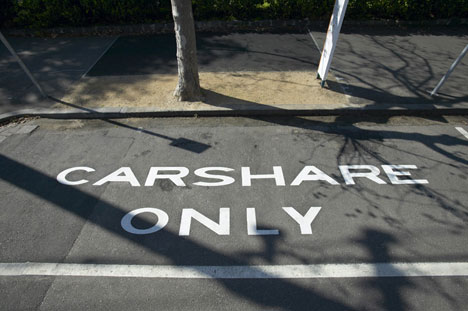
San Francisco has aimed to fight both these problems by eliminating unused parking spaces and using the room created for bike lanes and other public improvements to make alternative forms of transport more viable. By reducing spaces, you will inevitably reduce cars, leading to lower levels of pollution.
A big motivator for this change is a drive to reduce pollution. In Paris, which has suffered a number of instances of smog in the past few years, there have been a number of moves to improve air quality. Older models of cars with high emissions have been banned from the city, and for one Sunday a month the Avenue des Champs-Élysées, normally a major east-west thoroughfare terminating at the famous Arc de Triomphe, is kept free of cars. Around a third of the city was closed off to motor vehicles on the 25th of September this year, with exceptions made for buses and taxis, leading to noise levels dropping by half and air pollution being reduced by up to 40% in some areas through startups helping people find parking spots faster. This means less circling around looking for the cherished parking spot.
Cities like Tel Aviv have an enormous crisis with cars. As the people earn more in startup salaries from high-tech the premise of owning a car in the city becomes a liability. Where to park it if you need to leave for a few moments and then return? It can take you an hour to find a spot come free.
Seoul, South Korea has tried a similar experiment and both cities are looking to repeat them with increased scale and regularity. They are not the first to try making their cities car free but they might be the first to attempt making it more than an annual event, and this is an encouraging step for those who envision a future of clean and peaceful car free cities.
A lot of other cities around the world like Copenhagen and Norwich, England are even pedestrianizing shopping districts and high streets, some of which were once their main automotive access routes. This is also happening in Israel in cities like Jaffa.
But some places have also been trying less direct methods to reduce the number of cars on their streets. The London Congestion Charge Zone, introduced all the way back in 2003, and similar schemes in Durham, Milan, and Stockholm are all aimed at making traffic more manageable. Moves like this to lower car use also have the advantage of lowering oil dependency, contributing to falling prices on the commodities market, which have dropped by as much as 77.48% in the last five years according to trading platform IG.
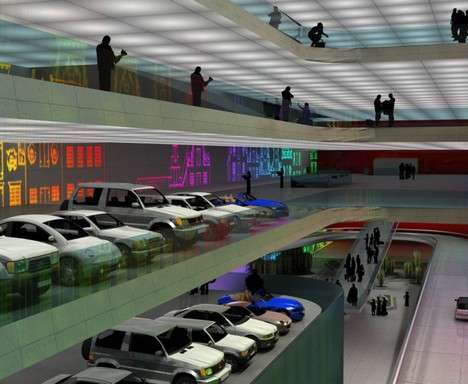
Naturally, if there are fewer cars in cities we will require far less parking, which will hopefully lead to greener, more spacious cities we can all enjoy.