Alberta Tar Sands wildfire and global warming

Alberta Wildfire

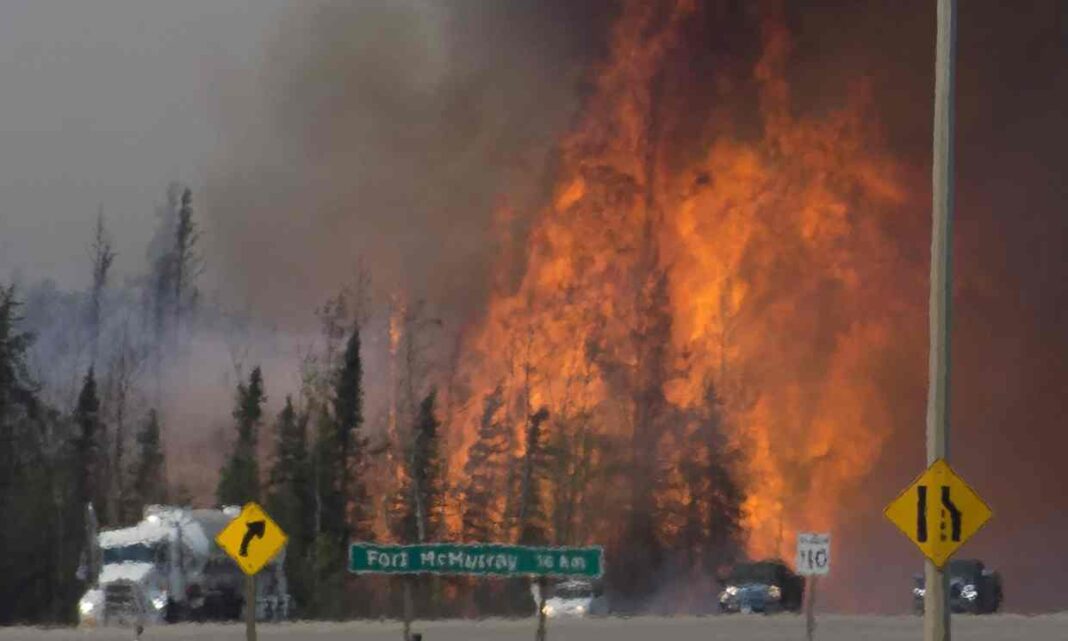
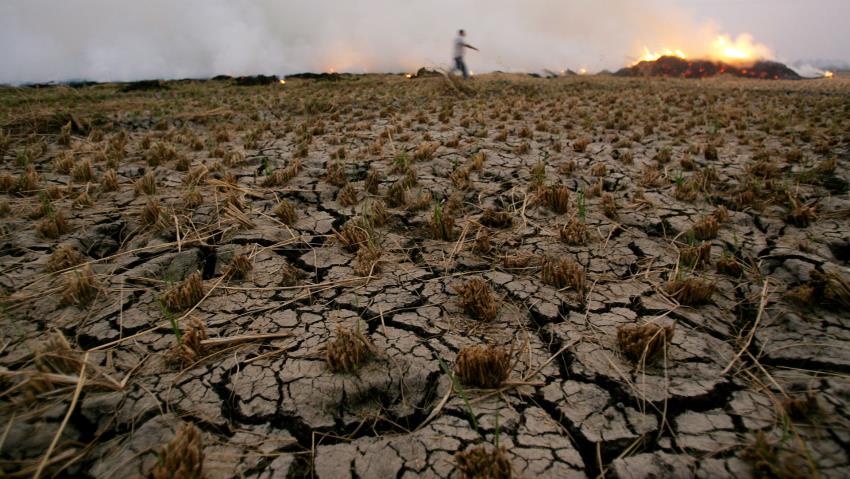
Alberta Canada’s massive wildfire, which has now consumed an area larger than Hong Kong and threatens to reach the border with neighboring Saskatchewan, is another startling example that may be attributed to the ravages of global warming.

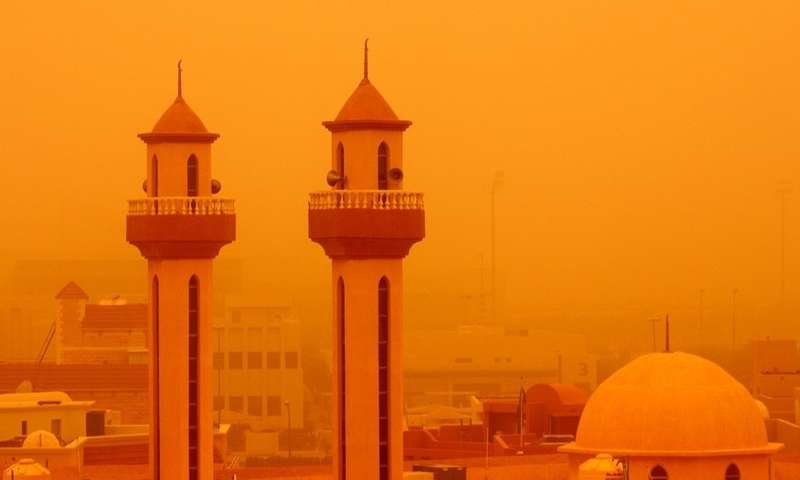
While most of the Middle East does not have large tracts of forest land, areas where forests and grasslands are located are continuously in danger of catching fire as higher than normal temperatures and “crazy heat domes” may make many parts of the Middle East unlivable by 2100.

Alberta’s wildfires, which became literally out of control after starting over a week ago, have already displaced more than 80,000 people and destroyed thousands of homes and commercial buildings. Located in the province’s well publicized Alberta Tar Sands, the big question being raised now is whether this industry, deemed to be one of the most environmentally damaging projects in North America, may be attributing to making it spread so quickly.

According to informed sources in International Business Times, the Alberta oil or tar sands account for more than 80% of Canada’s entire petroleum production. In physical terms, this amounts to more than 4.4 million barrels per day, according to the U.S. Energy Information Administration. Canadian governmental and private sources now say it will take weeks to fully bring these fires under control; and this only only happen if there are substantial rains. Dry conditions and unseasonably high temperatures of 23 degrees Celsious (80 degrees Fahrenheit) are causing the fires to spread even quicker.

Oil tar sand production, involving the use of chemicals and high pressure steam to bring up the gunky oil tar from underground, has long been considered to be an environmental disaster in the making by many environmentalists; even rivaling oil production in Saudi Arabia, and seen as having a severe impact on global warming.

The photo below shows what this oil sand tar goop looks like when brought to the surface.
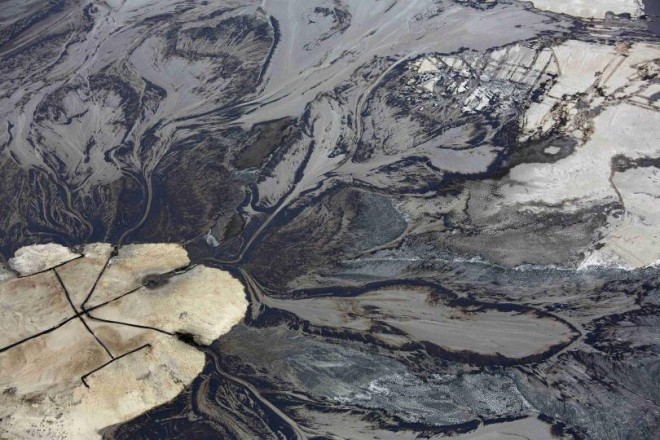
canada-oil-sands-crude
With events like the Alberta wildfires occurring in pristine locations like Canada, it’s not difficult to understand what is already occuring in regions like the Middle East. Mid-East area countries that do contain sizable tracts of forest land, such as Israel, Lebanon and Turkey, will undoubtedly see more occurrences of forest and brush fires on the like that Israel experienced in December, 2010; when a large section on the country’s Carmel mountain forest went up in smoke, killing more than 45 people.

We will all be watching the outcome of the Alberta wildfires; that up to now seem virtually unstoppable. As for the Middle East, the worst may yet to come, regarding global warming.

Read more on global warming, wildfires and the Alberta Tar Sands:
Crazy heat dome will mean that no one can live in the Arab Gulf by 2100
Israel’s Carmel wildfire blame goes all the way to the top
Canada Worst than Saudi Arabia, Considering Tar Sands Impact on Global Warming

Photo: Fort McMurray Wildfires, by Todd Korol/Reuters
Photo: Alberta Tar Sands crude oil, by Jonathan Hayward/ AP

Maurice Picow
Maurice Picowhttps://www.greenprophet.com/
Maurice Picow grew up in Oklahoma City, U.S.A., where he received a B.S. Degree in Business Administration. Following graduation, Maurice embarked on a career as a real estate broker before making the decision to move to Israel. After arriving in Israel, he came involved in the insurance agency business and later in the moving and international relocation fields. Maurice became interested in writing news and commentary articles in the late 1990’s, and now writes feature articles for the The Jerusalem Post as well as being a regular contributor to Green Prophet. He has also written a non-fiction study on Islam, a two volume adventure novel, and is completing a romance novel about a forbidden love affair. Writing topics of particular interest for Green Prophet are those dealing with global warming and climate change, as well as clean technology - particularly electric cars.
1 COMMENT
  1. Industry
    spends more
    on lobbyists EACH YEAR
    than the American Taxpayers spend on ALL of CONGRESS.
    To visit a Congressman, YOU have to make an appointment………
    …..LOBBYISTS walk the hallls of CONGRESS LIKE THEY OWN THEM…..and in a very real sense they do!
    …visit
    http://www.clearpath.org
    a
    conservative and Pro Business web site which is not MARRIED to OIL & COAL…..
    ****
    “…A six year study
    examining the nutritional content of crops exposed to atmospheric CO2 levels projected by mid-century found
    worrisome drops in zinc and iron in wheat grains as well as reduced protein levels in wheat as well as rice grains

    — a particularly troubling find considering that millions around the
    world who depend on wheat and rice for most of their iron and zinc
    already might not be getting enough. Credit: Credit: Peter Fredenburg,
    courtesy Flickr

    Dear EarthTalk: Is it true that global warming is causing our crops to be less nutritious?
    ….
    It
    is difficult to say whether or not the climate change we are now
    experiencing is negatively impacting the nutritional quality of ourfood,
    researchers warn that it may be only a matter of time.

    “Humanity
    is conducting a global experiment by rapidly altering the environmental
    conditions on the only habitable planet we know,” reports Samuel Myers, a
    research scientist at the Harvard School of Public Health.

    Earlier
    this year, Myers and his colleagues released the results of a six year
    study examining the nutritional content of crops exposed to levels of
    atmospheric carbon dioxide (CO2) that are expected to exist by
    mid-century.

    The conclusions were indeed troubling. They found
    that in wheat grains, zinc concentrations were down some 9.3 percent and
    iron concentrations were down by 5.1 percent across the seven different
    crop sites (in Australia, Japan and the U.S.) used in the study.

    The researchers also noted reduced protein levels in wheat and rice grains growing in the CO2-rich test environment.

    According to Myers, the findings
    —published in June 2014 in the peer-reviewed journal Nature
    —are
    particularly troubling when one considers that some of the two to three
    billion people around the world who depend on wheat and rice for most
    of their iron and zinc already might not be getting enough of these
    essential
    nutrients. Zinc deficiency, which can exacerbate
    pneumonia, malaria and other health problems, is already linked to some
    800,000 deaths each year among children under five. Meanwhile, iron
    deficiency is the primary cause of anemia, a condition that contributes
    to one in five maternal deaths worldwide….”

LEAVE A REPLY

Please enter your comment!
Please enter your name here

TRENDING

Charbone produces first hydrogen at Quebec’s local “model” UHP plant

The Sorel-Tracy site is the first decentralized clean UHP hydrogen production facility in Quebec and is positioned as a model for North America. The plant is part of CHARBONE’s five-phase plan to deploy a network of modular hydrogen production facilities across the continent, supported by the company’s growing specialty-gas distribution platform.

Sex selection kits for embryos available in the US and Canada

We used to be shocked to hear about gender...

Puppies used in heart experiments then killed at Canadian hospital

It sounds made up—until you read the documents, see...

Carbon Capture in 2025: Technologies, Markets, and Investment Trends

By 2028, the global CCUS market is projected to surpass $14 billion. Companies able to deliver scalable technology and tie it directly to revenue from high-integrity carbon credits are best positioned to benefit from the next wave of climate finance and regulation.

5 Brilliant eco-architect alternatives to Foster + Partners

In the world of architecture and design, there’s a growing movement towards exploring new, uncharted territories. While renowned firms like Foster + Partners and Zaha Hadid have undeniably shaped the skyline of modern architecture, there’s a wealth of untapped potential in emerging voices that can offer bold, innovative, and sustainable alternatives. These next five studios are pushing the boundaries of creativity, blending technology with art, and designing spaces that respond to the future needs of communities and the planet. Let’s take a closer look at these pioneers who are crafting tomorrow’s architectural landscape today.

Qatar’s climate hypocrisy rides the London Underground

Qatar remains a master of doublethink—burning gas by the megaton while selling “sustainability” to a world desperate for clean air. Wake up from your slumber people.

How Quality of Hire Shapes Modern Recruitment

A 2024 survey by Deloitte found that 76% of talent leaders now consider long-term retention and workforce contribution among their most important hiring success metrics—far surpassing time-to-fill or cost-per-hire. As the expectations for new hires deepen, companies must also confront the inherent challenges in redefining and accurately measuring hiring quality.

8 Team-Building Exercises to Start the Week Off 

Team building to change the world! The best renewable energy companies are ones that function.

Thank you, LinkedIn — and what your Jobs on the Rise report means for sustainable careers

While “green jobs” aren’t always labeled as such, many of the fastest-growing roles are directly enabling the energy transition, climate resilience, and lower-carbon systems: Number one on their list is Artificial Intelligence engineers. But what does that mean? Vibe coding Claude? 

Somali pirates steal oil tankers

The pirates often stage their heists out of Somalia, a lawless country, with a weak central government that is grappling with a violent Islamist insurgency. Using speedboats that swarm the targets, the machine-gun-toting pirates take control of merchant ships and then hold the vessels, crew and cargo for ransom.

Leopoldo Alejandro Betancourt López Turned Ocean Plastic Into Profitable Sunglasses

Few fashion accessories carry the environmental burden of sunglasses. Most frames are constructed from petroleum-based plastics and acrylic polymers that linger in landfills for centuries, shedding microplastics into soil and waterways long after they've been discarded. Leopoldo Alejandro Betancourt López, president of the Spanish eyewear brand Hawkers, saw this problem differently than most industry executives.

Why Dr. Tony Jacob Sees Texas Business Egos as Warning Signs

Everything's bigger in Texas. Except business egos.  Dr. Tony Jacob figured...

Israel and America Sign Renewable Energy Cooperation Deal

Other announcements made at the conference include the Timna Renewable Energy Park, which will be a center for R&D, and the AORA Solar Thermal Module at Kibbutz Samar, the world's first commercial hybrid solar gas-turbine power plant that is already nearing completion. Solel Solar Systems announced it was beginning construction of a 50 MW solar field in Lebrija, Spain, and Brightsource Energy made a pre-conference announcement that it had inked the world's largest solar deal to date with Southern California Edison (SCE).

Related Articles

Popular Categories