Earth up for sale – save it by buying it!

damselfish-sea-coral
Back in high school we bought a few acres of rainforest in Brazil – to save it. To stop illegal logging. To preserve biodiversity. Instead of buying just an acre or two or a few hundred, a researcher from Israel has a plan to save the world’s biodiversity – by buying 1.4% of the planet using crowdfunding.

Prof. Uri Shanas of the University of Haifa has launched an unusual new initiative: a massive, international, and democratic “purchase group” open to all that aims to save the Earth. “It is neither possible nor necessary to conserve the entire planet all the time,” Prof. Shanas explains.

“But if we manage to conserve even a small percentage that is home to an unusual diversity of plant and animal life in danger of extinction, we can go some way to halting the current process of species extinction.”

Prof. Shanas is using the crowdsourcing technique to raise the funds needed to launch the initiative.

He explains that many species of plants and animals already face extinction, and the list is getting longer due to global warming and the ongoing destruction of open spaces. “We can’t always predict the consequences of the disappearance of a single species from the ecosystem,” he admits, “but there are examples of systems that have collapsed to an extent that has influenced human life following the extinction of a single species.

“For example, the disappearance of the sea otter in the Pacific Ocean led to an increase in the population of sea urchins. The sea urchins ate seaweed that provided the necessary underwater habitat for development of fish and other sea life. The consequence was a collapse of fisheries that affected many fishermen and their families.”

Prof. Shanas’s plan for saving biodiversity is simple: 1.4 percent of the Earth’s surface is currently defined as “biodiversity hot spots” – areas with numerous plant and animal species on the brink of extinction.

Purchasing these areas and transforming them into nature reserves will save these species, and thereby save life on the planet.

If the necessary funding is raised to launch the organization – known as TIME (This Is My Earth) – anyone around the world, adult or child, will be able to join by making a payment of at least one dollar. Once a year, all the members will vote on how to invest the organization’s funds, based on a list of biodiversity hot spots prepared by an international team of scientists.

Every member will have an equal vote, no matter how much they pay.

Prof. Shanas emphasizes that the TIME group differs from existing efforts by groups and individuals to purchase land for the purpose of conservation. The difference lies in the democratic, international, and public character of his initiative, as well as in the fact that members in each country will be responsible for caring for the purchased areas. “The goal isn’t to engage in some kind of ‘green colonialism,’ but to enable local residents to manage their own natural resources.

“We are interested in founding an organization that can help educate people to involvement, environmental conservation, and democracy from an early age. And yes – to save the Earth in the process,” he concludes.

Great idea, but who will manage the purchased land and protect it into the future will be the bigger question.

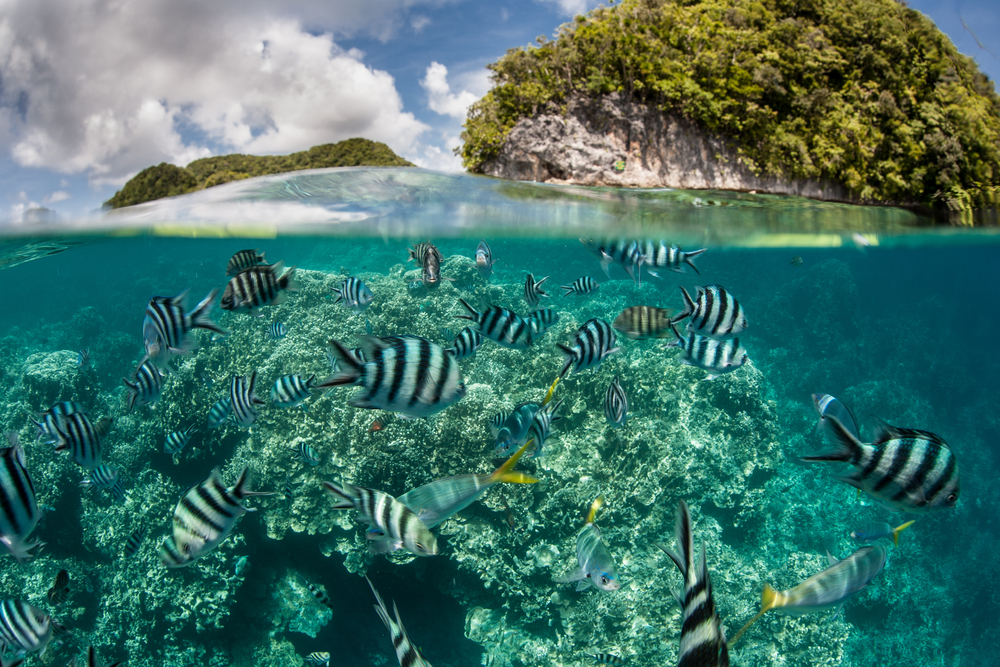
Photo of damselfish at sea from Shutterstock

Karin Kloosterman
Karin Kloostermanhttp://www.greenprophet.com
Karin Kloosterman is an award-winning journalist, innovation strategist, and founder of Green Prophet, one of the Middle East’s pioneering sustainability platforms. She has ranked in the Top 10 of Verizon innovation competitions, participated in NASA-linked challenges, and spoken worldwide on climate, food security, and future resilience. With an IoT technology patent, features in Canada’s National Post, and leadership inside teams building next-generation agricultural and planetary systems — including Mars-farming concepts — Karin operates at the intersection of storytelling, science, and systems change. She doesn’t report on the future – she helps design it. Reach out directly to [email protected]
2 COMMENTS

LEAVE A REPLY

Please enter your comment!
Please enter your name here

TRENDING

OECD: Renewable Energy Expansion Must Avoid New Ecological Trade-Offs

Overall, links between climate change and biodiversity are relatively well covered in national strategies, but the relationships involving pollution — including how climate and biodiversity pressures heighten pollution risks — are often missing. Policies designed to explicitly manage trade-offs, especially around pollution, remain limited.

Biodiversity Blueprint Set for 2026

If we seize this moment, the 2026 review can catalyse a new wave of finance (see Green Finance mechanisms in the UAE), innovation and policy coherence — and move us closer to the vision of a nature-positive world by 2050. If not, the checkpoint risks becoming another missed opportunity while ecosystems, livelihoods and economies continue to degrade.

Carbon Capture in 2025: Technologies, Markets, and Investment Trends

By 2028, the global CCUS market is projected to surpass $14 billion. Companies able to deliver scalable technology and tie it directly to revenue from high-integrity carbon credits are best positioned to benefit from the next wave of climate finance and regulation.

Seychelles’ UNESCO island under threat from luxury development and Qatari-linked terror funds

The fate of Assomption Island may determine not just the survival of its biodiversity, but the integrity of Seychelles’ commitment to sustainable development in the face of land grabs and neo-colonialism by powerful foreign interests.

Play your cannabis plants some white noise?

Soil fungi likes to hear sounds to stimulate growth.

Qatar’s climate hypocrisy rides the London Underground

Qatar remains a master of doublethink—burning gas by the megaton while selling “sustainability” to a world desperate for clean air. Wake up from your slumber people.

How Quality of Hire Shapes Modern Recruitment

A 2024 survey by Deloitte found that 76% of talent leaders now consider long-term retention and workforce contribution among their most important hiring success metrics—far surpassing time-to-fill or cost-per-hire. As the expectations for new hires deepen, companies must also confront the inherent challenges in redefining and accurately measuring hiring quality.

8 Team-Building Exercises to Start the Week Off 

Team building to change the world! The best renewable energy companies are ones that function.

Thank you, LinkedIn — and what your Jobs on the Rise report means for sustainable careers

While “green jobs” aren’t always labeled as such, many of the fastest-growing roles are directly enabling the energy transition, climate resilience, and lower-carbon systems: Number one on their list is Artificial Intelligence engineers. But what does that mean? Vibe coding Claude? 

Somali pirates steal oil tankers

The pirates often stage their heists out of Somalia, a lawless country, with a weak central government that is grappling with a violent Islamist insurgency. Using speedboats that swarm the targets, the machine-gun-toting pirates take control of merchant ships and then hold the vessels, crew and cargo for ransom.

Leopoldo Alejandro Betancourt López Turned Ocean Plastic Into Profitable Sunglasses

Few fashion accessories carry the environmental burden of sunglasses. Most frames are constructed from petroleum-based plastics and acrylic polymers that linger in landfills for centuries, shedding microplastics into soil and waterways long after they've been discarded. Leopoldo Alejandro Betancourt López, president of the Spanish eyewear brand Hawkers, saw this problem differently than most industry executives.

Why Dr. Tony Jacob Sees Texas Business Egos as Warning Signs

Everything's bigger in Texas. Except business egos.  Dr. Tony Jacob figured...

Israel and America Sign Renewable Energy Cooperation Deal

Other announcements made at the conference include the Timna Renewable Energy Park, which will be a center for R&D, and the AORA Solar Thermal Module at Kibbutz Samar, the world's first commercial hybrid solar gas-turbine power plant that is already nearing completion. Solel Solar Systems announced it was beginning construction of a 50 MW solar field in Lebrija, Spain, and Brightsource Energy made a pre-conference announcement that it had inked the world's largest solar deal to date with Southern California Edison (SCE).

Related Articles

Popular Categories