California builds first farm-to-table new home community

the-canary

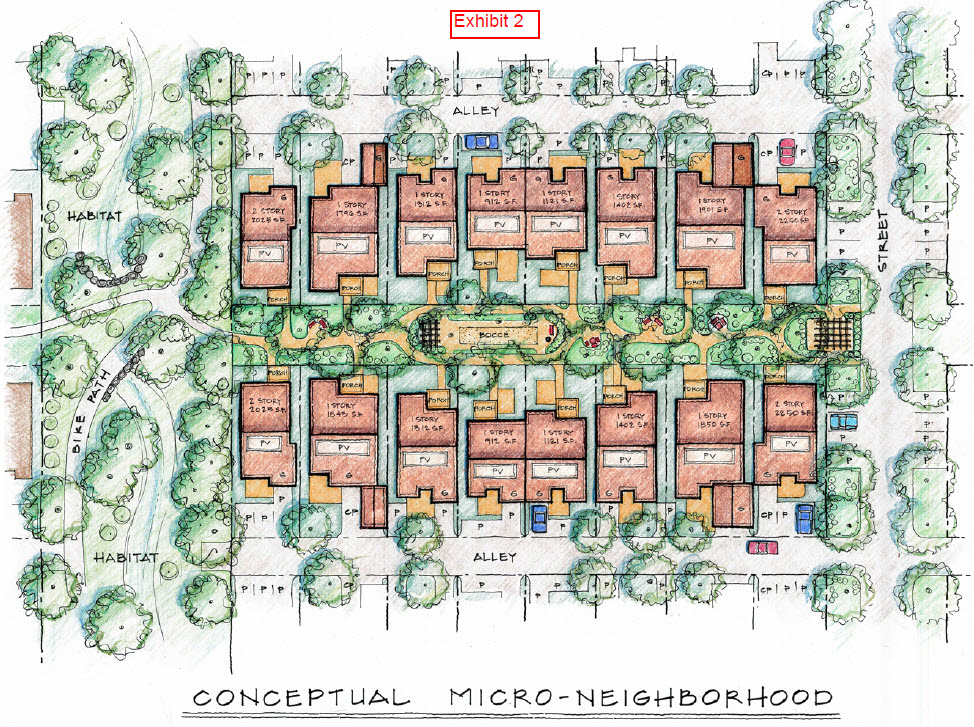
Urban farming is in the air and California is setting an example by creating the first American housing project of its kind with an urban farm built intentionally in the center of the community. The farm will be 7.4 acres and will include a teaching center for sustainable farming. Some 547 new homes have been built around the farm.

This is no straw bale hippy paradise, but fulfilling the dreams of mainstream urbanites who want the pleasures of big, single dwelling homes with access to fresh, local, organic produce.

The project is called The Cannery, and this Saturday 14 model homes will go on sale. Owned by NEW HOME (NYSE: NWHM) this event marks California’s first farm-to-table new home community. It is located in Davis, Calif.
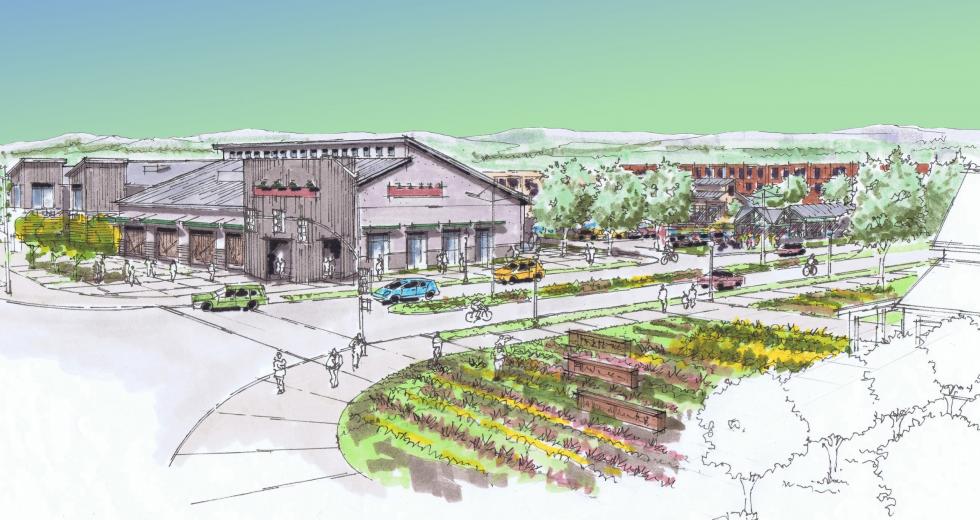
the_cannery-retail_1_by_jda_architects

“We have worked extremely hard over the past several years to get to this moment,” said Kevin Carson, Northern California President for NEW HOME. “The Cannery is unlike any other community in the western United States and it has truly been a rewarding experience to contribute to such an innovative concept.

Through a collaborative effort with the Center for Land-Based Learning of Winters, Calif., the Urban Farm will serve as a state-of-the-art example of sustainable urban farming and as an agri-classroom for students and beginning farmers.

“To see The Cannery today becoming a viable farm community is not only personally exciting for me, but also one of the most fulfilling accomplishments in my career,” said Craig McNamara, founder of the Center for Land-Based Learning. “The Cannery Urban Farm honors what I believe in most: Connecting eaters directly to food.”

Hear, hear. Let’s here of more projects like this multiplying across the US and the world.

::The Cannery

Karin Kloosterman
Karin Kloostermanhttp://www.greenprophet.com
Karin Kloosterman is an award-winning journalist, innovation strategist, and founder of Green Prophet, one of the Middle East’s pioneering sustainability platforms. She has ranked in the Top 10 of Verizon innovation competitions, participated in NASA-linked challenges, and spoken worldwide on climate, food security, and future resilience. With an IoT technology patent, features in Canada’s National Post, and leadership inside teams building next-generation agricultural and planetary systems — including Mars-farming concepts — Karin operates at the intersection of storytelling, science, and systems change. She doesn’t report on the future – she helps design it. Reach out directly to [email protected]
28 COMMENTS
  1. As presented here, this makes no sense. Someone has to fill in the details of how such a small amount of growing space could even be a substantial supplement to the nutritional needs of 500+ households. It seems to me that if you really want to build a sustainable, “green” community, you have to work from the bottom up to make a total system of sustainability, not just a vegetable garden. Start with the numbers of people, then consider housing, energy use, the food and water cycle, economics, governance, etc. etc.

    • Yes, we are doing such a project in Santa Clara.
      Our development deals with air, soil, native plant ecosystems, water, waste, food,(regenerative farming models) renewable energy, innovative transportation, education and human health and well being. Watch out for green dressing. Work with experts who understand local ecology restoration, eliminating infrastructure, strive to create sustainable regional food systems
      That produce a lot of nutritious organic food utilizing urban food technology like production aquaponics systems that use storm water and are on the roof tops of existing or new buildings!

  2. I only see a plan for a pretty conventional suburban development on the pictures shown. What has this to do wirh farm-to-table? Oh, its the marketing spin: , lets greenwash it with a couple of solarpanels on the roof an package it in a trendy way. Voila!

    • Exactly. It’s more of an expensive PR stunt than anything. It’s also interesting that it’s being marketed primarily to folks in the SF Bay Area, where real estate prices are high as are fantasies about “farm” country life. Also, what coincidence that this housing development is within daily commuting distance to the greater SF Bay area! 😉

  3. Yessiree! That would be right here in Davis, California. Single family detached homes START at a mere $710,000! As for farm-to-table, let this gal who grew up on a working farm tell you this so-called farm-to-table community is strictly a citified concept of farm. In other words, it’s a “farm” only to city folks who’ve never spent one night on a real working farm. Sorry for the disappointment, but that’s what happens when you hire slick PR folks pitching their wares to the basically uninformed.

  4. Um, what’s green about this? The materials used to build the houses/communities? The lot size that allows for breathing space and food gardens? The outsize size of the homes? The energy self-sufficiency and water catchment/recycling system built in? The grey-water recycling design? The composting center? The waste management practices? The permaculture practices and design of green space? Oh wait! No, they don’t have any of these things! This is just another regular housing development with some space set aside for growing veggies. Sorry, that does not make it green or sustainable. And by framing your article the way you did, you’re part of the problem. Utter lack of context leading to slick misinformation.

Comments are closed.

TRENDING

EU’s CAP reform continues trend of supporting small farmers in hour of need

Despite mounting political opposition, growing scientific criticism and even the retreat of many former industrial supporters like Nestlé and Danone, certain member-states and supermarket chains continue to prop up Nutri-Score. The Commission must therefore remain vigilant to ensure these attempts do not undermine farmers, distort fair competition or compromise the integrity of the single market – particularly as other pressing threats loom on the horizon.

New advances on making aquaponics a valid business

Researchers from a desert country, where food growing is limited due to lack of water, offer a new proof of concept for a new closed loop system called aquaponics that produces more fish and vegetables while using less energy than conventional systems.

Make moss graffiti

Express your green views for all to see - right on the walls of your house, restaurant or office. Moss grafitti is the hottest trend in urban agriculture, after hydroponics and vertical farming.

Saudi greenhouses to feed desert people

With its resilient hybrid tomato rootstocks already available in the market, iyris has proven the commercial viability of their technology in open-field trials.

DoTERRA Plants 500,000 Trees, Sowing Positive Seeds of Change in Hawaii

The KMR initiative is not simply about planting trees. DoTERRA has developed a comprehensive management plan in partnership with the Hawaii State Division of Forestry and Wildlife. This plan aims to reestablish a healthy native forest, ensuring that the reforestation efforts have long-lasting effects.

Turning Your Energy Consultancy into an LLC: 4 Legal Steps for Founders in Texas

If you are starting a renewable energy business in Texas, learn how to start an LLC by the books.

Tracking the Impacts of a Hydroelectric Dam Along the Tigris River

For the next two months, I'll be taking a break from my usual Green Prophet posts to report on a transnational environmental issue: the Ilısu Dam currently under construction in Turkey, and the ways it will transform life along the Tigris River.

6 Payment Processors With the Fastest Onboarding for SMBs

Get your SMB up and running fast with these 6 payment processors. Compare the quickest onboarding options to start accepting customer payments without delay.

Qatar’s climate hypocrisy rides the London Underground

Qatar remains a master of doublethink—burning gas by the megaton while selling “sustainability” to a world desperate for clean air. Wake up from your slumber people.

How Quality of Hire Shapes Modern Recruitment

A 2024 survey by Deloitte found that 76% of talent leaders now consider long-term retention and workforce contribution among their most important hiring success metrics—far surpassing time-to-fill or cost-per-hire. As the expectations for new hires deepen, companies must also confront the inherent challenges in redefining and accurately measuring hiring quality.

8 Team-Building Exercises to Start the Week Off 

Team building to change the world! The best renewable energy companies are ones that function.

Thank you, LinkedIn — and what your Jobs on the Rise report means for sustainable careers

While “green jobs” aren’t always labeled as such, many of the fastest-growing roles are directly enabling the energy transition, climate resilience, and lower-carbon systems: Number one on their list is Artificial Intelligence engineers. But what does that mean? Vibe coding Claude? 

Somali pirates steal oil tankers

The pirates often stage their heists out of Somalia, a lawless country, with a weak central government that is grappling with a violent Islamist insurgency. Using speedboats that swarm the targets, the machine-gun-toting pirates take control of merchant ships and then hold the vessels, crew and cargo for ransom.

Related Articles

Popular Categories