 Cannes Film Festival is in full swing this week, but here in Jordan every day is a film festival thanks to vendors who hawk bootleg DVDs for a dinar apiece. That’s less than two bucks for a new release that would otherwise set you back $20 in a Manhattan theater. The downside with Amman’s cheap movies is you don’t always get what’s advertised, and what I planned to watch last night had an unintended Russian soundtrack. So I turned to cable TV and found a gem of a film called Greenlit. Five years old, its message is still worth the price of admission.
When film producer Miranda Bailey heard that the makers of The River Why planned to create their film in a sustainable way, it piqued her interest. What exactly makes a movie “green”? Her 50 minute film-about-a-film is a bit meta, devised by a producer who tries herself to behave green as she documents a movie being made in an eco-responsible way.
Bailey’s sometimes snarky, often hilarious journey from idea development through implementation is disarmingly honest. She struggles to see a connection between herself and global warming (“It’s not like I took my blow-dryer to the ice sheet,” she says about the polar ice caps). As executive producer of indie hit The Squid and The Whale, she understands budget constraints, and makes clear her skepticism about why spending more money to be less polluting is worthwhile.
[youtube]https://youtu.be/szQPd7FazXQ[/youtube]
The movie’s hapless heroine emerges in Lauren Selman, founder of Reel Green Media, an environmental consulting and production company dedicated to helping “green” the entertainment industry both on and off-screen. She perseveres in the frustrating process of encouraging basic behavioral change despite constant push-back from cast and crew, and occasional sabotage.
Greenlit was a darling of the 2006 film festivals and is an frequent feature on the Sundance television network, where I found it. It had some shocking reveals, such as the egregious landscape alterations made to a pristine Thai island in prep for Danny Boyle’s 2000 release The Beach. That film also “required” chemical treatment of seawater for improve transparency for underwater filming, a concoction that killed large schools of fish and lowered local catch rates for a year (ironic, in light of DiCaprio’s self-named foundation dedicated to “protecting Earth’s last wild places”).
Left-leaning celebs who line up to endorse sustainability suggest that the film industry is one of the world’s greenest. Robert Redford’s environmental work dates back to the 1970s when he began lobbying for America’s Clean Air and Clean Water acts. Ed Begley has tooled around Los Angeles in electric cars for over 4 decades. DiCaprio served for two years as a jurist for Abu Dhabi’s prestigious Zayed Future Energy Prize. But did you know that Hollywood’s film and television industry is second only to petroleum manufacturing in pumping out harmful emissions in California?
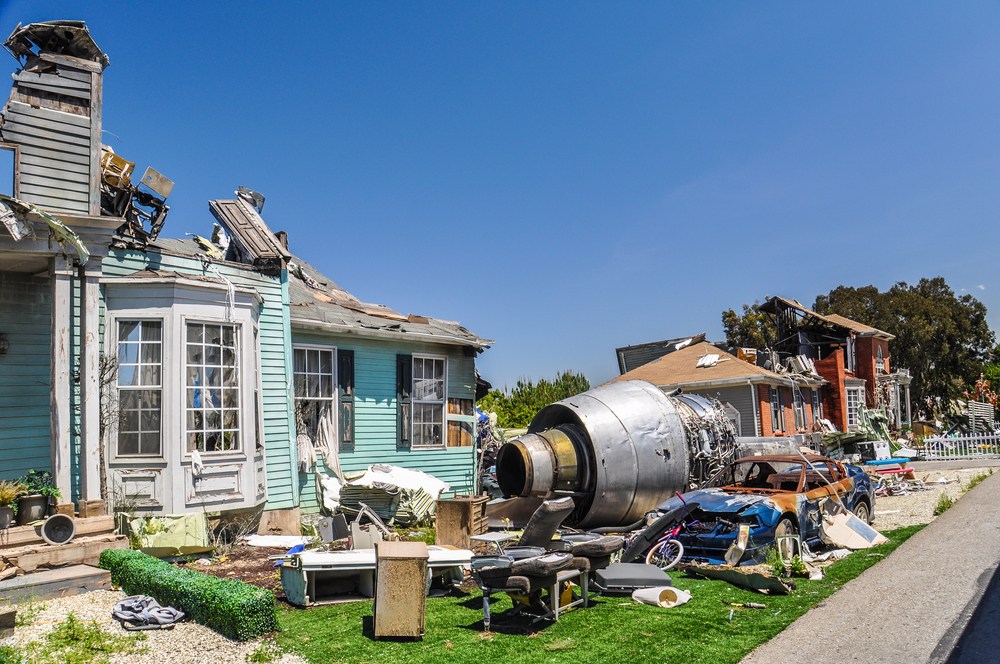
Movie making requires temporary, ersatz cities to house and feed and wash the people needed to make the film. Think of the tools and equipment used to build monumental sets (see lead image), fleets of idling vehicles to carry actors and crews, and air-conditioned trailers set up for the duration. Consider those spectacular special effects such as smoke, snow, rain and fog. Factor in fantastic explosions. It all contributes to air pollution. The study estimates that – between 2004 and 2006 – the industry emitted 140,000 tonnes a year of ozone and diesel particulate emissions.
Researchers looked at both direct and indirect emissions, from diesel generators to power specific sets to utility-scale power plants that feed electricity to a permanent studios. They looked at green building practices and recycling trends too, finding that compliance was the exception. (Two of the Matrix films are industry stand-outs, recycling more than 97% of their set materials. Political thriller Syriana was the first major motion picture to be “climate neutral”, offsetting 100% of its carbon dioxide emissions – an estimated 2,040 tons – with investments in renewable energy.)
The study assessed greater Los Angeles, in California – the American state that spearheaded environmental awareness in the USA. What happens when movies are increasingly filmed in locations where environmental regulation is less stringent, if at all existent?
The expansive deserts, craggy mountains, and miles of shoreline across the Middle East make for otherworldly settings for movies. This region is a favorite with filmmakers. Stretching back as far as 1962’s Lawrence of Arabia, modern classics like Indiana Jones and the Last Crusade, Incendies, The Hurt Locker, Zero Dark Thirty, Rosewater, and the now-in-production new Star Wars sequel have all picked the Middle East as a key shoot site. An even longer list of television programs, including Game of Thrones, also film here.
We rely on films to take us out of our own reality. We don’t consider how the industry’s tendency towards extreme waste is helping to usher in a new reality of an increasingly damaged environment. Poke around a bit into the polluting backstory to film production. It may not alter your entertainment habits, but may raise awareness, make you hungry to act for change. Greenlit makes for a good appetizer.