
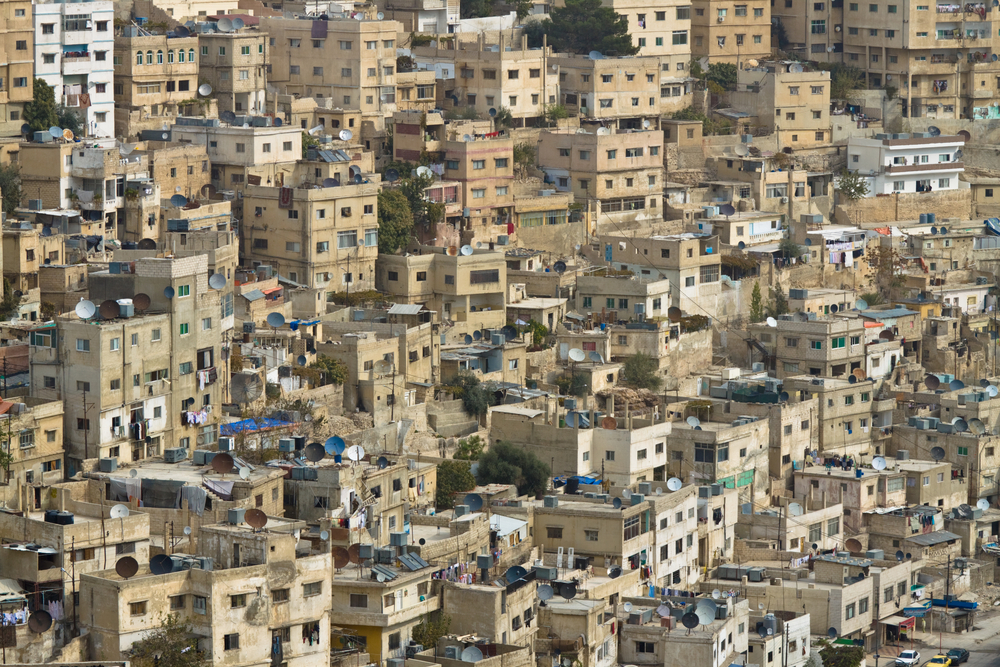

 Vive la France! The country recently passed legislation that requires rooftops on all new commercial buildings to be at least partly covered with solar panels or rooftop gardens. French environmental activists had sought to mandate full green roof coverage for all new buildings, but the new law allows commercial owners the option to install roof-mounted solar panels to generate distributed renewable energy – further lessening the carbon footprint of new construction. Imagine the immediate benefits if the sunny nations of the Middle East slipped this into their building codes, turning acres of flat rooftops into something more than a place to hang laundry and anchor a satellite dish.
Is there a hint of French greenwashing? Possibly, but the result is undeniably positive. This year Paris hosts the COP 21, the United Nations international conference on climate change. Expect to see other green news coming in the run up to the December summit. The Eiffel Tower is now wearing some green jewelry in the form of two wind turbines that can generate about 10,000 kilowatt-hours of electricity per year, enough to juice the annual demand of the tower’s first floor restaurants and shops. See them blending fashionably into the iconic tower in the short video clip, below.
[youtube]https://youtu.be/HwK4P2Ln0Eg[/youtube]
Green roofs, also called living roofs, provide a dual insulating effect. Their thermal mass protects buildings from excessive heat gain and prevents heat loss, which cuts the amount of energy needed for summer cooling and winter heating. To a lesser extent, in addition to their core function of generating renewable energy, roof-mounted solar panels can similarly shield a structure from the elements.
The long list of added benefits range from economic factors (prolong the service life of heating, ventilation, and HVAC systems through decreased use) to ecological (introduce more nature into the built environment, alter the micro-climate and provide habitat for insects and birds) to social (open up new areas for community gardens, commercial and recreational space in urban settings where space is generally limited).
There are macro-benefits too, especially when deployed city-wide. Green roofs retain rainwater and reduce problems with runoff since the substrate soils store water, later absorbed by plants, and returned to the atmosphere through transpiration and evaporation. Storm water management is not a major concern in the arid Middle East, but green roofs can address specific regional conditions such as air pollution and solar heat gain.
Rooftop greenery captures airborne pollutants and filters noxious gasses, and living roofs and PV panels both reduce urban “heat island” effect where cities become measurably hotter than surrounding rural areas. With rapid urbanization, as buildings and roads replace open land and vegetation, surfaces that were once were shaded, moist and permeable become dry and impermeable heat absorbents. Urban regions become warmer, forming an “island” of increased temperatures known as a heat island.
Green roofs are costlier than conventional roofs, but a Michigan State University research team found that they save about $200,000 over their lifetime. Almost two-thirds of the savings come from decreased energy needs. There are a range of low-maintenance designs that look attractive, and add to the resale value of the building.
There is some progress in adapting green roofs to the specific challenges of this region such as high temperatures and water scarcity. A few years back, a dedicated research center opened at the University of Haifa to explore green roof development. Rooftop farming is sprouting up in refugee camps in Bethlehem and Lebanon, expanding the benefits by growing organic food. But these initiatives, while worthwhile, are small.
It is inexplicable why building strategies, proven over time in other zip codes, are not adopted wholesale – everywhere. Particularly when the strategies are mature, tested, and maximally risk-free. Surely, localization must be considered. But as with waste recycling, banning free issue of non-biodegradable plastic products, and municipal composting, sustainable building practices can be painlessly realized swiftly and with minimal civic investment by simply assessing the best practices of other cities, and legislating them locally.
Image of Amman, Jordan’s ubiquitous flat roofs from Shutterstock


There are many benefits of getting a green roof on top of your house. Not only will you increase the beauty and allure of your home, but the green roof will also purify the environment around you and provide you with a fresh atmosphere to breathe in.
http://www.collegestationroofman.com/
Isn’t it ironic that European countries, which don’t exact have lots of sunshine, are making such progress with solar energy, while many countries in the Mediterranean area and Middle East are not. With oil prices still down, solar energy may not develop faster in Europe as well. Only environmental considerations are helping this to happen.