
As olive groves across Turkey are falling victim to energy projects, one construction company decided to buck the trend, turning a coal mine into an award-winning olive plantation.
Protests erupted in the disaster-struck coal capital Soma last month after a construction company felled 6,000 olive trees to make way for a power plant.
The case generated nationwide interest, underlining Turkey’s struggle to balance the government’s aim of reducing the country’s dependence on energy imports with protecting the environment.
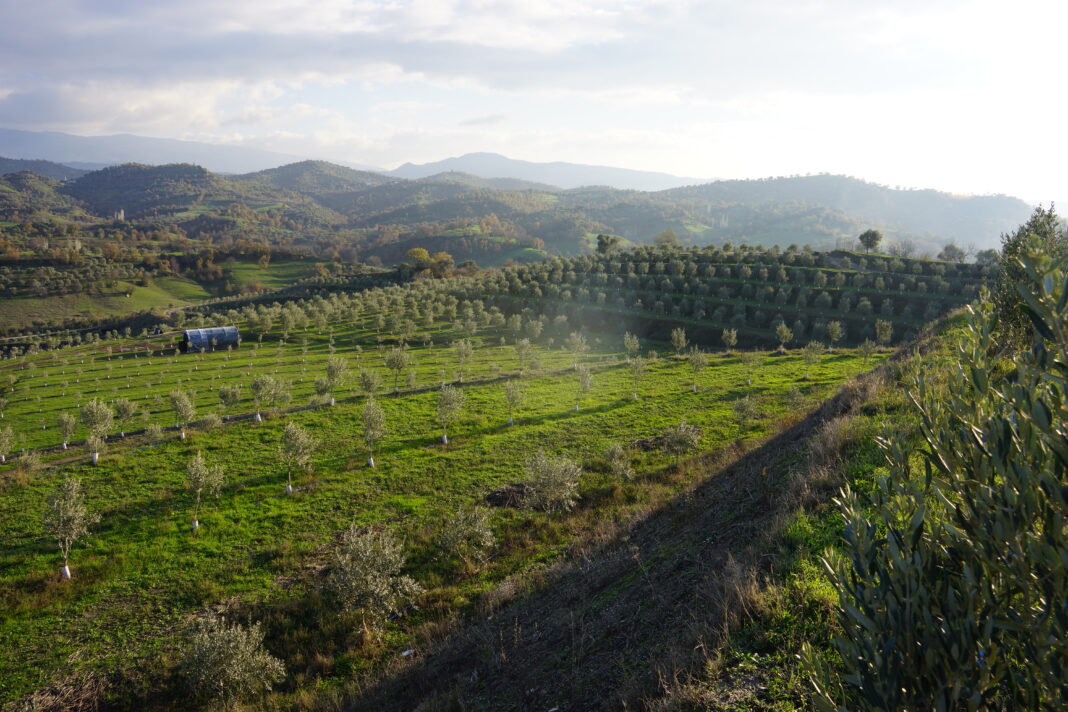
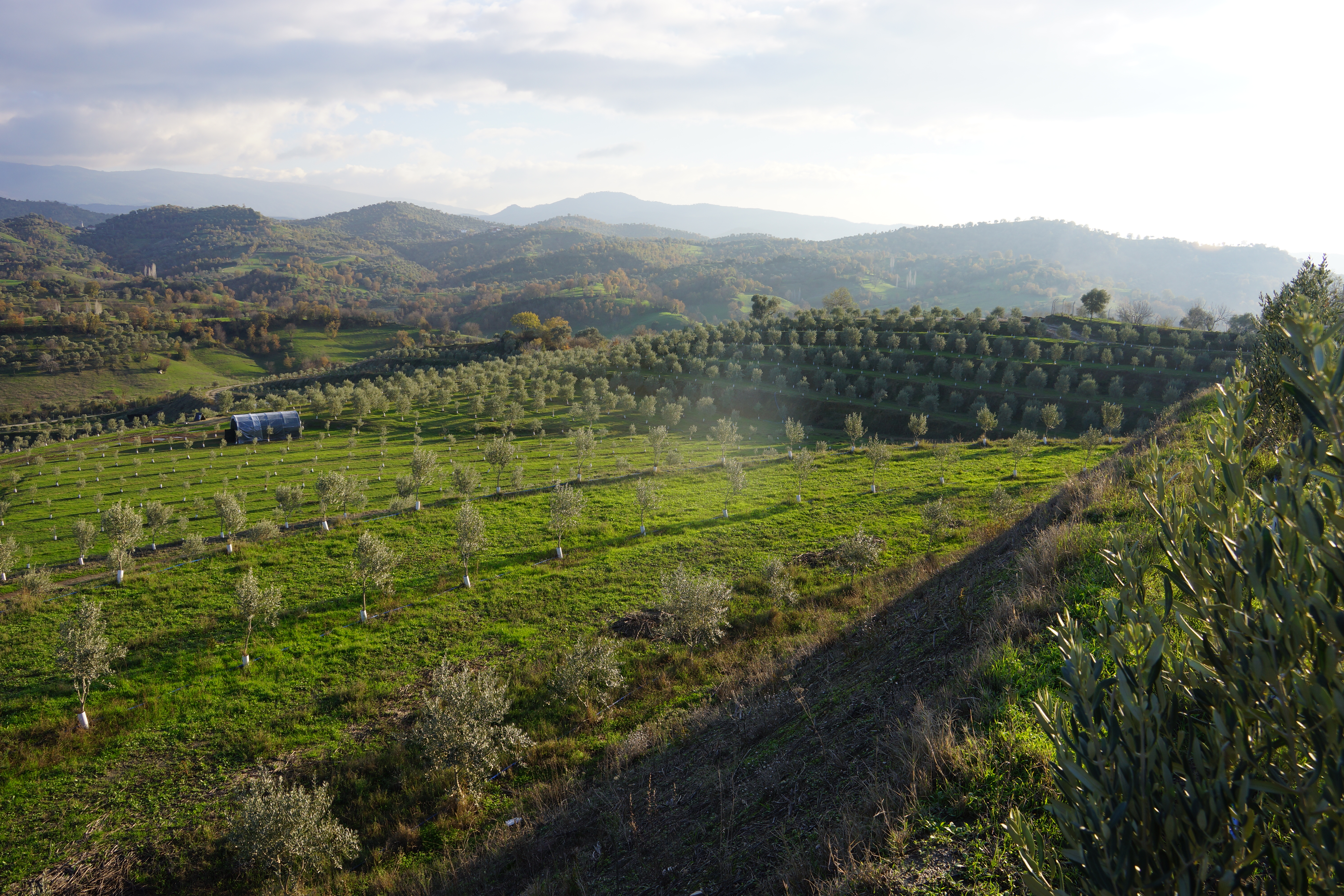
But in Aydin on the Aegean coast, a few hours’ drive from Soma, the Zetay olive grove serves as a rare example of sustainable development in Turkey.
Originally an open-excavation coal mine, it was operated by the Ankara-based Aydiner Company in the 1990s until the coal ran out.
Yet instead of letting the land lie barren, the company bought the 300,000 sqm area in 2007 and transformed it into an orchard. Last year, it began producing its own olive oil.
Ömer Aydiner, the company’s owner, said he had been thinking about converting the area for several years. After deciding to turn it into an olive grove, the company sought the advice of agriculture experts at Ankara University and the local community in Aydin.
“We started looking into the best variety we could use with one of the professors in Ankara and by using the experience of the muhtar [village headman] and his father,” Mr Aydiner told Green Prophet.
“They’d been living in the village ever since that village was established, so they knew what could be grown over there. We decided to stick to the olives that all the farmers and all the people in the area were growing.”
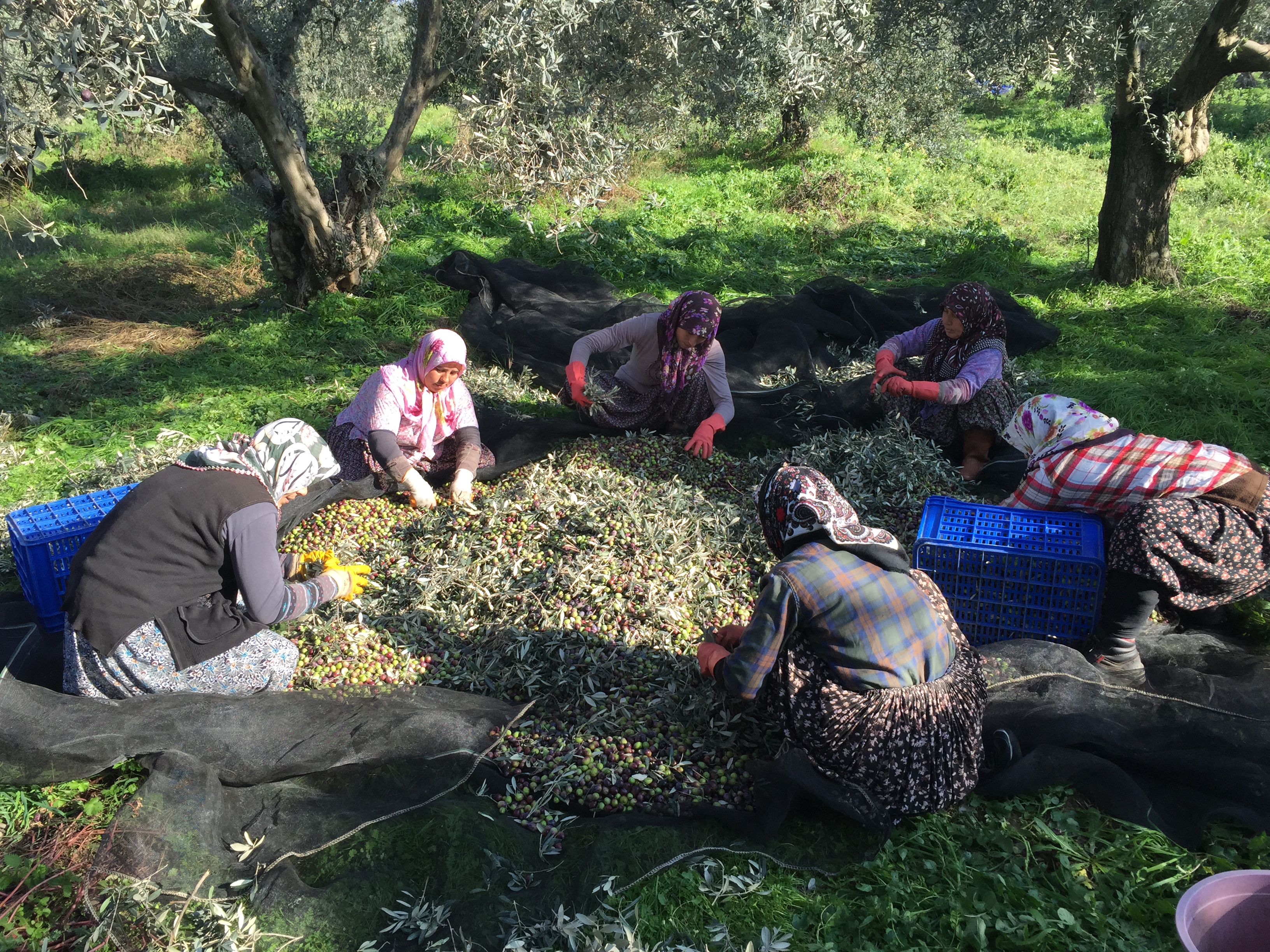
The company works closely with the villagers. As Zetay’s young trees do not yet yield enough to sustain the oil production, Aydiner buys olives from farmers in the region. During harvest, the plantation also relies on local labour.
“We are from a village ourselves. We’re from northern Turkey, from the Black Sea coast, so we know how to be a village person,” Mr Aydiner said about his company.
“The best knowledge is always on the ground, it comes from the people who live there. I cannot bring someone from the Black Sea to advise me on growing olives in the Aegean area, that would be ridiculous.”
External help came from Professor Mucahit Özkaya from Ankara University’s horticulture department, who specialises in olive farming.
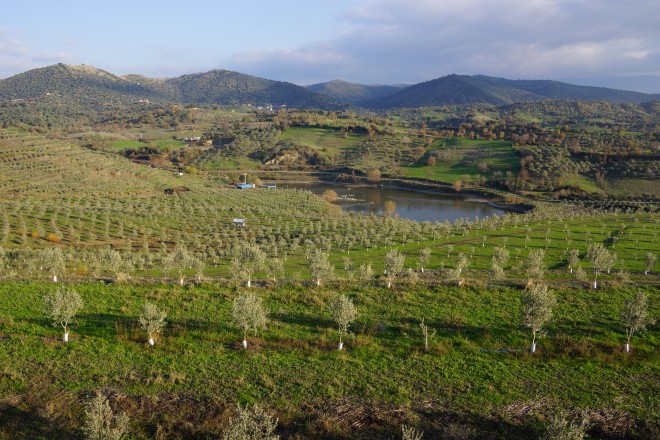
Under his supervision, the company began work on the barren mine. The area’s soil was severely damaged after years of coal exploitation, so Prof Özkaya instructed the company to dig holes – one each for the roughly 13,000 trees – and fill them with fertile earth.
He also added caper and pomegranate trees to the orchard to prevent landslides and further erosion.
“Some other companies plant forests or orchards on old coal mines, but this company contacted me to establish it in the right way. Most companies don’t care for the science behind it,” said Prof Özkaya, who still works as a consultant at Zetay.
As Aydiner wanted to produce organic oil, the plantation uses no fertiliser or pesticide and little machinery. To combat pests, the workers rely on tried-and-tested methods used by local farmers.
“We had some problems with mice and insects, so we put some animals, like turkeys, chickens, hens and geese, in the plantation and they’re eating the insects,” Prof Özkaya told Green Prophet.
Award-winning olive oil
Nearly 10 years in the planning, the effort has paid off: Zetay’s olive oil won eight awards from across the world this year. Encouraged by the plantation’s success, Mr Aydiner said his company was looking into starting a similar project in the Black Sea region.
Such projects are rare. Elsewhere in Turkey, olive groves are under threat after the government drafted a bill to facilitate the expropriation of small olive plantations to build power plants.
An estimated 90 per cent of the country’s olive groves are smaller than 2.5 hectares and could therefore be expropriated at the government’s will if the bill passes.
RELATED: Balyolu makes Turkey’s first honey tour
Even without the new law, Turkey’s hunger for energy has led the government to lend support to destructive construction projects.
Deforestation has become widespread: Istanbul’s northern forests, where the world’s largest airport is being built, are disappearing and on the Mediterranean coast, hundreds of thousands of trees stand in the way of Turkey’s recently-greenlit first nuclear power plant.
Plans for a thermal power plant in Soma, where 301 miners were killed in an explosion in May, saw 6,000 olive trees felled last month. The images of sobbing villagers sparked outrage nationwide, forcing the Council of State to suspend the project.
Deputy prime minister Numan Kurtulmus tried to strike a conciliatory note: “We need to find the middle ground. Yes, we need electrical energy. We need power plants. But it is also wrong to damage the environment in a thoughtless, reckless way just because we have some economic needs.”
Yet a few weeks later, his words seemed to have been forgotten when several dozen olive trees were cut down to make way for a power plant in Aydin province, less than an hour’s drive from the Zetay orchard.