“Drop-a-brick” in your toilet to defer regional drought

Join-the-Bowl-Movement-and-Drop-A-BrickDrop-A-Brick is a clever PR campaign to cut water waste in severely parched California, a state with dwindling aquifers that is experiencing its worst drought in 500 years. It’s a project that can be implemented everywhere there is indoor plumbing, and the concept is sound – displace some tank water and over time, save buckets of the wet stuff. This is an ideal solution for those of us put off by the “if it’s yellow, let it mellow” credo, yet not yet ready to pee in our shower. Let’s not just read about water conservation and, instead, actually act to save some!
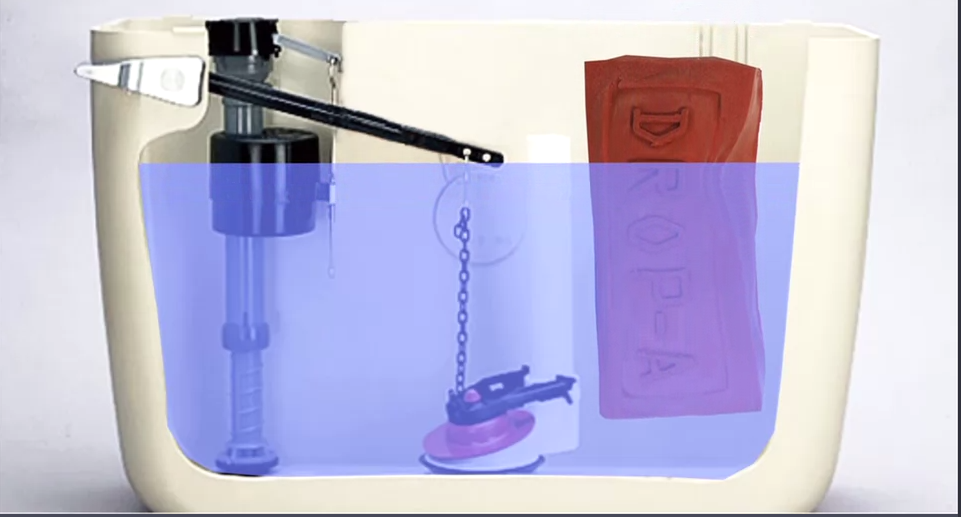
 Conserve water with the Drop a Brick Bowl Movement

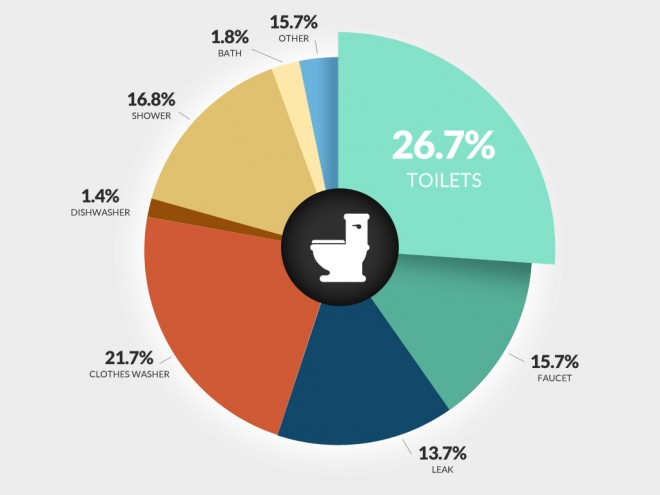
According to the U.S. Environmental Protection Agency, Americans use more water flushing toilets than they do with any other daily activity. Compared to Europe, America was late to hop on high-efficiency plumbing fixtures – but that high-toilet-flush stat is likely true for most developed nations. Middle Eastern bathrooms are fast adopting western-style fixtures, including a predilection for EU-style bidets.  Water waste is rising in this region that can least afford it, despite record rains in Jordan and elsewhere – so listen up desert nations: this brick shtick will work for us too.

The Indigogo campaign is a lighthearted way to convey a serious message, and given the myriad other puns the founders could have played with, the mild poop joke seems a wise choice. Project Drop-A-Brick is a not-for-profit, grassroots initiative, an eco-friendly improvement on the old trick of placing a clay brick in a toilet tank to save water. The mass of the brick displaces a half-gallon or so of tank water and reduces the amount used in each flush, with little impact to toilet performance.

[youtube]http://youtu.be/937g5_u-Wko[/youtube]

Their new “brick” is made of nontoxic rubber and filled with a hydro-gel that expands when mixed with water.  It’s pliable and fits inside almost every toilet tank.  The gadget is more tank-friendly than a real clay brick and less water use means lower utility bills.

Drop-a-brick water saving campaign

This brick costs $15, not exactly cheap but it will earn back its price tag over time. The campaign offers the usual crowd-sourcing fun stuff: you can give a brick to families that can’t afford them.  You can buy them in 3-packs (keep in mind, this is California-centric where most suburban homes come with at least three bathrooms).  There are “bag-of-bricks” deals for office buildings and motels, and the “brick wall” for bulk buyers.  Or live like a “King or Queen of Your Thrown” and give $2500 to the cause to jump-start production, run longer shifts to get Drop-A-Bricks made sooner, and spread the word.

They’re not the first to jump aboard toilets as a weapon of mass-desertification – Green Prophet recently alerted you to the pee-in-the-shower craze – but  Drop-A-Brick may prove to be a new bucket challenge. The developers figure each brick will save about 50 gallons of water a week. That’s astounding.
Drop-a-brick water saving campaign

If you are in the U.S., check out their website and consider these as wise and wacky water-saving gifts.  If you’re out of shipping reach like me here in Jordan – go for a walk, pick up a few stones, or indeed, a real brick – and pop it in your toilet tank. Sure, it’s fine to read about conservation (likely when sitting on your “throne”) – but take it a step further with a simple action to start saving water, in significant amounts, now.

Images from Drop-a-Brick


2 COMMENTS

Comments are closed.

Hot this week

How Renewable Energy is Revolutionizing the Way We Power Our World

Solar has become the star of the transition thanks to modular hardware and straightforward installation. It fits dense cities and remote towns alike. Many companies are turning to rooftop arrays and carport systems - and exploring commercial solar installation as a practical way to lock in future savings.

How does one start prepping?

Faced with an extreme winter storm this year, Americans wonder how to be prepared for catastrophe. Miriam has lived through wars in the Middle East - so she's prepared on giving you a guide to prepping.

Fishermen sue tire manufacturers on behalf of the salmon

A federal trial in San Francisco has brought US tire manufacturers, fishing groups, and environmental scientists into court over a chemical most drivers have never heard of — but which scientists say may be silently reshaping aquatic ecosystems.

Listening to Water: Tarek Atoui’s Next Work for Tate Modern

Born in Beirut, Lebanon in 1980 and now living in Paris, Atoui has spent years building instruments that don’t sit comfortably in concert halls. Many of them involve water, glass, and ceramics — materials that react to sound instead of simply producing it.

Leading Through a Dual-Energy Transition: Balancing Decarbonisation with Energy Security

Experience in one area of the energy industry isn't enough to guarantee readiness across all the others. That's where a structured program like an MBA in energy can come in. Today's advanced curricula explore energy economics, finance, policy, and strategic management alongside the technical subjects. And when pursuing an energy MBA online, professionals can skill up and retrain without having to step out of the labor market -- an important perk at a time when skilled professionals are already in short supply.

Topics

How Renewable Energy is Revolutionizing the Way We Power Our World

Solar has become the star of the transition thanks to modular hardware and straightforward installation. It fits dense cities and remote towns alike. Many companies are turning to rooftop arrays and carport systems - and exploring commercial solar installation as a practical way to lock in future savings.

How does one start prepping?

Faced with an extreme winter storm this year, Americans wonder how to be prepared for catastrophe. Miriam has lived through wars in the Middle East - so she's prepared on giving you a guide to prepping.

Fishermen sue tire manufacturers on behalf of the salmon

A federal trial in San Francisco has brought US tire manufacturers, fishing groups, and environmental scientists into court over a chemical most drivers have never heard of — but which scientists say may be silently reshaping aquatic ecosystems.

Listening to Water: Tarek Atoui’s Next Work for Tate Modern

Born in Beirut, Lebanon in 1980 and now living in Paris, Atoui has spent years building instruments that don’t sit comfortably in concert halls. Many of them involve water, glass, and ceramics — materials that react to sound instead of simply producing it.

Leading Through a Dual-Energy Transition: Balancing Decarbonisation with Energy Security

Experience in one area of the energy industry isn't enough to guarantee readiness across all the others. That's where a structured program like an MBA in energy can come in. Today's advanced curricula explore energy economics, finance, policy, and strategic management alongside the technical subjects. And when pursuing an energy MBA online, professionals can skill up and retrain without having to step out of the labor market -- an important perk at a time when skilled professionals are already in short supply.

From Green Energy to Healthy Societies: Why old systems thinking is becoming relevant again

Across the Middle East and North Africa, large investments are being made in green hydrogen, renewable energy, water infrastructure and sustainability. Most of these efforts are discussed in the context of climate change, decarbonization and economic diversification. That framing is important, but it may not capture their full value.

We saw peace – an interreligious encounter deep in our eyes

They came from Israel, Palestine, Jordan, Iraq, Yemen, Morocco, Tunisia, Lebanon, Egypt… There are Sunni Muslims, Shiite Muslims, Jews (Orthodox and Reform), Orthodox Christians, Coptic Christians, Protestant Christians, Druze, Baha'is, a Scientologist.

Can biochar reduce ‘Forever Chemicals’ in food if it’s used in farms?

Biochar is produced by heating organic material in a low-oxygen environment so it does not burn. This process, known as pyrolysis, transforms plant matter into a stable, carbon-rich material.

Related Articles

Popular Categories