Iran dominates drug headlines in the Middle East

drug-trade-iran
There is a growing concern that the free trade agreement between Iran and Turkey has encouraged an increase in the production and transit of drugs in the Middle East. Following the 2009 agreement to enhance co-operation efforts of land, air, and sea transportation, politicians and economic analysts have grown ever more concerned about the rising threat of drugs amid a free trade environment.

Iranians a Force in Turkish Drug Industry

Experts would appear to have every right to feel concerned, with statistics showing that heroin seizures increased from 2,025kg to 3,044kg between 2009 and 2010, which is just a year since the free trade agreement. Prior to the agreement, it had taken three years for a similar increase between 2005 and 2008. Those statistics represent the seizures of heroin, an opium-based drug, being transported to Turkey.

For the drug traffickers who are not caught during transit, close to one million Iranian nationals have chosen to continue living in Turkey instead of returning to their homeland. But rather than choosing to move for an improved quality of life, many of the illegal migrants are making the move for the purpose of becoming involved in the lifestyle offer by drug trafficking.

In fact, Turkey’s Department of Anti-Smuggling and Organised Crime (KOM) revealed in 2011 that 34% of all foreign nationals arrested in the country were Iranian. No other national demographic had a higher rate of drug-related arrests than Iranians, with these individuals dominating in the Turkish drug industry.

Hash Usage in Iran

Iran is not only making the headlines for drugs in the wider Middle East, but also within its own borders. Economic struggles within the country, combined with the readily available presence of cheap drugs, have driven many young Iranian nationals to consume drugs until the point of addiction is reached.

Prior to the development of serious addictions, Iranians are legally allowed to consume hashish, a product that is prepared from the readily available cannabis plants that are available throughout North Africa and the Middle East. Consumption of hash can act as a gateway drug for many young people, who turn to escapism to cope with the economic struggles of Iran. Wellness centres like FloridaBeachRehab.com have witnessed this problem on many occasions.

However, there is a considerable catch associated with the legal status of hash. While many hash users in the rest of the world will choose to smoke it through a variety of delivery methods, Iranian nationals can only legally consume hash by oral means. Effectively, this creates a situation where hash is easy to come by. Once in possession of the drug, it is then possible for the purchaser to smoke it in private.

Opiates Causing Damage

Iran has previously revealed to Economist.com that more than 2 million of 75 million people living in the country are addicted to damaging opiate-based drugs. Along with heroin, many of those 2 million addicts are using a cheaper derivate heroin, which is known as crack or shishe (this term is used to name cocaine in its freebase form). Users will gather in public places to smoke shishe and pose a threat to others.

The major problem with shishe is that it is not just poorer sections of Iranian society turning to the drug. Alarmingly, weight-conscious and beauty-obsessed women from the middle class are turning to shishe as a cure for weight loss. Courses are also said to be available for those who would like to manufacture shishe from the comfort of their own home.

To tackle the epidemic, Iran has attempted to implement a number of policies. Leading the charge are programmes formed to encourage safe disposal of needles, as well as methadone clinics to assist heroin addicts. With a 15% rate of HIV diagnosis among needle users in Iran, such initiatives are vital for responding to the troubling issue.

Iran is facing a battle on two fronts, with some of its citizens engaging in the trafficking of opiates to Turkey and then later settling there to join the local drug industry. Free trade is said to be the catalyst behind the first issue. Next, the dire economic conditions of Iran have driven many to consume cheap opium-based drugs. Iran has years of effort to combat the growing threat of drugs in the Middle East.

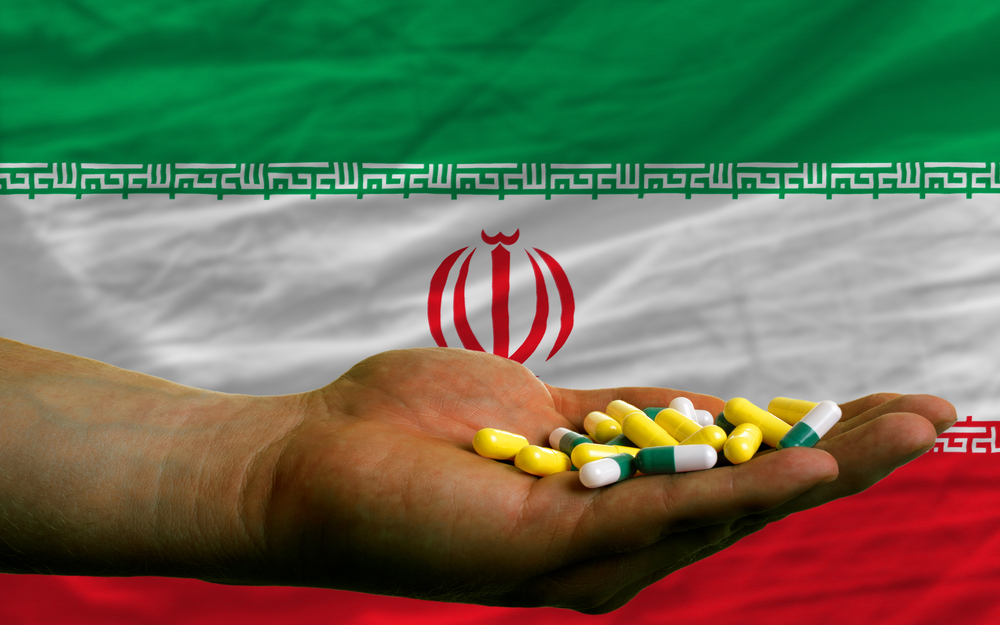
Image of drugs in Iran from Shutterstock

Karin Kloosterman
Karin Kloostermanhttp://www.greenprophet.com
Karin Kloosterman is an award-winning journalist, innovation strategist, and founder of Green Prophet, one of the Middle East’s pioneering sustainability platforms. She has ranked in the Top 10 of Verizon innovation competitions, participated in NASA-linked challenges, and spoken worldwide on climate, food security, and future resilience. With an IoT technology patent, features in Canada’s National Post, and leadership inside teams building next-generation agricultural and planetary systems — including Mars-farming concepts — Karin operates at the intersection of storytelling, science, and systems change. She doesn’t report on the future – she helps design it. Reach out directly to [email protected]

LEAVE A REPLY

Please enter your comment!
Please enter your name here

TRENDING

Zoroastrianism from Iran is the world’s first eco-religion

When Zarathustra started preaching around 1200 BCE in ancient Persia, which is known today as Iran, he wasn't just founding a religion—he was creating the world's first environmental protection movement. Good thoughts, good words, good deeds. But there was a mantra and words to live by: don't pollute the earth, water, or fire. Ever.

UNESCO forest being developed in Iran

Environmental activists in Iran often face significant personal risk when speaking out about illegal land grabs, deforestation, or the destruction of protected areas. In recent years, several high-profile environmentalists have been detained, interrogated, or imprisoned on broad national-security charges, sometimes without transparent legal proceedings.

Iran’s rarest forest is on fire

It's full of rare and endemic species, and it's a UNESCO heritage site. Iran's natural treasure, a 1000-kilometer forest, the Hyrcanian forest has been on fire for several days. It stretches from the Caspian Sea and into neighboring Azerbaijan and is home to more than 3,200 kinds of plants. 

Sustainable Architect Ronak Roshan on the Politics Behind the Houston Ismaili Center

Roshan’s reflection situates the Houston Ismaili Center within a broader discussion about architecture as diplomacy — where aesthetics, faith, and geopolitics intersect. Her words challenge readers to question whether “green” design and grand symbolism can coexist without transparency and accountability.

Iran’s holiest city about to run dry as terror chosen over water management

Iran’s second-largest city, Mashhad, is facing an acute water emergency after dam reservoirs feeding the city fell below three percent capacity, according to Iranian state and local media. Officials warn that without rainfall or improved inflows from neighboring Afghanistan, the city’s supply could soon collapse.

Qatar’s climate hypocrisy rides the London Underground

Qatar remains a master of doublethink—burning gas by the megaton while selling “sustainability” to a world desperate for clean air. Wake up from your slumber people.

How Quality of Hire Shapes Modern Recruitment

A 2024 survey by Deloitte found that 76% of talent leaders now consider long-term retention and workforce contribution among their most important hiring success metrics—far surpassing time-to-fill or cost-per-hire. As the expectations for new hires deepen, companies must also confront the inherent challenges in redefining and accurately measuring hiring quality.

8 Team-Building Exercises to Start the Week Off 

Team building to change the world! The best renewable energy companies are ones that function.

Thank you, LinkedIn — and what your Jobs on the Rise report means for sustainable careers

While “green jobs” aren’t always labeled as such, many of the fastest-growing roles are directly enabling the energy transition, climate resilience, and lower-carbon systems: Number one on their list is Artificial Intelligence engineers. But what does that mean? Vibe coding Claude? 

Somali pirates steal oil tankers

The pirates often stage their heists out of Somalia, a lawless country, with a weak central government that is grappling with a violent Islamist insurgency. Using speedboats that swarm the targets, the machine-gun-toting pirates take control of merchant ships and then hold the vessels, crew and cargo for ransom.

Leopoldo Alejandro Betancourt López Turned Ocean Plastic Into Profitable Sunglasses

Few fashion accessories carry the environmental burden of sunglasses. Most frames are constructed from petroleum-based plastics and acrylic polymers that linger in landfills for centuries, shedding microplastics into soil and waterways long after they've been discarded. Leopoldo Alejandro Betancourt López, president of the Spanish eyewear brand Hawkers, saw this problem differently than most industry executives.

Why Dr. Tony Jacob Sees Texas Business Egos as Warning Signs

Everything's bigger in Texas. Except business egos.  Dr. Tony Jacob figured...

Israel and America Sign Renewable Energy Cooperation Deal

Other announcements made at the conference include the Timna Renewable Energy Park, which will be a center for R&D, and the AORA Solar Thermal Module at Kibbutz Samar, the world's first commercial hybrid solar gas-turbine power plant that is already nearing completion. Solel Solar Systems announced it was beginning construction of a 50 MW solar field in Lebrija, Spain, and Brightsource Energy made a pre-conference announcement that it had inked the world's largest solar deal to date with Southern California Edison (SCE).

Related Articles

Popular Categories