

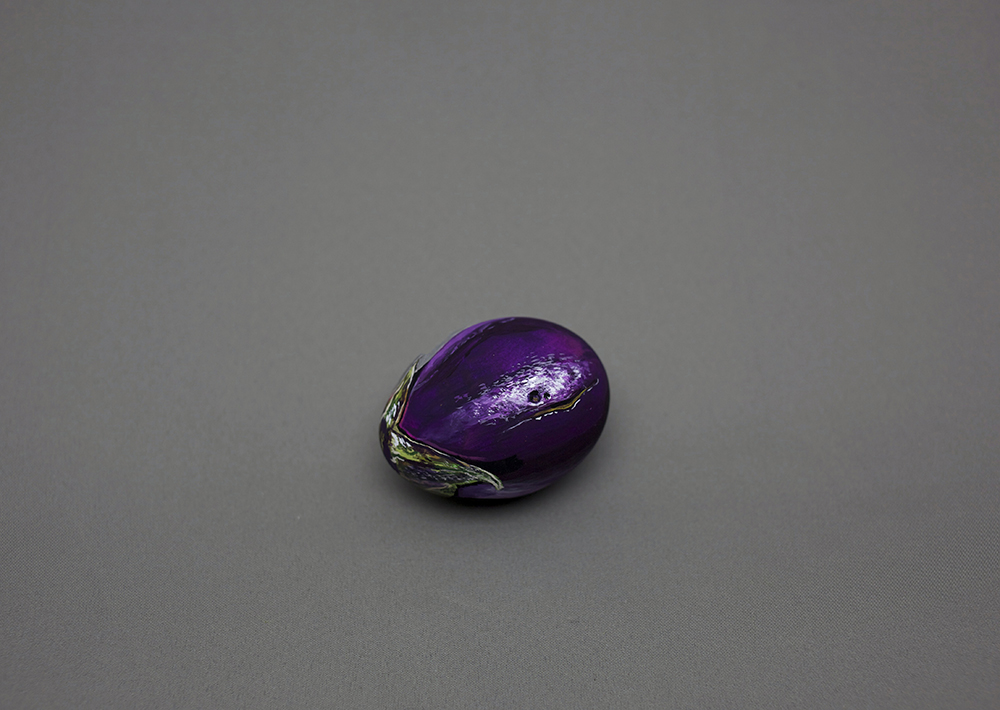
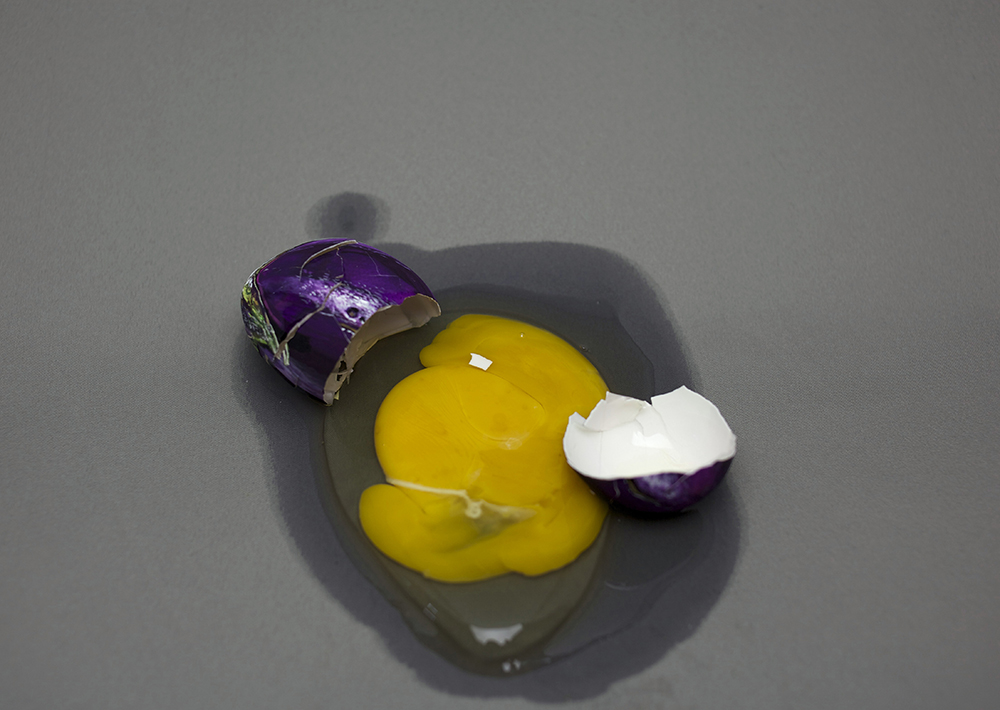
 Artist Hikaru Cho transforms ordinary foods into completely different foods, not by culinary skill, but with acrylic paint. She painstakingly camouflages veggies, fruits and even eggs into similarly-shaped but totally different foods. Viewers report they can experience the “surprise” in their mouths!
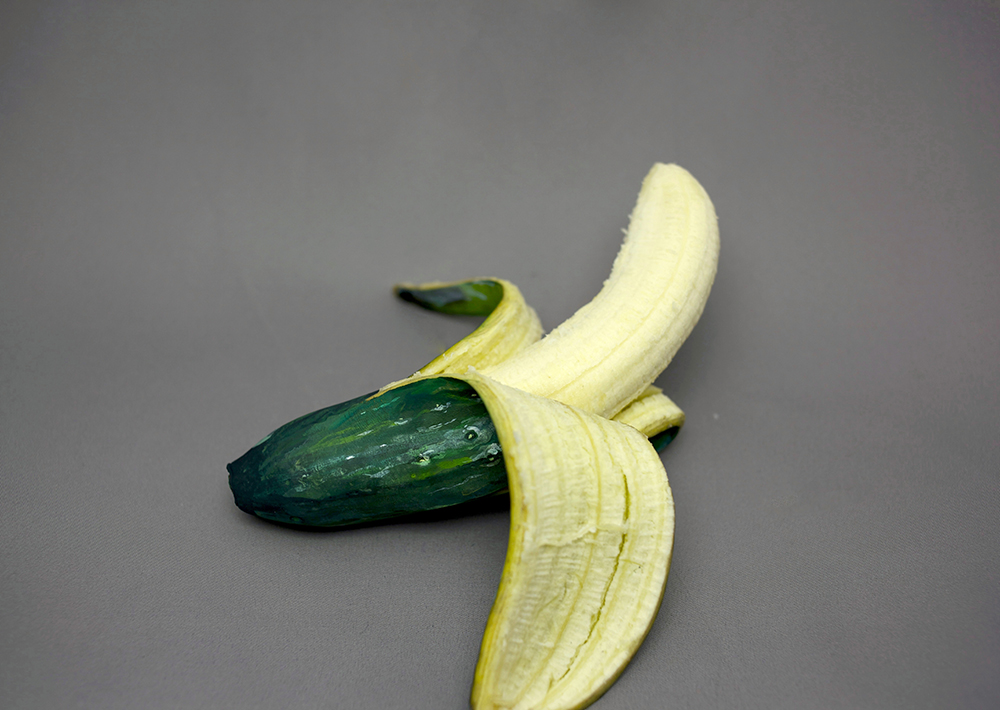 Her series titled “It’s not what it seems” turns a tomato into a tangerine, a banana into cucumber, and an egg into a baby eggplant. We’ve been seeing a lot of food art lately; eye-catching and clever, but maybe we should instead be reporting on more serious food transformations, namely, the looming changes to our diet due to climate change.
Three credible sources have featured stories on startling – and significant – setbacks in the global processes that stock our cupboards.
The World Food Program (WFP) says the Middle East’s driest winter in several decades is threatening global food prices, destroying local crops and farmers’ livelihoods. Climatologists point to varying degrees of drought occurring across 66% of scarce arable lands in Syria, Lebanon, Jordan, the Palestinian territories and Iraq; regional rainfall hasn’t been lower since 1970.
“Going back to the last 100 years, I don’t think you can get a five-year span that’s been as dry,” said Mohammad Raafi Hossain, a UN Food and Agriculture Organization (FAO) environmental economist.
“When governments that are responsible for importing basic foodstuffs have shortages in production, they will go to outside markets, where the extra demand will no doubt push global food prices higher,” said Nakd Khamis, FAO consultant and seed expert.
The Arab uprisings were triggered by soaring food prices that, in turn, aggravated social tensions. Some experts maintain the same triggered the 2011 uprising against Syrian President Bashar al-Assad.
Spin the glove to North America where 2013 was the driest year on record for the state of California – one of the world’s largest agricultural regions – and 2014 has been exceptionally dry too. According to the US Drought Monitor, 91.6% of California is currently experiencing “severe to exceptional drought”.
Hardest hit would be annual row crops like corn, tomatoes, broccoli, lettuce, cantaloupes, garlic, and peppers. Mike Wade, the executive director of the California Farm Water Coalition, said consumers can expect higher prices and reduced selection at grocery stores, particularly for products such as almonds, raisins, walnuts and olives.
CNBC reports that the lack of water means California farmers will let half a million acres of farmland sit idle this year. This bodes poorly for the supply and demand economics of basic food.
 Now move down to South America, where the worst drought in decades hits the Brazil coffee belt. The historic dry spell is forcing water rationing in over 140 Brazilian cities and causing coffee prices to spike more than 50% so far this year.
“The (lack of) rain has the same implication for sugar,” James Cordier, the founder of OptionSellers.com told Bloomberg News. “There’s a cap on sugar prices because there are other producers in the world. There isn’t a cap on the price of coffee because Brazil produces such a large percentage.”
Brazil accounts for 37% of global coffee output, including 46% of arabica beans, with their current share of sugar at 22%, USDA data show. Bulk buyers brace for a steep price rise as the dry spell causes a bean shortage, resulting on increased prices for end consumers.
Sure, this is the least life-critical of this article’s examples. But you get the picture.
 This info is not intended to instill panic, rather to raise awareness. Are concurrent droughts in the world’s food production belts coincidental? Is it climate change? Arguing over causes does little to prepare us to deal with effects.
Perhaps look to those who lived during war and depression, see the wisdom of having a well-stocked food pantry, and make wise choices in what to eat. Collectively, these stories are a wake up call. Understand that big changes are coming.
All images from Hikaru Cho




Comments are closed.