Google “spies” find weir trap fishing used illegally in Iran, Qatar and Bahrain

2D9793842-131126-science-weir.blocks_desktop_large

A Kuwaiti in Canada uses Google Earth to uncover how a banned method of Middle East fishing is being used to trap an estimated 31,000 tons of fish per year. 

According to Pew, who funded the research, most of the unreported catch occurred in the coastal waters of Bahrain and Iran. The researchers also found 17 illegally operating weirs in Qatar, which banned the gear in 1994.

Overfishing in many parts of the world has often been blamed as one of the prime factors in the decline of fish and other forms of marine life in the worlds seas and oceans. This problem is especially prevalent in the Arab Gulf region, where Gulf states like Dubai have finally gotten serious about overfishing.

Oman, another Gulf region country, “gave the boot to bottom trawling” by commercial fishermen.

An ancient method of trapping fish in coastal waters, known as Weir trapping or fishing Weirs, has been prevalent in Arab Gulf waters in recent times, reports the CBC.

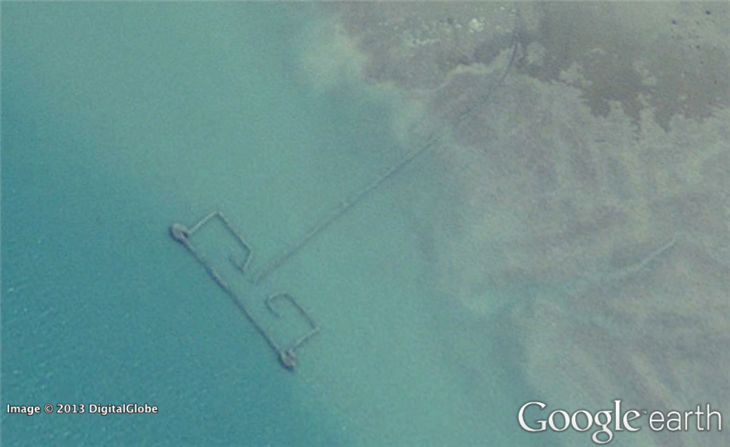
Weir fishing involves the placing of v-entrance shaped underwater traps into which fish swim and afterwards cannot find their way back into open water. Fishermen afterwards simply net the hapless fish found swimming in the trap enclosure. Weir fish traps have been in use for hundreds of years; and have been especially effective in the mouths of coastal streams and rivers to trap fish like salmon returning to spawn.

In an interview made with Dalal Al-Abdulrazzak, a Kuwaiti PhD student at the University of British Columbia Fisheries Center, she said that the amount of fishing using Weir fish traps in the Arab gulf has been grossly under-reported to UN fishery monitoring agencies.

“We should realize what’s being reported to the UN is likely an underestimate. That has implications for fisheries management,” she said.

Ms. Al-Abdulrazzak, who is currently working on ocean governance at the UN added that the fish traps often snare large numbers of immature fish before they have a chance to grow up enough to spawn.

(Photo  below shows Weir trap locations in red)
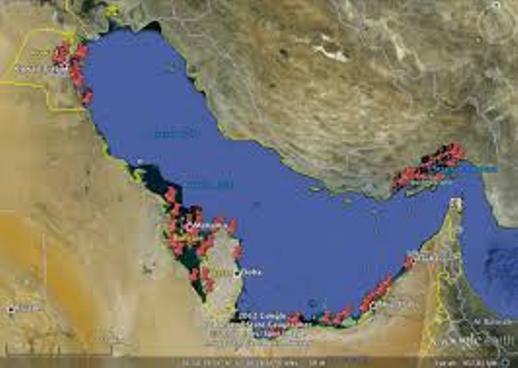
Locations of Weir fish traps in Arab Gulf

Al- Abdulrazzak added that she recalls seeing many of these Weir fish traps along coastal waters in her native Kuwait. She told CBC News that she decided to use satellite images created by Google to determine how many of these traps are found in the Gulf.

After four months of checking, she found no less than 1,900 of these fish traps. By talking with local Gulf fishing scientists on amounts of fish catches reported, she estimates that weirs in Kuwait, Saudi Arabia, Qatar, the United Arab Emirates, Iran, and Bahrain scoop up about 31,000 tons of fish a year, or about six times the amount actually reported.

In addition, Al-Abdulrazaak found that three regional countries, Iran, Qatar and Saudi Arabia reported no fish catches by Weir traps. Noting that her estimates “are huge” she adds that what she estimates are likely to be closer to the truth involving fish catches by this method.

She hopes that using resources like internet photo images, which does not cost much money, can lead to better controls over this kind of fishing; especially since Weir fish traps are used  world-wide.

Read more on overfishing issues in the Arabian Gulf and elsewhere in the Middle East:

Dubai Finally Gets Serious About Overfishing

Bottom Trawlers in Oman Get the Boot

Why Dolphins Have Disappeared from Israel’s Shores

Photo of Weir Fish Trap locations in the Gulf by IB Times/Google Earth

Maurice Picow
Maurice Picowhttps://www.greenprophet.com/
Maurice Picow grew up in Oklahoma City, U.S.A., where he received a B.S. Degree in Business Administration. Following graduation, Maurice embarked on a career as a real estate broker before making the decision to move to Israel. After arriving in Israel, he came involved in the insurance agency business and later in the moving and international relocation fields. Maurice became interested in writing news and commentary articles in the late 1990’s, and now writes feature articles for the The Jerusalem Post as well as being a regular contributor to Green Prophet. He has also written a non-fiction study on Islam, a two volume adventure novel, and is completing a romance novel about a forbidden love affair. Writing topics of particular interest for Green Prophet are those dealing with global warming and climate change, as well as clean technology - particularly electric cars.

LEAVE A REPLY

Please enter your comment!
Please enter your name here

TRENDING

Dubai overfishing: 13 years after Tafline’s warning

In 2012, Green Prophet sounded the alarm about depleted Gulf fish stocks and weak enforcement in Dubai. Revisit Tafline Laylin’s original piece here: Dubai Finally Gets Serious About Overfishing.

Arab action on shark finning, and body parts trade is too little, too late

Shark finning, in which captured sharks have their fins...

Qatar Must Stop Shoreline Development to Save Mangrove Forests

The Arabian Gulf has waters that are some of...

Dubai Developer Relocates Coral Reef that Thrives in New Home

A leading property developer in Dubai executed one of...

Masdar Aims to Detect Red Algae Before Coral and Desalination Damage

Red tides are toxic to both coral reefs and...

6 Payment Processors With the Fastest Onboarding for SMBs

Get your SMB up and running fast with these 6 payment processors. Compare the quickest onboarding options to start accepting customer payments without delay.

Qatar’s climate hypocrisy rides the London Underground

Qatar remains a master of doublethink—burning gas by the megaton while selling “sustainability” to a world desperate for clean air. Wake up from your slumber people.

How Quality of Hire Shapes Modern Recruitment

A 2024 survey by Deloitte found that 76% of talent leaders now consider long-term retention and workforce contribution among their most important hiring success metrics—far surpassing time-to-fill or cost-per-hire. As the expectations for new hires deepen, companies must also confront the inherent challenges in redefining and accurately measuring hiring quality.

8 Team-Building Exercises to Start the Week Off 

Team building to change the world! The best renewable energy companies are ones that function.

Thank you, LinkedIn — and what your Jobs on the Rise report means for sustainable careers

While “green jobs” aren’t always labeled as such, many of the fastest-growing roles are directly enabling the energy transition, climate resilience, and lower-carbon systems: Number one on their list is Artificial Intelligence engineers. But what does that mean? Vibe coding Claude? 

Somali pirates steal oil tankers

The pirates often stage their heists out of Somalia, a lawless country, with a weak central government that is grappling with a violent Islamist insurgency. Using speedboats that swarm the targets, the machine-gun-toting pirates take control of merchant ships and then hold the vessels, crew and cargo for ransom.

Leopoldo Alejandro Betancourt López Turned Ocean Plastic Into Profitable Sunglasses

Few fashion accessories carry the environmental burden of sunglasses. Most frames are constructed from petroleum-based plastics and acrylic polymers that linger in landfills for centuries, shedding microplastics into soil and waterways long after they've been discarded. Leopoldo Alejandro Betancourt López, president of the Spanish eyewear brand Hawkers, saw this problem differently than most industry executives.

Why Dr. Tony Jacob Sees Texas Business Egos as Warning Signs

Everything's bigger in Texas. Except business egos.  Dr. Tony Jacob figured...

Related Articles

Popular Categories