
5,000-Year-Old Leopard Trap Discovered in Israel’s Negev Desert


ancient-leopard-trap-israel

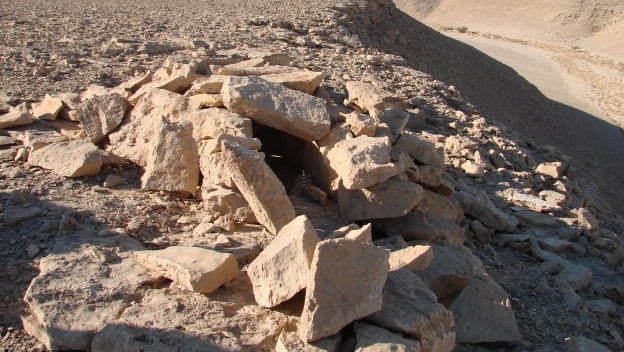
It’s easy for us to think of modern humans as the sole destroyers of all things living, but ancient humans also competed with other predators, using traps. This includes nomadic people from what is now Israel’s Negev Desert. A 5,000 year-old leopard trap, made from piles of stone, was just identified in Israel.

Researchers with the Geological Survey of Israel discovered no fewer than 50 leopard traps scattered throughout the desert. In just about each case, they were positioned near areas where sheep and goat were kept.

Once ancient nomadic people began to herd sheep and goat, they developed ingenious methods to curtail leopard and other predators, such as foxes, wolves, hyenas, and caracal, from snapping up their carefully-tended livestock.

Most surprisingly, the same kind of traps were used for thousands of years, suggesting that the design was passed on through the generations.

“The most exciting thing is the antiquity of these carnivore traps, which is totally unexpected,” geochronologist Naomi Porat told Live Science.
ancient-leopard-trap-israel-porat

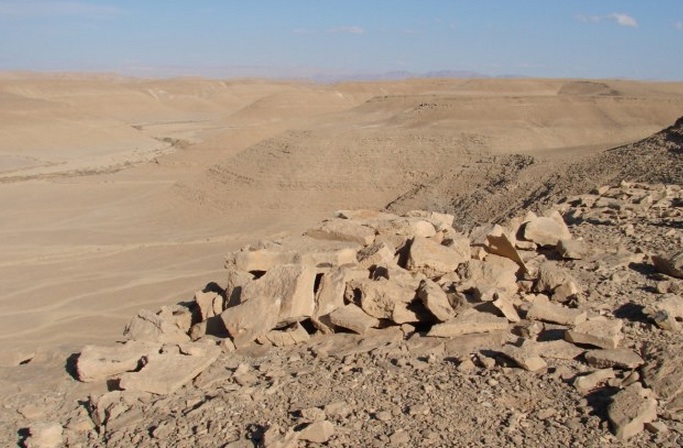
The leopard trap as seen from behind

A 1,600-year-old trap was unearthed besides the “nearly identical” 5,000 year old trap, which means predators have been a topic of conversation among desert dwellers in southern Israel for thousands of years.

“They look like a pile of stones, like a cairn, and you need a good eye and also some digging around to realize what it is,” Porat told Live Science.

A piece of meat on a piece of rope that is attached to a slab door lures the carnivore, which is then unable to escape the box trap.

This discovery was published in the September issue of the journal Antiquity based in the UK.

Today there are no more leopards left to hunt in the Negev desert. The last was seen one decade ago, and they are almost extinct in neighboring Jordan as well.

:: Live Science

Image of leopard on rocks, Shutterstock
Tafline Laylin
Tafline Laylinhttp://www.greenprophet.com
As a tour leader who led “eco-friendly” camping trips throughout North America, Tafline soon realized that she was instead leaving behind a trail of gas fumes, plastic bottles and Pringles. In fact, wherever she traveled – whether it was Viet Nam or South Africa or England – it became clear how inefficiently the mandate to re-think our consumer culture is reaching the general public. Born in Iran, raised in South Africa and the United States, she currently splits her time between Africa and the Middle East. Tafline can be reached at tafline (at) greenprophet (dot) com.

TRENDING

Lizard tail stew, dhub mansaf, is a favored folk dish in Saudi Arabia

By exploring forgotten folk dishes like lizard stew, Green Prophet continues to connect the dots between culture, ecology, and the future of sustainable living in the Middle East.

Is bear meat safe to eat?

It may not be a question you ask yourself every day in the city, but if you venture north in countries like Canada where wild bears are a mythical creature to be revered and feared, it just may happen that you will be offered bear meat. But is it safe?

Saudi Arabia artist Ahmed Mater featured at Christie’s in London

Saudi artist Ahmed Mater talks about his work involving magnetism, mirage and Mecca. Ahmed Mater: Chronicles is taking place at Christie’s headquarters located in the heart of St. James’s, London, from July 17 to August 22.

Bedouin Traditions to bring back a sustainable community with Project Wadi Attir

This story is about my experience at Project Wadi Attir and background on what the project does.

Ecotourism in Egypt

In contrast to eco tourism in other countries in...

Turning Your Energy Consultancy into an LLC: 4 Legal Steps for Founders in Texas

If you are starting a renewable energy business in Texas, learn how to start an LLC by the books.

Tracking the Impacts of a Hydroelectric Dam Along the Tigris River

For the next two months, I'll be taking a break from my usual Green Prophet posts to report on a transnational environmental issue: the Ilısu Dam currently under construction in Turkey, and the ways it will transform life along the Tigris River.

6 Payment Processors With the Fastest Onboarding for SMBs

Get your SMB up and running fast with these 6 payment processors. Compare the quickest onboarding options to start accepting customer payments without delay.

Qatar’s climate hypocrisy rides the London Underground

Qatar remains a master of doublethink—burning gas by the megaton while selling “sustainability” to a world desperate for clean air. Wake up from your slumber people.

How Quality of Hire Shapes Modern Recruitment

A 2024 survey by Deloitte found that 76% of talent leaders now consider long-term retention and workforce contribution among their most important hiring success metrics—far surpassing time-to-fill or cost-per-hire. As the expectations for new hires deepen, companies must also confront the inherent challenges in redefining and accurately measuring hiring quality.

8 Team-Building Exercises to Start the Week Off 

Team building to change the world! The best renewable energy companies are ones that function.

Thank you, LinkedIn — and what your Jobs on the Rise report means for sustainable careers

While “green jobs” aren’t always labeled as such, many of the fastest-growing roles are directly enabling the energy transition, climate resilience, and lower-carbon systems: Number one on their list is Artificial Intelligence engineers. But what does that mean? Vibe coding Claude? 

Somali pirates steal oil tankers

The pirates often stage their heists out of Somalia, a lawless country, with a weak central government that is grappling with a violent Islamist insurgency. Using speedboats that swarm the targets, the machine-gun-toting pirates take control of merchant ships and then hold the vessels, crew and cargo for ransom.

Related Articles

Popular Categories