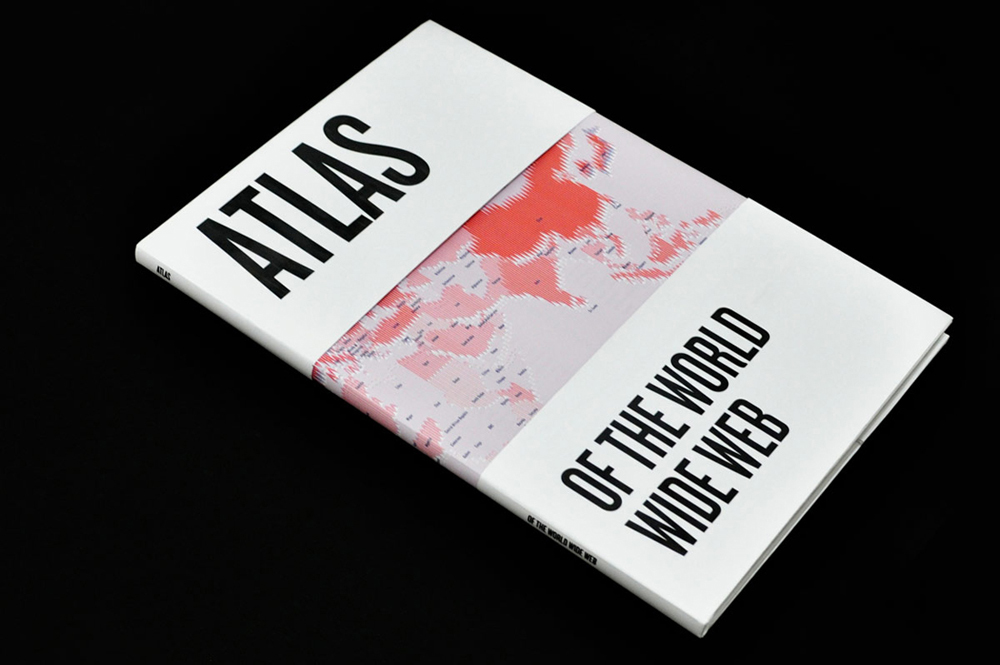
A young Israeli designer has collected digital data across a variety of internet meta-aspects (think “search phrases” and “virus attacks”) to paint pictures of the modern world, producing an atlas that maps the planet the way the internet sees it.
Designed as her final project at the Department of Visual Communication, Shenkar College of Engineering and Design near Tel Aviv, Dafna Aizenberg created an atlas that charts social media usage and internet connections, cybercrime and online shopping.
“As the world becomes smaller, physical borders seem to fade away. These trends may lead us to consider today’s world map, drawn centuries ago by the global powers of the time, as obsolete”, she says in a project statement.
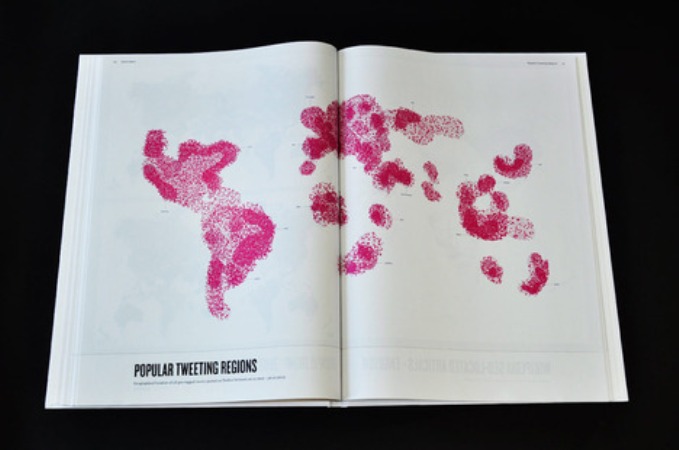 The 120-page guide covers all aspects of the internet: social media, spam, e-commerce, infrastructure and connection speeds. Ironically, the vivid and colorful info-graphics and maps were all handmade, not computer-generated. Visually, the atlas is art.
Aizenberg set out to record the influence technology has on our lives, but as she collected data, a sub-theme emerged of global internet inequality. Technology sharply divides established and developing nations. “The infrastructure is so expensive; they stay in the same state”, she told The Star. Internet use patterns also offer insight to global society in terms of poverty and wealth, aggression and tolerance.
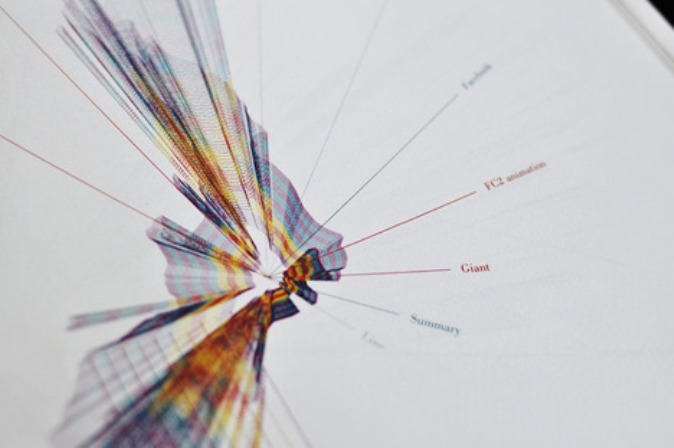 When charted according to different metrics, entire continents disappear while similarities emerge in disparate nations. Assessing Google search patterns, she observed, “Israel and Japan look the same. France and Germany have almost identical patterns, but they are not the same as the U.S and U.K. You wonder why.”
Because there is so little information on North Korea, it only appears on the cybercrime pages, where Africa doesn’t show up at all. She theorizes that digital criminals don’t target Africa “because there is nothing there to attack.”
Israel ranked first in social media engagement, averaging 11 hours a month per capita. Korea and Japan offer the world’s fastest connections, likely linked to the demands of their respective gaming cultures.
Aizenberg concluded that the more undeveloped the country, the greater their search activity for online amusement. “Kazakhstan searches for a lot of entertainment,” she said.
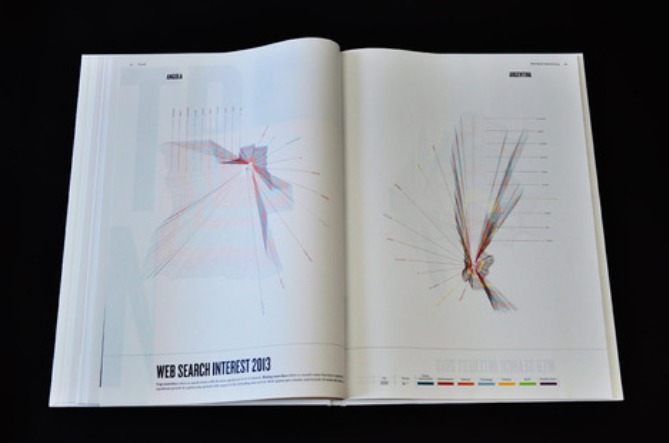 Her data mapping illustrates how the Internet is breaking down national borders. “Most of the world is living on Facebook. It unites us all in a way. Some countries like Russia and China stay with their own social network, but globally we all speak the Facebook language. We all know what ‘like’ and ‘share’ mean.”
Aizenberg has created a website to promote the Atlas and determine if media interest supports a limited printing of the books. Given the ephemeral nature of digital trends, the atlas would require frequent revision, but perhaps there’s a wider commercial market for the stunning pictorials, which presumably, would be sold online.
The exercise raises an existential question bespoke to the IT era, do we exist if we’re not connected?
Images of the Atlas from MocoLoco