
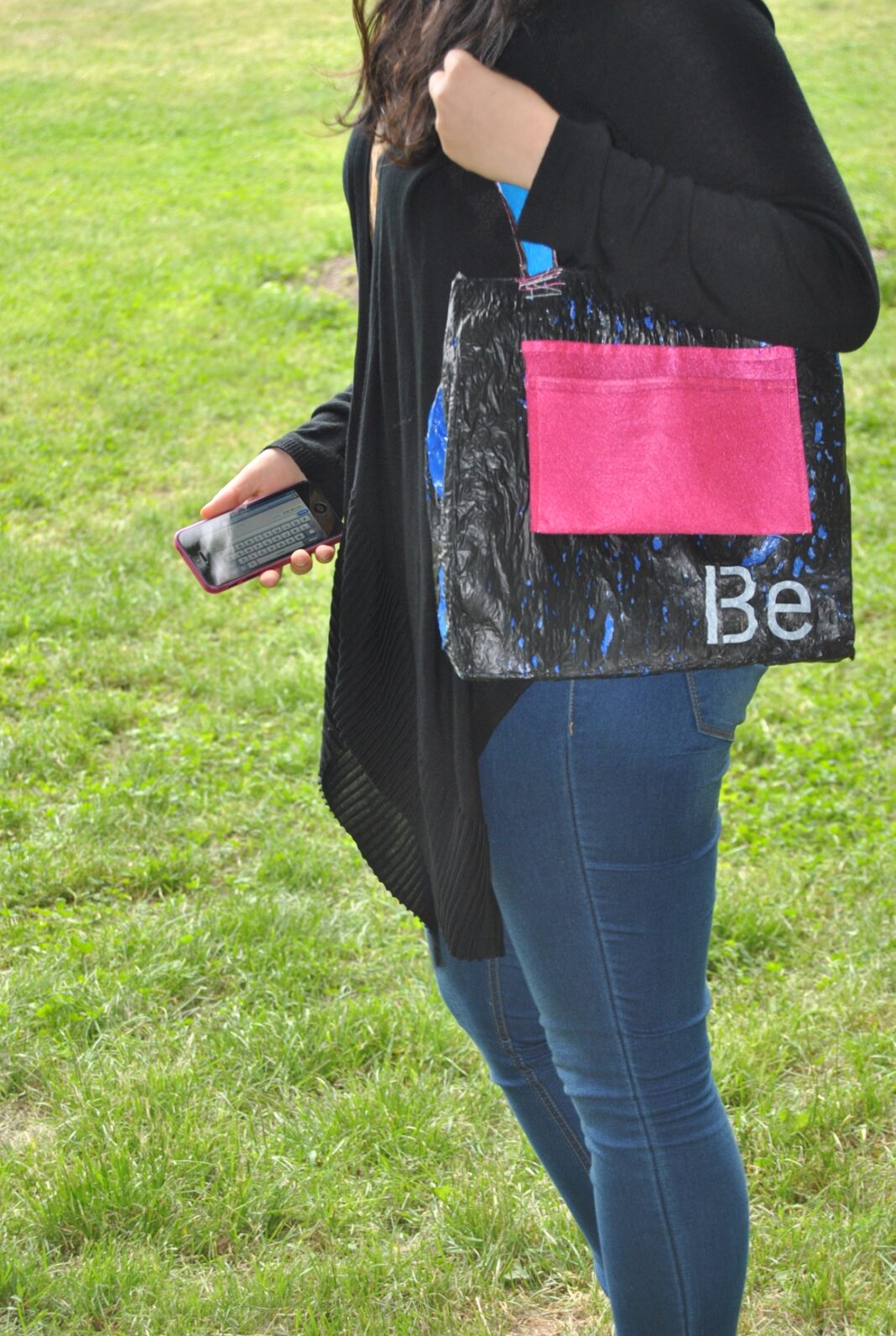

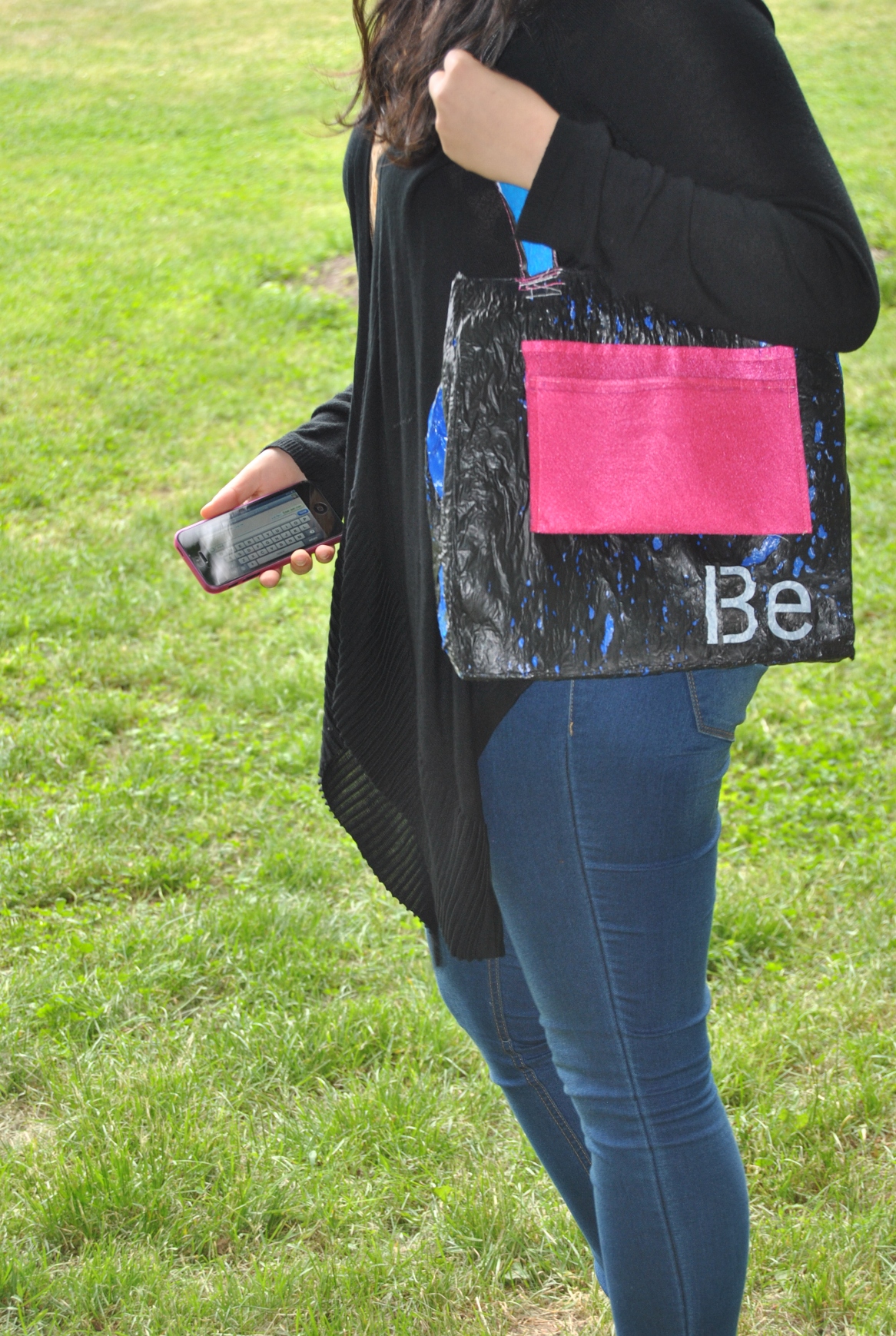
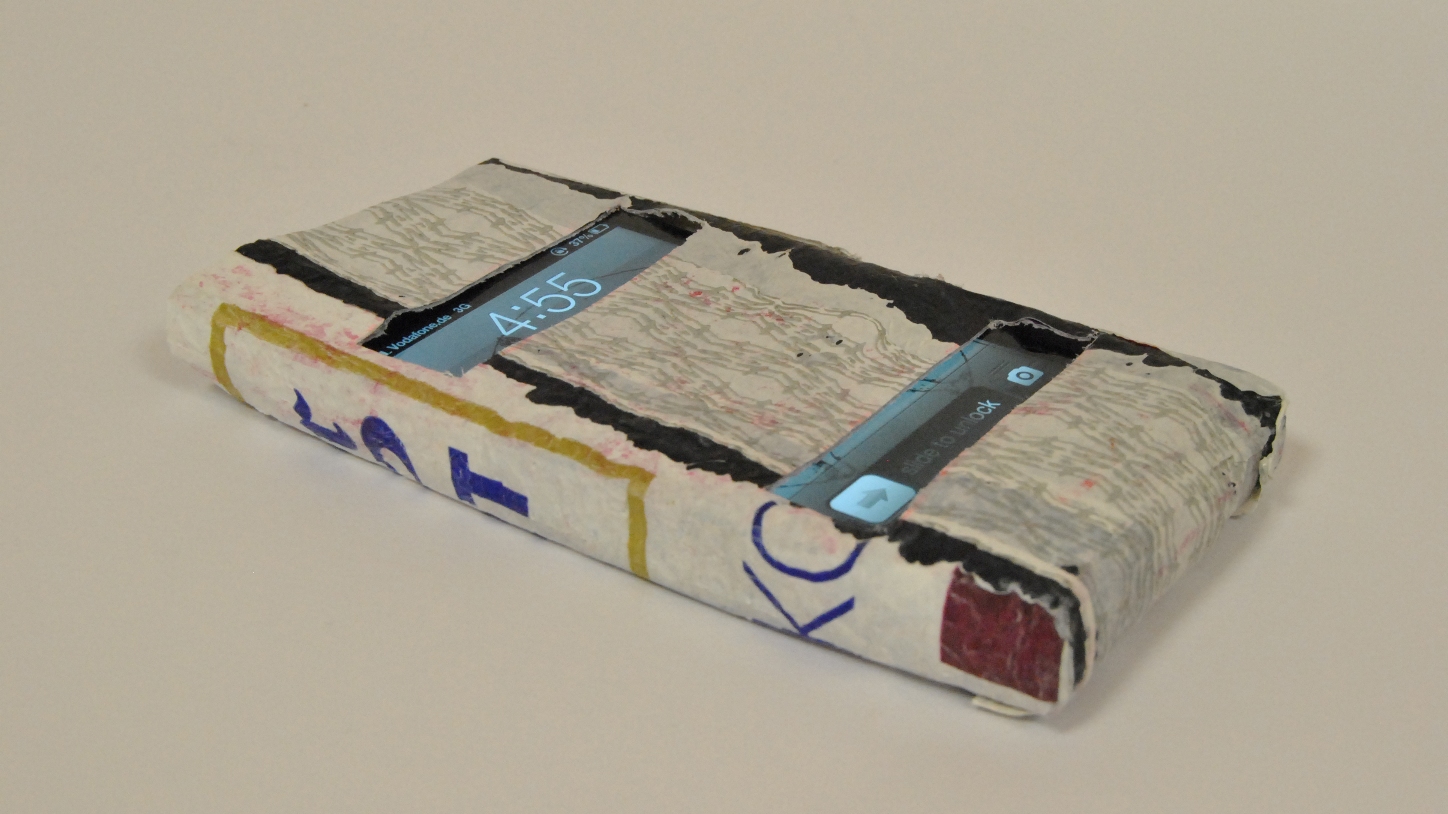
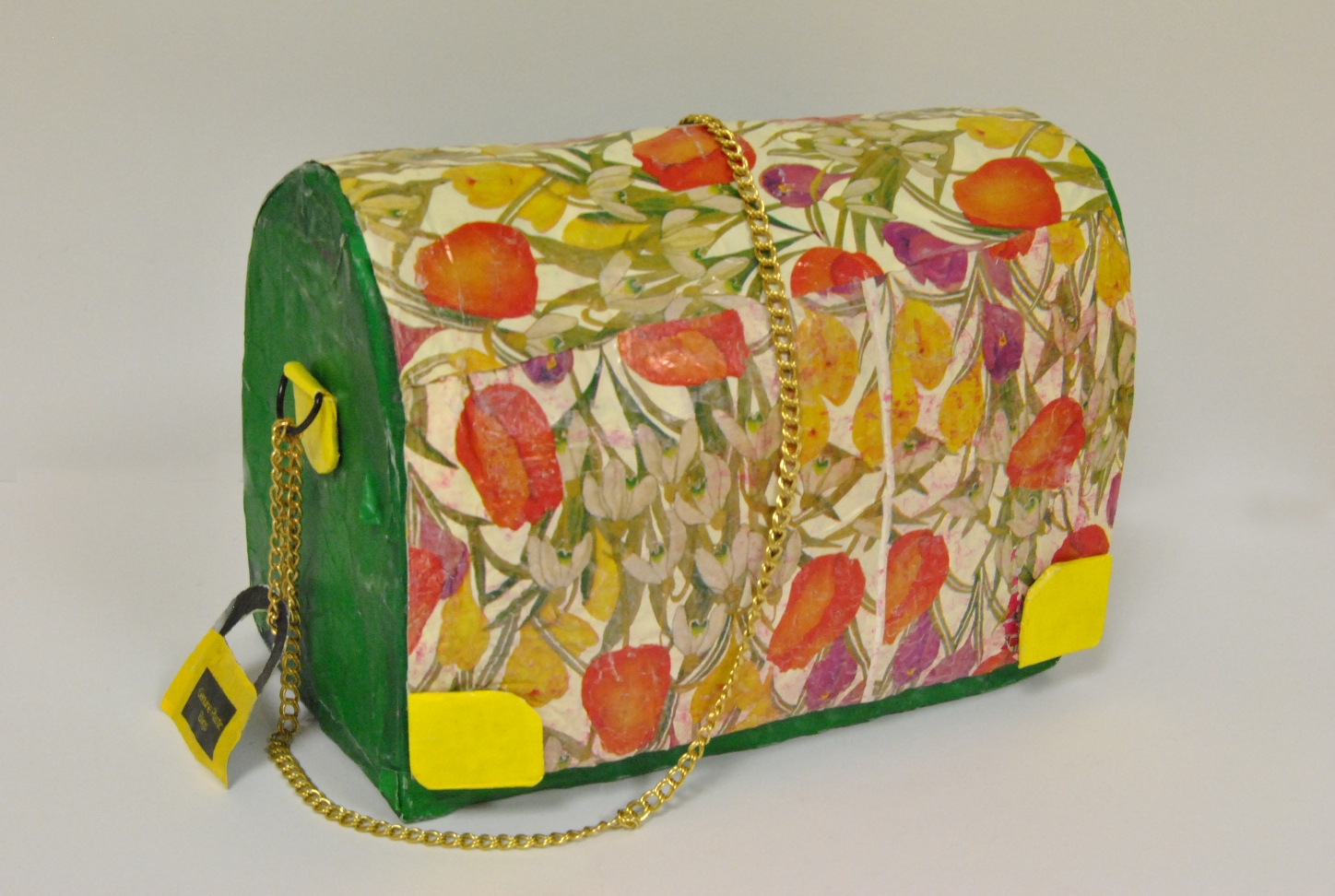
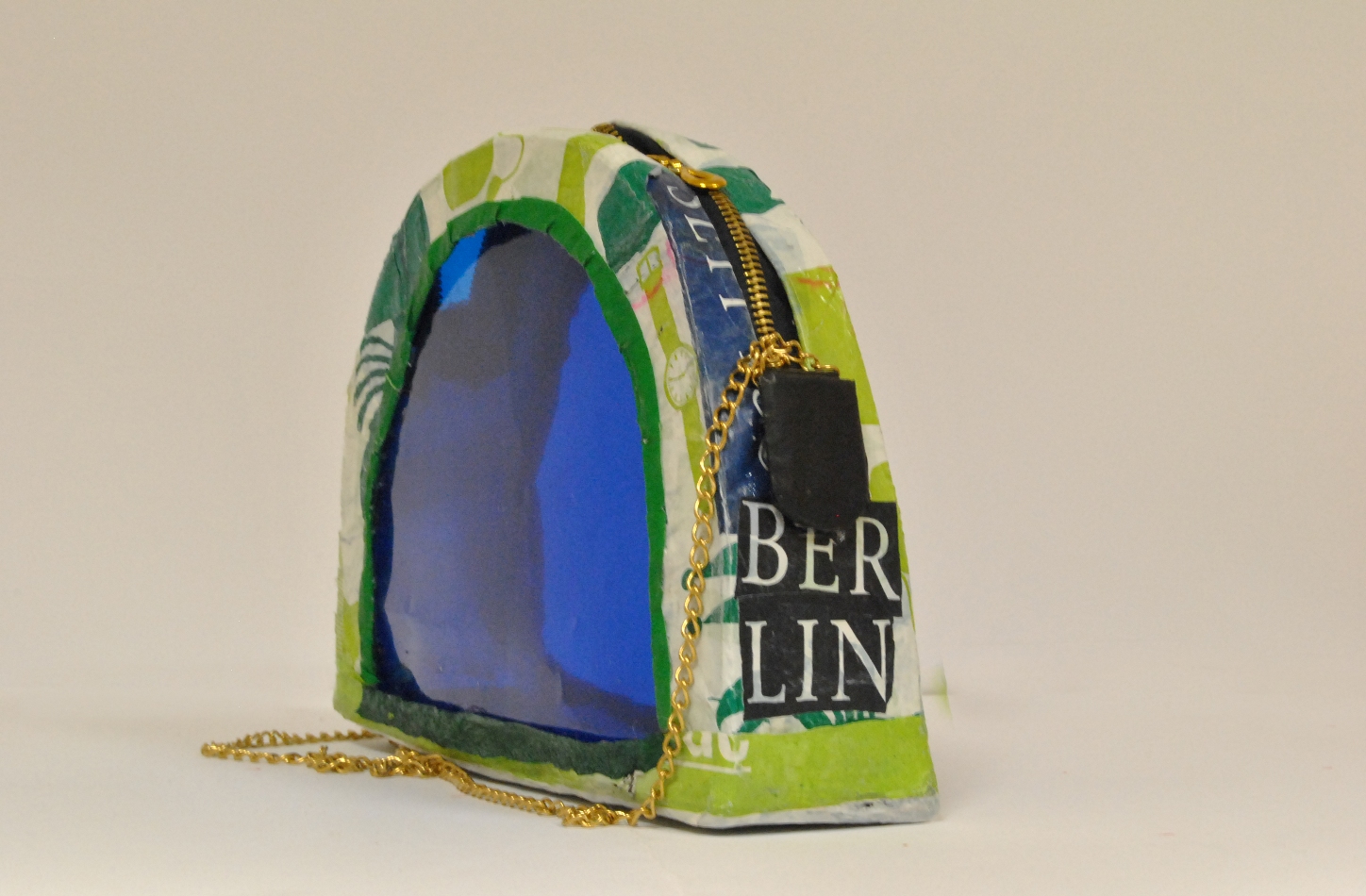
 Young Egyptians Yara Yassin and Rania Rafie are embarking on a business that makes bags from bags – innovative handbags sewn from throwaway plastic. It’s not a gimmick, a serious environmental message underpins the venture.
The freshly minted design school grads share a heightened awareness of modern consumerism, and hope to spread the word that our daily habits have powerful and negative global impact. Green Prophet had a chat with the upcycling duo.
Green Prophet: Tell the readers about yourselves.
Yara/Rania: We are two Egyptian designers who graduated this past winter from the German University in Cairo. We spent our last semester in Berlin in an exchange program run by our university. We created this project together, under the supervision of Tim Braun.
GP: What did you study?
Y/R: We studied Applied Arts and Design, majoring in Product Design. Our field might seem conceptual and general, but our studies were quite detailed and specific. We learned about the different types and stages of product design across broad categories.
 GP: How did you get interested in environmental issues?
Y/R: Coming from a developing country, and traveling abroad, we began to see how different lifestyles, values, and economic conditions directly influence the environment. Each country has its different climate which, in turn, influences and creates different cultures, but in the end, we all live on the same planet. Earth, as a whole, must be protected.
Yara has been always interested in sustainable design and the question of why we consume more than we need. She’s worked on several projects trying to solve environmental problems in Egypt. Rania is interested in minimalism: designing in simple forms using the fewest elements and creating minimal waste.
We both share a vision that future decades demand eco-friendly designs. Of course, we don’t imply that our products don’t harm the earth. Instead, we are bringing attention to over-consumerism and highlighting the limitless potential for creative recycling.
 GP: Why specifically plastic bags (as opposed to plastic bottles, general litter)?
Y/R: We chose plastic bags because we can’t see a real reason for them anymore. We observe everyday and everywhere the enormous amount of plastic floating in the air and water, trapped in trees, littering the streets. Bag production and disposal creates a huge carbon footprint, and their function can be met in greener ways.
On a personal level, we deal with piles of plastic bags in our homes. We questioned why the waste was so prolific, when will people wake up and say “No more!”. After our semester in Berlin, we saw how Germany worked to reduce plastic bag use. That’s when we started to research plastic pollution and design ways to positively impact the problem.
GP: What do you see as the worst impact of plastic bags?
Y/R: The greatest risk is that plastic can be eaten by animals and fish. It unbalances ecosystems and is making its way into the human food-chain.
GP: In Jordan, everything we buy gets put in plastic bags. There’s no culture of using reusable market bags. Issuing free plastic bags is illegal in Israel – if you want one you must pay a small fee (the same as in Ireland, and many other countries). What is Egypt’s plastic bag policy?
Y/R: Unfortunately, in some Arab countries like Jordan, Palestine, Morocco, and Lebanon, bans on plastic bag don’t exist. Same goes in Egypt, there is no plastic policy; whatever you buy, you will receive a plastic bag, whether you need it or not. That’s why we felt the urge to create a social awareness through out our products, for people to realize the hazardous health and environmental effects of these bags.
GP: What would you like to see happen next (with your project and your work)?
Y/R: We are currently working on social awareness, we want to create our own community to help us deliver the message. We’ll be participating in an upcoming design competition in Amsterdam, and we’d like to see our designs reaching out into Egypt and beyond. Our goal is not only to start an individual business, we want to incite a huge social awareness to help people in the Middle East change these habits. As cliche as it sounds, this could really make difference into a better life.
GP: Is there anything you would like to tell Green Prophet readers?
Y/R: Take a minute to research your own country’s plastic bag policy. See if there is an effort underway to limit their use, and support it. Aim to reduce your own use of the bags – refuse them when they are offered, turn to reusable eco-friendly shopping bags instead. It will make a difference.
Then, think wider: consider what other wastes you throw away, where you throw them and where it will all end up. We tend to be naturally lazy. Counting your weekly use of plastic bags and bottles you use (and toss away) can be a bit shocking. Take your head out of the sand. Our earth is all we’ve got, start by yourself to save it.
Endnote: You can contact the designers directly via email Yara Yassin at [email protected] and Rania Rafie at [email protected] regarding their designs or to request product brochures.
Images courtesy of Yara Yassin and Rania Rafie


[…] Young Egyptian Designers Use Fashion to Change Our Plastic Habits We both share a vision that future decades demand eco-friendly designs. Of course, we don't imply that our products don't harm the earth. Instead, we are bringing attention to over-consumerism and highlighting the limitless potential for creative … Read more on Green Prophet […]